
Introduction
Picking a mobile phone plan can feel like a guessing game. You might land in a new country, start a job abroad, or just want to trim your monthly phone bill, only to get stuck reading pages of confusing fine print. Big bold numbers on ads rarely tell the whole truth, and a bargain deal can turn pricey once taxes, speed slowdowns, or short expiry dates kick in.
Taking a few minutes to compare plans properly saves you money and stops sudden signal drops. Whether you want a local prepaid card, a quick digital profile, or a steady monthly allowance, knowing how phone companies build their offers takes the stress out of shopping. This guide breaks down the main plan styles, covers local rules in five major countries, and shows you how to check real facts before you buy.
Why Shopping for a Mobile Plan Feels So Confusing
Most phone users trip over the exact same hurdles when looking at carrier websites. Bright banners push low starter rates or massive data numbers while tucking the real rules away at the bottom of the page.
Watch out for these everyday catches when browsing plans:
- Surprise checkout totals: Advertised prices often leave out local taxes, setup fees, or rules that force you to pay for several months upfront.
- Tricky expiry windows: Two plans at the exact same price might give you 30 days of service on one network and only 28 days on another.
- Hidden speed slowdowns: Many plans promise endless data but slow your internet to a crawl once you pass a set usage limit.
- Locked handsets: A new local card or digital profile will not connect if your old phone company still has a carrier lock on your device.
Reading the full terms before you pay keeps your phone working smoothly. Always look past the biggest price tag on the screen.
Making Sense of SIM vs eSIM Plans
Before picking a phone company, you need to know how your device will connect to their towers. Today's smartphones use removable plastic chips, built-in digital profiles, or a mix of both. Learning the basics of SIM vs eSIM plans makes it easy to pick the setup that fits your phone and travel style.
What a Physical SIM Card Does
A physical SIM is the tiny plastic chip you slide into a small tray on the edge of your phone. It holds your account details and links your handset to the local mobile network.
Plastic cards work inside almost every unlocked phone ever made. If your battery dies or you drop your device, you can pop the chip out and put it into a backup phone in seconds. On the downside, getting one means walking into a shop or waiting for the mail, and those tiny chips are very easy to misplace during a trip.
How an eSIM Works on Your Phone
An eSIM is a digital version of that chip built right inside your phone's hardware. Instead of handling plastic, you load your plan onto your phone by scanning a QR code or tapping through a carrier app.
Setting one up usually takes just a couple of minutes over Wi-Fi. Newer phones also let you keep several digital profiles saved at once, so you can switch between your home number and a travel data line with a quick tap. Even so, a digital profile is not automatically cheaper or faster than a plastic chip, and older phones or certain regional models do not support eSIM hardware at all.
| What to Compare | Physical SIM Card | Digital eSIM Profile |
|---|---|---|
| How You Set It Up | Slide a plastic chip into your phone tray | Scan a QR code or use a carrier app |
| Phone Support | Fits almost any unlocked mobile phone | Needs a newer phone with eSIM hardware |
| Moving to a New Phone | Pull the chip out and put it in the next phone | Ask your carrier to transfer or reissue the profile |
| Using Two Numbers | Depends on how many physical slots your phone has | Lets you save multiple profiles on one device |
| Where You Can Get It | Sold by virtually every mobile provider | Offered by select carriers and specific plans |
The Main Types of Mobile Plans
Phone companies bundle minutes, texts, and data in a few standard ways. Knowing how monthly bills differ from upfront credit stops you from paying for extras you never touch.
Prepaid Plans vs Monthly Contracts
Prepaid plans mean you pay upfront for a set pile of data, calls, and texts before you start using them. When your data runs out or your days are up, the service stops until you add more money. You never face credit checks, surprise overage bills, or long lock-in contracts.
Postpaid contracts send you a bill at the end of every month based on your plan tier and any extra usage. These deals sometimes bundle a new phone or family perks, yet they usually ask for local proof of address, a credit check, and steep exit fees if you leave early.
SIM-Only and Pay-As-You-Go Deals
SIM-only plans give you a monthly bundle of data, calls, and texts without tying you to the cost of a brand-new phone. Since you already own your handset, the monthly price stays much lower than a full phone contract. Some SIM-only plans renew every 30 days, while others ask you to stay for 12 or 24 months.
Pay-as-you-go deals give even more breathing room to light phone users and short-term guests. You load cash onto your account and pay only for the exact data, minutes, or texts you spend, or you grab a small add-on bundle only during the weeks you actually need it.
Finding the Right Mobile Plan in the United Kingdom
The UK phone market packs plenty of competition, with four main networks and dozens of smaller brands running on those same towers. People who already have an unlocked phone usually begin by searching to compare SIM only deals UK providers sell on 30-day rolling or 12-month terms.
Checking Unlimited Data and Pay-As-You-Go Rules
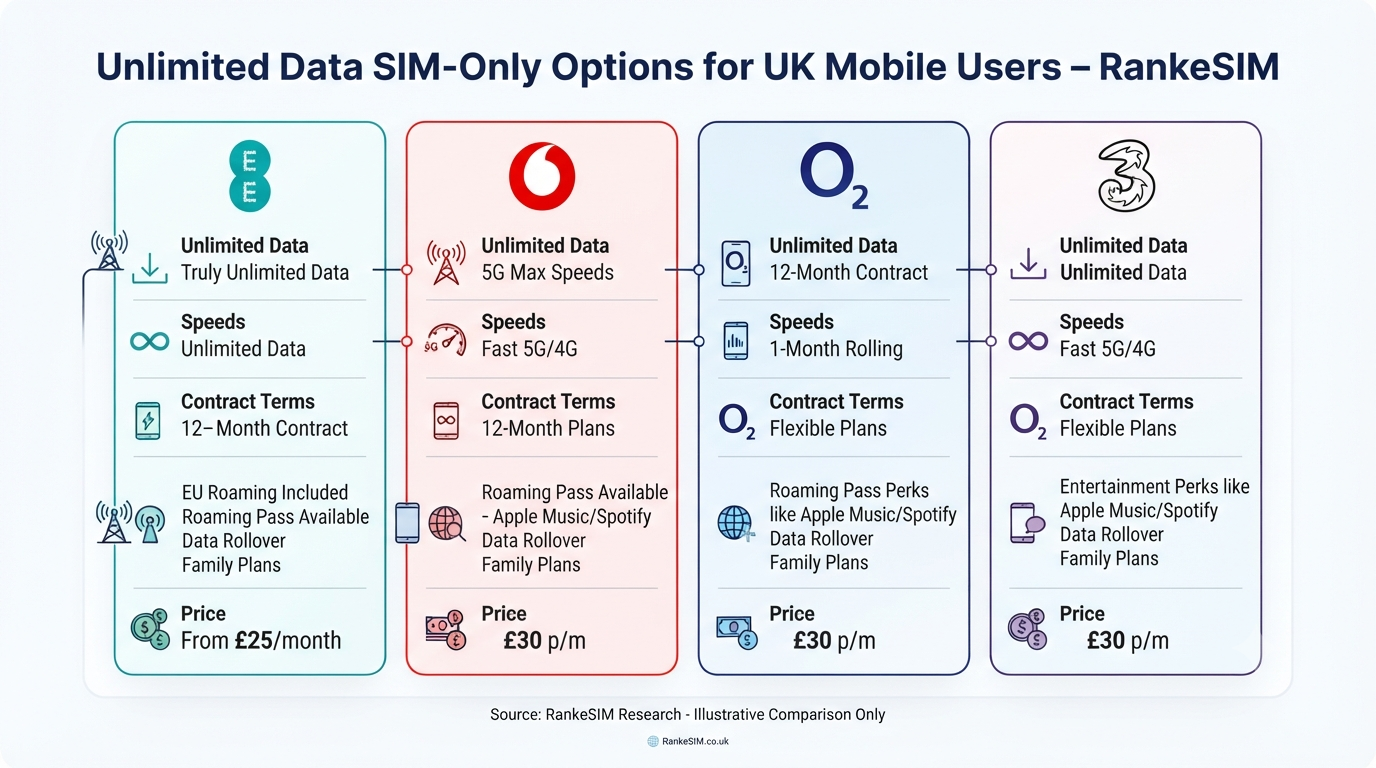
People who stream video or work from laptops on the road often hunt for unlimited data SIM only deals UK networks offer. Even when a deal says unlimited, read the small print for fair-use caps, personal hotspot rules, and European roaming limits. Certain carriers restrict how much data you can share with a laptop or slow your speed during busy evening hours if you use a huge amount of data.
If you are only visiting Britain for a short holiday or barely touch mobile data, it pays to compare pay as you go SIM deals UK networks sell. Pay-as-you-go packs keep you free from monthly direct debits, though you should check how quickly unused credit expires. Always look at a signal map for your exact UK postcode too, since indoor reception can change from one street to the next.
Picking a Wireless Plan in the United States
The US covers a huge stretch of land, so your signal quality depends heavily on the exact towns and highways you visit. Many students, travelers, and everyday residents prefer to compare prepaid phone plans USA carriers offer so they can skip credit checks and multi-year contracts.
Checking 5G Speeds and Extra Fees
When you compare 5G mobile plans USA providers advertise, pay close attention to network priority and tower reach. Not every prepaid bundle gives you full access to the fastest 5G bands, and some budget plans slow down when local cell towers get crowded.
On top of that, US advertised prices rarely include state taxes and carrier fees, which can bump up your final bill at checkout. Check if personal hotspot data comes out of your main bucket or has a separate cap, and look up local coverage around your home or hotel before paying.
Exploring Mobile Deals in Australia
Australia stretches across massive distances between coastal cities and rural outback towns, making broad tower coverage a top concern. Whether you are moving there for work or visiting for a season, taking time to compare mobile plans Australia carriers list helps you match your data needs with reliable regional reception.
Prepaid eSIM Setup and ID Checks
Many flyers and newcomers look for prepaid eSIM plans Australia providers support so they can get online the moment their plane lands. While major Australian networks and several smaller brands offer digital profiles, not every prepaid deal supports instant eSIM setup, and your phone must be unlocked and compatible.
Australian law also requires an identity check before any local mobile line can go live. You will normally need your passport or an Australian ID card during activation, and it helps to check whether your recharge lasts 28 days or a full 30 days so you know when your next payment is due.
Getting a Prepaid Mobile Plan in Germany
Germany runs strong 4G networks alongside growing 5G coverage across its cities, towns, and rail lines. Travelers, students, and locals who want freedom often look at prepaid SIM plans Germany providers offer instead of signing a standard two-year German telecom contract.
ID Verification and Four-Week Cycles
German telecom rules require every phone company to check your identity before turning on a local prepaid card or digital profile. Depending on the brand you pick, you might finish a quick video call check online or show your passport at a local shop or post office counter.
Because setup steps and eSIM support differ from one German provider to another, read the current activation rules before buying. Check if your bundle renews every 28 days rather than once a calendar month, and see if EU roaming is included when you take a train across the border.
Comparing Mobile Phone Plans in Canada
Canada spans wide provinces and northern regions, and wireless service there often costs more than in many European countries. Taking a careful look to compare mobile phone plans Canada carriers provide helps you find sensible data limits, clear overage protections, and solid coverage where you live.
Provincial Taxes and Speed Tiers
Canadian carriers offer both monthly bring-your-own-phone plans and upfront prepaid options across national networks and smaller flanker brands. When reading plan details, check if you get full 5G speeds or a capped 4G LTE connection, and verify how much hotspot sharing is allowed.
Provincial sales taxes get added on top of the listed monthly rate, so your final price depends on your province or area code. Always check coverage maps for your exact region, especially if your work or travel takes you outside major cities.
| Country | Popular Plan Styles | Smart Checks Before You Buy |
|---|---|---|
| United Kingdom | 30-day SIM-only, 12-month SIM-only, pay-as-you-go | Fair-use caps on unlimited data, roaming rules, local postcode signal |
| United States | Upfront prepaid, monthly postpaid, family bundles | State taxes added at checkout, 5G speed priority, rural tower reach |
| Australia | 28-day or 30-day prepaid, SIM-only, prepaid eSIM | Mandatory ID check at setup, outback vs city signal, eSIM support |
| Germany | 28-day prepaid packs, 24-month contracts | Mandatory ID verification step, EU roaming rules, eSIM rules |
| Canada | Monthly bring-your-own-phone, upfront prepaid | Provincial sales tax rates, 4G vs 5G speed limits, regional coverage |
Five Things to Check Before Choosing Any Plan
Chasing the cheapest headline number often ends in frustration. A smart comparison checks five practical details that shape your daily phone experience:
- True daily cost: Divide your total checkout price—with all taxes and fees included—by the exact number of days the plan stays active.
- Data limits and speed drops: See how much full-speed data you get and whether your connection slows down once you hit that limit.
- 4G and 5G support: Make sure the plan actually unlocks 5G speeds on your phone model rather than keeping you on 4G.
- Hotspot sharing rules: Check if you can tether your laptop or tablet using your phone data without paying extra fees.
- Renewal and exit terms: Know how to turn off auto-renew or cancel your plan without getting hit by surprise charges.
How RankeSIM Helps You Check Real Plan Facts
Digging through dozens of carrier pages across different countries gets tiring fast, especially when websites bury key rules or leave old prices online. RankeSIM is a mobile connectivity comparison platform designed to help everyday users explore local SIM and eSIM options using clear, trustworthy details.
Rather than guessing missing numbers or treating every listing the same way, the platform builds its pages around official sources and visible last-checked dates. You can browse country guides—including the United Kingdom, the United States, Australia, Germany, and Canada—to look at mobile providers, prepaid and SIM-only options, eSIM support, data amounts, and plan validity where those facts are verified.
RankeSIM clearly labels how each piece of information was checked—marking entries as official-source verified, provider confirmed, admin reviewed, or unverified—and leaves missing details openly marked as unknown instead of making guesses. The platform is also rolling out destination, regional, and global travel eSIM comparisons country by country as verified facts become available.
Because the top-ranked network in any country is not automatically the best fit for your specific budget or data habits, RankeSIM keeps general provider rankings separate from personalized plan-fit results tailored to what you actually need.
Frequently Asked Questions
How are SIM-only deals different from prepaid phone plans?
SIM-only plans give you a monthly bundle of data, calls, and texts without bundling a new handset, and they can run on 30-day rolling terms or longer contracts. Prepaid plans ask you to pay upfront before using any data or minutes, so you never get a surprise bill at the end of the month.
Do unlimited data SIM only deals UK networks sell have hidden limits?
Yes, many unlimited plans carry fair-use rules that limit personal hotspot sharing, cap European roaming data, or manage speeds during peak hours. Always read the carrier's full terms so you know how your connection behaves after heavy usage.
What is the easiest way to compare prepaid phone plans USA carriers offer?
Look past the sticker price and check the final checkout total once state taxes, regulatory fees, and SIM kit charges are added. Also compare the exact renewal window, since some plans run for 30 days while others follow a full calendar month.
Do 5G mobile plans USA providers sell give 5G speeds everywhere?
You only get 5G speeds when you have a 5G-capable phone and stand inside an area covered by 5G towers. In rural towns or deep inside concrete buildings, your phone will smoothly drop back to 4G LTE service.
Will prepaid eSIM plans Australia carriers sell work on every phone?
No, your handset must have built-in eSIM hardware and be completely unlocked from any previous phone company. You also need to verify that the specific Australian prepaid deal supports eSIM activation, as some entry-level plans still use physical cards.
Why do prepaid SIM plans Germany networks offer ask for passport checks?
German telecom laws require phone companies to confirm every customer's identity before activating a new prepaid SIM or eSIM. You will need to complete a short video ID check online or show your passport at a participating shop or post office before using the line.
What matters most when I compare mobile phone plans Canada providers list?
Check the final monthly cost after provincial taxes, confirm whether the plan includes 5G speeds or stays capped at 4G, and review the data allowance. Looking at local coverage maps for your province is also essential if you drive outside major cities.
Who benefits most from pay as you go SIM deals UK carriers offer?
Pay-as-you-go deals work great for short-term visitors, backup phones, and light users who rarely stream video away from Wi-Fi. Just check how often you need to send a text or top up credit so your phone number does not expire from inactivity.
Is an eSIM faster or more reliable than a physical SIM card?
No, both connect to the exact same cell towers and deliver identical speeds when used on the same mobile plan. An eSIM wins on convenience for quick digital setup and holding multiple lines, while a physical SIM is easier to move into a spare phone in an emergency.
How can I tell if a mobile plan price I see online is still current?
Check for a visible last-checked date and links or references to the carrier's official plan page. Because mobile companies update data bundles and promos every few weeks, verifying details against official sources keeps you from relying on expired offers.
Conclusion
Choosing a solid mobile plan comes down to looking past catchy banner prices and checking the details you rely on every day. Taking a quick look at data limits, expiry windows, 5G rules, hotspot permissions, and local ID steps helps you avoid costly headaches at home or while traveling.
Whether you are looking into SIM-only deals in the UK, prepaid 5G options in the US, or local eSIM plans in Australia, Germany, and Canada, sticking to verified facts makes all the difference. Using transparent comparison tools like RankeSIM lets you check official-source details, see when data was last verified, and find a plan that genuinely fits the way you use your phone.



Top comments (0)