
Introduction
Polished travel brochures and sanitized real estate pitches lose all credibility the moment you find yourself wedged into a surging commuter train at Dadar during morning peak hours or trying to figure out why two residential streets five minutes apart carry completely different rental rates. Surviving here requires paying attention to street-level realities rather than relying on digital maps. This manual cuts straight to the core of suburban rail mechanics, housing trade-offs across varied suburbs, iconic street food culture, weekend getaways, and small business setups, while looking at how MumbaiOrbit operates as an independent peer-to-peer forum for unfiltered local guidance.
Suburban Rail Realities
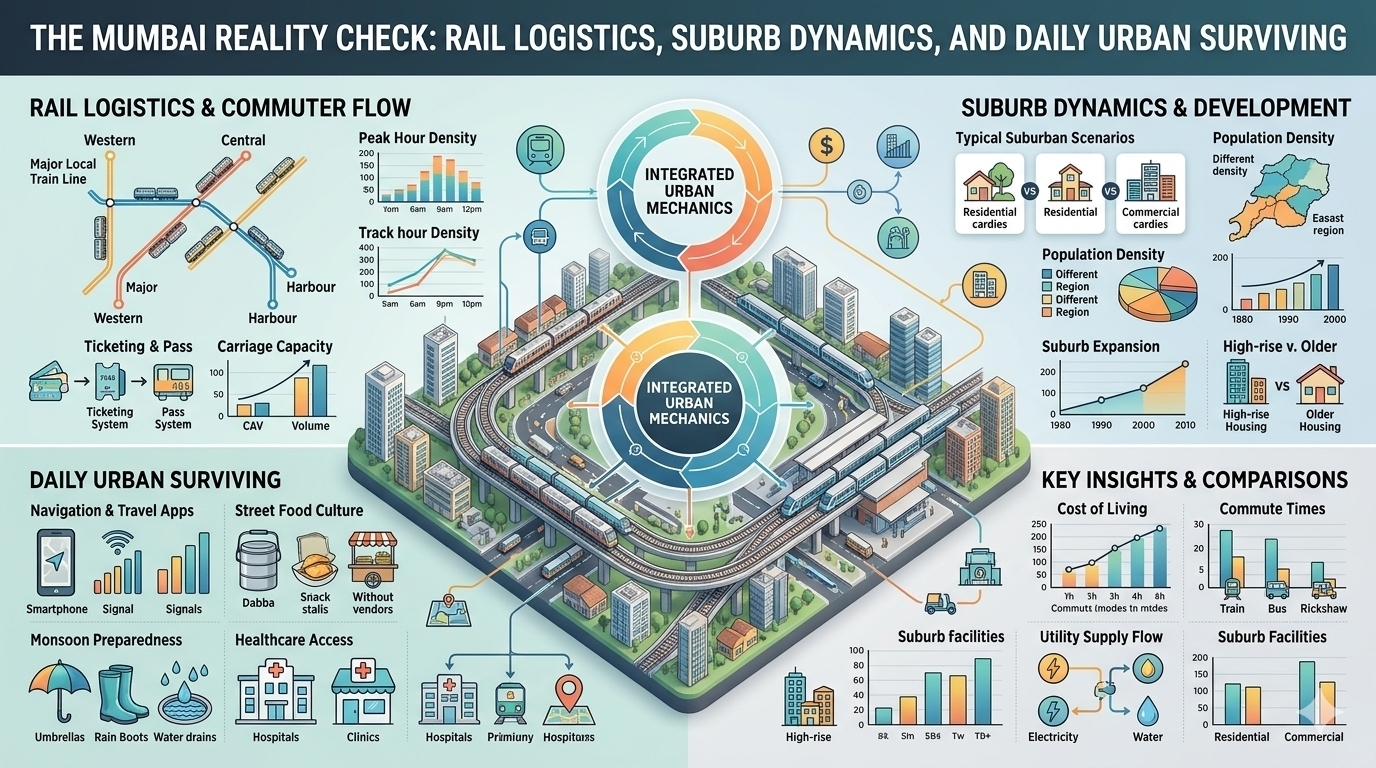
Line Layouts: The commuter railway network runs across three primary corridors: the Western Line heading north toward Dahanu, the Central Line stretching inland toward Kalyan, and the Harbour Line looping across to Panvel.
Transfer Hubs: High-volume interchange stations such as Dadar, Kurla, and Andheri act as critical crossover points where millions switch lines during rush hours.
Ticketing Systems: Paper single-journey tickets and seasonal passes remain available at station ticket counters, though booking through the UTS mobile app lets you bypass the worst of the queues.
Passenger Tides: Daily crowd movements follow an unyielding rhythm: heavy inbound surges heading toward South Mumbai commercial districts in the morning, followed by massive northbound evening dispersals.
Platform Discipline: Basic commuter survival demands staying entirely clear of open doorway edges, never crossing active tracks on foot, and keeping a firm grip on overhead straps during abrupt braking.
Delay Tracking: Experienced riders rely on live tracking apps to anticipate monsoon waterlogging delays, overhead equipment failures, or weekend track maintenance blocks.
Station Upgrades: Although traditional foot over-bridges still dominate older stops, railway authorities have steadily installed escalators and elevators at high-density stations to ease congestion.
Heritage, Landmarks, and Public Spaces
Colonial Architecture: South Mumbai preserves dense Victorian Gothic stone structures, anchored by the Gateway of India, the Fort business district, and CSMT.
Coastal Promenades: Open-air waterfronts like Marine Drive, Juhu Beach, and Bandra Bandstand serve as the city's default communal living rooms for evening sea breezes.
Museums and Galleries: Cultural hubs such as the Chhatrapati Shivaji Maharaj Vastu Sangrahalaya (CSMVS) and the National Gallery of Modern Art house extensive regional archives and fine art collections.
Places of Worship: Landmark spiritual sites span every corner of the city, including the sea-linked Haji Ali Dargah, Siddhivinayak Temple, and Bandra's historic Mount Mary Church.
Elevated Parks: Green spaces like Hanging Gardens and Kamala Nehru Park offer quiet lawns and sweeping panoramic views over Malabar Hill.
Wholesale Bazaars: Traditional trading markets operate directly alongside modern retail strips and dense residential alleyways throughout the urban area.
Family Destinations: Popular educational stops include the Taraporewala Aquarium and the Nehru Planetarium in Worli.
Weekend Trips Beyond the City
Destination Terrain & Atmosphere Best Suited For Key Planning Factors
Matheran Car-free red-dirt walking paths Quiet nature strolls and valley viewpoints Vehicles stay outside town; access requires walking or the toy train
Lonavala Misty hills and seasonal waterfalls Quick overnight hill station breaks Expressway traffic bottlenecks heavily on Saturday mornings
Alibaug Sandy coastal shores and fishing villages Weekend beach trips and seafood dining Ferry schedules shift with ocean tides; road routes involve long detours
Karjat River valleys and agricultural farmlands Relaxing farmstays and beginner hill treks Heavy monsoon rains swell local rivers; arrange transport early
Housing and Suburb Selection
Rent Variance: Monthly rental costs and apartment sizes fluctuate wildly based on building age, water availability, and walking distance to transit lines.
Commute Priority: Calculating actual door-to-door travel time to your workplace must take precedence over choosing a fashionable neighbourhood name.
Station Proximity: Securing housing within a ten-minute walk of a railway station, metro stop, or bus hub cuts hours off weekly transit fatigue.
Neighbourhood Errands: Inspecting immediate residential lanes for essential vendors—chemists, grocers, and vegetable stalls—keeps daily routines manageable.
Building Realities: Water supply schedules, housing society bylaws, and street lighting change block by block, making thorough in-person apartment inspections mandatory before signing leases.
Metro Infrastructure: Line 3
Underground Route: The Aqua Line connects Cuffe Parade at the southern tip directly with Aarey Colony in the northern suburbs.
Interchange Tunnels: Dedicated underground pedestrian concourses link metro stations straight to mainline railway terminals and older transit routes.
Travel Speed: Air-conditioned rake cars bypass street-level traffic congestion entirely, significantly shortening north-south travel times.
Automated Gates: Station turnstiles accept single-journey tokens, rechargeable smart cards, and mobile QR code tickets.
Passenger Facilities: Modern stations feature clean platforms, bright LED wayfinding signage, and systematic security screening checkpoints.
Three-Day Itinerary Outline
Day One Morning: Arrive at the Gateway of India and catch an early harbour ferry to explore the ancient rock-cut caves on Elephanta Island.
Day One Afternoon: Return to Colaba for lunch, then walk past heritage stone facades and art galleries around the Fort district.
Day One Evening: Wind down with a walk along Marine Drive as streetlights illuminate the curve of the bay.
Day Two Morning: Walk the tidal causeway to Haji Ali Dargah and follow the coastal path north along Worli Seaface.
Day Two Afternoon: Cross the Bandra-Worli Sea Link into Bandra to explore quiet heritage bungalow lanes and independent cafes.
Day Two Evening: Head up to Juhu Beach to watch the sunset over the Arabian Sea and sample local evening chaat.
Day Three Morning: Arrive early at Crawford Market to browse wholesale spice sacks, dried fruits, and hardware aisles before the midday rush.
Day Three Afternoon: Stop at a traditional Irani cafe in South Mumbai for lunch and browse nearby secondhand bookshops.
Day Three Evening: Climb up to Hanging Gardens at dusk to catch sweeping panoramic views over the coastline.
Street Food Staples
Vada Pav: A spiced potato fritter wedged inside a soft bread bun, coated with dry garlic chutney and green chilli.
Pav Bhaji: A thick, buttery vegetable mash served boiling hot alongside toasted bread rolls and chopped raw onions.
Bhel Puri: A crunchy, tangy mix of puffed rice, sev, diced potatoes, raw onions, and tamarind-date pulp.
Pani Puri: Crisp semolina spheres filled with spiced potatoes and chickpeas, dipped into chilled mint water.
Sev Puri: Flat puris layered with potatoes, three chutneys, and a heavy blanket of yellow gram flour sev.
Bombay Sandwich: White bread stacked with boiled potatoes, beetroot, cucumber, tomatoes, and fresh green coriander chutney.
Misal Pav: A fiery sprouted moth-bean curry topped with crunchy farsan and served with soft pav rolls.
Retail and Wholesale Markets
Market Name Specialty Items Practical Shopping Advice
Crawford Market Wholesale spices, dried fruits, and household goods Arrive before noon to avoid crushing crowds and verify package weights
Colaba Causeway Street apparel, imitation silver jewellery, and souvenirs Bargain firmly but politely; keep backpacks zipped in tight lanes
Linking Road Footwear, export-surplus clothing, and handbags Walk the full length of the market to compare rates across stalls
Fashion Street Budget-friendly everyday apparel near Azad Maidan Inspect stitching, buttons, and fabric quality carefully before paying
Chor Bazaar Antique furniture, brassware, and vintage curiosities Expect intense bargaining; check item condition thoroughly
Setting Up a Small Business
Market Gaps: Identify local service gaps by studying what existing neighbourhood competitors fail to provide in your target operating zone.
Financial Buffer: Build a cash reserve covering commercial security deposits, initial stock, utility bills, and at least six months of lean operating expenses.
Location Choice: Choose a workspace offering steady pedestrian foot traffic, practical delivery vehicle access, and proximity to public transit.
Legal Framework: Select the appropriate corporate structure—sole proprietorship, partnership, or private limited company—based on expansion goals.
Administrative Compliance: Clear mandatory requirements early, including municipal Shop and Establishment licenses, GST registration, and category-specific trade permits.
Bookkeeping: Combine digital UPI and card payment terminals with disciplined daily bookkeeping from your very first commercial transaction.
Grassroots Marketing: Build visibility by listing on local directories, engaging with residential community groups, and encouraging word-of-mouth customer referrals.
Community Forum Categories
Ask Mumbai: A dedicated Q&A board where residents post everyday logistical questions and receive peer-tested advice.
Trains & Transport: Real-time commuter threads sharing delay alerts, route changes, and efficient station exit strategies.
Housing: Discussions regarding local broker norms, building society rules, and realistic suburb rental expectations.
Khau Galli: A specialised board for exchanging recommendations on hidden food stalls, regional kitchens, and late-night eateries.
Maharashtra Matters: Broader conversations touching upon regional cultural festivals, civic updates, and local travel notes.
Common Oversight Corrections
Common Mistake Practical Solution
Attempting to board peak-hour local trains with heavy luggage Travel outside core rush windows or book an app-based cab for airport transfers
Relying blindly on outdated bus route schedules Cross-check real-time transit status updates using official mobile applications
Signing a rental lease without testing the morning commute Travel the exact route at 9:00 AM on a weekday before paying a security deposit
Assuming short distances on map apps equal fast cab rides Build a generous time buffer into schedules to account for traffic bottlenecks
Visiting museums and galleries without checking weekly closing days Confirm operating hours and ticket booking rules online before heading out
Eating at completely empty roadside food stalls with slow turnover Stick to busy vendors where snacks are prepared fresh and sold rapidly
Buying open-market clothing without inspecting seams and zippers Check garment stitching and fabric quality closely on the spot
Opening a shop before clearing municipal paperwork Consult a local compliance expert to secure necessary trade licenses early
The Utility of Peer Networks
Cutting through glossy real-estate marketing and tourist hype to receive grounded feedback from residents living in those exact suburbs.
Learning practical commuting shortcuts from daily transit riders who know precisely which train coach aligns with station exit stairs.
Comparing rental micro-markets through candid peer discussions rather than relying on guesswork.
Discovering hidden neighbourhood eateries and traditional markets that rarely appear on commercial tourist lists.
Asking specific logistical questions and helping incoming residents navigate everyday city challenges.
MumbaiOrbit operates as a practical digital neighbourhood noticeboard where individuals pool everyday urban knowledge in one accessible space.
Relocation and Business Examples
Scenario A: Meera relocated from Pune to take up a design role in Lower Parel and used MumbaiOrbit housing threads to find a walkable flat near a Western Line station, avoiding a grueling daily road commute.
Scenario B: A family visiting from Delhi wanted to pack as much culture and coastal scenery into a tight three-day break, using structured community itineraries to manage an efficient loop covering South Mumbai museums, Marine Drive, and Elephanta Caves.
Scenario C: Kabir planned to open a small specialty coffee counter in Andheri and used community business threads to understand municipal licensing basics and identify wholesale ingredient suppliers.
Frequently Asked Questions
What are the main local train lines in Mumbai?
The suburban rail network operates primarily across three core corridors known as the Western Line, Central Line, and Harbour Line. These tracks connect distant northern and eastern suburbs directly with South Mumbai's commercial districts, carrying millions of daily commuters.
How do I purchase tickets for Mumbai local trains?
Passengers can purchase single-journey tickets or return fares directly at station ticket windows and automated vending machines. Regular commuters typically use monthly or quarterly season passes, while digital ticketing is available via the official UTS mobile app.
What are the top tourist spots to visit in Mumbai?
Must-visit locations include the Gateway of India, Marine Drive, Chhatrapati Shivaji Maharaj Vastu Sangrahalaya, and the Siddhivinayak Temple. The city also features stunning colonial-era architecture, vibrant art galleries, and scenic coastal promenades.
Which weekend destinations are closest to Mumbai?
Popular short trips include the hill stations of Matheran and Lonavala, the coastal town of Alibaug, and the countryside around Karjat. These spots offer quick escapes from city traffic via road, suburban train, or harbour ferry.
How do I figure out the best area to live in Mumbai?
Your ideal neighbourhood depends entirely on your office location, monthly rent budget, and access to local transport links. Weighing daily travel times against housing costs helps narrow down the most practical suburbs.
What is Mumbai Metro Line 3?
Metro Line 3 is an underground rapid-transit corridor stretching from Cuffe Parade up to Aarey Colony. It provides air-conditioned rapid transit across the length of the city with convenient interchanges to existing railways.
How should I structure a three-day sightseeing trip?
Group nearby attractions geographically: spend your first day exploring South Mumbai heritage sites, your second day along coastal promenades and western suburbs, and your third day browsing local markets and food lanes.
What are some classic street foods to try?
Essential street bites include vada pav, pav bhaji, bhel puri, pani puri, sev puri, Bombay sandwich, and misal pav. These dishes offer a mix of spicy, tangy, and buttery flavors found across city food stalls.
Which markets are best for bargain shopping?
Crawford Market is great for household goods and spices, Colaba Causeway and Linking Road cater to apparel and accessories, Fashion Street offers budget clothing, and Chor Bazaar is the go-to spot for vintage items.
What are the initial steps for starting a small business?
You need a solid business plan, clear market research, startup capital, a compliant commercial location, proper business registration, local municipal licenses, and reliable digital payment systems.
How can a community forum help someone new to the city?
Newcomers can use forums to ask direct questions about local services, check commuting conditions, find housing tips, and discover reliable neighbourhood recommendations from established residents.
What is the purpose of MumbaiOrbit?
MumbaiOrbit functions as a local information platform and community forum where residents, newcomers, and visitors can exchange recommendations, ask logistical questions, and explore practical city guides.
Final Thoughts
Making your way through Mumbai means throwing out textbook assumptions and tuning into the city's actual momentum. Long-term survival here depends on street smarts, patience, and leaning on people who have already figured out where the waterlogging happens and which landlords to avoid. Peer-to-peer spaces like MumbaiOrbit keep you grounded in those exact realities so you can skip the trial-and-error phase entirely.



Top comments (0)