
Introduction
Researching fertility care is a deeply personal step. For many individuals and couples, exploring assisted reproductive technology brings up questions about medical procedures, clinic choices, financial commitments, and expected outcomes. Finding reliable information is essential for navigating this journey with confidence. Platforms like IVFHospitalsNow serve as valuable informational resources, helping patients better understand the complexities of fertility treatment, explore available options, and learn how to evaluate medical providers effectively.
What Is IVF Treatment?
In vitro fertilization, commonly known as IVF, is a complex series of procedures used to help with fertility or prevent genetic problems and assist with the conception of a child. During IVF, mature eggs are collected from ovaries and fertilized by sperm in a laboratory setting. Once fertilization occurs and the resulting embryos develop, one or more embryos are transferred into the uterus with the goal of achieving a successful pregnancy.
While IVF is one of the most widely recognized forms of assisted reproductive technology, it is not a universal solution for every fertility challenge. Treatment plans vary significantly depending on an individual or couple's medical history, underlying causes of infertility, age, and previous reproductive health evaluations. Consulting with a qualified fertility specialist is an essential first step to determine whether IVF is appropriate for a specific medical situation.
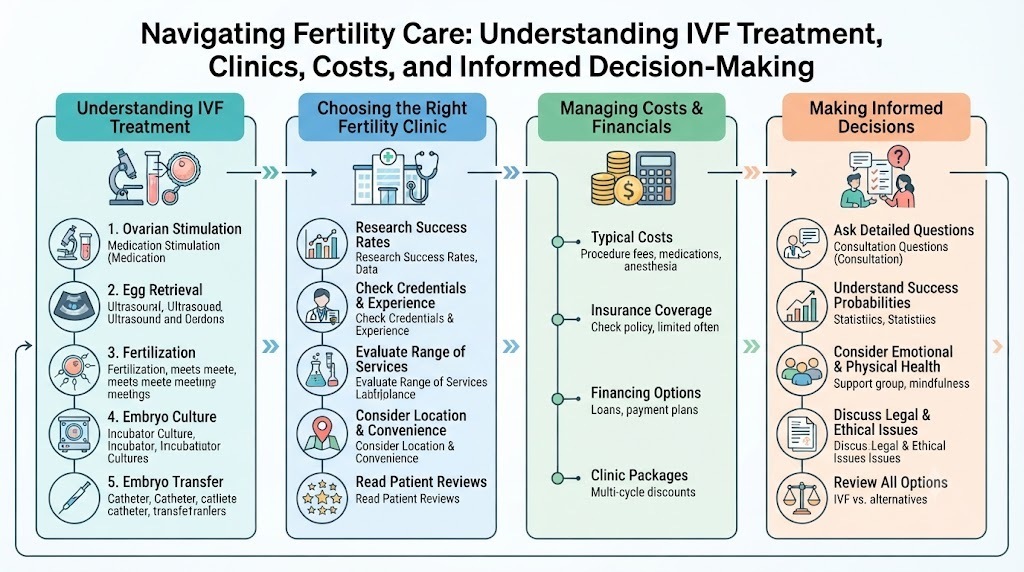
Understanding the IVF Treatment Process
Initial Fertility Assessment
Before any treatment begins, reproductive endocrinologists and fertility specialists conduct a comprehensive medical evaluation. This assessment typically involves reviewing medical and surgical history, analyzing previous fertility treatments, performing hormonal blood tests, evaluating pelvic structures through imaging, and conducting a detailed semen analysis. These diagnostic steps help the medical team understand the underlying factors contributing to fertility challenges and design a personalized treatment protocol.
Ovarian Stimulation
The IVF process usually starts with controlled ovarian stimulation. Patients are prescribed hormone medications designed to stimulate the ovaries to produce multiple mature eggs during a single cycle, rather than the single egg typically released monthly. Regular monitoring through ultrasound scans and blood tests allows specialists to track follicle development and adjust medication dosages safely.
Egg Retrieval
Once the ovarian follicles reach the optimal size, a minor surgical procedure known as egg retrieval is scheduled. Performed under light sedation or anesthesia, the specialist uses ultrasound guidance to pass a thin needle through the vaginal wall into the ovaries to collect the mature eggs from the follicles. The procedure is typically brief, though mild cramping or discomfort may follow.
Fertilization and Embryo Development
Immediately following retrieval, the collected eggs are transferred to an embryology laboratory. Here, they are combined with prepared sperm for conventional fertilization or injected with a single sperm using specialized techniques. The developing embryos are monitored closely over the next several days by embryologists to assess their growth, quality, and developmental milestones.
Embryo Transfer
The embryo transfer is a straightforward, non-surgical procedure that resembles a routine Pap smear. A thin catheter containing one or more selected embryos is gently guided through the cervix into the uterus. The number of embryos transferred depends on various factors, including patient age, embryo quality, and medical guidelines, with single-embryo transfer being common to reduce the likelihood of multiple pregnancies.
Follow-Up and Pregnancy Testing
Following the embryo transfer, patients enter the "two-week wait" period leading up to a blood pregnancy test. During this time, hormonal support medications are typically continued to prepare the uterine lining. A follow-up blood test measures human chorionic gonadotropin levels to confirm whether the transfer was successful, after which the patient is transitioned to early obstetric care or scheduling further reviews.
IVF Treatment Cost and What It Includes
Understanding the financial aspects of fertility care is a major priority for individuals exploring assisted reproduction. When evaluating IVF treatment cost, patients must look beyond the base fee and understand all the components that contribute to the overall expense. A standard treatment cycle involves multiple medical, laboratory, and pharmacological steps.
The total financial requirement generally encompasses initial consultations, diagnostic blood work and imaging, specialized fertility medications, ovarian monitoring appointments, the surgical egg retrieval procedure, laboratory fertilization and embryo culture services, embryo transfer, and post-transfer follow-up care. Additional procedures, such as genetic testing of embryos or cryopreservation services, can also influence the total cost. Because every patient responds differently to stimulation protocols and may require specialized laboratory techniques, final expenses vary widely from one cycle to another.
Factors That Can Affect IVF Treatment Cost
Financial planning for assisted reproductive technology requires an understanding of the variables that shape overall expenses. Several clinical and logistical factors influence the final IVF treatment cost, including:
- Patient age and overall ovarian reserve
- Specific fertility diagnosis and underlying medical conditions
- Tailored treatment protocols and required medication dosages
- Total number of treatment cycles needed to achieve success
- Complexity of laboratory services, such as advanced embryo selection tools
- Geographic location of the clinic and local healthcare economics
- Specialist fees and facility charges
- Cryopreservation, storage fees, and annual maintenance for unused embryos
- Travel and accommodation expenses for patients traveling away from home
Advertised package prices or base clinic fees rarely cover every potential expense. Patients should carefully review itemized estimates to distinguish between base treatment fees, medication costs, additional procedural add-ons, and travel-related expenses.
Understanding IVF Success Rates
Evaluating treatment outcomes is a critical part of researching reproductive care. When reviewing IVF success rates, it is essential to understand that statistics represent population-level averages rather than individual guarantees. Outcomes depend heavily on a wide range of biological, medical, and technical variables.
Key factors influencing success rates include patient age at the time of egg retrieval, egg and sperm quality, specific fertility diagnoses, embryo grading, previous treatment history, and the number of embryos transferred. Furthermore, laboratory standards, air quality control within the embryology lab, and the technical expertise of the clinical team play a substantial role in cultivating viable embryos. Patients should examine success-rate data categorized by age groups and ask clinics how their specific metrics are calculated and verified.
How to Compare Fertility Clinics
Choosing the right medical provider requires a structured approach to research. When individuals set out to compare fertility clinics, they should look past marketing claims and evaluate clinics based on objective quality indicators, transparency, and patient-centered practices.
A thorough clinic comparison involves reviewing the credentials and experience of the reproductive endocrinologists, the qualifications of the embryology team, and the technological standards of the laboratory facilities. Transparency regarding pricing, success-rate reporting, treatment options, and clear patient communication are equally important. Evaluating how well a clinic supports patients emotionally and logistically throughout their treatment journey helps ensure a positive care experience.
What to Look for When Choosing IVF Clinics
Selecting among various IVF clinics requires careful attention to detail. Patients should assess whether a clinic offers comprehensive diagnostic and therapeutic services under one roof or requires coordination with external laboratories.
Important elements to examine include the accessibility of the medical team, the clarity of financial disclosures, individualized treatment planning rather than standardized protocols, and supportive follow-up care. Reviewing clinic accreditations, adherence to professional medical association guidelines, and safety records provides additional reassurance regarding the standard of care provided.
IVF Abroad: Important Things to Consider
Many patients explore IVF abroad as an option due to potential cost savings, specialized treatment availability, or regional healthcare offerings. While international treatment can offer distinct advantages, it requires careful logistical planning and thorough research.
Patients considering international travel for medical care must evaluate foreign clinic standards, doctor credentials, laboratory accreditation, language barriers, and legal regulations regarding donor tissues or embryo disposition. Travel logistics, including visa requirements, extended stays away from home, follow-up monitoring after returning, and the secure transfer of medical records, demand careful preparation. Lower upfront treatment costs must be weighed against travel expenses, accommodation, follow-up care, and potential currency fluctuations to determine the true value of care.
Understanding IVF Cost by Country
Discrepancies in healthcare infrastructure, labor costs, regulatory frameworks, and local economic factors mean that IVF cost by country can vary dramatically. For example, average treatment expenses in North America often differ significantly from those in parts of Europe, Asia, or Latin America.
When reviewing international pricing structures, patients should verify whether quoted fees include medications and laboratory procedures, as these expenses are sometimes billed separately. Understanding how local healthcare systems subsidize or regulate fertility treatments in different countries helps patients build realistic financial expectations and avoid unexpected out-of-pocket costs.
Egg Freezing and Fertility Preservation
Egg freezing, medically known as oocyte cryopreservation, is an increasingly common method of fertility preservation. Individuals may choose to freeze their eggs for medical reasons, such as upcoming cancer treatments that impact fertility, or for elective reasons to preserve reproductive potential for the future.
The process involves ovarian stimulation, egg retrieval, and vitrification—a rapid-freezing technique that protects the eggs during long-term storage in liquid nitrogen. While egg freezing offers greater reproductive flexibility, success rates depend heavily on the patient's age at the time the eggs are retrieved and frozen, as younger eggs generally yield higher survival and fertilization rates in subsequent years.
Understanding ICSI Treatment
Intracytoplasmic sperm injection, commonly referred to as ICSI treatment, is a specialized fertilization technique often performed alongside IVF. During conventional IVF, thousands of swimming sperm are placed near an egg in a petri dish, allowing natural fertilization to occur.
In contrast, ICSI involves an embryologist selecting a single, healthy sperm and microinjecting it directly into the center of a mature egg using specialized microscopic instruments. ICSI is frequently recommended when male factor infertility is present, when previous fertilization attempts have failed, or when using cryopreserved sperm. While ICSI helps overcome certain fertilization barriers, it does not guarantee embryo development or pregnancy success.
Exploring Different Fertility Treatment Options
Assisted reproductive technology encompasses a wide spectrum of care tailored to individual diagnostic findings. Reviewing various fertility treatment options helps patients understand the stepping stones available before or alongside IVF.
Common approaches range from simple ovulation induction and timed intercourse to intrauterine insemination, conventional IVF, ICSI, egg and embryo freezing, and third-party reproduction involving donor eggs, sperm, or gestational carriers. The appropriate treatment path depends entirely on diagnostic test results, age, and professional medical guidance from a fertility specialist.
How to Prepare for a Fertility Clinic Consultation
A productive consultation with a fertility specialist begins with thorough preparation. Patients can maximize their appointment time by organizing their medical history, previous diagnostic reports, surgical records, and a list of current medications or supplements.
Writing down specific questions regarding potential diagnoses, recommended treatment pathways, expected timelines, and cost breakdowns helps ensure all concerns are addressed. Being open about personal goals and emotional boundaries allows the specialist to tailor recommendations that align with the patient's needs.
Questions to Ask Before Choosing a Fertility Clinic
To make an informed choice, patients should prepare targeted questions for their initial clinic visits. Useful inquiries include:
- What is the recommended treatment plan based on my specific diagnostic results?
- What are the estimated total costs, including medications and laboratory fees?
- Are there additional procedural costs that may arise during treatment?
- How are your clinic's success rates calculated, and how do they apply to my age group?
- What laboratory accreditations and quality control measures are maintained?
- Who will oversee my daily monitoring and perform procedures like egg retrieval and transfer?
- What support services, such as counseling or patient navigation, are available?
- How are emergency questions handled outside of normal clinic hours?
- What policies govern embryo storage, transfer, or disposition?
- What are the next steps if an initial treatment cycle is unsuccessful?
Common Mistakes Patients Should Avoid When Comparing Fertility Care
Navigating fertility care can be overwhelming, and patients sometimes make avoidable missteps during their research phase. Common pitfalls include choosing a clinic based solely on the lowest advertised price, looking at success rates without considering patient age or clinical context, and failing to verify what is included in treatment packages.
Other mistakes include ignoring the importance of laboratory standards, relying exclusively on online anecdotal reviews, assuming every patient follows the exact same protocol, and making rushed decisions without discussing alternative treatment options with a qualified medical professional. Taking a methodical, evidence-based approach helps patients avoid these traps.
Who Can Benefit From Fertility Information Platforms?
Couples Exploring IVF
Couples beginning their reproductive journey often face a steep learning curve. Reliable information platforms help them understand what the IVF process entails, demystify medical jargon, and prepare thoughtful questions for their clinical consultations.
People Comparing Fertility Clinics
Evaluating multiple healthcare providers can be challenging. Comprehensive resources help readers identify objective criteria worth reviewing, such as laboratory credentials, specialist expertise, and transparent communication standards.
Patients Researching Treatment Costs
Financial planning requires clear breakdowns of medical expenses. Cost-focused educational content helps patients anticipate various line items, ask targeted financial questions, and budget effectively for their care.
People Considering IVF Abroad
Patients researching international options benefit from guides that outline the logistical, legal, and clinical factors necessary for evaluating foreign clinics safely and responsibly.
People Exploring Fertility Preservation
Individuals researching elective or medical egg freezing can access clear explanations of the cryopreservation process, storage considerations, and the impact of age on future outcomes.
People Learning About Different Fertility Treatments
Educational summaries allow readers to explore a spectrum of assisted reproductive technologies—from ovulation tracking to donor-assisted care—before speaking with a specialist.
Step-by-Step Guide to Researching Fertility Treatment
Step 1: Understand Your Fertility Concerns
Begin by gathering medical history, reviewing diagnostic test results, and identifying any underlying reproductive health challenges with the help of a primary care physician or gynecologist.
Step 2: Learn About Available Treatment Options
Familiarize yourself with the spectrum of assisted reproductive technologies, including ovulation induction, IUI, IVF, ICSI, and fertility preservation methods.
Step 3: Research Suitable Fertility Clinics
Identify local or international clinics with strong reputations, accredited laboratories, and experienced reproductive endocrinologists.
Step 4: Compare Treatment Costs
Request detailed, itemized cost estimates from multiple clinics to understand base fees, medication expenses, and potential additional procedures.
Step 5: Review IVF Success-Rate Information
Examine published success-rate data carefully, ensuring statistics are broken down by age group and clinical diagnosis.
Step 6: Check Clinic and Laboratory Details
Verify staff credentials, embryology lab standards, quality control protocols, and patient communication practices.
Step 7: Ask Questions During Your Consultation
Bring a structured list of questions to your initial appointments to clarify treatment timelines, risks, and financial expectations.
Step 8: Make a Decision With Qualified Medical Guidance
Collaborate closely with your fertility specialist to choose a personalized treatment plan that aligns with your medical profile and personal goals.
Fertility Treatment Options Overview
| Fertility Treatment Option | General Purpose | Important Consideration |
|---|---|---|
| Fertility medicines | Stimulate ovulation or regulate hormonal cycles | Requires regular ultrasound and blood monitoring |
| IUI | Place washed sperm directly into the uterus around ovulation | Less invasive than IVF; success rates vary by diagnosis |
| IVF | Combine eggs and sperm in a lab, then transfer resulting embryos | Involves hormonal stimulation and minor surgical egg retrieval |
| ICSI | Inject a single sperm directly into an egg during IVF | Often used for male factor infertility or previous fertilization failure |
| Egg freezing | Preserve unfertilized eggs via vitrification for future use | Success depends heavily on patient age at the time of freezing |
| Embryo freezing | Cryopreserve created embryos for future transfer cycles | Requires successful fertilization and healthy embryo development |
| Donor-assisted treatment | Utilize donor eggs, sperm, or embryos to achieve pregnancy | Involves legal, psychological, and screening considerations |
IVF Clinic Comparison Factors
| Clinic Comparison Factor | What to Check | Why It Matters |
|---|---|---|
| Treatment cost | Itemized estimates including lab and medication fees | Ensures financial transparency and prevents unexpected expenses |
| Success-rate reporting | Age-stratified data and reporting methodology | Provides realistic context regarding clinical outcomes |
| Specialist expertise | Board certifications and reproductive endocrinology experience | Directly impacts diagnostic accuracy and treatment protocol design |
| Laboratory facilities | Embryology lab accreditations and air quality standards | Essential for optimal embryo culture and development |
| Treatment options | Range of available assisted reproductive technologies | Ensures access to advanced care if primary protocols need adjustment |
| Follow-up care | Availability of post-transfer monitoring and emotional support | Promotes continuity of care and patient well-being |
| Location | Geographic proximity or travel requirements | Influences convenience, stress levels, and logistical planning |
| Additional costs | Storage fees, genetic testing, and cryopreservation charges | Affects long-term financial planning for unused embryos |
Common Challenges When Researching IVF Treatment
Navigating the landscape of reproductive medicine often presents several hurdles for patients. The sheer volume of online medical content can feel overwhelming, while conflicting statistics, complex medical terminology, and varying success-rate definitions make objective comparisons difficult.
Additionally, opaque pricing structures, hidden fees, and differing treatment recommendations from multiple specialists can add to patient stress. Readers can handle these challenges by relying on verified educational resources, consulting board-certified reproductive endocrinologists, and seeking transparent, itemized cost breakdowns from clinics before committing to a treatment plan.
Best Practices for Fertility Clinic Research
Approaching fertility clinic research with a structured methodology helps ensure well-informed decisions. Patients should investigate more than one clinic when feasible, look far beyond headline pricing to understand total care expenses, and examine success-rate data within the proper clinical context.
Asking detailed questions about laboratory quality, specialist credentials, and follow-up care protocols allows patients to evaluate clinics objectively. Most importantly, individuals should discuss their unique medical history and personal suitability for specific treatments directly with a qualified fertility specialist.
How to Evaluate Online Fertility Information Responsibly
Evaluating digital health resources requires critical thinking and caution. Readers should always check the credibility of the information source, look for current publication dates, and remain skeptical of any platform promising guaranteed pregnancy outcomes or miraculous cure rates.
Statistical data should always be presented with clear contextual definitions rather than standalone claims. Educational content should be viewed as a tool to facilitate discussions with healthcare professionals rather than a substitute for formal medical advice. Verifying important facts with recognized medical organizations or qualified specialists ensures safe, responsible decision-making.
Frequently Asked Questions
1. What factors affect IVF treatment cost?
IVF expenses are influenced by diagnostic testing requirements, prescription medication dosages, laboratory services, specialist fees, the number of cycles performed, and additional procedures such as genetic testing or embryo storage.
2. How should patients understand IVF success rates?
Success rates should be evaluated within the context of patient age, specific fertility diagnoses, and clinic laboratory standards. Statistics represent group averages rather than individual guarantees.
3. What should people check when choosing IVF clinics?
Patients should review specialist credentials, embryology laboratory accreditations, success-rate reporting methods, cost transparency, and the availability of supportive follow-up care.
4. How can patients compare fertility clinics?
Comparing clinics involves examining objective quality indicators, reviewing itemized cost estimates, evaluating communication standards, and assessing the range of available treatment options.
5. What should patients consider before choosing IVF abroad?
International treatment requires evaluating foreign clinic standards, doctor credentials, laboratory quality, legal regulations, travel logistics, currency exchange, and continuity of follow-up care.
6. Why can IVF cost by country vary?
Differences in local healthcare economics, labor expenses, regulatory frameworks, medication pricing, and government subsidization contribute to wide cost variations between countries.
7. What is egg freezing?
Egg freezing is a fertility preservation process involving ovarian stimulation, surgical egg retrieval, and rapid vitrification of unfertilized oocytes for future reproductive use.
8. What is ICSI treatment?
ICSI is a specialized fertilization technique performed during IVF where a single sperm is injected directly into a mature egg to assist with fertilization.
9. What fertility treatment options may be available?
Depending on individual medical evaluations, options can range from ovulation induction and IUI to IVF, ICSI, fertility preservation, and third-party reproductive care.
10. What questions should patients ask before starting IVF treatment?
Patients should ask about their specific diagnosis, recommended treatment protocols, itemized cost estimates, success rates, laboratory standards, and expected timelines.
Conclusion
Exploring fertility care is a significant journey that requires careful planning, reliable information, and professional medical guidance. Understanding the intricacies of IVF treatment, evaluating treatment costs, examining success-rate data with proper context, and comparing fertility clinics effectively empower patients to take an active role in their reproductive health.
While informational resources like IVFHospitalsNow help demystify the research process, every fertility journey is unique. Patients are encouraged to discuss their personal medical circumstances, treatment choices, potential risks, and expected outcomes thoroughly with a qualified fertility specialist to determine the most appropriate path forward.



Top comments (0)