
Getting around Colombia is an exciting part of any trip. The country has tall green mountains, sunny coastal highways, deep valleys, and lively cities. Because the landscape changes so quickly, having the right set of wheels gives you the freedom to stop whenever you want, take pictures, and explore places that buses cannot easily reach.
Different journeys call for different vehicles. Some travellers want the breeze and agility of two wheels, while others prefer the enclosed comfort and extra seats of an automobile. MotoShare serves as a Colombia-focused vehicle rental marketplace that connects travellers directly with local rental providers. Instead of spending hours contacting separate rental shops across different towns, riders and drivers can explore options in one place, compare details, and arrange transportation that fits their travel plans.
Understanding MotoShare and How It Works
MotoShare is an online marketplace built to make vehicle rentals straightforward for international visitors, Colombian travellers, daily commuters, backpackers, and adventure riders. The platform acts as a bridge between people who need transport and local vehicle owners or rental businesses throughout the country.
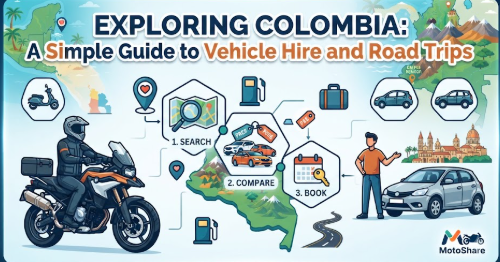
When planning a trip, users can enter their destination city and travel dates to see available listings nearby. The process generally involves three distinct stages:
- Searching: Browsing vehicles based on where you are arriving, when you need transport, and what vehicle type you want.
- Comparing: Looking closely at photos, technical specifications, prices, mileage rules, security deposits, and provider conditions.
- Confirming: Submitting a booking request and agreeing to the local provider's terms before picking up the vehicle.
By showing listings from verified local operators, the marketplace helps travellers make informed decisions without needing to navigate unfamiliar city streets just to find an open rental desk.
Why Different Journeys Call for Different Vehicles
Every traveller moves differently, and no single vehicle fits every trip in Colombia:
- Solo travellers and backpackers often choose lightweight bikes to navigate tight city streets and save on fuel.
- Urban commuters and short-stay visitors frequently lean toward twist-and-go scooters for quick trips between cafes, hotels, and co-working spots.
- Experienced riders often seek out dedicated dual-sport or touring bikes capable of climbing steep mountain passes and handling unpaved roads.
- Couples and families carrying large suitcases usually prefer a car so everyone stays dry and comfortable during sudden tropical rainstorms.
- Business travellers moving between meetings in major financial districts typically pick compact cars for safe, reliable transport with trunk security.
The right choice comes down to your personal riding experience, your budget, how much luggage you carry, the local weather, and the specific terrain along your route.
Choosing the Right Vehicle for Your Colombian Trip
Selecting the best vehicle requires understanding vehicle types, regional road conditions, and local rental expectations.
Understanding Different Motorcycle Types
Motorcycles come in various shapes and sizes, each built for a specific purpose:
- Commuter Motorcycles: Small, lightweight bikes (often 125cc to 150cc). They are affordable, simple to handle, and sip very little fuel. They work well for city streets and gentle paved roads, though they lack high-speed passing power.
- Scooters: Fully automatic two-wheelers with step-through frames. They are easy to ride in stop-and-go city traffic, offer under-seat storage for small bags, and require no manual clutch work.
- Sport and Naked Bikes: Designed with agile handling and responsive engines. They are fun on paved twisty roads, but their forward-leaning riding position can cause fatigue during long multi-day journeys.
- Touring and Premium Bikes: Built with comfortable upright seats, large windscreens, and mounts for luggage boxes. They excel on long highway stretches, though their heavier weight requires confidence at low speeds.
- Dual-Sport and Adventure Bikes: Taller motorcycles equipped with long-travel suspension, higher ground clearance, and durable dual-purpose tyres.
A bigger engine is not always better. Heavy 1200cc touring bikes can feel tiring on narrow, bumpy mountain switchbacks, whereas an agile 250cc or 300cc dual-sport often navigates rough patches and heavy traffic with much less effort.
Two-Wheeled Rentals Across Colombian Cities
City environments in Colombia vary significantly in altitude, layout, and climate. When arranging a motorcycle rental Colombia travellers should consider the unique character of each base city:
- Medellín: Nestled in the Aburrá Valley, the "City of Eternal Spring" features pleasant temperatures, steep hillside neighbourhoods, and winding roads leading up into nearby mountain towns like Guatapé and Jardín. Arranging a motorcycle rental Medellin provides an efficient way to climb out of valley traffic and enjoy mountain curves, provided you feel comfortable starting on steep inclines.
- Bogotá: Situated high on an Andean plateau at 2,600 metres above sea level, the capital is cool, often rainy, and known for dense traffic. Choosing a motorcycle rental Bogota helps riders navigate busy city corridors and access scenic highland roads toward Villa de Leyva, though warm, waterproof riding gear is essential due to chilly morning temperatures.
- Cartagena: Located on the Caribbean coast, Cartagena is warm, flat, and humid. Securing a motorcycle rental Cartagena gives you an open, breezy way to explore coastal boulevards, visit nearby fishing villages, or ride out toward the beaches of Baru, provided you stay hydrated and plan around hot midday sunshine.
Across all locations, always compare pickup spots, daily rates, minimum rental periods, and the security deposit requirements set by the local provider before locking in your reservation.
Deciding Between a Scooter and a Motorcycle
If you want two wheels, choosing between an automatic scooter and a manual motorcycle depends on where you plan to go.
When you need a quick, simple way to run errands or travel between neighbourhoods, picking a scooter rental Colombia offers simple twist-and-go operation, built-in storage under the seat, and great ease of use in heavy traffic. Scooters are ideal for flat coastal towns or relaxed city cruising.
However, smaller scooters have smaller wheels and limited ground clearance, making them less suitable for deep potholes, steep dirt inclines, or long highway journeys. If your itinerary involves climbing steep Andean roads or carrying heavy saddlebags over long distances, a geared motorcycle with larger wheels and more suspension travel provides greater stability and control.
How the Rental Process Works
Securing a rental through a modern marketplace removes much of the guesswork from trip planning. As you review listings, keep an eye on these essential details:
- Rental Duration & Pricing: Daily rates typically cover a 24-hour cycle. Many providers offer lower daily rates for weekly or monthly hires.
- Security Deposits: Most providers place a temporary hold on a major credit card to cover potential damages, tolls, or unpaid fuel. Always check the required deposit amount beforehand so your card limit is sufficient.
- Insurance and Deductibles: Understand what coverage is included. Check whether the policy covers third-party liability, collision damage, or theft, and always verify your financial deductible limit in case of an accident.
- Mileage Allowances: Some rentals come with unlimited daily kilometres, while others enforce a daily limit with an extra charge per additional kilometre.
- Fuel Policies: The standard rule is "same-to-same" (return the vehicle with the exact amount of fuel it had at pickup).
- Pickup and Return Times: Confirm operating hours and whether after-hours drop-offs or airport handovers are supported.
- Required Documents: Most providers require an original passport, a valid national or international driver's licence corresponding to the vehicle class, and an accepted credit card matching the renter's name.
Preparing for an Off-Pavement Ride
Colombia's rugged geography makes it a premier destination for dual-sport exploration. When booking an adventure motorcycle rental Colombia riders should prepare carefully for changing terrain:
- Protective Gear: Always ride with a certified helmet, an abrasion-resistant jacket with impact armour, sturdy riding gloves, reinforced boots that protect your ankles, and knee guards.
- Navigation Tools: Mobile phone reception can drop in remote mountain passes. Download offline navigation maps before departing each morning.
- Fuel Planning: Mountain climbs burn through fuel faster than flat highways. Fill up whenever your tank drops below half, especially before heading into rural areas where fuel stations may be far apart.
- Daily Bike Inspections: Check tyre pressures, engine oil levels, brake lever firmness, and drive chain tension every morning before rolling out.
- Emergency Supplies: Carry a compact tyre-puncture repair kit, a portable 12-volt air pump, basic hand tools, and a small first-aid kit.
Planning Longer Routes and Group Journeys
A self-guided motorcycle road trip Colombia provides deep travel memories, taking you through coffee farms, cloud forests, and historic colonial squares. When sketching your route, keep your daily distances realistic. Covering 150 kilometres across winding mountain passes can easily take four to six hours due to curves, slow-moving cargo trucks, and road maintenance.
For riders who prefer organized support, joining motorcycle tours Colombia can simplify route planning. Guided tours often provide experienced lead riders, pre-arranged hotel stops, luggage transport vehicles, and mechanical support. Before booking any organized tour, verify the route difficulty, the group size, the safety support provided, and what expenses are included in the package.
When Renting an Automobile Makes More Sense
Two wheels offer great agility, but choosing a car rental Colombia is often the more practical choice for many travellers. An automobile protects you from tropical downpours, provides air-conditioned comfort, and secures valuable bags out of sight in a locked boot.
Car options generally fall into three practical groups:
- Hatchbacks: Compact and economical. Easy to park in tight city spaces and ideal for couples with light luggage.
- Sedans: Offer a smooth highway ride, comfortable seating for four adults, and a fully enclosed trunk to keep luggage hidden.
- SUVs and Crossovers: Feature higher ground clearance, sturdy suspension, and ample cargo space. They are well-suited for family vacations or driving on bumpy rural roads leading to countryside fincas.
For travellers landing in the Antioquia region, selecting a car rental Medellin allows groups to take day trips to nearby reservoir towns and heritage villages comfortably without worrying about rain or carrying heavy backpacks on their shoulders.
Understanding Driving Regulations and Road Requirements
Before driving or riding in Colombia, make sure you understand basic legal requirements:
- Licence Validity: Foreign visitors on a tourist visa can generally drive using their valid home-country driver's licence for the duration of their permitted stay, provided the licence clearly covers the vehicle category being operated. An International Driving Permit (IDP) is recommended to avoid language misunderstandings during routine road checks.
- Mandatory Insurance (SOAT): Every motorized vehicle in Colombia must carry Seguro Obligatorio de Accidentes de Tránsito (SOAT), which covers emergency medical expenses for road users in an accident. Always verify that the physical or digital SOAT paper provided by the rental company is current.
- Local Traffic Restrictions: Many Colombian cities enforce peak-hour vehicle restrictions known locally as Pico y Placa. This system restricts vehicles from driving during specific hours on certain weekdays based on the final digit of the vehicle's licence plate. Always ask your rental provider how local restrictions apply to your vehicle on your travel dates.
The Value of Thoughtful Preparation
Rushing into a rental often leads to unnecessary stress. Taking time to inspect the vehicle thoroughly, take clear photos and videos of existing scratches before leaving the provider's lot, and check the weather forecast will ensure a smooth journey. Knowing what your rental contract includes keeps you focused on the scenery rather than worrying about paperwork.
A Simple Five-Step Vehicle Rental Process
- Identify Your Trip Details: Determine your destination, travel dates, passenger count, luggage volume, and preferred vehicle style.
- Compare Available Listings: Browse marketplace options to compare vehicle specifications, daily rates, and provider pickup locations.
- Review Provider Conditions: Read the fine print regarding insurance deductibles, fuel rules, mileage caps, and credit card security deposits.
- Prepare Your Documentation: Verify your passport, driver's licence validity, credit card available balance, and essential safety gear.
- Inspect and Confirm: Check the vehicle carefully during handover, record pre-existing marks, verify emergency contacts, and confirm the return details.
Common Rental Mistakes to Avoid
- Overestimating Riding Experience: Renting a tall, heavy motorcycle when you only have experience on small city scooters can make riding on steep mountain switchbacks difficult and stressful.
- Focusing Solely on the Base Price: The lowest daily advertised rate might exclude basic insurance, have high security deposits, or enforce strict mileage limits that add extra costs later.
- Skipping the Handover Inspection: Failing to photograph existing scratches, chipped mirrors, or tyre wear before riding away can lead to disputes when returning the vehicle.
- Underestimating Travel Times: Mountain roads in Colombia feature sharp turns, sudden elevation shifts, and heavy truck traffic. Planning 400 kilometres in a single day often leads to exhaustion.
- Overlooking Plate Restrictions: Driving during restricted Pico y Placa hours in major cities can result in municipal fines and vehicle impoundment.
Planning a Trip: A Believable Journey
Consider Julian, an experienced rider from Canada planning a seven-day trip through Colombia's coffee region.
Initially, Julian looked at renting an economy hatchback because it offered protection from daily afternoon rain. However, after mapping his desired route, he noticed that several scenic viewpoints and historic farms sat along unpaved gravel tracks with steep inclines.
Julian realized that an economy hatchback might struggle with low ground clearance on rutted dirt tracks, while a large 1200cc adventure bike would be heavy and awkward to manoeuvre if he encountered muddy stretches.
Instead of choosing the cheapest car or the biggest motorcycle, he selected a nimble 300cc dual-sport motorcycle with spoked wheels and dual-sport tyres. He verified that his rental provider included third-party liability coverage, arranged a secure top-box for his waterproof luggage, and confirmed the deposit requirement. By matching his vehicle choice to the actual terrain, Julian enjoyed a comfortable, reliable ride across both paved highways and backcountry lanes.
Frequently Asked Questions
Can I drive or ride in Colombia with my home country's driver's licence?
Yes. Tourists visiting Colombia can legally operate a rental vehicle using a valid home country driver's licence for the permitted period of their tourist stay, as long as the licence explicitly covers that class of vehicle. Carrying an International Driving Permit alongside your original licence is advisable to prevent language confusion during routine roadside checks.
What is the minimum age to rent a vehicle in Colombia?
Most commercial rental companies require drivers and riders to be at least 21 years old. Some providers rent to individuals aged 18 to 20 with an additional young-driver surcharge or higher security deposit, while certain high-performance vehicles may require the renter to be 25 or older.
What should I check during the vehicle pickup inspection?
Inspect the bodywork, mirrors, lights, horn, tyre tread depth, and brake pads. Take a clear, continuous walk-around video and close-up photos of all pre-existing scratches, scuffs, or dents in the presence of the rental representative, and ensure all existing marks are marked on the inspection sheet.
How does fuel payment work for rental vehicles?
Vehicles are almost always provided with a specific fuel level and must be returned with that same amount. If you return the vehicle with less fuel, the provider will charge you for the missing fuel plus an administrative refuelling fee.
Are tolls common on Colombian roads?
Yes, Colombia has well-maintained national toll booths (peajes) along major highways between cities. While cars and larger vehicles must pay tolls at these stations, motorcycles are typically exempt from paying tolls on most public national highways, using a dedicated bypass lane on the right side of the toll plaza.
Conclusion
Exploring Colombia by road gives you direct access to stunning landscapes, warm local cultures, and unforgettable routes. The key to a successful journey lies in matching your vehicle to your route, reading rental terms carefully, and keeping your daily travel plans realistic. MotoShare helps simplify this preparation by bringing local rental providers together into one convenient marketplace, allowing you to discover, compare, and arrange the right vehicle for your journey with confidence.



Top comments (0)