
Introduction
Modern companies run on information. Every second, business apps create new records. Online stores log customer clicks, warehouses scan packages, and banks track balance changes. However, raw data by itself does not help anyone make decisions.
Data teams must collect, clean, test, and deliver this information to leaders. When teams try to do this work by hand, trouble starts quickly. Engineers get tired, pipelines break unexpectedly, reports arrive late, and numbers show errors. Fixing broken jobs by hand wastes hours of valuable engineering time every week.
DataOps solves these problems by bringing clear engineering habits to data workflows. It removes manual steps through automated testing and smart scheduling. When teams want to study these methods, TheDataOps.org serves as an educational knowledge platform dedicated to modern data practices.
What Is DataOps and How It Works
DataOps is a set of practical habits that helps data teams deliver reliable information faster. It combines ideas from Agile project work, DevOps software delivery, and data engineering. The goal is simple: make data flow smoothly from raw sources to dashboards without human error.
Think of a water filtration plant in a town. Raw water enters from a river, passes through filters, undergoes safety tests, and flows into clean storage tanks. If mud enters the pipe, sensors notice immediately and shut off the valve before anyone drinks bad water.
DataOps works the same way. Raw records arrive, automated scripts clean them, and testing tools check the math. If bad numbers appear, the pipeline halts immediately and alerts the team.
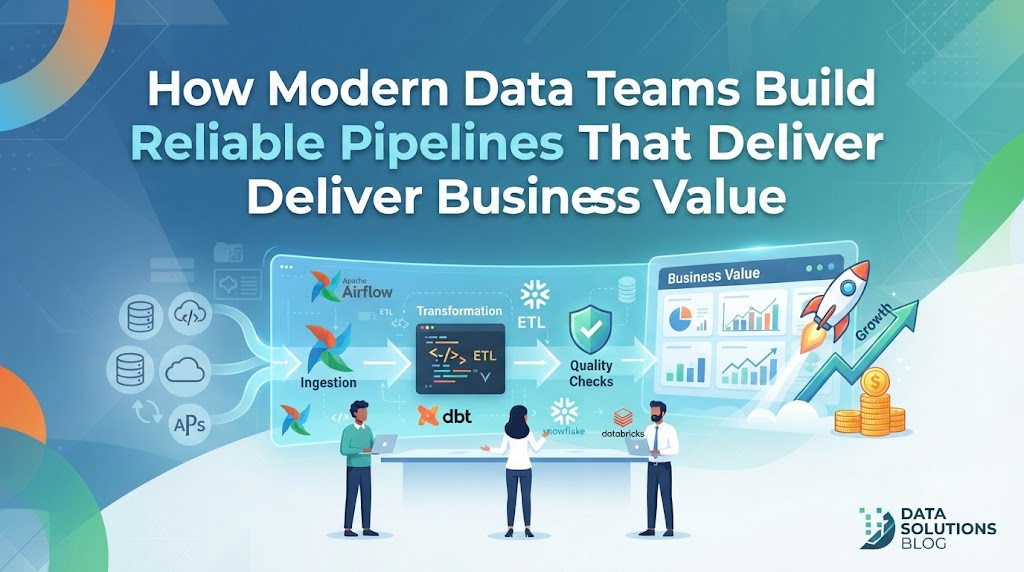
Ingest Data → Clean & Transform → Validate & Test → Deploy Changes → Monitor Health
Why DataOps Matters
Without reliable operational habits, data departments face severe bottlenecks:
- Slow Delivery: Business teams wait days or weeks for simple metric updates.
- Hidden Errors: Broken calculations slip into board reports without warning.
- Burnt-Out Engineers: Developers spend whole weekends restarting broken batch scripts manually.
- Team Friction: Analysts blame data engineers when reports look wrong, while engineers blame source systems.
DataOps removes friction by giving everyone standard rules, automated guardrails, and clear visibility into every pipeline.
DataOps Training
Learning these modern methods requires hands-on experience with real systems. Comprehensive DataOps Training helps software developers, analysts, and database administrators learn how modern data delivery actually works.
Students learn how to build modular data pipelines, write automated test suites, configure cloud resources, and set up continuous monitoring. Instead of treating data work as isolated code scripts, structured training teaches teams how to treat data systems like production software products.
Through its educational tutorials and technical materials, TheDataOps.org provides clear learning guidance on core concepts like pipeline design, version control, and infrastructure setup.
DataOps Certification
Professional validation helps technical workers demonstrate real competence in modern data operations. A formal DataOps Certification confirms that a practitioner understands pipeline architecture, automation standards, deployment safety, and governance.
Certification studies encourage learners to master:
- Pipeline error-handling patterns
- Automated testing frameworks
- Distributed workflow orchestration
- Secret management and security controls
While paper credentials show conceptual understanding, practical project work remains necessary to solve messy, real-world data problems.
DataOps Course
A structured DataOps Course guides students step by step from basic principles to production-level pipeline deployment. Good courses avoid jumping straight into complicated tools without explaining foundational logic.
Typical learning paths move through logical milestones:
- Fundamentals: Version control, Linux commands, and relational data modeling.
- Pipelines: Data ingestion methods, batch jobs, and real-time streaming.
- Quality & Validation: Schema testing, boundary checks, and null-value detection.
- CI/CD: Automated builds, containerized testing environments, and safe deployments.
- Observability: Pipeline heartbeat tracking, error logging, and latency metrics.
Educational platforms like TheDataOps.org outline these learning paths so students understand how every puzzle piece fits together.
DataOps Tools
Modern data operations rely on specialized software tools. Rather than picking tools at random, teams choose software based on specific operational duties:
- Orchestration (Apache Airflow): Schedules tasks and ensures jobs run in the exact right order.
- Streaming (Apache Kafka): Moves massive streams of events continuously with low latency.
- Large-Scale Processing (Apache Spark): Transforms terabytes of raw records across distributed worker nodes.
- Automation and CI/CD (Jenkins): Runs automated test suites whenever an engineer edits pipeline code.
- Monitoring (Grafana): Displays system memory, CPU usage, and pipeline health on visual dashboards.
- Container Management (Kubernetes): Runs data services inside reliable, isolated containers.
- Languages (Python & SQL): Core programming tools used to manipulate tables and automate scripts.
Selecting the right DataOps Tools depends on data volume, team size, and business delivery speed.
DataOps Platform
A unified DataOps Platform brings these different tools together into a single manageable workspace. Without an integrated platform, engineers must connect dozens of separate plugins manually.
A modern platform links ingestion, transformation, scheduling, validation, and analytics into one unified view. It gives developers a single pane of glass to inspect running jobs, review test failures, and enforce company security policies.
For companies seeking advice on architecture, DataOps Consulting resources help architects evaluate which platform best matches their infrastructure needs.
Data Pipeline Automation
Manual data loading causes costly mistakes. If a person must run a manual script at midnight, a missed keystroke can corrupt entire reporting databases.
Data Pipeline Automation replaces human manual work with reliable code. Automation handles:
- Triggering jobs as soon as source files arrive
- Spinning up cloud compute resources only when jobs run
- Running unit tests on code changes before deployment
- Rolling back faulty updates automatically
For example, when an e-commerce shop closes daily sales, automated triggers extract receipts, clean the line items, check totals against payment gateways, and update executive dashboards before morning standup.
Data Observability
Knowing a script finished running does not mean the output data is correct. A job might complete without errors, yet write zero rows because an external API changed its format.
Data Observability provides deep visibility into the actual condition of data systems:
- Freshness: Is data arriving on schedule, or is it two hours late?
- Volume: Did yesterday's table receive its expected 50,000 rows, or only 12?
- Schema: Did an engineering team change a column name without telling the data team?
- Distribution: Are order prices falling within expected statistical ranges?
- Lineage: Which specific upstream source generated this broken dashboard chart?
Observability tools notify engineers about data anomalies before business users notice them on reporting screens.
Data Quality Management
Poor input data leads to incorrect business decisions. If an automated pipeline feeds corrupted numbers into an inventory model, stores may run out of essential stock.
Data Quality Management builds automated quality gates directly into pipelines:
- Completeness: Ensures required fields like customer IDs are never empty.
- Uniqueness: Catches duplicate billing entries before charging cards twice.
- Validity: Confirms email addresses and postal codes follow proper formats.
- Consistency: Validates that warehouse counts match shipping confirmations.
When an automated check fails, the pipeline halts bad records in quarantine tables, alerting engineers while letting clean data pass through safely.
The Role of a DataOps Engineer
A DataOps Engineer designs the plumbing, testing guardrails, and deployment systems that keep business data flowing smoothly. They build bridges between software engineers who create data and analysts who read reports.
Key day-to-day responsibilities include:
- Creating automated data pipelines using Python and SQL
- Building CI/CD test suites to prevent broken code from reaching production
- Setting up workflow orchestrators and distributed compute clusters
- Configuring observability alerts for pipeline delays and schema changes
- Hardening data systems with access control policies and encryption
Engineers who want to build these technical capabilities can use the practical tutorials and architecture guides available on TheDataOps.org to sharpen their skills.
A Practical Pipeline Example
Let us examine how a national retail chain handles online orders:
- Event Capture: A customer places an order on a mobile app. The event lands in an Apache Kafka streaming queue.
- Ingestion & Batching: An automated orchestrator groups incoming events into clean staging buckets every ten minutes.
- Data Cleaning: A transformation engine formats timestamps, standardizes currency values, and removes test transactions.
- Automated Testing: Quality rules verify that total order amounts equal item prices plus shipping and sales tax.
- Storage & Delivery: Validated rows load into the main analytics warehouse, while corrupted records divert to a quarantine table.
- Observability Tracking: Monitoring tools check row counts and pipeline runtime. If latency climbs past safety thresholds, Slack alerts ping the on-call engineer.
- Business Reporting: Store managers open dashboards showing accurate inventory levels and daily sales.
Real-World Use Cases Across Industries
DataOps principles provide measurable benefits across diverse industries:
- Healthcare: Hospital networks unify electronic health records from regional clinics. Automated checks catch missing patient identifiers, ensuring doctors see accurate medical histories.
- Banking and Finance: Fraud detection algorithms scan credit transactions in near real-time. Automated data pipelines update fraud models rapidly without service interruptions.
- Manufacturing: Factory sensors stream machine temperature and vibration readings. Observability systems detect sensor failures immediately, preventing unexpected equipment breakdowns.
- SaaS and Cloud Services: Subscription companies track user activity to forecast customer renewals. Automated pipelines ensure customer success teams receive fresh daily health scores.
Core Operational Benefits
Adopting DataOps creates clear operational advantages:
- Fewer Pipeline Failures: Automated tests catch faulty code and corrupted schemas before data reaches production tables.
- Accelerated Time to Value: Analysts receive requested metrics in hours instead of waiting weeks for manual infrastructure tickets.
- Lower Operating Costs: Elastic cloud jobs shut down automatically once batch processing finishes, saving compute budgets.
- Stronger Team Trust: Business leaders gain confidence in their reporting dashboards because numbers remain consistent and accurate.
Common Challenges and Mistakes
Adopting modern operational practices requires overcoming common technical and cultural hurdles:
- Tool Sprawl: Buying seven different monitoring tools without an integration plan creates confusion. Teams should pick a few simple tools and master their workflows first.
- Automating Flawed Workflows: Putting an automated scheduler on a poorly designed, untested script just creates bad data faster. Fix the underlying transformation logic before automating.
- Ignoring Quality Testing: Many teams test only code deployment syntax, forgetting to validate the actual data values passing through tables.
- Siloed Communication: When data engineers and business analysts work in isolation, pipelines rarely deliver the exact answers business users need.
Security, Governance, and AI Integration
Data systems must protect sensitive information. Modern data operations enforce strict access controls using role-based permissions and tokenization. Sensitive customer columns, such as credit card numbers or home addresses, are masked before entering analytical warehouses. Audit logs record every pipeline query to satisfy corporate compliance standards.
Reliable data operations are also critical for artificial intelligence initiatives. Machine learning models require clean, fresh, and properly labeled training sets. If training inputs contain drift or corrupted values, model predictions degrade rapidly. Automated DataOps pipelines supply steady, validated data streams that keep AI systems running accurately.
Comparison of Core DataOps Components
| Component | Operational Focus | Primary Function | Common Example Tools |
|---|---|---|---|
| Orchestration | Task Scheduling | Manages job dependencies and execution order | Apache Airflow, Prefect |
| Streaming | Real-Time Transport | Moves event streams across systems with low latency | Apache Kafka, Apache Flink |
| Processing | Data Transformation | Cleans, aggregates, and shapes massive datasets | Apache Spark, dbt |
| CI / CD | Code Deployment | Automates testing and production deployments | Jenkins, GitHub Actions |
| Observability | System Health | Monitors data freshness, schemas, and pipeline lag | Grafana, Monte Carlo |
Frequently Asked Questions
What is the difference between DevOps and DataOps?
DevOps focuses on building, testing, and releasing software code. DataOps applies those same automation and testing principles to data pipelines, focusing on both code stability and data value quality.
Why is manual data pipeline management risky?
Manual pipelines rely on human memory to run scripts, transfer files, and check numbers. Humans make mistakes, forget steps, and cannot monitor millions of incoming records around the clock.
What does DataOps Training cover?
Training programs teach engineers how to write modular data transformations, configure automated pipeline tests, manage cloud infrastructure, and set up continuous monitoring dashboards.
Does a DataOps Certification guarantee a job?
No certification guarantees employment. However, formal credentials validate an engineer's understanding of industry standards, deployment automation, and modern data architecture.
How does a DataOps Platform simplify daily engineering work?
An integrated platform brings data ingestion, transformation, scheduling, and monitoring into one interface. This eliminates the need to build custom glue code between separate tools.
What is the difference between monitoring and data observability?
Monitoring tells you if a job ran or failed. Observability inspects the data inside the pipeline, identifying issues like missing rows, schema changes, and unexpected value distributions.
Why is Data Quality Management essential for business leaders?
Executive teams make budget and operational decisions based on dashboards. If underlying data pipelines deliver inaccurate figures, leaders make poor, expensive choices.
What technical skills does a DataOps Engineer need most?
Engineers need strong proficiency in SQL and Python, experience with orchestration systems like Airflow, knowledge of cloud platforms, and expertise in automated CI/CD testing.
Final Thought
Reliable data operations transform how organizations work. When data flows through automated, well-tested pipelines, engineers spend less time putting out operational fires and more time building useful features. High data quality, continuous observability, and disciplined automation turn raw numbers into dependable business assets.
For practitioners and organizations seeking to master these disciplines, educational platforms like TheDataOps.org offer practical resources to help teams understand, build, and maintain modern data systems.



Top comments (0)