
Introduction
You land in Bali at noon. Your hotel sits 40 minutes away. The taxi price makes you pause.
Now picture a different plan. You collect a scooter, tuck your bag under the seat, and ride out with the sea wind on your face. Nobody sets your route but you.
That choice sounds easy, but a few details matter. Which vehicle fits your trip? Which papers do you need? What should you check before you pay?
This guide answers those questions step by step. It starts with your trip, not the vehicle. MotoShare.id is an online marketplace for vehicle rentals in Indonesia. It helps travelers find local hosts. Use this guide to know what to ask when you search.
Why Rent a Motorcycle or Scooter in Indonesia?
Start with one question. How do you want your days to feel? If you want freedom, a scooter wins. You stop where you like and leave when you like.
Traffic is the first reason. Island roads clog fast near beaches and markets. A scooter glides past the slow lines. You spend more time at places and less time waiting.
Access is the second reason. The best spots often hide down small lanes. Tiny food stalls, hidden bays, and hill cafes rarely have parking for cars. A scooter fits almost anywhere.
Engine size is the part many people ignore. A 125cc scooter feels light and calm. A 155cc scooter climbs hills with more ease. A 250cc bike gives speed but needs strong skills.
Be honest about your riding level. Match the engine to what you can handle today. Do not pick power to impress your friends. A bike you control always beats a bike that controls you.
Choosing Your Ride: Scooters, Bikes, and Cars
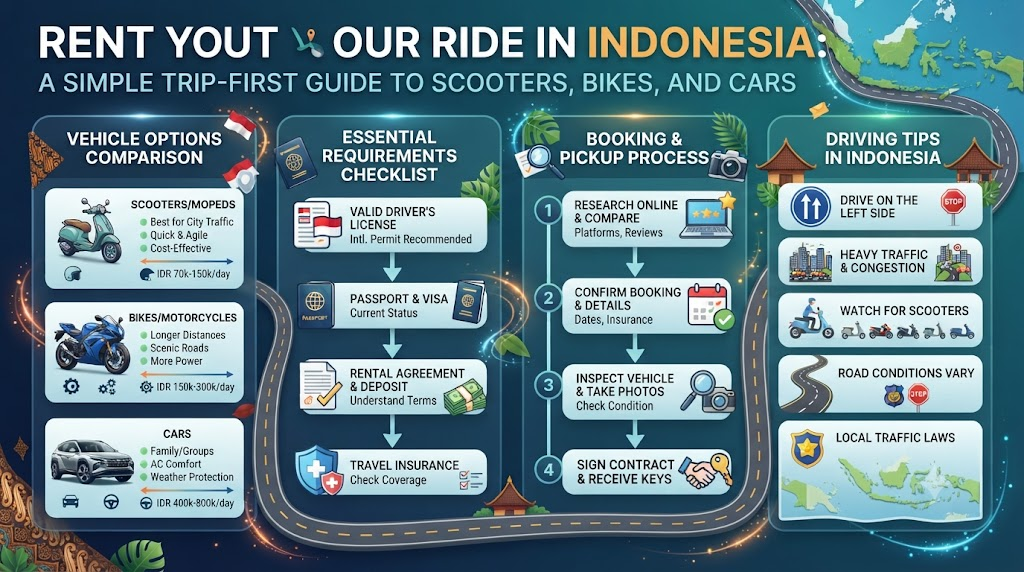
Do not pick a vehicle first. Pick your route first. Bali packs beach towns and narrow lanes close together. Jakarta stretches wide with heavy traffic. Lombok offers open roads and calm beaches. Once you know your route, your bags, and your skill, the right vehicle becomes clear. This table makes the match fast.
| Vehicle Type | Best Use | Rider Skill Needed | Luggage Space | Road Comfort |
|---|---|---|---|---|
| Automatic Scooter (110cc–155cc) | Short hops, beach towns, easy day trips | Beginner-friendly | Small; a day pack fits under the seat | Fair; you feel sun, wind, and rain |
| Commuter Motorcycle | Work trips, errands, city streets | Basic; you must shift gears | Small to medium; a rear rack helps | Fair; steady and light in traffic |
| Dual-Sport Adventure Bike | Dirt roads, volcano trails, long tours | Skilled; off-road practice needed | Medium; side bags work well | Good on rough roads; seat feels firm |
| Rental Car / MPV | Families, wet weather, long drives | Basic; a calm, careful driver | Large | High; cool, dry, and quiet |
Bags decide more than people expect. A scooter fits a day pack and not much more. Rain comes next. A poncho works on two wheels, but a car stays fully dry. Passengers matter as well. Two people on a small scooter slow it and cut your control. If you carry a passenger, pick a stronger engine or switch to a car.
Scooter Rental Bali and Sewa Motor Bali
Bali works best when you ride it in pieces. Scooter rental Bali is easy to find near every beach town. Travelers also type sewa motor Bali, which means "motorbike rental" in Indonesian. Both searches lead to the same simple choice.
Mornings in Canggu or Seminyak suit short beach hops. Distances are small, but roads fill up fast. A scooter lets you skip the line and park near the sand.
Afternoons call for Ubud. Rice fields frame the road, and the lanes twist. Go slowly. Watch for dogs, chickens, and small offering baskets.
Uluwatu is the tougher ride. Roads climb toward the cliffs, and some parts feel rough. Pick a scooter with good power and firm brakes. Take the last climbs with care.
Remember the basics. Traffic keeps to the left. Police checkpoints are common in tourist zones. Officers may ask for your license and the bike's papers. Keep both within reach.
A helmet is a must, for you and your passenger. For fuel, choose Pertamax at a real station. It is a higher-grade petrol. Roadside bottle stands may sell weak or mixed fuel.
Bike Rental Jakarta and Sewa Motor Jakarta
Jakarta is a work city first and a holiday spot second. It is huge, loud, and always moving. Cars crawl for long stretches while motorbikes keep going.
That explains why bike rental Jakarta suits business travelers and long-stay guests. Many people also search sewa motor Jakarta. A commuter motorcycle is a strong fit. It is light, thrifty with fuel, and easy to park.
Check your route before every trip. Toll highways ban two-wheelers on most stretches. Map apps can show the allowed roads. If you miss a turn, find the next safe exit instead of a toll ramp.
Rain changes everything here. Heavy showers hit often in the wet season. Pack a proper rain suit and shoe covers. Seal your phone and papers in a waterproof bag.
Ride with calm eyes. Local riders cut through tight gaps, but you do not have to copy them. Keep your distance and check your mirrors often.
Start early to dodge the worst rush hours. Park in marked spots and lock your helmet to the bike.
Scooter Rental Lombok and Island Hopping
Lombok moves at a slower beat than Bali. The roads are wider and the crowds are thinner. That makes it a kind place to build riding confidence. Scooter rental Lombok is easy to find around Kuta Lombok and Mataram.
The coast near Kuta Lombok is the star. Roads run past empty bays and green hills. Surfers love this area. Ask your host if a surf rack can go on the bike. Never add one without a clear yes.
Bike rental Indonesia follows a similar path on every island. You show your license, leave a deposit, and inspect the bike. Details differ by host, so confirm them first.
Slow roads still hide risks. Watch for loose sand, potholes, and cattle. Dusk comes fast, and street lights are rare. Plan to finish riding before dark.
Ferry harbors often have rental stands. Take a minute for safety checks there. Squeeze both brakes. Look at the tires and lights. Check the fuel. Ask if the bike may cross on a ferry, because some hosts forbid it. Get the answer in writing.
Adventure Motorcycle Rental Indonesia
Adventure bikes are not for everyone. A dual-sport motorcycle works on paved roads and on dirt. Three parts make it special. Long-travel suspension means deep springs that soak up bumps. Knobby tires have chunky blocks that bite into mud and gravel. High ground clearance lifts the engine away from rocks.
Adventure motorcycle rental Indonesia attracts riders who want trails, not just beaches. These bikes weigh more and cost more per day. Rent one only if you already ride off-road with confidence.
East Java gives you a classic route. The passes around Mount Bromo cross sandy plains and cool hills. Check park rules and entry needs before you ride. Weather can turn within an hour.
Flores and Sumatra suit patient travelers. Dirt tracks link villages, forests, and rice terraces. Some roads turn muddy in the wet season. Allow extra days and carry basic repair tools.
Motorcycle rental Indonesia also covers touring bikes with racks and side bags. Ask your host about spare parts. Learn where the next repair shop sits. Share your route with someone you trust.
Pre-Ride Vehicle Inspection Checklist
Think of this as a five-minute test drive for your eyes. Do it in daylight, with the host standing next to you. Touch each part and ask questions. A good host will not mind. A careful renter protects both sides. Use the table below as your script every time you pick up a vehicle. It takes only five minutes and can save your whole trip.
| Check Point | What to Look For | Why It Matters |
|---|---|---|
| Tires & Tread Grooves | Clear grooves, no cracks, firm air, even wear | Bald tires skid on wet roads |
| Hand & Foot Brakes | Strong grip, quick stop, no soft or loose feel | Weak brakes fail you in sudden traffic |
| Headlights & Turn Signals | Bright beam, blinking signals, glowing brake light | Other drivers must spot you at dusk and in rain |
| STNK Registration Card | Same plate number as the bike, valid tax date | Police may ask for it at any checkpoint |
| Mirrors & Horn | Clear glass that stays in place, loud horn | You must see behind you and warn others |
| Helmet Buckle & Strap | Solid clip, strong strap, snug fit | A weak strap fails when you need it most |
Hold the STNK paper in your hands. The STNK is the vehicle's registration and tax card. Match the plate number on the paper with the plate on the bike. Then walk around the vehicle and photograph each side. Take close shots of scratches, tires, and the fuel gauge. Send the photos to the host by message for a clear record.
Planning a Safe Motorcycle Road Trip in Indonesia
A road trip works best with a loose plan. Pick your start, your end, and a few stops. Book rooms ahead in busy months. Planning gives you more freedom, not less.
A motorcycle road trip Indonesia style means short riding days. Keep each day under 150 km on curvy island roads. Bends, hills, and village traffic eat time. Short days leave room for photos, food, and rest.
Ride only in daylight. After sunset, roads hide dogs, potholes, and trucks with weak lights. Aim to park by late afternoon. Let the sunset be a view, not a risk.
Prepare for sudden rain. Tropical showers often hit after lunch. Keep a poncho or rain suit in the seat box. Wrap your phone and papers in a waterproof bag.
Watch coastal corners for loose sand. Wind pushes sand onto the road at the bends. It acts like marbles under your tires. Slow down before the corner, not inside it.
Carry water, a small first-aid kit, and a power bank. Save your host's number in your phone. Refuel when the tank reaches half. Stations can sit far apart in rural areas. Take a short break every hour or so.
Self Drive Car Rental Indonesia and Family Travel
Two wheels are not always the best answer. Some trips need a roof, a seatbelt, and a trunk.
Take a car when you travel with young kids. They need shade, a safe seat, and snack breaks. Choose a car in the rainy season too. You stay dry, and so do your bags. Big loads like surfboards and large suitcases also fit better inside.
Self drive car rental Indonesia gives families full control of the day. You stop at waterfalls, temples, and food stalls on your own clock. Car rental Indonesia also costs less per person when four people share one vehicle.
Remember to drive on the left. The steering wheel sits on the right. Junctions and roundabouts feel odd at first. Practice on a quiet road before you join traffic.
Many toll roads use electronic toll cards, also called e-money cards. You tap the card at the gate. Cash is often not taken. Buy a card at a bank or convenience store and top it up.
Visitors need the right papers. Carry your home license, an International Driving Permit with a car category, and your passport. Locals hold a SIM A license for cars. Big cities mean tough traffic, and village roads can be tight for an MPV. Use a map app and give yourself extra time.
Finding Verified Rides Through MotoShare
Finding a good host should not feel like a gamble. MotoShare.id is an online marketplace built for this job. It links travelers with verified local rental partners in Bali, Jakarta, Lombok, and other places. You compare everything on one screen.
Begin with your location. Type the island or city you will visit. Then pick a vehicle type, such as a scooter, a bike, or a car.
Next, look at the daily price in IDR. Each listing shows the cost up front, so budgeting is easy. Read the notes on helmets, deposits, and fuel rules.
Then check the host ratings. Past riders leave honest reviews. A host with steady good scores is usually a safer choice. Look for comments about bike condition and friendly help.
Finally, book with zero added platform fees. You pay the listed rental price and nothing extra from the platform. Confirm your pickup time and place with the host. A good listing helps, but your own checks at pickup still matter most.
Real-Life Travel Scenarios
- The remote worker in Canggu: Nina rents an automatic 155cc scooter. She rides each day between two coworking spaces and the beach. She skips taxi waits and saves time. A rain poncho stays in the seat box, and she parks only in marked areas.
- The trail lover near Mount Batur: Raka books a dual-sport bike in Bali. He rides north around Mount Batur and across black volcanic sand. The knobby tires hold well on loose ground. He leaves early, carries extra water, and heads back before clouds thicken.
- The meeting-hopper in Jakarta: Dewi flies in for work and books a light commuter bike. She skips the morning jams and reaches each office on time. She avoids toll roads and follows side routes on her map app. A folded raincoat sits in the seat box.
- The family in central Bali: The Wijaya family of four books a self-drive seven-seater. They visit waterfalls and temples in cool, air-conditioned comfort. The kids nap in the back seat. Dad keeps left and parks at official lots near each site.
Common Mistakes to Avoid When Renting Vehicles in Indonesia
- Riding with no IDP or home license. Missing papers can bring fines and a refused insurance claim. Apply for an International Driving Permit with a motorcycle category before you travel. Carry it beside your home license on every ride.
- Skipping the chin strap. A loose helmet can fly off in a fall. Village lanes bring sudden dogs, potholes, and turning cars. Click the buckle each time you ride, and make sure the helmet sits snug.
- Wearing shorts and flip-flops. Falls scrape skin and break toes fast. Wear closed shoes, light long pants, and a thin jacket. Keep these in a small backpack so you can change after beach stops.
- Handing over your passport as a deposit. Some counters ask to keep it. That leaves you stranded if a dispute starts. Offer a refundable cash deposit instead, and keep a photo of your passport page.
- Ignoring the STNK paper. The STNK is the vehicle's tax registration card. Police may ask for it. Check the glove box or seat compartment before you leave. If the host keeps the original, ask for a clear copy.
- Driving onto a toll road. Many toll roads ban two-wheelers by law. A wrong turn can mean fines and fast, risky traffic. Study your route before you start, and pick non-toll roads. Stay off any ramp with a ban sign.
- Trusting wet roads. Afternoon downpours turn roads slick in minutes. Painted lines and drain covers get the worst. Slow down, brake early, and give extra space. Stop under cover if the rain grows too heavy.
- Forgetting proof of the bike's condition. Without photos, you may pay for scratches you did not cause. Record photos and a short video of every side before you pay the deposit. Capture the odometer, fuel level, and tires.
Simple Rental Booking Checklist
- Home license and IDP: The license must match the vehicle class. Make sure the IDP shows a motorcycle or car category.
- Original passport with entry stamp: Show it for ID, then take it back. Store a photo copy on your phone.
- IDR cash or approved payment: Prepare the refundable deposit. Ask for the amount and refund terms in writing.
- SNI-certified helmets: Choose clean, snug helmets that meet the national standard. Shake your head side to side. The helmet should not slide.
- Fuel level and photo proof: Agree on full-to-full or a matched needle level. Photograph the gauge and all sides of the vehicle.
Frequently Asked Questions
1. Can international tourists legally rent and ride a scooter in Bali with a foreign license?
A foreign license alone is not enough. Indonesian rules expect visitors to hold a valid home license plus an International Driving Permit for that vehicle type.
Some shops skip this check, but that does not make riding legal. Police can fine you at checkpoints. Insurance may also refuse a claim after a crash. Prepare your papers before you fly.
2. What is an International Driving Permit (IDP), and why is it needed in Indonesia?
An IDP is a small booklet that translates your home license into several languages. It never replaces your license. You carry both together.
Indonesia asks for it so police and rental hosts can read your driving rights. Apply in your home country before you travel. Check that it lists a motorcycle category if you plan to ride.
3. Which side of the road do motorists drive on in Indonesia?
Drivers in Indonesia keep to the left side of the road. Cars have the steering wheel on the right. Visitors from right-side countries need extra care.
Junctions and roundabouts feel odd at first. Repeat "stay left" in your head at each turn. Practice on a quiet street before you enter busy traffic.
4. What is the STNK document, and must it always stay with the rental vehicle?
The STNK is the official registration and tax card for a vehicle. It lists the plate number, the owner, and the tax status. Police may ask to see it at checkpoints.
The paper should travel with the vehicle, often in the glove box or seat compartment. Some hosts keep the original and give you a clear copy. Ask about this at pickup.
5. Are helmets mandatory for both riders and passengers across Indonesian roads?
Yes, both the rider and the passenger must wear helmets. Look for a helmet with the SNI mark, which shows it meets the national standard. Keep the strap buckled at all times.
Police check helmets often, and fines are common. A good helmet also protects your head in a fall. Children need a helmet that fits their head size well.
6. What type of fuel should I put into a rental scooter in Indonesia?
Most rental scooters run well on Pertamax, a higher-grade petrol sold at Pertamina stations. Ask your host which fuel suits the bike.
Fill up at real stations, not roadside bottle stands. Staff will pump the fuel for you. Keep small IDR notes handy for rural stations that may not take cards.
7. Can beginners learn to ride a scooter safely in Bali or Lombok?
Yes, if you take care. Bali and Lombok have quiet roads where you can practice. Pick an automatic scooter between 110cc and 125cc. Wear a helmet, closed shoes, and long pants.
Practice braking and turning in an empty car park first. Skip busy roads and night rides at the start. If you still feel unsure, choose a car or hire a driver.
8. Are motorcycles allowed to ride on highway toll roads in Indonesia?
Most toll roads in Indonesia ban motorcycles. This is common around Jakarta and on main highways. A few places have special lanes, but rules change from road to road.
Do not guess. Study your route before you leave and choose non-toll roads. A banned toll road can bring a fine and a real danger from fast traffic.
9. When should a traveler choose a rental car instead of a scooter in Indonesia?
Choose a car when you travel with young kids or older family members. Pick one in the rainy season too. Cars also suit long drives and heavy bags.
A car keeps you cool in the midday heat. It carries surfboards and big suitcases with ease. If your route has long highway stretches, four wheels feel safer and more comfortable.
10. Should tourists leave their original passport book as a rental deposit?
No. Never leave your original passport as a deposit. You need it for hotels, banks, and police checks. A host who holds it can leave you stuck in a dispute.
Offer a refundable cash deposit in IDR instead. Show your passport for ID, then take it back. Keep a photo copy on your phone as a backup.
11. What happens if a rental scooter gets a flat tire in a rural village?
Stay calm and move to a safe spot. Call your host and share your location. Many villages have a tambal ban, which is a small tire repair stall. Repairs there are quick and cheap.
Agree with your host on who pays before work starts. Keep the receipt. Take a photo of the damaged tire for your records.
12. Why should travelers use a verified platform like MotoShare to find rental vehicles?
A verified platform lowers your risk. MotoShare.id lists local rental partners with clear daily prices in IDR. You can read ratings and past rider feedback before you book.
That saves time and helps you avoid shady street deals. You see vehicle types, deposits, and host details in one place. You also book with zero added platform fees.
Conclusion
The right rental starts with your trip, not the vehicle. Look at your route, your riding skill, your bags, and the season. Then pick a light scooter for beach towns, a commuter bike for Jakarta, a dual-sport bike for trails, or a car for family days. Check your papers, inspect the vehicle, and save your photos before you ride off. Wear your helmet, keep left, and greet the villages you pass with respect. Indonesia rewards travelers who go slowly and stay curious. Ride safe, stay kind, and enjoy every kilometer.



Top comments (0)