
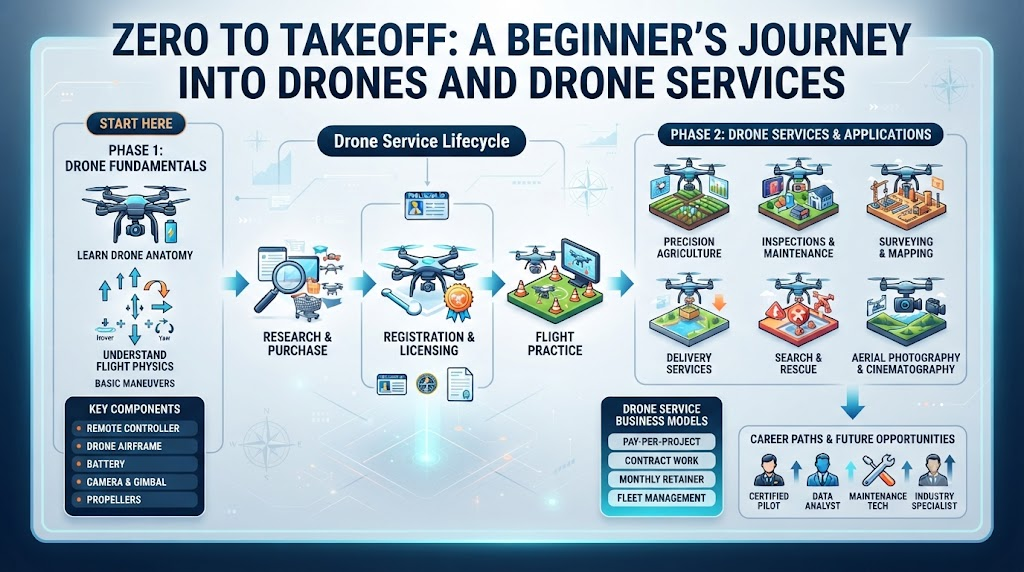
Picture yourself on day one. You want a drone, or maybe you need a pilot for a work task. You open a search page and see hundreds of results. Brands shout. Prices jump around. Words like gimbal and payload sound strange. Many first-timers freeze at this point. Business owners feel the same worry. They want licensed operators, but they cannot tell who is real. So choosing reliable gear and safe pilots feels overwhelming. This guide walks you through the journey step by step. You will start from zero and finish with a clear plan. Along the way, you will meet DronesBee.com, an open drone research and service platform. It helps new learners explore before they spend. Take a deep breath. Your journey starts now.
What Is DronesBee.com?
Think of DronesBee.com as a friendly guide at the start of your trail. It is an open discovery hub and drone directory. It does not pressure anyone to buy. Here is what you will find:
- A drone database with clear, simple facts
- A verified directory of pilots and service teams
- Plain guides on gear, rules, and common jobs
- Honest tips to help you plan before you spend
Picking the Right Flying Machine
Your first drone should teach you, not scare you. So start with three checks. First, look at flight time. Most beginner drones fly about 20 to 30 minutes. Second, look at the camera sensor. A larger sensor gives smoother, clearer pictures. Third, look at battery limits. Cold air and strong wind drain power fast. Next, read drone reviews from other first-time owners. They tell you what feels easy and what feels hard. Many lists claim to show the best drones. But the best drones for you match your skill and your goal. Pick the one you will enjoy flying.
Evaluating Hardware Side by Side
Now narrow your choices. Make a simple drone comparison with three models. Write each model on one line. Then add notes. Check payload capacity first. It tells you how much weight the drone can lift. Check range next. It shows how far the drone can fly from you. Then check obstacle sensing. Sensors help the drone stop before it hits a tree. Read the drone specifications slowly. Do not guess. Numbers show what a drone can really do. If a number is missing, ask the seller why.
Table 1: Drone Selection and Buying Factors
| Key Factor | What to Look For | Common Buying Trap | Why It Matters |
|---|---|---|---|
| Ease of Flying | Simple controls and auto-hover | Buying a pro drone too soon | Easy flights build skill and trust |
| Battery Time | 20 minutes or more, with swaps | Ignoring wind and cold | Short flights cut your work time |
| Camera Sensor | Large sensor and a steady gimbal | Judging by megapixels only | Clean images help you win clients |
| Safety Sensors | Sensors on front, back, and sides | Choosing a model with none | Sensors lower crash and repair costs |
| Signal Range | Strong link and return-home feature | Flying far before you practice | A weak link can lose your drone |
| Parts and Support | Spare parts and clear help | Skipping the repair plan | Quick repairs keep you flying |
Hiring Professional Help for High-Stakes Jobs
Every learner reaches a day when solo flying stops making sense. Some jobs carry too much risk. Roofs, power lines, and large land plots are good examples. Laws can also ask for a license. On those days, hire a pro. Trusted drone services give you a trained pilot, backup gear, and insurance. Now you need to find one. Many people type drone pilots near me and get a flood of results. So slow down. Check each pilot's license, sample work, and client notes. Then chat with two or three. A friendly call tells you a lot.
Capturing Stunning Media from Above
Say you sell homes, plan weddings, or run a small shop. A view from above can tell your story better than words. Aerial photography services show the full house and garden in one smooth clip. They capture a wedding venue in soft evening light. They also film shops, resorts, and events for ads. Before you book, ask for a sample reel. Watch the motion. Check the color. Make sure the shots feel steady and clean.
Mapping Land and Job Sites Accurately
Next, picture a builder with a big empty lot. Walking the land takes days. Drone surveying services finish the job in hours. The drone flies a set grid and takes hundreds of photos. Software joins them into a 3D map. GPS sensors tag each spot with an exact location. Land developers use these maps to plan roads and measure piles. Construction teams use them to track progress. Fewer errors mean fewer surprises.
Checking Hard-to-Reach Infrastructure Safely
Now think about a tall bridge or a steep roof. Climbing there puts workers at risk. Drone inspection services remove most of that danger. A pilot flies close to power lines, wind turbines, bridges, and building roofs. The camera zooms in on cracks and rust. Engineers study the photos from the ground. No one hangs from a rope. Repairs also start sooner.
Modern Farming from the Air
Imagine a farmer with a hundred acres. Walking every row would take days. Agricultural drone services give a fast view from above. The drone scouts crop health in minutes. Moisture maps show dry areas. Some drones spray only the weak spots. So the farmer saves water, time, and product. Problems get fixed before they grow.
Table 2: Commercial Drone Services Comparison
| Service Type | Typical Equipment | Main Business Benefit | Safety Check Needed |
|---|---|---|---|
| Aerial Photography | Camera drone with a smooth gimbal | Eye-catching visuals that attract clients | Permit and clear space away from crowds |
| Surveying | GPS drone and mapping software | Fast and exact measurements | Ground markers and data checks |
| Inspection | Zoom or heat camera drone | Safer checks and lower labor cost | Safe gap from live wires and moving blades |
| Agricultural | Crop camera or spray drone | Healthier crops with less waste | Wind check and local spray rules |
Real-Life Scenarios
- A café owner wants a short promo video of her new rooftop seating. She hires a licensed pilot with a steady camera drone. The sweeping clip draws new guests.
- A vineyard owner worries about dry rows on a hot hillside. He books a crop scouting flight. The moisture map shows the weak spots, so he waters only those rows.
- A property manager fears a leak in a wide warehouse roof. He sends a drone with a heat camera instead of a ladder crew. The images reveal the wet spot, and he fixes only that part.
8 Common Mistakes to Avoid
- Hiring an uninsured operator. Ask for proof of insurance before you sign. Skip anyone who cannot show it.
- Ignoring local flight permits. Look up the rules for your area first. Get every permit before takeoff.
- Buying beyond your skill level. Begin with a simple, stable model. Move up after you log many safe flights.
- Ignoring weather limits. Read the wind and rain forecast each morning. Reschedule when the sky looks risky.
- Skipping practice flights. Spend a few hours in an open field. Learn the controls before any real job.
- Forgetting extra costs. Add batteries, cases, and software fees to your plan. Then you see the true price.
- Booking a pilot with no sample work. Ask for a short portfolio. Pick a style that fits your goal.
- Missing software updates. Update the drone and app before each trip. Updates fix bugs and add safety tools.
The 7-Step Drone Planning Process
Follow this path each time: Goal → Search → Shortlist → Compare → Ask → Verify → Decide.
First, write your goal in one line. Next, search for drones and pilots that fit it. Then shortlist your top three. Compare them on price, gear, and skill. Ask each one the same clear questions. Verify licenses, insurance, and past work. Finally, decide and book.
Frequently Asked Questions
Question 1: What is DronesBee.com and who is it for?
DronesBee.com is an open hub for drone research and services. It suits beginners, business owners, and drone fans. You can browse a drone database, read plain guides, and explore a verified pilot directory. It does not push sales. Instead, it helps you learn the basics, compare choices, and talk to trusted pilots when you feel ready.
Question 2: Is a drone hard to learn for a beginner?
Not at all. Most modern drones hover on their own and fly home when the battery runs low. You still need practice. Start in an open field with no people nearby. Learn to take off, hover, turn, and land. Then move on to simple paths. Short, calm practice sessions build skill faster than long, rushed ones.
Question 3: How much practice do I need before a paid job?
Aim for at least ten hours of calm practice. Fly at different times of day and in light wind. Practice smooth turns and steady hovering. Also practice emergency landings. Paid work adds pressure, so you need strong habits first. Many places also require a license before you charge money. If you feel unsure, hire a licensed pilot and watch how the pro works.
Question 4: Where can I fly my drone?
Fly in open areas away from crowds, airports, and private land. Many places limit flights near schools, stadiums, and government buildings. Rules change by place, so check a local map or the aviation office first. Always get permission for private property. When in doubt, ask. A quick check beats a big fine.
Question 5: How do I read a drone spec sheet?
Start with the numbers that match your job. Check flight time, range, camera sensor, and weight limit. Then look at the sensors and the wind rating. Ignore fancy words. Look for tested numbers instead. If a figure seems too good, compare it with owner feedback. Real users often share what the spec sheet leaves out.
Question 6: How do I find drone pilots near me?
Use a verified directory and filter by city and job type. Read each profile with care. Look for a license, insurance, and sample work. Message your top three with the same short brief. Compare how fast and how clearly they reply. A pilot who explains the plan in simple words is usually easy to work with.
Question 7: How do drones help at weddings and events?
Drones capture wide views that ground cameras miss. They show the venue, the crowd, and the setting in one smooth shot. Many couples love a short flyover film. Still, safety matters. A trained pilot keeps a safe distance from guests and follows local rules. Ask the pilot to visit the venue first and plan each shot.
Question 8: How can a small landowner use a drone map?
A drone map shows slopes, water flow, and open space on one screen. Owners use it to plan a driveway, a pond, or a new building. The map also helps when you talk to builders. Everyone sees the same facts. That cuts guesswork and costly changes. Ask your pilot for a map that fits your planning software.
Question 9: What problems can drone inspections find?
Drones can find cracks, rust, loose bolts, missing tiles, and water damage. Heat cameras can also spot hidden leaks and hot spots in wires. The pilot then shares photos and notes. An engineer reviews them and plans the repairs. Early finds are cheaper to fix. So many owners schedule a check once a year and after big storms.
Question 10: How do small farms use drones?
Small farms use drones to check crops fast. A quick flight shows weak plants, dry zones, and pest damage. The farmer can then treat only those spots. This saves water and money. Many small farms hire a pilot for a few flights each season instead of buying a drone. That keeps costs low and results strong.
Question 11: What should I do if my drone loses signal?
Stay calm. Most drones start a return-to-home move when the link drops. Keep your eyes on the sky and wait. Do not panic. Before every flight, set the home point and the return height. Check that the height clears trees and buildings. If the drone does not return, note the last known spot and search safely.
Question 12: How do I care for drone batteries?
Store batteries in a cool, dry place at half charge. Never leave them in a hot car. Do not charge a hot battery. Let it cool first. Check for swelling or damage before each flight. Retire any puffy battery right away. Follow the maker's guide. Good care keeps batteries strong, and it lowers fire risk.
Conclusion
You have come a long way from day one. Now you know how to choose a drone, judge a pilot, and plan a safe project. Keep three ideas close. Safety comes first. Rules matter every time you fly. Smart research saves money and worry. Take small steps, and ask questions whenever you feel unsure. Nobody becomes an expert overnight. When you want a friendly place to keep learning, visit DronesBee.com for guides, drone facts, and verified pilots. Your first flight will feel exciting, and your tenth will feel natural. So make a plan, check the sky, and enjoy the view. You are ready to begin.



Top comments (0)