
Introduction
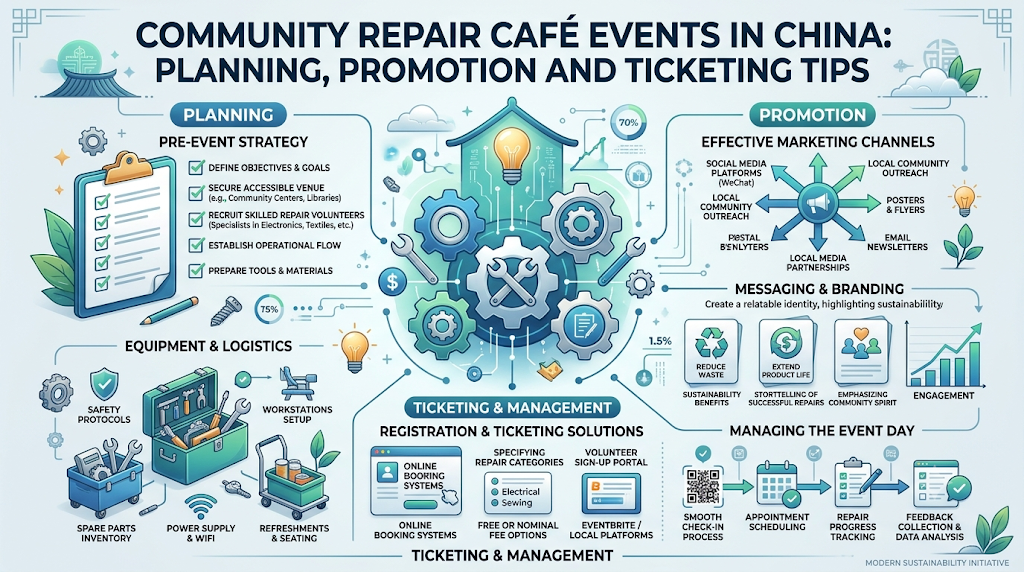
Community repair café events bring people together to fix everyday items, share useful skills, and reduce unnecessary waste. These gatherings create a friendly space where people can learn from others while giving damaged belongings another chance.
A repair café can focus on small household items, clothing, bicycles, or basic electronic devices. The event does not need a large venue or a complicated program. A clear purpose, skilled volunteers, suitable equipment, and good organization can create a valuable community experience.
Digital event platforms also make promotion easier. Organizers can use MyEventsNow to share event information and help interested people discover local activities. This article explains how to plan, promote, manage, and improve community repair events across China.
The Meaning of a Community Repair Café
A community repair café is a public gathering where people bring suitable damaged items and work with skilled volunteers to explore possible repairs. It combines practical learning with social interaction.
The main purpose is not to operate a commercial repair shop. Instead, the event encourages people to understand basic repairs, share knowledge, and make better use of everyday belongings.
Common activity areas include:
- Clothing repair and simple stitching.
- Bicycle checks and basic adjustments.
- Household item maintenance.
- Small appliance inspection by qualified people.
- Furniture care and simple fixes.
- Basic repair demonstrations.
- Discussions about reducing everyday waste.
Organizers should clearly explain which items the event can accept. Some repairs may need special tools, professional skills, or a suitable workspace. Visitors should never assume that every item can be repaired during the session.
The Community Value of Repair Events
Repair events can create benefits beyond the items being fixed. They give people a chance to meet neighbours, learn practical skills, and exchange knowledge.
A person who knows how to sew may help someone repair a bag. A bicycle enthusiast may demonstrate basic maintenance. A skilled technician may explain why a small appliance needs professional attention.
These shared experiences can help build stronger local connections.
The events can also support more thoughtful consumption. People may become more aware of product care, maintenance, and responsible disposal. Even when an item cannot be repaired, visitors can learn how to handle it more responsibly.
Organizers can connect this purpose with Upcoming Events in China by presenting repair activities alongside other community learning opportunities. A clear event description helps people understand that the gathering is about participation, not simply watching demonstrations.
Choosing a Suitable Repair Theme
A focused theme makes planning easier. It also helps visitors understand what they can bring.
A first event could focus on clothing and fabric repairs. Another gathering could cover bicycle care or household maintenance. A larger program may include several repair stations, provided that enough skilled volunteers are available.
Avoid accepting too many repair categories at the beginning. A narrow theme is easier to manage and allows the team to prepare the correct tools.
For example, a clothing repair session may need sewing machines, needles, thread, scissors, measuring tape, and work tables. A bicycle maintenance session may require a different setup and people with relevant experience.
The theme should also guide event promotion. A specific description is more useful than a general announcement about fixing everything.
Planning the Venue and Workstations
The venue should support practical activities. It needs enough space for visitors, volunteers, tools, and waiting areas.
Community centres, educational spaces, and suitable multipurpose rooms may be considered. Organizers should inspect the location before confirming it.
Important venue features include:
- Good lighting across workstations.
- Enough tables and comfortable seating.
- Clear walking paths.
- Suitable power access when required.
- A separate welcome and registration desk.
- A waiting area for visitors.
- Safe storage for tools and materials.
- Accessible entry and basic visitor facilities.
Each repair station should have a clear purpose. Signs can show the type of activity available at that table.
Keep sharp tools, electrical equipment, and other potentially dangerous materials under suitable supervision. Check venue conditions and relevant safety requirements with qualified people before the event.
Volunteer Recruitment and Skill Matching
Volunteers are central to a repair café. Their skills shape the activities that the organizer can offer.
Start by identifying the repair categories. Then recruit people with suitable experience in those areas. Local hobby groups, educational communities, professional networks, and neighbourhood associations may help spread the invitation.
Do not assign technical work only because someone is interested. Volunteers should have the skills needed for their assigned tasks.
A small organizing team can include these roles:
- Event coordinator: Manages the overall plan and schedule.
- Repair volunteers: Support approved repair activities.
- Welcome team: Greets visitors and explains the process.
- Registration team: Records visitor details when needed.
- Equipment coordinator: Checks tools and supplies.
- Floor support: Helps manage movement and waiting areas.
Give volunteers their duties before the event. A short briefing can explain the schedule, visitor flow, activity limits, and emergency contacts.
Managing Visitor Registration
Registration helps organizers estimate attendance and prepare enough workstations. It can also help the team understand which repair categories may receive the most interest.
An Event Registration Platform China search can help organizers explore digital options for managing event participation. The chosen system should match the size and needs of the gathering.
A simple registration process may collect:
- Visitor name.
- Contact details, when necessary.
- Preferred arrival time.
- General repair category.
- Accessibility requirements.
- Agreement to the event's participation terms.
Avoid collecting information that the event does not need. Explain how submitted details will be used and handled.
Organizers can also provide a walk-in process if the venue and team can support it. However, visitors should understand that walk-in participation may depend on available space and volunteer capacity.
Promoting the Event Across China
Promotion should explain the event in simple language. People need to know the purpose, location, schedule, accepted items, and participation process.
A useful event announcement should include:
- A clear event title.
- A short explanation of the repair activities.
- The intended audience.
- Confirmed date and venue details.
- Registration information.
- A list of accepted and excluded items.
- Contact details for event questions.
Organizers can share announcements through community groups, local social channels, newsletters, and relevant online platforms.
People searching for Online Event Ticket Booking China may also be interested in community workshops and practical learning sessions. A detailed event page can help them understand the activity before registering.
For location-based promotion, organizers may create separate information for Shanghai Events and Tickets and Beijing Events and Tickets when their programs are actually scheduled in those cities. The content should always match the confirmed venue and event details.
Reaching Different Audience Groups
Repair cafés can attract people with different interests. Some visitors want to repair personal belongings. Others want to learn a new skill or volunteer their time.
The promotional message should reflect these different reasons for attending.
For residents, highlight practical learning and local participation. For students, explain the opportunity to observe repair methods. For experienced hobbyists, invite them to share their knowledge. For businesses, explain how suitable support or equipment contributions could help the event.
Organizers should avoid promising successful repairs. The result depends on the item's condition, available parts, volunteer skills, and time.
A useful event listing can also connect repair activities with Upcoming Events in China searches. The listing should use an accurate category and a clear description rather than unrelated popular terms.
Equipment and Materials Preparation
Good preparation prevents unnecessary delays. Each workstation should have the tools and materials required for its specific activity.
A clothing station may need fabric samples, thread, needles, scissors, and sewing equipment. A bicycle station may need basic maintenance tools and a suitable stand. Other repair categories require different equipment.
Create an inventory before the event. Record which items are supplied by the venue, volunteers, partners, or organizers.
Use clear labels for shared tools. Keep equipment in its assigned area and return it after each activity.
Do not allow visitors to operate equipment without suitable guidance. Technical repairs should remain within the ability and experience of the people supervising them.
Using Digital Tools for Event Management
Digital tools can make communication and registration easier. Organizers may use an event page to publish details, update visitors, and share participation information.
An Event Ticketing Software China search can help teams understand available digital options. However, a small community gathering may not need a complex ticketing system.
The best setup depends on the event's size and format. A free workshop may only need registration. A larger gathering may need scheduled entry or separate sessions.
Before selecting a platform, check whether it supports the tasks the team actually needs. These may include:
- Event descriptions and categories.
- Registration forms.
- Attendee communication.
- Ticket types, when applicable.
- Event updates.
- Basic participation records.
A platform should make the process simpler. It should not add unnecessary steps for visitors or volunteers.
Handling Free and Paid Participation
Many community repair events use free entry. This can make practical learning more accessible.
Some organizers may have costs for venue use, materials, equipment, or refreshments. They should decide how these expenses will be managed before announcing the event.
If participation is paid, explain what the fee covers. Do not suggest that payment guarantees a successful repair.
For a free event, registration can still help control visitor numbers. A free ticket or booking confirmation may also help the team plan attendance.
People looking for Concert Tickets in China may use different booking habits from visitors attending a repair workshop. Organizers should select a registration approach that suits their own audience and activity.
Promoting Workshops in Shanghai and Beijing
Large cities have different neighbourhoods, communities, and venue options. Organizers should focus on the people who can realistically attend the event.
For a Shanghai gathering, location details should explain the venue's neighbourhood and transport information. A listing related to Shanghai Events and Tickets should describe the actual repair theme rather than using a broad city label alone.
For a Beijing program, the same principle applies. A page connected with Beijing Events and Tickets should provide accurate event information and clear visitor instructions.
Organizers may also work with educational groups, community spaces, and local businesses. These partnerships can help identify volunteers and suitable equipment.
Do not advertise a city event before its location and schedule are confirmed.
Reaching Business and Educational Communities
Repair cafés can also interest companies, schools, and educational groups. These organizations may support practical learning or community participation.
A business might contribute suitable materials or provide a skilled volunteer. An educational group might help students understand basic maintenance and responsible product use.
This activity is different from Business Conferences in China, which usually focus on professional discussions, industry knowledge, and business connections. A repair café should keep its practical community purpose clear.
Organizers can still promote both types of activities through a wider event discovery service. The event category and description should always reflect the actual program.
Listing a Repair Café Online
A complete event listing helps visitors make informed decisions. It should answer basic questions about participation without making people search through several announcements.
The listing can include the event purpose, accepted items, activity schedule, venue information, registration process, and contact details.
Organizers planning to List Your Event in China should prepare accurate information before publishing. Clear details reduce confusion and help visitors decide whether the event suits their needs.
A platform described as an Event Registration Platform China can be useful when organizers need a digital place to present event details and collect registrations.
MyEventsNow.cn can support event discovery by giving organizers a place to share information about activities. Visitors can explore listed opportunities and review the details supplied by organizers.
Ticketing and Attendance Management
Not every repair café needs paid tickets. However, some events may use limited registration slots to manage workstation capacity.
Organizers exploring Sell Event Tickets Online China should first decide whether payment is necessary. If the event is free, a registration-only process may be more suitable.
A digital ticketing system can help manage different entry options. For example, an organizer may offer separate sessions for clothing repairs and bicycle maintenance.
The event page should explain whether visitors need to bring an item, book a time, or simply attend. It should also state that repair outcomes depend on the condition of each item and the available expertise.
The following table compares common event management options.
| Option | What It Helps With | Who It Helps |
|---|---|---|
| Free registration | Estimates visitor interest | Small community teams |
| Timed entry | Spreads visitors across sessions | Busy repair events |
| Paid tickets | Collects an announced participation fee | Events with confirmed costs |
| Walk-in entry | Allows flexible attendance | Small gatherings with spare capacity |
| Volunteer sign-up | Organizes repair support | Event coordinators |
Common Mistakes to Avoid
1. Accepting every type of item
A broad promise can create problems. Publish a clear list of accepted repair categories.
2. Recruiting volunteers at the last minute
Technical activities need suitable people. Confirm volunteer availability early.
3. Choosing a venue without checking the layout
A room may look large but still lack suitable workstations or safe movement space.
4. Forgetting to prepare tools
Check each station before opening the event. Missing basic supplies can delay activities.
5. Making unrealistic repair promises
Some items may not be repairable. Explain that volunteers will assess each item within their skills.
6. Creating a confusing registration process
Ask only for useful information. Keep instructions short and easy to understand.
7. Ignoring visitor waiting time
People may need to wait for a suitable volunteer. Provide clear signs and a comfortable waiting area.
8. Giving unclear volunteer duties
Every team member should understand their responsibilities before visitors arrive.
9. Sharing incomplete event information
Missing venue or participation details can discourage visitors. Review the event page before publishing.
10. Skipping feedback after the event
Visitor and volunteer feedback can reveal problems that the organizing team may have missed.
A Simple Example of a Repair Café
Imagine a fictional community group planning a small repair café in Shanghai. The team chooses clothing repairs and basic bicycle maintenance as its main activities.
First, the organizers confirm a suitable venue. They then invite volunteers with relevant experience and prepare separate workstations.
The team creates an event page with the schedule, accepted items, and registration details. Visitors can review the information before deciding to attend.
The organizers share the listing through MyEventsNow.cn and suitable community channels. During the event, volunteers explain the process and guide visitors to the correct station.
Some items receive simple repairs. Others need more work or professional attention. The team records feedback and uses it to improve the next gathering.
Improving Future Repair Café Events
The first event can help organizers understand local interest. Attendance figures alone do not show the full experience.
Review the number of visitors, volunteer availability, waiting times, and activity demand. Check whether the venue supported the planned workstations.
Ask volunteers about equipment problems. Ask visitors whether the instructions were clear. Keep feedback short so people can respond easily.
The next event may need more volunteers in one category and fewer in another. It may also need different session times or clearer item acceptance rules.
Organizers can build a regular community program by making small improvements after each gathering.
How MyEventsNow Supports Event Discovery
MyEventsNow is an online event discovery and ticket-related information platform. It helps connect organizers, businesses, communities, and people interested in activities across China.
Organizers can use the platform to share event information and improve its visibility among people exploring local opportunities. Visitors can browse event details and discover activities that match their interests.
For teams planning a repair café, a clear listing can explain the theme, venue, schedule, and participation process. Organizers should keep all information accurate and update it when plans change.
The platform can also be relevant to broader searches such as Online Event Ticket Booking China and Event Ticketing Software China. The right approach depends on whether an event needs free registration, paid tickets, or simple information sharing.
Frequently Asked Questions
*1. What items are suitable for a community repair café?
*
Suitable items depend on the event theme and volunteer skills. Clothing, bicycles, and selected household belongings may be considered. Organizers should publish accepted categories in advance. Visitors should contact the team before bringing unusual, heavy, or potentially dangerous items.
*2. Can organizers promote a repair café through Upcoming Events in China searches?
*
Yes. A clear event listing can help interested people discover local activities. Use the correct category, location, and description. Include confirmed dates and participation details so visitors can understand the event before making plans.
*3. Are Shanghai Events and Tickets listings useful for repair workshops?
*
They can be useful when a repair workshop is actually taking place in Shanghai. The listing should explain the activity, venue, and registration process. Avoid using city-related terms when the event is not scheduled in that location.
*4. Can a repair café use Beijing Events and Tickets listings?
*
Yes, when the event is scheduled in Beijing. Organizers should provide accurate venue information and explain the repair categories. A clear description helps local residents understand whether the workshop is suitable for their needs.
*5. Do repair cafés need paid entry like Concert Tickets in China?
*
No. Many repair cafés use free registration or walk-in participation. Paid entry is a choice for organizers with clear event costs. Any fee should be explained before registration, and visitors should understand what participation includes.
*6. Can companies support repair cafés alongside Business Conferences in China?
*
Yes. Companies may support community activities through suitable volunteers, materials, or practical knowledge. However, a repair café has a different purpose from a business conference. Its communication should focus on learning, repair skills, and community participation.
*7. Is an Event Registration Platform China useful for small workshops?
*
It can help manage visitor details and estimate attendance. Small events may only need a simple registration form. Organizers should choose a process that matches their capacity and avoid collecting unnecessary personal information.
*8. How can organizers choose Event Ticketing Software China for a repair event?
*
Start by identifying the event's needs. Check registration, ticket types, attendee communication, and event update features. A small free gathering may not need advanced ticketing. The selected tool should make participation easier for visitors and organizers.
*9. How can organizers List Your Event in China through an online platform?
*
Prepare the event title, description, location, schedule, category, and registration details. Review all information before publishing. Organizers can explore MyEventsNow.cn as an event discovery option and should keep the listing updated if plans change.
*10. Is it possible to Sell Event Tickets Online China for a repair café?
*
Yes, if the organizer decides to charge an entry or participation fee. Explain the price and included activities clearly. If the gathering is free, use registration instead of paid tickets. Always communicate the event's terms before visitors sign up.
Final Thoughts
Community repair cafés make practical learning more social and accessible. They give people a place to exchange skills, understand basic maintenance, and use everyday belongings more thoughtfully.
A successful event starts with a focused theme, suitable volunteers, clear activity limits, and a well-planned venue. Simple registration and honest promotion can also improve the visitor experience.
Organizers should review their results and use feedback to improve future gatherings. MyEventsNow can help share event information with people exploring activities across China. Keep every listing accurate, explain participation terms clearly, and follow relevant venue guidance when planning the event.



Top comments (0)