
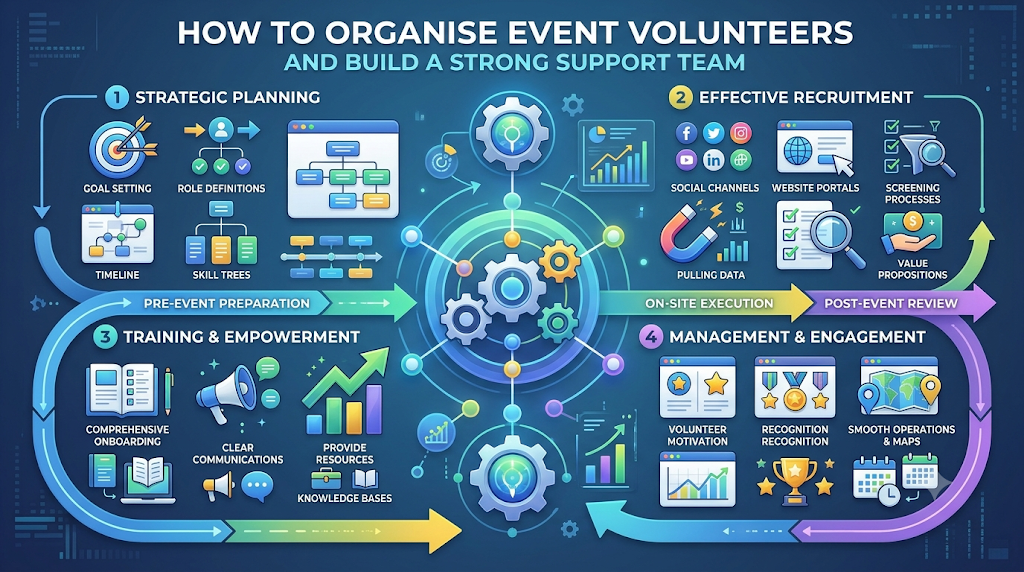
Introduction
Behind many well-organised events, there is a team of people working quietly to keep everything running smoothly. Volunteers often help welcome visitors, guide guests, manage information desks and support different activities. Their contribution can make a big difference to the overall event experience.
However, working with volunteers requires proper preparation. Organisers need to understand the work involved, assign suitable duties and make sure every team member knows what to do. Without clear instructions, even willing volunteers may feel confused during a busy event.
Whether you are arranging a local festival, charity programme, business exhibition or educational gathering, a prepared volunteer team can provide valuable support. MyEventsNow also aims to help people discover events and explore online event information, giving organisers another opportunity to connect with interested audiences.
Why Volunteers Are an Important Part of Event Organisation
Volunteers can support many activities that require time, attention and communication. Their presence can help organisers manage visitor needs while other team members focus on important event responsibilities.
For example, a volunteer at the entrance can guide visitors towards registration. Another person may help guests find the correct room, while someone else can provide basic information about the programme.
Volunteers can also bring local knowledge, practical skills and enthusiasm to an event. People who understand the community may be especially helpful when organising public gatherings.
Their contribution should never be treated as unlimited free labour. Volunteers need clear duties, suitable support and respect for the time they give.
Decide How Many Volunteers Your Event Needs
Before inviting people to join the team, organisers should understand the amount of work involved. The number of volunteers depends on the event's size, location, duration and planned activities.
A small workshop may need only a few people to welcome participants and assist the presenter. A larger public programme may require separate teams for entry, information, visitor guidance and activity support.
Start by listing the tasks that need human assistance. Then estimate how much time each task will take and how many people may be needed.
Consider these points:
- Number of expected visitors.
- Number of entrances and activity areas.
- Length of the event.
- Number of sessions or performances.
- Availability of paid staff.
- Special assistance that visitors may require.
Avoid assigning too many people to one area while leaving another area without enough support. A balanced team makes better use of everyone's time.
Create Clear Volunteer Roles Before Recruitment
People are more comfortable joining a team when they understand what is expected of them. A simple role description can explain the work, required skills and time commitment.
Instead of asking everyone to perform every task, divide responsibilities according to the needs of the event.
| Volunteer Role | Main Responsibility | Useful Skills |
|---|---|---|
| Welcome Assistant | Greet visitors and provide basic directions | Friendly communication |
| Registration Helper | Support the entry and check-in process | Attention to detail |
| Information Desk Assistant | Answer general visitor questions | Clear communication |
| Room Coordinator | Help manage session areas | Organisation |
| Activity Assistant | Support planned event activities | Teamwork |
| Visitor Support Helper | Guide visitors who need assistance | Patience and awareness |
These roles can be adjusted according to the event. Some volunteers may handle more than one responsibility when the tasks are simple and do not overlap.
Find Volunteers Through Suitable Channels
Once the roles are ready, organisers can begin looking for people who may be interested in helping.
Local educational institutions, community groups, clubs and voluntary organisations can be useful places to share opportunities. Organisers may also use their own social media pages and event communication channels.
The recruitment message should explain the event's purpose and the kind of support required. Include the location, expected working hours, age requirements if applicable and the process for expressing interest.
Do not describe a demanding role as a simple task just to attract more people. Honest information helps volunteers decide whether the opportunity suits them.
Select People According to Their Interests and Abilities
Not every volunteer will have the same experience. Some may be confident speaking with visitors, while others may prefer organising materials or helping behind the scenes.
A short conversation can help organisers understand a person's interests, availability and relevant abilities.
For roles involving public interaction, clear communication and patience may be important. For registration support, careful handling of information may be more useful.
Selection should also consider the time people can genuinely commit. A person who can only attend for part of the day may still be valuable if their duties are planned accordingly.
Provide Training Before the Event
Giving volunteers a list of duties is not enough. They should understand how to perform those duties and whom to contact when they need help.
Training does not always require a long classroom session. A short briefing, demonstration or written instruction sheet may be suitable for a smaller event.
Training should cover:
- The event's purpose and basic schedule.
- Volunteer duties and work locations.
- Important contact people.
- Visitor communication guidelines.
- Entry and exit arrangements.
- What to do when a problem occurs.
- Rules about handling personal information.
For example, a registration helper should know how to guide visitors through the check-in process. They should also know what to do if a visitor's name is missing from the list.
Practical examples make instructions easier to understand.
Prepare a Volunteer Schedule With Realistic Shifts
Volunteers should not be expected to work continuously without suitable breaks. Long periods of standing, speaking or guiding visitors can become tiring.
Organisers can divide the day into shifts. This helps ensure that important areas remain covered while team members get time to rest.
A simple schedule should include the volunteer's name, assigned role, reporting time, shift duration and break period.
It should also mention any handover requirements. When one person replaces another, important information should be passed on clearly.
If a volunteer is responsible for an information desk, for example, the next person should know about any programme changes or visitor enquiries that still need attention.
Give Every Volunteer a Reliable Contact Person
Volunteers should know who is responsible for answering their questions. Without a clear reporting structure, small problems can take longer to solve.
Organisers can appoint team leaders for different areas. A team leader can communicate updates, check whether duties are being completed and pass important concerns to the main event coordinator.
This structure also prevents volunteers from receiving conflicting instructions from several people.
For a larger programme, a contact list may include the names and roles of key organisers. Volunteers should receive this information before their shifts begin.
Explain Visitor Safety and Professional Behaviour
Volunteers may be among the first people visitors meet. Their behaviour can influence how welcoming and organised an event feels.
They should understand basic safety instructions and know how to report a concern. However, volunteers should not be asked to perform specialist tasks without suitable training or authority.
Organisers should explain how to respond if a visitor becomes unwell, an area becomes crowded or someone reports a lost item.
Other important expectations include:
- Treat visitors politely and fairly.
- Avoid sharing private attendee information.
- Do not make promises without approval.
- Follow venue instructions.
- Report problems to the assigned coordinator.
- Avoid arguments with visitors.
- Ask for help when a situation is beyond their role.
Clear boundaries protect both volunteers and attendees.
Keep Communication Simple During the Event
An event can change quickly. A session may move to another room, an entrance may become busy or a scheduled activity may be delayed.
Volunteers need a reliable way to receive updates. Organisers can use a designated team communication channel, direct contact with team leaders or short in-person briefings.
Important changes should be shared with everyone whose duties may be affected.
Avoid sending unnecessary messages during busy periods. Updates should be short, clear and focused on actions people need to take.
It is also useful to confirm that volunteers have received important instructions rather than assuming everyone has seen them.
Give Volunteers the Materials They Need
A volunteer may understand their role but still struggle if the required materials are missing.
Before the event, organisers should prepare items according to each assignment. These may include identification badges, printed schedules, maps, stationery, information sheets or suitable equipment.
The team should also know where to collect and return these materials.
For example, registration assistants may need access to approved attendee lists, while room coordinators may need session schedules and room labels.
Personal information should only be shared with authorised people who need it for their assigned work. Organisers should avoid unnecessary copies of attendee records.
Use Online Event Promotion to Support Volunteer Planning
Volunteer recruitment and event promotion are connected. When people can understand what an event offers, they may be more interested in attending or supporting it.
Organisers can share clear descriptions, programme details and relevant participation information through online channels.
People searching for Upcoming Events in the UK may be interested in community activities, public programmes or professional gatherings. Others may search for Events Near Me to find opportunities in their local area.
Visitors may also look for Events in London or specific entertainment options such as Concert Tickets UK. Clear event information helps them understand what is available.
MyEventsNow.uk aims to provide an online space where people can explore event information and discover different activities.
Organisers may also consider Online Event Ticket Booking UK options when they want to make booking information easier to access.
Choose Digital Tools That Match Your Requirements
Some events can be managed with simple spreadsheets and shared documents. Others may require more organised systems for registration, scheduling and communication.
An Event Ticketing Platform UK can support ticket-related activities, depending on its available features. Event Registration Software UK may be useful when organisers need to manage attendee details.
Teams planning larger programmes may also explore Event Management Software UK for coordinating different tasks.
The best choice depends on the number of visitors, the complexity of the programme and the available budget.
Before selecting a tool, check whether it is easy to use and whether the team can manage it properly. A complicated system may create extra work instead of reducing it.
Organisers who want to List Your Event Online UK or Sell Event Tickets Online UK should also check the platform's available listing and booking services.
Recognise the Work Volunteers Contribute
People often volunteer because they want to support a cause, learn something new or become part of a community. Their contribution deserves genuine appreciation.
Organisers can thank volunteers during the closing session, provide certificates where appropriate or send a personal message after the event.
Recognition should be sincere rather than treated as a formality. A simple thank-you that mentions someone's contribution can make them feel valued.
If volunteers want to share feedback, organisers should give them an opportunity to do so. Their experience may reveal practical issues that the main planning team did not notice.
Learn From the Volunteer Team After the Event
Once the event ends, organisers should review how the volunteer arrangements worked.
Ask whether the duties were clear, whether the shifts were manageable and whether volunteers received enough support.
Some useful questions include:
- Were all assigned roles necessary?
- Did volunteers receive instructions on time?
- Were materials available when needed?
- Did team leaders respond to questions?
- Were shift changes handled properly?
- Which tasks created the most confusion?
Use the answers to improve future recruitment and training. Keep useful instructions for the next event, but update them whenever the venue, programme or responsibilities change.
Frequently Asked Questions
1. What is the main responsibility of an event volunteer?
An event volunteer supports specific activities assigned by the organiser. Duties may include welcoming visitors, providing directions, helping with registration or assisting with programme activities. Volunteers should follow their role instructions and contact the assigned coordinator when they need guidance.
2. Can someone volunteer without previous event experience?
Yes. Many basic event duties can be learned through simple instructions and practical training. Organisers should match tasks with each person's abilities and provide suitable guidance. Roles involving specialist responsibilities may require additional qualifications or trained staff.
3. How early should volunteer recruitment begin?
Recruitment should begin early enough to allow organisers to select suitable people, confirm availability and provide training. The exact timing depends on the size and complexity of the event. Larger programmes generally need more preparation than small gatherings.
4. Should volunteers receive a written agreement?
A written volunteer agreement can explain duties, expected hours, conduct guidelines and important event arrangements. It helps everyone understand the role before work begins. Organisers should also explain any relevant policies and local requirements that apply to the activity.
5. How can organisers manage volunteers who cancel at the last minute?
A backup contact list and flexible shift plan can help organisers respond to unexpected cancellations. Important roles should have suitable cover where possible. Team leaders should be informed about replacement arrangements so that duties remain clear.
6. What should a volunteer do if a visitor asks a difficult question?
The volunteer should avoid guessing or providing information they cannot confirm. They can politely direct the visitor to the appropriate organiser or information desk. This helps prevent incorrect instructions and ensures that visitors receive reliable answers.
7. Can volunteers help with event registration?
Yes, volunteers may assist with basic check-in activities when organisers provide suitable training and access. They should follow the approved process and protect attendee information. Any payment-related or sensitive tasks should only be handled by authorised people.
8. How can organisers keep volunteers motivated during a long event?
Clear duties, reasonable breaks, helpful team leaders and respectful communication can support motivation. Volunteers should also have access to drinking water and any necessary facilities. Recognising their work helps create a positive team environment.
9. Should every volunteer receive the same training?
Basic event information should be shared with everyone, but role-specific training should match individual responsibilities. A registration helper needs different instructions from a room coordinator. This approach makes training more relevant and easier to understand.
10. What is the best way to thank event volunteers?
A genuine thank-you message is a good starting point. Organisers may also offer certificates, appreciation notes or opportunities to participate in future programmes. Recognition should reflect the volunteer's actual contribution and should never be used as a substitute for proper support.
Final Thoughts
A reliable volunteer team can make event organisation more manageable and create a welcoming experience for visitors. However, good teamwork does not happen automatically. It requires clear roles, suitable training, realistic schedules and regular communication.
Organisers should treat volunteers with respect, provide the materials they need and make sure they know where to find help. After the event, their feedback can reveal useful ways to improve future arrangements.
MyEventsNow aims to connect people with event information and online discovery opportunities. With thoughtful planning and a prepared support team, organisers can create events that are easier to manage and more enjoyable to attend.



Top comments (0)