
Introduction
An Apple device can make daily tasks easier. Yet small problems can interrupt an ordinary day. A new iPhone may need careful setup. A Mac may require an update before work. Wi-Fi trouble can also stop important tasks. Many users feel unsure about these settings. They may also worry about losing personal files. Clear guidance can make each step easier. It helps users understand their choices before making changes. Osnivo supports this learning with practical Apple device information. It helps people explore setup, updates, security, and common problems. This article explains useful steps in simple language. It also shows how to check important details safely. Users can build better habits without rushing device changes.
What Is Apple Device Care?
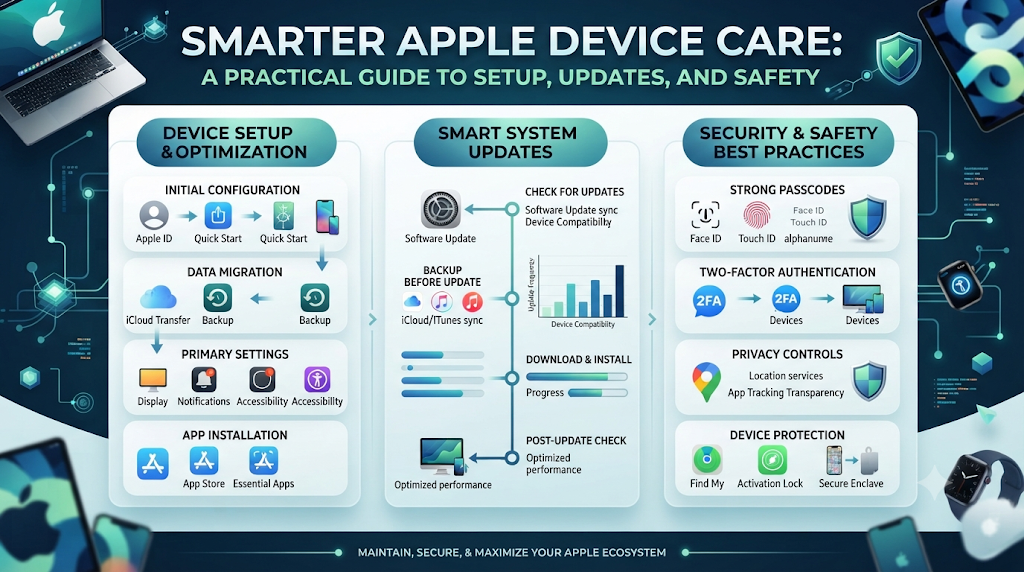
Apple device care means managing devices with attention. It includes setup, updates, backups, privacy, and repair preparation. It also means learning how device settings work.
An Apple ecosystem can include several products. These may include an iPhone, iPad, Mac, or Apple Watch. Some users also own Apple TV or Apple Vision Pro. Each product has its own settings and support needs.
Good device care starts with correct information. Users should check their model and software version first. This helps them avoid unsuitable steps. It also makes support instructions easier to follow.
Osnivo.com brings Apple learning topics together. It is an independent Apple ecosystem knowledge platform. It is not owned, operated, or endorsed by Apple.
Why Careful Device Management Matters
A well-managed device can support daily work. It can also help protect personal information. Simple habits often prevent avoidable problems.
For example, regular backups protect important files. Software checks help users understand available updates. Privacy reviews show which apps can access certain data.
Device management also helps when problems appear. Users can check basic settings before seeking support. They can prepare useful details about their device. This makes troubleshooting more organised.
However, users should not change settings without understanding them. Some actions can remove saved information. A backup should come before major changes.
Check iPhone Support Before Making Changes
Understanding iOS 27 compatible iPhones
The phrase iOS 27 compatible iPhones refers to models that support this software version. Compatibility depends on Apple's published requirements. Users should confirm their exact model before planning an update.
Start by finding the iPhone model name. Then check Apple's official compatibility information. Do not rely only on an old device list. Support details can change with software releases.
The iOS 27 compatible iPhones check should come first. It helps users avoid expecting unsupported features. It also gives a clear starting point for update planning.
Osnivo.com offers a Compatibility Checker for guidance. Users can enter their device details where supported. They should confirm the result with Apple's official information.
Check Mac Support With Care
Understanding macOS 27 compatible Macs
The phrase macOS 27 compatible Macs means Mac models supported by that release. Different Mac models may have different support limits. The exact model matters when checking compatibility.
Find the Mac model information first. Then compare it with Apple's official support details. Read the release information before starting an installation.
Checking macOS 27 compatible Macs can prevent confusion. It helps users understand whether their computer meets requirements. It also supports better planning for work files and apps.
Osnivo.com provides model-focused learning resources. Its guidance can help users understand compatibility terms. Always confirm important requirements through Apple.
Plan an Update Before Installing It
How to decide: should I update to iOS 27
The question should I update to iOS 27 needs careful review. The right choice depends on the device and its needs. Users should not make this decision from headlines alone.
First, check whether the model supports the release. Next, read Apple's published release notes. These explain the changes Apple has documented.
Check important apps before updating. Some work tools may need their own updates. Make sure enough device storage is available. Back up important information before beginning.
Choose a suitable time for the process. Avoid starting when the phone is needed urgently. Keep the device charged and connected as instructed.
When asking should I update to iOS 27, review these points together. Consider your work needs and available support information. Osnivo.com's Should I Update tool can help organise this review. It uses published security information and release notes as guidance.
Prepare a New iPhone With Confidence
how to set up a new iPhone
The phrase how to set up a new iPhone describes the first steps for a new device. Setup usually includes language, network, and account choices. Users can also restore information or begin with a fresh setup.
Begin by turning on the iPhone. Follow the displayed language and region choices. Connect to a trusted Wi-Fi network when asked. Sign in with an Apple Account if appropriate.
Choose a transfer or restore option carefully. Users who prefer a clean start can set up the device without restoring everything. Review security options during setup.
The how to set up a new iPhone process may look different across versions. Read each screen before selecting an option. Menu names can differ by version and device.
Osnivo.com offers a Setup Companion for general guidance. Its iPhone settings guide can also help users understand later adjustments.
Move Information From Android
How to transfer data from Android to iPhone
The phrase transfer data from Android to iPhone means moving selected information between devices. The available transfer options depend on the devices and software. Not every item may move in the same way.
Prepare both phones before starting. Charge them and check available storage. Keep important files backed up. Use a stable network when the transfer method requires it.
Apple provides an official migration option. Follow its current instructions for supported data types. Review the results after the transfer finishes.
When planning to transfer data from Android to iPhone, check which information matters most. Contacts, photos, and messages may need separate review. Some apps and settings may require fresh setup.
Osnivo.com's Migration Planner can help users prepare. It also covers other device migration situations. Treat its guidance as a planning aid, not a guarantee.
Keep a Reliable Copy of Important Information
how to back up an iPhone
The phrase how to back up an iPhone means creating a separate copy of device information. A backup can help when a phone is lost or replaced. It can also help before certain changes.
Users can review cloud backup options. They can also use a computer-based backup method. Each choice has different storage and access needs.
Cloud backups can run automatically when requirements are met. Computer backups give users another way to keep a copy. Check Apple's instructions for encryption and backup details.
Before deciding how to back up an iPhone, review available storage. Check when the last successful backup took place. Do not assume that a backup completed without checking.
Osnivo.com offers backup planning guidance. Its resources can help users create a regular backup routine. Keep important copies protected from unauthorised access.
Make Everyday iPhone Settings Easier
Using an iPhone settings guide
An iPhone settings guide explains common controls in clear steps. It can help users find network, display, and notification options. It can also explain privacy and accessibility controls.
Start with the settings you use most. Review Wi-Fi and mobile network choices. Adjust screen brightness and text size. Set notification preferences for useful alerts.
Check app permissions from time to time. Some apps may request access they do not need. Review location, camera, microphone, and photo access.
An iPhone settings guide should match the device version. Avoid following instructions for a different model without checking. Menu names can differ by version and device.
Osnivo.com provides a Settings Pathfinder. It helps users understand where common controls may be found. Its guidance can make settings easier to explore.
Build Stronger Protection Habits
Your iPhone security settings checklist
An iPhone security settings checklist is a simple review of important protection controls. It helps users check account safety and device privacy. It should be reviewed after major changes.
Use this iPhone security settings checklist as a starting point:
- Create a strong device passcode.
- Use Face ID or Touch ID when available.
- Protect the Apple Account with a strong password.
- Enable two-factor authentication where available.
- Review location access for each app.
- Check camera and microphone permissions.
- Keep supported software up to date.
- Turn on Find My where suitable.
- Review trusted devices linked to the account.
- Keep backup access secure.
An iPhone security settings checklist cannot prevent every risk. It can help users notice weak settings. Features may vary by device and software version.
Osnivo.com offers security checkups and practical checklists. Users can use them to review settings step by step. Confirm sensitive account changes through Apple's official instructions.
Troubleshoot Wireless Connection Problems
What to do when iPhone won’t connect to Wi-Fi
The phrase iPhone won’t connect to Wi-Fi describes a common connection issue. The cause may involve the phone or router. A network service problem may also affect access.
Try these steps in order:
- Check whether other devices can use the same network.
- Confirm that the router has power.
- Turn Wi-Fi off and on again.
- Restart the iPhone.
- Restart the router if you can access it safely.
- Forget the network and join it again.
- Check for available software updates.
- Contact the internet provider if other devices also fail.
If iPhone won’t connect to Wi-Fi after these checks, consider network settings. Resetting network settings removes saved Wi-Fi networks and passwords. Review Apple's instructions before choosing this step.
Do not erase the whole phone for a simple connection issue. Back up important information before major changes. These steps often help. Results vary.
If iPhone won’t connect to Wi-Fi on several networks, seek further help. Apple Support can review device-related problems. Your internet provider can check service or router issues.
Capture Screen Activity on a Mac
QuickTime Player screen recording Mac
The phrase QuickTime Player screen recording Mac refers to capturing Mac screen activity through QuickTime Player. This can help users create demonstrations. It can also help explain a software problem.
Open QuickTime Player and review its recording options. Choose the screen recording option when available. Check the microphone choice before recording audio.
Mac computers also offer built-in screen capture tools. Their controls may differ from QuickTime Player. Check privacy permissions if screen or audio capture fails.
Before using QuickTime Player screen recording Mac, plan what appears on screen. Close private documents and messages. Avoid recording passwords or personal account details.
Menu names can differ by version and device. Osnivo.com explains common Mac tasks in simple steps. Check current Apple instructions if a control looks different.
How Osnivo.com Tools Support Apple Users
Osnivo.com brings practical Apple learning into one place. It is an independent Apple ecosystem knowledge platform. It does not represent Apple or provide official Apple support.
Its resources cover several everyday needs:
- Compatibility Checker helps users review device support.
- Should I Update tool helps organise update decisions.
- Settings Pathfinder explains common settings.
- Version Compare helps users review software versions.
- Setup Companion supports device preparation.
- Update Readiness Checker helps users review update needs.
- Migration Planner helps plan device transfers.
- Osnivo Fix offers guidance for common problems.
- Security checkups help users review protection habits.
- Backup planning supports safer device changes.
The platform also covers iPhone, iPad, Mac, Apple Watch, Apple TV, and Apple Vision Pro. Its information draws on official Apple documentation. It organises learning by device model and software version.
My Osnivo can save device models and software versions. This can make later guidance more relevant. Browser-based use does not require an account.
The blog shares tutorials and clear explanations. The community forum gives users space for practical questions. Osnivo.com resources offer guidance, not guaranteed fixes. Confirm important steps through Apple's official pages.
Quick Reference Table
| Topic | What to Check | Who It Helps |
|---|---|---|
| iOS 27 compatible iPhones | Exact model and Apple's support details | iPhone owners |
| macOS 27 compatible Macs | Mac model and release requirements | Mac users |
| should I update to iOS 27 | Release notes, apps, storage, and backup | Update planners |
| how to set up a new iPhone | Network, account, and setup choices | New iPhone owners |
| transfer data from Android to iPhone | Storage, backup, and supported data | Switching users |
| how to back up an iPhone | Backup method and last backup status | All iPhone users |
| iPhone settings guide | Network, privacy, and display controls | Everyday users |
| iPhone security settings checklist | Passcode, account, and app permissions | Privacy-conscious users |
| iPhone won’t connect to Wi-Fi | Router, network, and device settings | Users with connection trouble |
| QuickTime Player screen recording Mac | Recording options and privacy access | Mac users |
Common Mistakes Apple Users Should Avoid
Small mistakes can create larger problems later. A careful approach can reduce avoidable trouble.
1. Updating without checking support: Always confirm the exact device model first. The iOS 27 compatible iPhones check should use official information. The macOS 27 compatible Macs check matters too.
2. Ignoring release notes: Do not judge an update by its name. Review the details before deciding should I update to iOS 27.
3. Rushing the first setup: Read each screen during how to set up a new iPhone. Account and transfer choices deserve attention.
4. Starting migration without preparation: Before you transfer data from Android to iPhone, check storage and backups. Keep both devices ready.
5. Assuming backups are current: Learn how to back up an iPhone and check the latest backup status. A failed backup may leave gaps.
6. Changing too many settings together: Use an iPhone settings guide and make one change at a time. This makes unexpected results easier to trace.
7. Skipping privacy reviews: Follow an iPhone security settings checklist regularly. Remove app permissions that no longer make sense.
8. Resetting network settings too soon: If iPhone won’t connect to Wi-Fi, try simpler checks first. A reset removes saved network details.
9. Recording private information: Before QuickTime Player screen recording Mac, hide personal content. Check the recording before sharing it.
A Simple Example: A Museum Conservator
Consider a fictional museum conservator named Dev. He uses an iPhone to document object condition reports. He also keeps work notes on a Mac.
Dev receives a replacement iPhone before a busy exhibition period. He first learns how to set up a new iPhone. Then he checks the transfer choices for his old device.
He reviews how to back up an iPhone before moving files. He also uses an iPhone settings guide to adjust notifications. This keeps non-urgent alerts from interrupting his work.
Later, Dev finds that iPhone won’t connect to Wi-Fi at the museum. He checks the router and tests another device. He then follows basic troubleshooting steps.
Dev uses QuickTime Player screen recording Mac to capture a software issue. Before sharing the recording, he checks for private information. He also reviews the iPhone security settings checklist.
When he considers a software update, he asks should I update to iOS 27 only after reviewing official information. He checks iOS 27 compatible iPhones and macOS 27 compatible Macs through current support details.
Dev uses Osnivo to organise his learning. Its tools help him plan rather than guess. He confirms important instructions through Apple.
How Osnivo Can Help With Everyday Questions
Apple users often need help with small tasks. They may want to compare versions or find settings. They may also need a clear troubleshooting plan.
Osnivo.com brings these topics together. Its tools support compatibility checks, setup planning, migration, backups, and security reviews. Its learning resources cover common iPhone and Mac tasks.
Users can explore articles before changing device settings. They can also use the community forum to discuss practical questions. My Osnivo can keep selected device details for future guidance.
Osnivo is independent from Apple. It does not replace Apple Support or authorised repair services. Use official Apple information for important decisions. This is especially important before erasing data or changing account security.
Frequently Asked Questions
1. How can I check whether my iPhone model supports a new release?
Find your exact model name in the device settings. Then compare it with Apple's published compatibility details. The iOS 27 compatible iPhones information should come from an official source. Osnivo.com can help explain model terms, but Apple remains the source for final support confirmation.
2. What should I review before changing my software version?
Check the release notes and device support first. Review your important apps and available storage. Make a backup before starting. When considering should I update to iOS 27, also think about your daily schedule. Osnivo.com's update guidance can help organise these checks.
3. Can I prepare an iPhone before giving it to another family member?
Yes, but plan the handover carefully. Save any information you need first. Review account access and follow Apple's official preparation steps. If the phone is being transferred to another person, remove personal information only after confirming your backup and following the correct instructions.
4. What should I check before moving from Android?
Check storage, battery levels, and important files first. Review Apple's current transfer instructions before starting. The process to transfer data from Android to iPhone may not move every item. Check important contacts, photos, and documents after the transfer. Set up missing apps separately when needed.
5. How can I tell whether my backup is useful?
Check the date and status of your latest backup. Confirm that the method includes the information you need. Learning how to back up an iPhone also means knowing where the backup is stored. Keep access details safe and review backup settings after major changes.
6. Why do some apps request access to my photos or location?
Apps may need certain permissions for specific features. However, access should match the task. Use an iPhone settings guide to find permission controls. Review each app's access and change settings when needed. Some app features may stop working if required permissions are disabled.
7. What should I do if a Wi-Fi problem returns often?
Record when the problem happens and which networks are affected. Check whether other devices have the same issue. If iPhone won’t connect to Wi-Fi across several networks, contact Apple Support. Your internet provider can also check router or service problems.
8. Can I record a Mac screen without sharing private details?
Yes. Close private windows and hide personal notifications first. Check recording permissions and review the finished file. QuickTime Player screen recording Mac can capture visible screen activity. Do not include passwords, payment details, or private messages in a recording.
9. How often should I review device protection settings?
Review them after major account or device changes. Also check them when installing unfamiliar apps. An iPhone security settings checklist can make the review easier. Check passcodes, account protection, app permissions, and Find My. Feature availability depends on your device and software.
10. What kind of help can users find on Osnivo.com?
Osnivo offers independent Apple learning resources. Users can explore setup help, compatibility guidance, update planning, and troubleshooting topics. Its tools and community forum support practical learning. It is not Apple, and it cannot guarantee a repair. Confirm important instructions through official Apple information.
Final Thoughts
Good Apple device care begins with clear information. Check compatibility before planning software changes. Prepare backups before moving or erasing important data. Review privacy settings as your needs change. Use simple troubleshooting steps before trying major resets. Keep device details available when seeking help. Osnivo can support this process through tools, tutorials, and community discussions. It offers an independent place to learn about Apple products. Still, official Apple information should guide important decisions. Careful habits can make devices easier to manage. They can also help users feel more confident each day.



Top comments (0)