
Introduction
Finding reliable company information is an important part of stock market research. India has businesses from many industries and different market segments. Each listed company has its own financial records, exchange details, and business activities. New investors may find it difficult to organise all this information.
Online discussions can make research easier, but they also need careful review. Some posts explain useful concepts. Others may contain personal opinions or incomplete details. Readers need a place where company discovery and learning can work together.
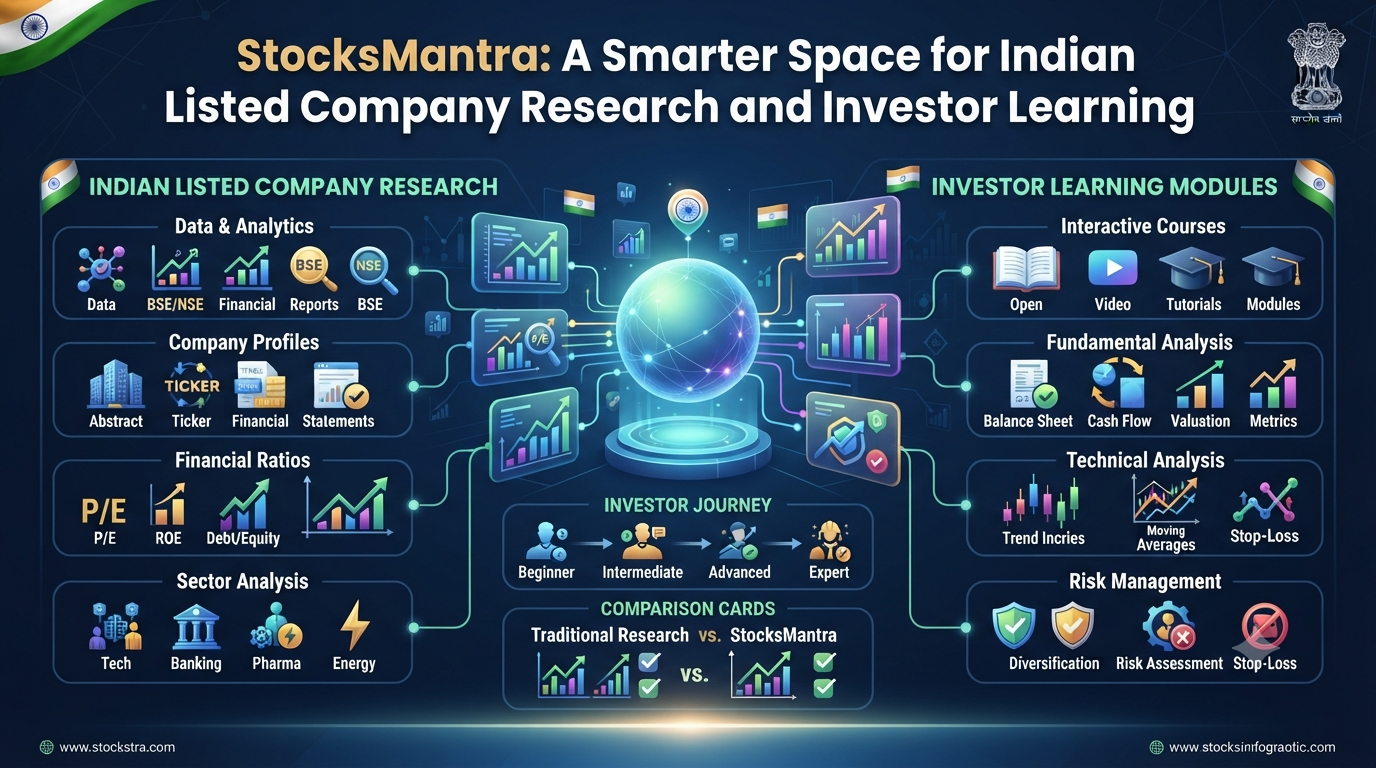
StocksMantra brings these activities into one India-focused community. It combines a searchable listed-company directory with company-related discussions. Users can explore business information, search exchange identifiers, and discuss market topics. The platform supports information sharing and community learning. It is not a stockbroker or registered investment advisory service.
What Is an Indian Listed Company Research Community?
An Indian listed company research community is an online space where people explore public companies and exchange market knowledge. Members can discuss business operations, financial reports, company announcements, and industry developments.
A useful community connects information with practical questions. For example, a beginner may want to understand operating profit. Another member may explain the difference between revenue and profit. Such conversations can make financial terms easier to understand.
An Indian stock market discussion forum provides a place for these exchanges. Members can ask questions, share observations, and discuss company-related subjects. However, every post should be treated as information to review, not as verified advice.
StocksMantra.in connects company discovery with community conversations. Readers can explore company entries and find discussions around listed businesses. This approach gives users a starting point for further research.
Why Company Discovery and Market Discussions Matter
Company research involves more than finding a company's name. Readers may need its exchange details, business activities, financial results, and public announcements.
Searching across many sources can take time. It can also create confusion when company names or security identifiers look similar. A structured directory helps readers begin with the correct company record.
Community discussions add another learning opportunity. Members can explain financial terms and raise questions about business performance. Readers can then use those questions to guide their research.
An Indian stock market discussion forum can support this learning process. It can introduce readers to different research methods and market topics. Still, important details should come from official company filings and exchange announcements.
StocksMantra.in brings these two activities together. Users can explore company entries and take part in conversations. This makes the platform useful for company discovery and shared learning.
Understanding the Indian Stock Market Discussion Forum
An Indian stock market discussion forum allows people to exchange information about listed businesses and market subjects. It may include conversations about company results, corporate actions, business changes, and financial concepts.
StocksMantra.in provides a community focused on Indian listed companies. Its discussion areas include Market Discussions, Investing & Analysis, and Community. Each area supports a different kind of conversation.
Members may discuss:
- Company announcements and public disclosures.
- Business operations and industry developments.
- Quarterly financial results.
- Fundamental and technical analysis concepts.
- Long-term investing principles.
- Beginner questions about market terms.
A helpful forum encourages clear explanations and respectful discussion. Members should identify opinions as opinions. They should also provide sources when sharing factual claims.
Readers should not follow a post only because it receives attention. They should check the information and consider its context. A community can support learning, but it cannot replace independent research.
Exploring the NSE BSE Listed Companies List
The NSE BSE listed companies list helps users discover businesses whose securities trade on India's major stock exchanges. It provides a starting point for finding company names and their exchange records.
The National Stock Exchange and Bombay Stock Exchange maintain public information about listed securities. Their records help users confirm company details and listing information.
A company directory can make this discovery process easier. Instead of searching without a clear identifier, readers can begin with a company name or known code.
StocksMantra.in offers searchable listed-company entries. Readers can explore available company information and related discussions. The directory helps users connect a company with its exchange identifiers.
A useful company directory can help readers:
- Find a listed business by name.
- Identify its NSE trading symbol.
- Check its BSE scrip code.
- Locate its ISIN.
- Explore company-centred discussions.
- Understand whether an entry relates to an SME or mainboard listing.
The NSE BSE listed companies list should be treated as a discovery tool. Readers must check official exchange records for current listing details. They should also review company filings before drawing conclusions about a business.
Learning Through NSE BSE Company Stock Discussions
NSE BSE company stock discussions bring together conversations about businesses listed on the two major exchanges. Members may discuss financial performance, business activities, public announcements, and industry conditions.
These discussions can help readers identify subjects that need more attention. For example, a company may report higher sales but lower profits. Members may discuss operating costs or changes in profit margins.
Another discussion may focus on a company's debt. Readers can explore interest expenses, repayment needs, and cash flow. These topics help explain the financial position of a business.
StocksMantra.in supports company-centred discussion threads. Readers can connect a listed company with conversations about its business and financial information.
Good NSE BSE company stock discussions should explain the subject clearly. Members should avoid rumours and unsupported claims. When discussing financial results, they should refer to the correct reporting period.
Readers should also compare different views. One comment may highlight revenue growth, while another may raise concerns about debt. Reviewing both views can help readers ask better research questions.
Finding Companies Through NSE Stock Symbol Search
An NSE stock symbol search helps users locate a security through its trading symbol. The symbol is a short exchange identifier used to recognise a listed security.
A reader may know a company's name but not its NSE symbol. Searching with the company name can help locate the matching record. The reader should then confirm the full company name and security details.
This search method is useful when:
- Checking a company mentioned in a report.
- Finding the correct NSE trading identifier.
- Comparing company records across documents.
- Locating a company entry in a directory.
- Avoiding confusion between similar business names.
For example, a reader may see a company discussed in a financial article. The reader can check its name and symbol before exploring related information.
StocksMantra.in supports company discovery through available search options. An NSE stock symbol search can help users reach the relevant company entry. Official exchange records remain important for confirming the identifier.
Identifying Securities With BSE Scrip Code Search
A BSE scrip code search helps users find a security through its BSE-assigned identifier. This code can help distinguish a listed company from other businesses with similar names.
Company names may appear differently in reports, websites, and financial documents. A scrip code gives readers another way to identify the intended security.
For example, someone researching a company may find its name in an old document. The reader can use the BSE code to check the matching exchange record. This helps reduce the risk of selecting the wrong company.
A BSE scrip code search can support several research activities:
- Identifying a BSE-listed security.
- Matching company details across documents.
- Checking exchange records.
- Finding the correct company entry.
- Connecting company details with relevant discussions.
StocksMantra.in provides company discovery features that use available identifiers. Readers can explore company entries and related conversations. They should always confirm the code through official exchange information.
The Role of ISIN Lookup for Indian Stocks
An ISIN lookup for Indian stocks helps identify a security through its International Securities Identification Number. ISIN is a standard twelve-character code used to identify securities.
This identifier is useful because a company may have different securities. Similar company names may also appear in different financial records. An ISIN helps readers identify the exact security being discussed.
For example, a document may mention a company's equity shares. Another record may refer to a different security issued by the same company. Checking the ISIN helps users understand which security the record covers.
An ISIN lookup for Indian stocks can help readers:
- Identify a particular security.
- Match information across financial documents.
- Check security details.
- Reduce confusion between different securities.
- Support company and exchange record searches.
StocksMantra.in includes ISIN-based company discovery where the identifier is available. Readers should confirm the code with official records before using it for research.
Understanding SME Listed Companies India
SME listed companies India refers to smaller businesses whose securities trade on recognised SME platforms. These platforms offer eligible small and medium enterprises a route to public listing.
SME businesses operate across many sectors. They may work in manufacturing, technology, trading, services, or specialised industries. Their business models and financial positions can differ widely.
Researching an SME company requires attention to its own business details. Readers should understand its products, customers, revenue sources, and operating costs.
Useful research questions include:
- What does the business sell or provide?
- Which industries does it serve?
- How does it earn revenue?
- What are its main operating expenses?
- What do its financial statements show?
- What risks appear in its public disclosures?
SME listed companies India may have different liquidity and business risks from larger companies. Readers should not judge a company only by its listing category.
StocksMantra.in helps users explore available company entries and discussions. These conversations can introduce useful research topics. Official filings and exchange announcements should remain the basis for checking facts.
Learning Fundamental Analysis Discussion Indian Stocks
A fundamental analysis discussion Indian stocks topic examines the business and financial details of listed companies. It helps readers understand the factors behind reported company performance.
Fundamental analysis often includes revenue, profit, debt, cash flow, and operating costs. It may also consider customer demand, industry conditions, and business risks.
For example, a company may report higher revenue but lower operating profit. This difference may lead readers to examine rising expenses. Another business may report lower debt but weaker cash flow. Each change needs more detailed study.
Useful areas for discussion include:
- Revenue and profit trends.
- Operating expenses and profit margins.
- Debt and interest costs.
- Cash flow and working capital.
- Business operations and competition.
- Changes in industry demand.
A fundamental analysis discussion Indian stocks community can help beginners understand these topics. Members can explain financial terms and share research methods. However, readers should confirm figures through published company reports.
StocksMantra.in gives members a place to discuss company information and analysis concepts. These conversations can help readers form better questions. They should not replace careful review of financial statements.
Exploring Small Cap Stocks Discussion India
A small cap stocks discussion India topic focuses on companies with relatively smaller market capitalisation. Market capitalisation means the total market value of a company's listed shares.
Small-cap businesses work in many industries. Their size, operations, financial strength, and risks can vary. Some serve specialised markets, while others operate in competitive sectors.
Readers should study the business rather than focus only on its market category. Useful research areas include revenue sources, debt, customer concentration, and industry competition.
For example, a small manufacturing business may depend on a limited number of customers. This may create a business risk if one customer reduces orders. Another company may face higher costs because of changes in raw material prices.
A small cap stocks discussion India space can help readers understand these research areas. Members can share questions about financial reports and business models. Readers should still check official information before accepting claims.
StocksMantra.in connects listed-company entries with community discussions. Users can explore business topics and learn from different viewpoints. Online comments should never replace independent research.
Understanding Quarterly Results Discussion Indian Stocks
Quarterly results discussion Indian stocks covers company performance during a three-month reporting period. Listed companies publish financial results that help readers review changes in business activity.
These reports may include revenue, expenses, profit, debt, and other financial details. Readers can compare results across periods and study major changes.
For example, a company may report higher sales but lower net profit. This could lead readers to examine expenses and margins. Another company may report improved cash flow despite lower revenue. Such differences need careful review.
Readers can study several points:
- Revenue growth or decline.
- Changes in operating expenses.
- Profit before and after tax.
- Debt and interest costs.
- Cash flow movements.
- Management explanations for major changes.
A quarterly results discussion Indian stocks topic should use published financial information. Readers should check whether figures are standalone or consolidated. These reports show different views of a company's financial performance.
StocksMantra.in provides a place for members to discuss company results and related questions. Readers can use these conversations to understand financial terms and reporting changes.
How to Participate in a Stock Market Community Safely
Online discussions can provide useful learning opportunities. However, readers should review information carefully before relying on it.
These practices can help:
- Check original records: Use official company filings and exchange announcements.
- Confirm dates: Older information may not reflect the latest position.
- Check company identity: Match the company name with its exchange identifiers.
- Question strong claims: Guaranteed returns and certain predictions deserve caution.
- Separate facts from opinions: A member's view is not an official statement.
- Compare information: Read different explanations before forming an opinion.
- Avoid sharing private details: Keep account and personal financial information secure.
- Report suspicious content: Use community reporting options when needed.
An Indian stock market discussion forum should encourage responsible conversations. Members should avoid manipulation, spam, and misleading claims.
StocksMantra.in provides community rules and moderation features. New members' first posts go through a short moderation queue. Users can also flag content for moderator review. These steps help address concerns, but they do not mean every post is verified.
Table: Company Search Tools and Research Topics
| Item | Meaning | Research Use |
|---|---|---|
| NSE symbol | Trading identifier on NSE | Finds the relevant security |
| BSE scrip code | BSE security identifier | Helps match exchange records |
| ISIN | Standard security identification code | Distinguishes securities |
| Company directory | Searchable listed-company information | Supports company discovery |
| SME platform | Listing route for eligible smaller businesses | Helps identify SME listings |
| Quarterly results | Financial reports for a three-month period | Helps review company performance |
| Fundamental analysis | Study of business and financial details | Supports financial understanding |
| Company discussion | Conversation about a listed business | Encourages shared learning |
Common Mistakes People Make During Company Research
New readers may find stock market information difficult to understand. These mistakes can make the process more confusing.
- Trusting every comment: A forum post may contain an error or personal opinion.
- Ignoring official filings: Company disclosures provide important facts.
- Mixing up company names: Similar names can lead to incorrect research.
- Using the wrong identifier: Check the symbol, scrip code, and ISIN.
- Focusing only on profit: Revenue, costs, and cash flow also matter.
- Comparing different periods: Use matching reporting periods when comparing results.
- Ignoring business risks: Industry conditions can affect company operations.
- Following rumours: Verify claims before accepting them.
- Overlooking debt: Debt and interest costs can affect financial performance.
- Treating discussions as advice: Community posts cannot replace personal research.
An NSE BSE listed companies list can help users find businesses. It does not explain every detail about their financial position. Readers should review company records and relevant disclosures.
A Simple Example
Imagine a reader named Aditi wants to research a company in the renewable energy equipment sector. She has seen its name in a business report but does not know its exchange details.
She starts by searching the company name on StocksMantra.in. She checks the available exchange identifiers and opens the matching company entry. This helps her confirm that she has found the intended business.
Aditi then explores the company's discussion thread. She finds conversations about business operations, financial results, and industry developments. One member raises a question about changes in operating expenses.
Instead of accepting the comment, Aditi checks the company's published financial results. She compares the reported figures and looks for management explanations. She also notes other questions for further research.
This fictional example shows how a company directory and community can support learning. StocksMantra.in helps users connect company discovery with relevant conversations. Official disclosures remain the source for confirming company information.
How StocksMantra Supports Company Discovery and Learning
StocksMantra brings a searchable company directory and an Indian stock market community together. It helps readers explore listed-company entries and take part in related discussions.
The platform supports company searches through available names and identifiers. These include NSE symbols, BSE scrip codes, and ISINs. Users can explore company-centred threads and wider market conversations.
Its community areas include Market Discussions, Investing & Analysis, and Community. These sections support conversations about financial reports, business developments, market concepts, and beginner questions.
Readers can use StocksMantra.in to:
- Discover available listed-company entries.
- Search through company names and identifiers.
- Explore company-related discussion threads.
- Ask questions about market terms.
- Share useful information with other members.
- Learn about financial and business research.
The platform also provides community rules and a disclaimer. Its moderation features help address spam and flagged content. Readers should still check factual claims against official records.
StocksMantra is an information-sharing and community-learning platform. It does not act as a broker or provide personalised investment advice.
Frequently Asked Questions About Indian Listed Company Research
1. What makes an Indian stock market discussion forum useful for beginners?
An Indian stock market discussion forum gives beginners a place to ask questions and learn market terms. Members may explain company reports, business models, and financial concepts. Readers should check important information against official sources before relying on it.
2. Can an NSE BSE listed companies list help with company identification?
Yes. An NSE BSE listed companies list helps readers find listed businesses and explore their exchange details. It can support searches by company name and available identifiers. Readers should confirm current listing information through official exchange records.
3. Which subjects appear in NSE BSE company stock discussions?
NSE BSE company stock discussions may cover financial results, business operations, company announcements, and industry changes. Members may also discuss analysis methods and market concepts. Useful conversations explain their points and separate confirmed facts from personal opinions.
4. What details should users check after an NSE stock symbol search?
After an NSE stock symbol search, users should confirm the full company name and security details. They should check that the symbol matches the intended business. Official exchange records can help prevent confusion between similar names or identifiers.
5. Can a BSE scrip code search help identify a company in financial documents?
A BSE scrip code search can help readers match a security with its exchange record. This is useful when company names appear differently across documents. Users should verify the code and company details through official BSE information.
6. Why is an ISIN lookup for Indian stocks useful when checking securities?
An ISIN lookup for Indian stocks helps identify a particular security through its standard twelve-character code. It can support checks across financial documents and security records. Readers should confirm that the ISIN belongs to the exact security under review.
7. What should readers examine before researching SME listed companies India?
When studying SME listed companies India, readers should review the business model, revenue sources, financial statements, and public announcements. They should also understand the company's industry and risks. SME businesses can differ widely in size, operations, and financial position.
8. What financial details matter in fundamental analysis discussion Indian stocks?
A fundamental analysis discussion Indian stocks topic may examine revenue, profit, debt, cash flow, and operating expenses. It may also cover business risks and industry conditions. Readers should use published financial reports to confirm figures and understand company performance.
9. How can small cap stocks discussion India improve financial learning?
A small cap stocks discussion India space can introduce readers to company research topics. Members may discuss business models, financial strength, and industry risks. Readers should compare views carefully and verify factual claims instead of relying on online opinions.
10. Where can readers find quarterly results discussion Indian stocks?
Readers can explore company-focused communities such as StocksMantra.in for conversations about financial performance. A quarterly results discussion Indian stocks topic may cover revenue, profit, expenses, and cash flow. Official company results remain essential for confirming reported figures.
Final Thoughts
Good company research starts with correct information and clear questions. Exchange identifiers help readers find the right security. Financial reports explain business performance, while community discussions can introduce useful research topics.
StocksMantra connects listed-company discovery with shared market learning. Readers can explore company entries, search available identifiers, and join relevant conversations. They should always confirm important details through official exchange announcements and company filings.
An Indian stock market discussion forum can support knowledge sharing, but it cannot remove market risk. Investing in the market carries risk, including the loss of money. Readers should consider speaking with a qualified, registered professional before making personal financial decisions.



Top comments (0)