
Introduction
Finding a suitable mobile plan takes more than looking at a low monthly price. Different providers offer different data packages, network access, payment options, and contract conditions. These differences make choosing the right plan difficult.
A package that works for one person may not suit another. Students often need affordable data for everyday activities. Travelers need flexible connectivity across destinations. Remote workers may depend on reliable internet and hotspot access.
You should understand what each package offers before spending money. Check its data allowance, validity, network coverage, and extra conditions. Also consider whether your phone supports the selected SIM format.
Comparing these details helps you avoid unnecessary expenses. It also makes it easier to find a plan that matches your lifestyle.
This guide explains how to evaluate mobile plans across several countries. It also explores how transparent comparison tools can help people make informed choices.
Start With These Important Mobile Plan Factors
Every mobile package offers a different combination of features. Understanding these details helps you compare options fairly.
1. Total plan cost
Look beyond the advertised monthly price. Check activation charges, taxes, recharge costs, and possible renewal fees. Calculate the amount you will actually spend.
2. Mobile data allowance
Estimate your regular internet usage. Messaging requires little data, while streaming and video calls consume much more.
3. Calling and texting benefits
Some packages include unlimited local calls and messages. Others offer limited allowances or charge separately. International calling may also require an additional package.
4. Expiry and validity
Prepaid packages usually follow specific validity periods. Check when your data, calls, and remaining balance expire.
5. Network availability
Research coverage around your home, office, university, and regular travel locations. Strong coverage matters more than an impressive advertising claim.
6. 4G and 5G connectivity
Check whether your selected package supports 5G. Your phone and local network coverage must also support the technology.
7. Hotspot permissions
Hotspot features allow you to share mobile internet with other devices. Some providers apply separate limits to tethering.
8. SIM compatibility
Confirm whether your phone accepts a physical SIM, an eSIM, or both.
9. Renewal conditions
Review automatic payments, recharge requirements, cancellation rules, and promotional expiry dates.
A suitable package balances these factors. The lowest price does not always provide the best experience.
Understanding Different Types of Mobile Packages
Mobile providers organize their services into several categories. Each category serves different payment habits and connectivity needs.
SIM-only packages: These packages provide mobile services without a new handset. They suit people who already own compatible phones.
Prepaid packages: Customers pay before using mobile services. They can control spending by selecting specific recharge amounts and validity periods.
Postpaid packages: Customers use mobile services throughout a billing cycle. Providers then generate a bill based on the selected package and applicable usage.
Data-only packages: These focus on internet connectivity rather than regular voice services. Tablet users, portable routers, and secondary devices may benefit.
Bundled packages: Providers combine data, calls, texts, and sometimes additional services. Check whether every included feature offers practical value.
Pay-as-you-go packages: Customers pay according to usage or available credit. These options can suit occasional mobile users.
Digital eSIM packages: These use an electronic SIM profile instead of a removable card. Compatible devices can activate supported profiles through digital setup methods.
Mobile Plan Types at a Glance
| Plan Type | Payment Method | Main Benefit | Best Suited For |
|---|---|---|---|
| SIM-only | Monthly or prepaid | No new phone required | Existing phone users |
| Prepaid | Pay before use | Spending control | Students and budget users |
| Postpaid | Pay after use | Regular billing | Frequent mobile users |
| Data-only | Depends on package | Internet-focused access | Tablets and routers |
| Bundled | Depends on package | Combined mobile services | Users needing multiple benefits |
| Pay-as-you-go | Pay according to usage | Flexible spending | Occasional mobile users |
| eSIM | Depends on package | Digital activation | Compatible devices and travelers |
Always examine individual provider conditions. Similar package names do not guarantee identical benefits.
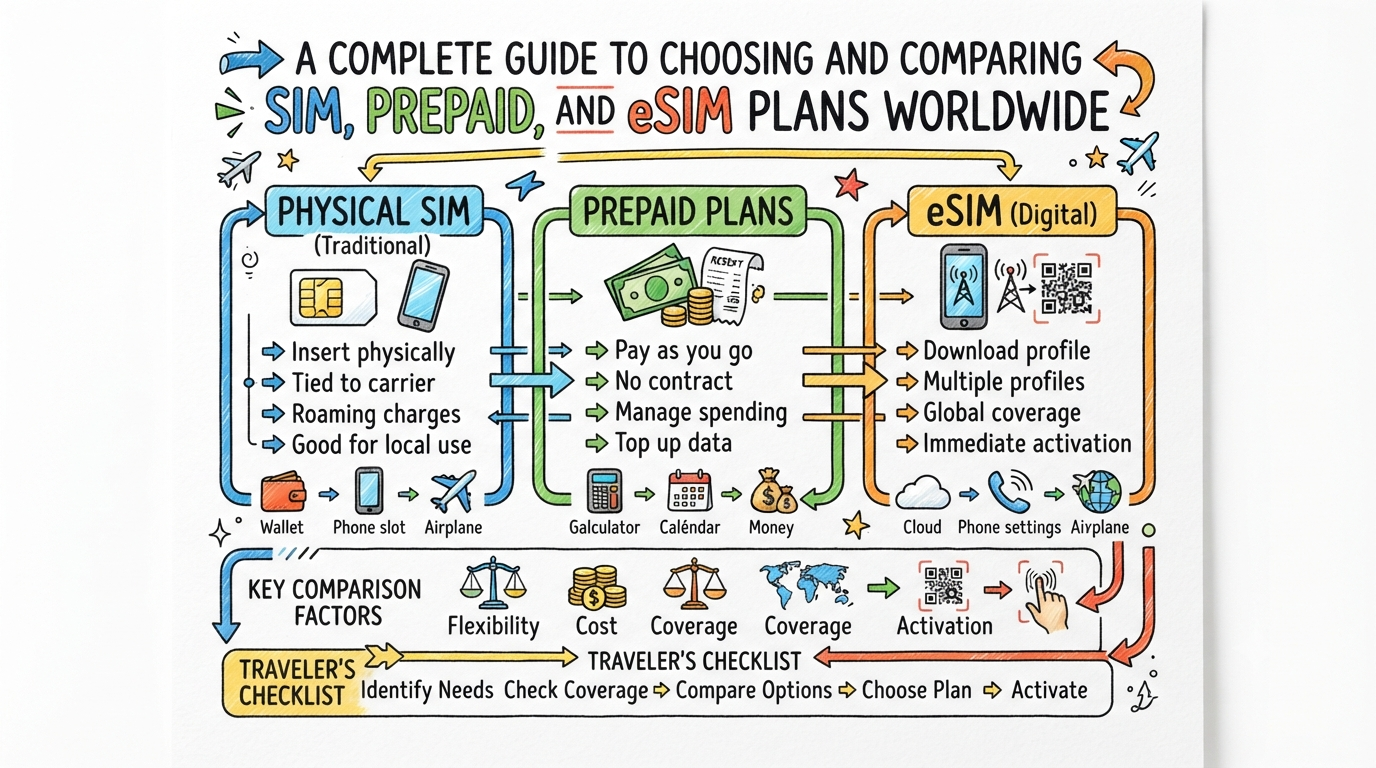
Physical SIM or Digital eSIM: Understanding the Difference
Choosing between these technologies depends on your device and preferences.
A physical SIM uses a removable card. You insert it into your phone to connect with a mobile provider.
An eSIM works differently. Manufacturers build its technology directly into compatible devices. Users download or install a supported mobile profile.
Both options offer mobile connectivity, but their management differs.
An eSIM can help frequent travelers manage different mobile profiles. However, physical SIM cards remain practical for many users.
Before choosing, confirm your phone's compatibility. Also check the provider's activation process and profile transfer rules.
UK Mobile Market: Finding Better SIM-Only Options
People who compare SIM only deals UK should examine package costs, contract conditions, and network access together.
Start by deciding how much data you need. Light users may prefer smaller packages. People who stream videos or work remotely may need larger allowances.
Consider these comparison points:
- Monthly payment and contract duration.
- Data allowances and unlimited packages.
- 4G and 5G connectivity.
- Local network coverage.
- Hotspot restrictions.
- Roaming benefits.
- Cancellation and renewal conditions.
People exploring unlimited data SIM only deals UK should read the fair-use policy carefully. Some providers apply speed limits or network management conditions.
Pay-as-you-go packages offer another approach. When comparing pay as you go SIM deals UK, examine recharge prices, expiry dates, and individual usage rates.
A flexible package may suit occasional users better than a long contract. Regular users may prefer a monthly option with predictable costs.
USA: Evaluating Prepaid and 5G Connectivity
American customers have many reasons to compare prepaid phone plans USA. Some want spending control, while others need flexible mobile services without long commitments.
Begin with the available data allowance. Then examine network access, hotspot limits, and renewal conditions.
Important comparison factors include:
- Monthly data limits.
- Calling and texting benefits.
- Hotspot allowances.
- Network coverage.
- Plan validity.
- International calling options.
- Taxes and additional charges.
People who compare 5G mobile plans USA should examine local coverage and device support.
A provider may offer 5G services in selected areas. However, your location and phone determine whether you can access those services.
Also check whether your chosen prepaid package includes 5G. Some packages may offer different network features.
Australia: Choosing Mobile and Prepaid eSIM Packages
Australian customers should consider coverage, recharge flexibility, and mobile data when evaluating available packages.
People who compare mobile plans Australia should first identify their monthly usage. Students, residents, tourists, and remote workers often have different requirements.
Prepaid packages can offer useful spending control. Meanwhile, monthly options may suit customers who prefer regular payments.
People searching for prepaid eSIM plans Australia should confirm two things. Their device must support eSIM, and their selected provider must offer compatible prepaid activation.
Compare these details:
- Data allowance and recharge price.
- Recharge validity.
- Local calls and messages.
- Network coverage.
- 4G and 5G access.
- Hotspot permissions.
- SIM format compatibility.
Do not assume every Australian provider supports prepaid eSIM services. Check the selected package before purchasing.
Germany: What to Check Before Buying a Prepaid SIM
People researching prepaid SIM plans Germany should understand local activation and usage conditions.
Start with the package price and included data. Next, examine validity, network access, and recharge requirements.
German prepaid customers should also check identification rules. Providers may require identity verification before activating a SIM.
Review these important details:
- Available mobile data.
- Recharge costs.
- Activation requirements.
- Network coverage.
- SIM and eSIM availability.
- Expiry conditions.
- International roaming rules.
Roaming benefits can vary between packages. Read the provider's current conditions before using your SIM abroad.
Canada: Comparing Mobile Packages for Everyday Use
Customers who compare mobile phone plans Canada should consider coverage and data together.
Canada has different connectivity needs across urban and rural locations. A package that works well in one area may not provide similar service elsewhere.
Compare the following features:
- Monthly charges.
- Mobile data allowances.
- Local calling and texting.
- 4G and 5G access.
- Network coverage.
- Roaming options.
- Hotspot restrictions.
- Additional fees.
Also check whether your provider supports reliable connectivity in your regular locations.
Avoid paying for unused data. Select a package that matches your everyday requirements and budget.
Network Performance: Why the Cheapest Plan May Not Win
Mobile network quality affects your daily experience. However, network performance and package value are not the same.
Mobile Network Operators (MNOs) operate their own mobile network infrastructure. They provide connectivity through their network services.
Mobile Virtual Network Operators (MVNOs) offer mobile services through another operator's infrastructure. They may provide different pricing and package structures.
However, MVNOs can have different service conditions. Speed limits, roaming features, and network access rules may vary.
Before selecting either type, consider:
- Signal strength around your regular locations.
- Network availability during busy periods.
- Supported 4G and 5G services.
- Hotspot performance.
- Package restrictions.
- Overall cost.
A large data allowance has little value if the connection does not meet your needs. Balance network reliability with package features and price.
The Importance of Fresh and Verified Plan Information
Mobile providers frequently change their packages. They adjust prices, introduce promotions, modify data limits, and update network conditions.
This creates a problem for people who rely on older comparison information. An advertised offer may have expired. A provider may also introduce new restrictions.
Reliable comparison requires more than collecting package names and prices.
Look for five important information signals:
Official references: Check whether information connects to provider sources.
Verification status: Understand whether someone has checked the available details.
Last-checked dates: Review when the platform last examined the information.
Ageing warnings: Pay attention to details that may no longer reflect current provider terms.
Unknown information: Recognize details that still need confirmation.
Never treat missing information as a confirmed feature. Clear comparisons should separate verified details from unknown information.
How RankeSIM Makes Mobile Plan Research Easier
RankeSIM provides an independent platform for comparing SIM and eSIM options across different countries.
Instead of examining every package manually, users can explore available comparison information in one place.
Its interactive comparison tool helps users examine several important factors:
- Effective plan costs.
- Data allowances.
- Package validity.
- 5G availability.
- Hotspot restrictions.
- Supported SIM formats.
- Provider and network information.
- Verification status.
- Last-checked dates.
RankeSIM also provides personalized plan-fit scores. These help users understand how available packages match their requirements.
Its provider information covers both MNOs and MVNOs. Users can review official-source references and submit corrections when they identify information that needs attention.
Its identified active markets include:
Australia, Canada, France, Germany, India, Ireland, New Zealand, the United Kingdom, and the United States.
RankeSIM also publishes country-specific comparison snapshots.
| Market | Published comparison count |
|---|---|
| UK | 68 plans |
| Australia | 35 plans |
| USA | 29 plans |
| Germany | 27 plans |
These numbers describe published comparison snapshots, not permanent live totals. The catalog can change as RankeSIM updates its information.
The platform is also introducing a separate travel eSIM comparison mode. This remains a developing feature rather than a fully established service.
Its main purpose is simple: help people understand mobile options through clearer comparisons and transparent information.
A Practical Decision Checklist Before Switching Providers
Take a few minutes to review your requirements before purchasing a package.
- Data usage: How much internet data do I consume monthly?
- Budget: What amount can I comfortably spend?
- Unlimited access: Do I actually need unlimited data?
- Network technology: Will 4G meet my needs, or do I require 5G?
- Coverage: Does the provider offer service where I live and work?
- Device support: Can my phone use the selected SIM format?
- Calling: Does the package include local and international calls?
- Hotspot: Can I share my connection with other devices?
- Validity: When will my package expire?
- Extra conditions: Does the provider charge additional fees?
- Information freshness: Have I checked the latest available terms?
Your answers will help narrow down suitable options. Compare the complete package rather than focusing on one attractive feature.
Frequently Asked Questions
1. How do SIM-only and prepaid packages differ?
SIM-only describes a mobile package without a new phone. Prepaid describes its payment method. A SIM-only package can use prepaid or postpaid billing. Check the provider's payment rules before selecting either option.
2. What is the easiest way to compare mobile packages?
Create a shortlist based on your location and budget. Compare data, calls, prices, validity, network coverage, and additional conditions. Check official provider information to confirm important details before purchasing.
3. Should I replace my physical SIM with an eSIM?
An eSIM offers digital activation and convenient profile management. However, a physical SIM works well for compatible devices and simple transfers. Check your phone and provider support before making the change.
4. Where can I find affordable SIM-only options in the UK?
Compare different data packages, monthly charges, and contract lengths. Check smaller packages alongside unlimited options. Review network coverage, fair-use policies, and cancellation conditions before choosing a suitable deal.
5. Do unlimited data packages have restrictions?
Some providers apply fair-use policies, speed management, or separate hotspot limits. Unlimited data does not always mean unrestricted usage under every condition. Read the complete package terms before purchasing.
6. Can I use 5G with a prepaid package?
Yes, some providers include 5G connectivity in prepaid packages. However, your phone, selected package, and local network coverage must support it. Always confirm availability with the provider.
7. What should Australians check before selecting a prepaid eSIM?
Check phone compatibility, provider support, data allowance, and recharge validity. Also examine network coverage, calling benefits, and hotspot conditions. Confirm the activation process before purchasing the package.
8. How do MNOs and MVNOs differ?
MNOs operate mobile network infrastructure. MVNOs provide mobile services through another operator's network. Their packages, prices, and service restrictions can differ. Compare actual coverage and plan conditions before choosing.
9. Why does mobile package information need regular checking?
Providers change prices, promotions, allowances, and restrictions. Older comparison details may no longer match current offers. Review official references, verification status, and last-checked dates before making a purchase.
10. What makes RankeSIM useful for mobile plan comparisons?
RankeSIM brings available mobile plan information into an interactive comparison experience. Users can examine costs, data, validity, network features, and SIM compatibility. Its verification details also help readers identify information that needs further checking.
**Final Thoughts
Smart mobile decisions begin with understanding your actual requirements. Compare data, network access, validity, device support, and complete package costs before switching providers.
Different countries and providers offer different mobile options. Therefore, always examine local conditions instead of assuming every package works the same way.
Students, travelers, remote workers, and everyday users all need different features. A little research can help prevent unnecessary spending and connectivity problems.
RankeSIM supports this research through independent comparisons, plan-fit scores, and transparent verification details. Use clear information to evaluate your choices and select a mobile package that suits your daily needs.



Top comments (0)