
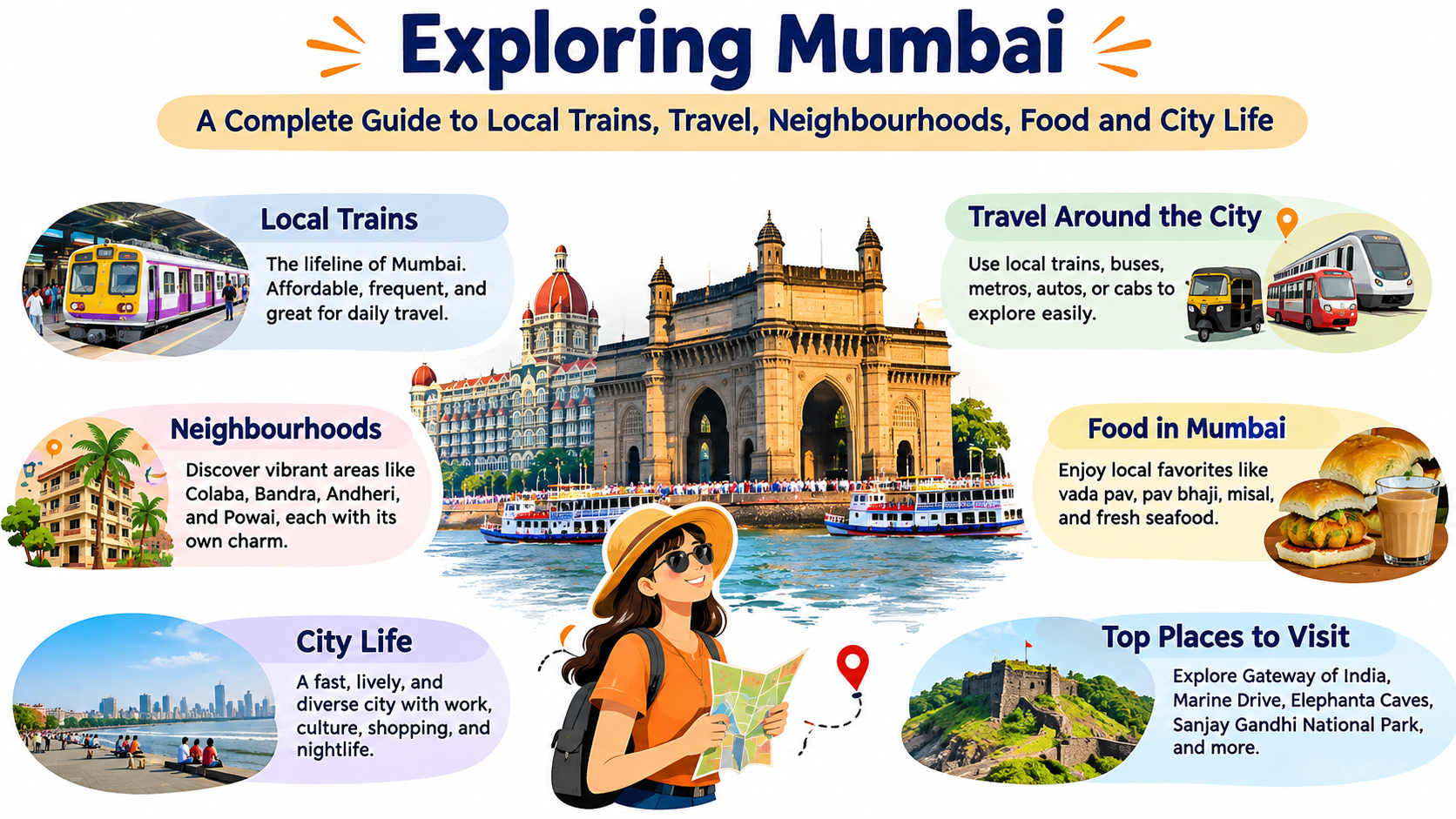
Introduction
Mumbai brings together people, businesses, cultures, and opportunities. The city attracts students, professionals, entrepreneurs, families, and tourists throughout the year.
From busy railway stations to peaceful coastal areas, Mumbai offers many experiences. Residents enjoy its food, markets, entertainment, and business opportunities. Visitors can explore historic landmarks, beaches, museums, and nearby hill stations.
However, newcomers often face practical questions. Which train should they take? Where should they search for a home? Which markets offer good shopping? How can they plan a short holiday?
Good local knowledge helps people answer these questions.
MumbaiOrbit helps people explore Mumbai through local guides and community discussions. Its information platform covers travel, transport, housing, food, shopping, and everyday city life.
People can also join discussions through categories such as Ask Mumbai, Trains & Transport, Housing, Khau Galli, and Maharashtra Matters.
This guide explains how to explore Mumbai with better planning. It also shares practical ideas for commuters, tourists, residents, and small-business owners.
1. Getting Around Mumbai: A Practical Transport Guide
Mumbai has several transport options. Local trains, metro services, buses, taxis, auto-rickshaws, and ferries help people travel across different areas.
Your choice depends on distance, budget, traffic, and convenience.
Understanding the Mumbai Suburban Railway
Mumbai's suburban railway supports daily travel across the city. Students, office workers, traders, and visitors use these trains.
The network has three main corridors.
Western Railway
The Western Line connects Churchgate with northern suburban areas. Important stations include:
- Churchgate
- Mumbai Central
- Dadar
- Bandra
- Andheri
- Borivali
- Virar
This line serves many residential and commercial locations.
Central Railway
The Central Line connects Chhatrapati Shivaji Maharaj Terminus with areas towards Kalyan and beyond.
Important stations include:
- CSMT
- Byculla
- Dadar
- Kurla
- Ghatkopar
- Thane
- Kalyan
Several services continue towards nearby towns.
Harbour Line
The Harbour Line connects South Mumbai with eastern suburbs and nearby areas.
Important stations include:
- CSMT
- Wadala Road
- Kurla
- Chembur
- Vashi
- Belapur
- Panvel
Always check your train's destination before boarding. Different services may follow different stopping patterns.
How Newcomers Can Use Local Trains
First, identify your nearest station. Next, find the station closest to your destination.
Check whether your route needs a train change. Major interchange stations can help passengers switch lines.
Also, understand the difference between slow and fast trains.
Slow trains stop at more stations. Fast trains skip selected stations and cover certain routes differently.
Follow these practical steps:
- Check your route before leaving home.
- Confirm the train's final destination.
- Check the platform number.
- Read station displays and announcements.
- Buy the correct ticket.
- Keep your belongings secure.
- Allow passengers to exit before boarding.
- Avoid boarding crowded trains when possible.
Train Tickets and Pass Options
Mumbai railway passengers can choose different ticket types.
| Ticket Type | Suitable Use | Important Detail |
|---|---|---|
| Single ticket | One-way travel | Check journey validity |
| Return ticket | Outward and return journeys | Follow applicable validity rules |
| Season ticket | Regular commuting | Select the correct route and period |
| First-class ticket | First-class travel | Use the designated compartment |
| AC local ticket | Air-conditioned train services | Check eligible services |
| Tourist ticket | Multiple journeys | Check current tourist ticket conditions |
Passengers can check current ticket options through official railway channels and authorised booking services.
Fares, rules, and booking methods can change. Always confirm the latest details.
Managing Crowded Travel Hours
Mumbai trains often attract heavy crowds during morning and evening office hours.
Newcomers should plan carefully during these periods.
Try these simple precautions:
- Reach your platform before the train arrives.
- Keep your phone and wallet secure.
- Stand behind platform safety lines.
- Avoid standing near closing doors.
- Hold handrails when needed.
- Keep children close.
- Never cross railway tracks.
- Avoid boarding a moving train.
Passengers with mobility needs should check station facilities. Some stations provide lifts, ramps, and escalators, but facilities vary.
Comparing Mumbai's Main Transport Options
Different transport services suit different journeys.
| Transport Option | Main Use | Important Planning Tips |
|---|---|---|
| Local trains | Travel across major city areas | Check routes, platforms, and peak hours |
| Metro | Travel along metro corridors | Verify stations, fares, and service timings |
| BEST buses | Connect neighbourhoods | Check current routes and schedules |
| Taxis | Travel between locations | Confirm fares and availability |
| Auto-rickshaws | Short-distance journeys | Check local service availability and fares |
| Ferries | Selected coastal journeys | Confirm routes and operating conditions |
Choose the service that suits your journey. Consider travel time, walking distance, and traffic.
2. Mumbai Metro Line 3: What Commuters Should Know
Mumbai Metro Line 3, also called the Aqua Line, connects Cuffe Parade with Aarey JVLR.
The underground corridor serves several important residential, commercial, and transport areas.
The complete corridor became operational in October 2025. It covers approximately 33.5 kilometres and has 27 stations.
Important Stations Along the Aqua Line
The route includes:
- Cuffe Parade
- Vidhan Bhavan
- Churchgate
- Hutatma Chowk
- Chhatrapati Shivaji Maharaj Terminus
- Kalbadevi
- Girgaon
- Grant Road
- Mahalaxmi
- Acharya Atre Chowk
- Worli
- Siddhivinayak
- Dadar
- Dharavi
- Bandra Kurla Complex
- Bandra Colony
- Santacruz
- Mumbai Airport Terminal 1
- Mumbai Airport Terminal 2
- Marol Naka
- MIDC-Andheri
- SEEPZ
- Aarey JVLR
How Metro Line 3 Helps Different Passengers
Working professionals
The corridor serves business areas such as Bandra Kurla Complex and SEEPZ. Office workers can consider it when planning daily journeys.
Airport travellers
The line connects with stations serving both airport terminals. Passengers should check their terminal and allow enough time for airport procedures.
Students
Students can explore metro connections when travelling to colleges and educational areas.
Tourists
Visitors can use the Aqua Line to reach selected parts of Mumbai. It offers another option beyond road transport.
Ticketing and Passenger Facilities
Before travelling, check:
- Current ticket prices.
- First and last train timings.
- Available ticket purchase methods.
- Station entry and exit points.
- Interchange arrangements.
- Lift and escalator access.
- Current service announcements.
Metro Line 3 supports modern urban travel. However, passengers should confirm current information through official metro channels.
3. Famous Mumbai Attractions Worth Exploring
Mumbai offers attractions for different interests. History lovers can explore heritage buildings. Families can enjoy gardens and museums. Beach lovers can spend time along the coastline.
Here are several places worth considering.
Historic and Architectural Attractions
Gateway of India
The Gateway of India stands near the Arabian Sea in Colaba.
Visitors can admire its architecture and enjoy waterfront views. Ferries to Elephanta Island also depart from this area.
Chhatrapati Shivaji Maharaj Terminus
This famous railway station combines transport activity with historic architecture.
Visitors can admire its exterior and learn about Mumbai's railway heritage.
Rajabai Clock Tower
The tower stands near the University of Mumbai. Its historic design adds character to the Fort area.
Check visitor access before planning an interior visit.
Beaches and Waterfront Experiences
Marine Drive
Marine Drive offers beautiful sea views and a popular walking route.
Visitors often come here during evenings. The lights along the curved road create the famous Queen's Necklace appearance.
Juhu Beach
Juhu Beach attracts families, tourists, and food lovers.
Visitors can enjoy the sea breeze and try popular local snacks. Avoid unsafe swimming areas and keep personal belongings secure.
Girgaon Chowpatty
This beach attracts people who enjoy coastal views and street food.
Visitors often try bhel puri and pav bhaji during evening outings.
Museums and Art Destinations
Chhatrapati Shivaji Maharaj Vastu Sangrahalaya
This museum displays art, historical objects, and cultural collections.
It offers an educational experience for families and history lovers.
Jehangir Art Gallery
Art lovers can explore exhibitions by different artists. Check the current exhibition schedule before visiting.
National Gallery of Modern Art
This gallery focuses on modern and contemporary Indian art.
It offers another way to understand India's changing artistic traditions.
Religious and Cultural Attractions
Mumbai also offers many religious and cultural destinations.
- Siddhivinayak Temple: A popular Ganesh temple in Prabhadevi.
- Haji Ali Dargah: A coastal religious site near Worli.
- Mahalakshmi Temple: A well-known temple that attracts devotees throughout the year.
Visitors should follow local customs and entry rules.
Check tide and weather conditions before visiting Haji Ali Dargah.
Parks and Family Activities
Families can explore several green spaces and outdoor attractions.
Sanjay Gandhi National Park: Offers nature trails and outdoor experiences.
Hanging Gardens: Provides green spaces and city views from Malabar Hill.
Jijamata Udyan: Also called Byculla Zoo, it offers a family-friendly outing.
Check entry rules, ticket details, and opening hours before visiting.
4. Planning Short Holidays Around Mumbai
Mumbai offers access to several weekend destinations. Travellers can enjoy hills, beaches, waterfalls, and nature trails.
Your destination should match your interests and available time.
Lonavala: A Break in the Hills
Lonavala attracts visitors with green hills, caves, waterfalls, and scenic viewpoints.
Popular nearby attractions include Khandala, Karla Caves, Bhaja Caves, and historic forts.
Travel options: Train, road, and private transport.
Best suited for: Families, couples, and nature lovers.
Planning advice:
- Check weather forecasts.
- Carry comfortable footwear.
- Avoid dangerous waterfall areas.
- Check road conditions during heavy rain.
- Arrange accommodation early during busy holidays.
Matheran: Enjoy Nature and Walking Trails
Matheran offers a quieter atmosphere and natural surroundings.
Visitors can explore viewpoints, walking paths, and forest areas.
Motor vehicles face restrictions inside Matheran. Visitors generally park near Dasturi Naka and continue through permitted local options or on foot.
Travel options: Train, road, and local transport.
Best suited for: Walkers, nature lovers, and peaceful holidays.
Planning advice:
- Carry drinking water.
- Wear comfortable shoes.
- Check local transport rules.
- Prepare for changing weather.
- Avoid slippery paths during heavy rain.
Alibaug: Explore Coastal Areas
Alibaug attracts visitors who enjoy beaches and coastal experiences.
Visitors can explore Alibaug Beach and nearby coastal attractions. Historic forts also add interest to the trip.
Travel options: Road and available ferry services.
Best suited for: Families, couples, and beach lovers.
Planning advice:
- Confirm ferry services before departure.
- Plan your return journey.
- Check tide conditions.
- Carry sun protection.
- Follow beach safety instructions.
Karjat: Enjoy Outdoor Activities
Karjat offers hills, greenery, and outdoor experiences.
Visitors can explore nature areas, trekking routes, and nearby rural surroundings.
Travel options: Train, road, and private transport.
Best suited for: Friends, families, and adventure lovers.
Planning advice:
- Check trekking conditions.
- Choose authorised activity operators.
- Carry suitable clothing.
- Avoid unknown trails.
- Follow monsoon warnings.
Weekend Destination Comparison
| Destination | Main Attractions | Suitable For | Planning Considerations |
|---|---|---|---|
| Lonavala | Hills, caves, waterfalls | Nature trips and family holidays | Weather and road conditions |
| Matheran | Forest trails and viewpoints | Walking and peaceful breaks | Vehicle restrictions |
| Alibaug | Beaches and coastal attractions | Beach holidays | Ferry and road arrangements |
| Karjat | Green valleys and outdoor activities | Adventure and relaxation | Trekking and seasonal conditions |
Plan your journey before leaving Mumbai. Check transport services, weather, accommodation, and return options.
5. Choosing a Neighbourhood That Fits Your Lifestyle
Mumbai has many residential areas. Each area offers different housing options, transport connections, and daily facilities.
The best areas to live in Mumbai depend on your needs. Your workplace, budget, family, and lifestyle should guide your choice.
What Should You Check Before Renting?
Housing expenses
Compare rent, deposits, maintenance charges, and other costs.
Do not judge a property only by its advertised rent.
Daily commuting
Calculate your expected journey to work or college. Check train, metro, bus, and road connections.
Schools and colleges
Families should compare nearby schools and colleges. Check admission conditions and travel needs.
Healthcare
Look for nearby hospitals, clinics, and pharmacies. Consider emergency travel access.
Daily shopping
Check grocery stores, supermarkets, banks, and local markets.
Lifestyle
Some people enjoy busy commercial neighbourhoods. Others prefer quieter streets and green spaces.
Visit different areas before choosing a home.
Comparing Popular Residential Areas
| Residential Area | General Lifestyle | Connectivity to Check | Possible Suitability |
|---|---|---|---|
| Bandra | Active residential and commercial environment | Western Line and road links | People seeking social and business activities |
| Andheri | Large residential and business area | Western Line and metro connections | Professionals and families |
| Powai | Residential and business surroundings | Road and bus connections | Professionals and families |
| Ghatkopar | Residential and commercial mix | Central Line and Metro Line 1 | Regular public transport users |
| Borivali | Residential areas and green spaces | Western Line and road links | Families and commuters |
| Chembur | Residential and commercial neighbourhoods | Harbour Line and road connections | Families and professionals |
| Thane | Large residential and commercial areas | Central Line and road connections | People comparing wider housing choices |
These descriptions do not represent fixed safety or affordability rankings. Property costs vary across streets and buildings.
A Home-Selection Checklist
Before signing a rental agreement:
- Visit the property.
- Inspect the building.
- Check water and electricity.
- Understand maintenance charges.
- Read the rental agreement.
- Confirm parking arrangements.
- Check mobile network coverage.
- Understand society rules.
- Test your daily travel route.
MumbaiOrbit's Housing discussions offer a place to explore local questions and exchange personal neighbourhood experiences.
Always verify property details independently.
6. Experience Mumbai Through Its Local Food
Mumbai's food culture attracts residents and tourists alike.
The city offers snacks, traditional Maharashtrian dishes, quick meals, and different regional flavours.
Here are seven popular foods worth trying.
Vada Pav
Vada pav combines a fried potato filling with a soft bread roll.
Vendors often serve it with garlic chutney and green chilli. Many people enjoy it as a quick snack.
Pav Bhaji
Pav bhaji contains mashed vegetables cooked with spices.
Cooks serve the curry with toasted bread rolls, butter, and lemon.
Bhel Puri
Bhel puri combines puffed rice, sev, potatoes, onions, and chutneys.
It offers sweet, spicy, and tangy flavours.
Pani Puri
Pani puri uses small crispy shells with flavoured water and fillings.
It offers a mix of tangy and spicy tastes.
Sev Puri
Sev puri combines crispy bases with potatoes, onions, chutneys, and sev.
It suits people who enjoy crunchy snacks.
Bombay Sandwich
The Bombay sandwich combines bread, vegetables, chutneys, and spices.
Some vendors add cheese or toast the bread.
Misal Pav
Misal pav is a popular Maharashtrian dish.
It contains spicy sprouted bean curry with bread rolls, farsan, onions, and lemon.
Where Can You Explore Local Food?
Consider these popular food areas:
- Juhu Beach: Offers popular evening snacks.
- Girgaon Chowpatty: Attracts people who enjoy beachside food.
- Dadar: Offers traditional Maharashtrian food choices.
- Mohammed Ali Road: Features different food traditions and seasonal food activity.
- Ghatkopar Khau Galli: Offers a variety of vegetarian snacks.
Food Hygiene Tips for Visitors
Enjoy local dishes while taking simple safety steps.
- Choose stalls with clean cooking areas.
- Prefer freshly cooked food.
- Avoid uncovered food.
- Drink safe, sealed water.
- Check food freshness.
- Clean your hands before eating.
- Start with small portions of unfamiliar dishes.
Mumbai's street food offers a memorable local experience. Choose food outlets carefully and enjoy the city's flavours.
7. Explore Mumbai's Popular Shopping Markets
Mumbai offers shopping options for different budgets and interests.
You can explore traditional markets, street stalls, clothing shops, and antique stores.
Crawford Market
Crawford Market, also called Mahatma Jyotiba Phule Mandai, stands in South Mumbai.
Shoppers can explore produce, spices, household goods, and other products.
Compare prices and inspect goods before buying.
Colaba Causeway
Colaba Causeway attracts tourists and local shoppers.
Its shops and street stalls offer clothes, jewellery, bags, accessories, and souvenirs.
Bargaining often forms part of shopping at pavement stalls.
Linking Road
Linking Road in Bandra offers clothes, footwear, and fashion accessories.
You can explore street vendors and established retail shops.
Check fabric quality, stitching, and footwear before paying.
Fashion Street
Fashion Street attracts shoppers looking for casual clothing and accessories.
Compare designs, sizes, and prices before making a purchase.
Chor Bazaar
Chor Bazaar offers antiques, vintage objects, decorative items, and second-hand goods.
Inspect valuable items carefully. Ask for proof of ownership when necessary.
Shopping Advice for First-Time Visitors
- Compare prices across different shops.
- Bargain politely when suitable.
- Inspect products before payment.
- Check return and exchange conditions.
- Use secure payment methods.
- Protect your wallet and phone.
- Avoid counterfeit branded goods.
- Keep receipts for valuable purchases.
- Check market opening days.
Different markets follow different schedules. Confirm current access and business hours before travelling.
8. Starting a Small Business in Mumbai
Mumbai attracts entrepreneurs from many industries. Its large customer base creates opportunities for retail, food, education, technology, and local services.
However, business owners need more than a good idea. They must study demand, manage costs, and understand applicable rules.
If you are researching how to start a small business in Mumbai, consider these steps.
Step 1: Find a Suitable Business Idea
Choose an idea that matches your skills and budget.
Possible options include:
- Food and snack shops.
- Clothing stores.
- Online product sales.
- Educational services.
- Home-based businesses.
- Digital marketing services.
- Repair services.
- Local travel services.
- Small retail shops.
- Delivery services.
Focus on solving a real customer problem.
Step 2: Research Local Customers
Understand who may purchase your products or services.
A shop near a college may attract students. A store near offices may serve working professionals.
Talk to potential customers. Observe local shopping habits and demand.
Step 3: Study Competitors
Visit businesses that offer similar products.
Compare their prices, customer service, product quality, and locations.
Look for opportunities to offer something useful or different.
Step 4: Prepare a Business Plan
A clear plan helps you manage the business.
Include:
- Business idea.
- Target customers.
- Products and services.
- Startup expenses.
- Monthly operating costs.
- Competitor research.
- Marketing activities.
- Sales targets.
Review your plan before spending money.
Step 5: Calculate Your Budget
List the expenses you may face.
These may include:
- Rent and property deposits.
- Equipment and furniture.
- Stock and raw materials.
- Employee payments.
- Electricity and internet.
- Packaging and delivery.
- Professional fees.
- Registration expenses.
- Marketing costs.
- Emergency funds.
Keep extra money for unexpected expenses.
Step 6: Select a Business Location
Compare different locations before signing a property agreement.
Check customer access, nearby competition, parking, transport, and visibility.
Confirm that the property supports your planned business activity.
Step 7: Choose a Legal Business Structure
Common business structures include:
Sole proprietorship: One person owns and manages the business.
Partnership: Two or more people run the business together.
Limited Liability Partnership: Partners operate under an LLP structure with limited liability, subject to applicable law.
Private limited company: This structure provides a formal company framework for suitable businesses.
Consult a qualified professional before choosing.
Step 8: Check Registrations and Permissions
Your business activity determines the registrations and permissions you need.
You may need to consider:
- Shops and Establishments requirements.
- GST registration, where applicable.
- Municipal permissions.
- Food safety registration or licensing.
- Fire and safety requirements.
- Professional tax obligations.
- Trade-specific approvals.
- Environmental permissions, where applicable.
Food businesses should check the relevant food safety rules.
The Maharashtra Labour Department provides services related to Shops and Establishments requirements.
Step 9: Consider Udyam Registration
Small businesses may consider Udyam Registration through the Ministry of MSME.
The official portal offers a free online registration process. Applicants must provide the required Aadhaar and business details.
PAN and GST information apply according to the relevant rules.
Remember that Udyam registration does not replace other business licences.
Step 10: Arrange Payments and Accounting
Set up suitable ways for customers to pay.
Consider cash, bank transfers, and digital payment options.
Maintain clear records of:
- Sales.
- Purchases.
- Business expenses.
- Employee payments.
- Taxes.
- Stock.
- Customer transactions.
Use professional accounting support when necessary.
Step 11: Promote Your Business
Start with simple local marketing activities.
- Create a business profile.
- Share clear product information.
- Display accurate shop details.
- Build local business relationships.
- Offer helpful customer service.
- Encourage genuine feedback.
- Participate in relevant community discussions.
MumbaiOrbit can also provide a place to explore general local business topics and exchange experiences.
Small Business Planning Table
| Business Activity | Important Things to Review |
|---|---|
| Idea selection | Customer needs and demand |
| Market research | Competitors and local trends |
| Financial planning | Startup and monthly expenses |
| Location selection | Customers and transport access |
| Business structure | Suitable legal arrangement |
| Registrations | Applicable licences and permissions |
| Payments | Secure payment options |
| Accounting | Sales and expense records |
| Promotion | Local marketing and customer service |
Important: Business and tax rules can change. Check current government requirements before opening. Consult a qualified accountant or legal professional when needed.
9. How a Mumbai Community Forum Helps Residents
Mumbai's residents often need answers to everyday questions.
They may want transport advice, housing suggestions, food recommendations, or information about local services.
A Mumbai community forum gives people a place to discuss these topics.
Common Uses of a Local Community Forum
Ask everyday questions
New residents can ask about neighbourhoods, public transport, and daily services.
Discuss travel and transport
Commuters can exchange general experiences about railway routes, metro services, and buses.
Explore housing options
People can discuss residential areas, rental experiences, and local facilities.
Share food suggestions
Food lovers can discuss local dishes, restaurants, and food streets.
Discuss cultural activities
Residents can exchange information about festivals, events, and community activities.
Talk about civic concerns
Members can discuss roads, waste collection, water supply, and other local issues.
For official complaints, people should contact the relevant government department.
Exchange business ideas
Entrepreneurs can discuss customer needs, business experiences, and local opportunities.
Explore MumbaiOrbit's Discussion Categories
MumbaiOrbit brings several Mumbai-focused discussion topics together.
Ask Mumbai
People can ask general questions about Mumbai and its everyday services.
Trains & Transport
Members can discuss trains, metro services, buses, and commuting experiences.
Housing
This category focuses on neighbourhoods, rental questions, and residential choices.
Khau Galli
Food lovers can explore local dishes, food streets, and restaurant experiences.
Maharashtra Matters
Members can discuss Maharashtra's culture, regional topics, and local concerns.
Guidelines for Helpful Participation
A good community needs respectful and responsible members.
Follow these suggestions:
- Ask clear questions.
- Share genuine experiences.
- Avoid unconfirmed claims.
- Respect different opinions.
- Protect personal information.
- Avoid abusive language.
- Report harmful content when necessary.
- Check important information through reliable sources.
MumbaiOrbit combines city guides with community discussions. It offers an independent place to explore local information and exchange knowledge.
It does not operate as an official government service. Readers should verify important recommendations independently.
10. Mistakes That Can Make Mumbai Life More Difficult
Mumbai offers many opportunities, but poor planning can create unnecessary problems.
Residents and visitors can avoid many issues with simple preparation.
Mistake 1: Ignoring Train Timings and Routes
Problem: Boarding the wrong train can waste time.
Better approach: Check the destination, train type, platform, and route before boarding.
Mistake 2: Travelling During Crowded Hours Without Preparation
Problem: Heavy crowds can make journeys uncomfortable.
Better approach: Travel outside peak hours when possible. Allow extra time for important appointments.
Mistake 3: Using Old Metro Information
Problem: Outdated station and service details can cause confusion.
Better approach: Check current official metro information before travelling.
Mistake 4: Choosing a Home Only Because of Low Rent
Problem: A distant home can increase daily travel costs and time.
Better approach: Compare rent, transport, nearby services, and workplace distance.
Mistake 5: Planning Too Many Attractions Together
Problem: Long journeys can reduce sightseeing time.
Better approach: Group nearby attractions and keep extra travel time.
Mistake 6: Ignoring Attraction Schedules
Problem: A closed attraction can disrupt your travel plan.
Better approach: Check opening hours, entry rules, and weekly closures.
Mistake 7: Choosing Street Food Without Checking Hygiene
Problem: Poor food handling can create health risks.
Better approach: Choose clean stalls and prefer fresh, hot food.
Mistake 8: Buying Products Without Inspecting Them
Problem: Some products may have defects or poor quality.
Better approach: Check materials, size, stitching, and return conditions before paying.
Mistake 9: Planning Weekend Trips Without Checking Transport
Problem: Weather or service changes can affect your journey.
Better approach: Confirm trains, ferries, road conditions, and return options.
Mistake 10: Opening a Business Without Research
Problem: Missing permissions or poor planning can create serious problems.
Better approach: Study customer demand, prepare a budget, and check applicable licences.
Good preparation helps people enjoy Mumbai with fewer surprises.
11. Why Local Information Matters in Mumbai
Mumbai changes from one neighbourhood to another. A transport tip that helps one commuter may not suit another.
A tourist needs different information from a student or shop owner. Local information helps people understand these differences.
A city-focused platform can support several everyday needs.
Better Knowledge of Neighbourhoods
Residents can explore housing topics and compare different parts of the city.
Easier Travel Planning
Visitors can research sightseeing plans and transport options before leaving home.
More Food and Shopping Ideas
People can discover markets, food streets, and different local experiences.
Support for Everyday Questions
Community discussions can help newcomers understand local services and common city challenges.
Business Learning Opportunities
Entrepreneurs can explore local customer needs and discuss general business experiences.
A Place to Exchange Experiences
Residents can share useful knowledge with newcomers and visitors.
The Role of MumbaiOrbit
MumbaiOrbit connects travel and lifestyle information with community discussions.
Its blog covers transport, sightseeing, accommodation, restaurants, shopping, and weekend trips.
Its discussion forum supports topics such as Ask Mumbai, Trains & Transport, Housing, Khau Galli, and Maharashtra Matters.
People can explore guides, ask questions, and share their experiences.
The platform does not guarantee every recommendation or independently verify every discussion. Readers should check important details before acting.
12. Everyday Mumbai Situations: Four Fictional Examples
These fictional examples explain how people can use local information to make better decisions.
Example 1: A Professional Looking for a Home
A professional moves to Mumbai for a new job near Bandra Kurla Complex.
The person compares Bandra, Andheri, and Ghatkopar. They check housing expenses, travel options, hospitals, and grocery shops.
They visit the neighbourhoods before selecting a property.
Housing discussions can help them prepare useful questions. They confirm property details independently.
Example 2: A Family Planning a Short Holiday
A family plans a three-day Mumbai visit.
They choose Colaba, Fort, Marine Drive, Bandra, and Juhu. They check attraction hours and travel options before leaving.
They also keep extra time for traffic.
This approach helps the family enjoy different parts of Mumbai without rushing.
Example 3: A Student Learning Public Transport
A student starts attending college in Mumbai.
The journey involves a local train and Metro Line 3. The student checks stations, train direction, and ticket options.
They practise the route outside peak hours.
After a few journeys, they gain more confidence using public transport.
Example 4: A Person Planning a Retail Shop
An entrepreneur wants to open a clothing shop.
They compare customer demand, rent, competition, and transport access across different areas.
They prepare a business budget and check applicable permissions.
They then choose a suitable location based on their research.
These examples show how planning and local knowledge can support better decisions.
13. Frequently Asked Questions About Mumbai
1. What should first-time visitors know about Mumbai local trains?
First-time visitors should learn the Western, Central, and Harbour lines. Check your starting station, destination, and train direction before boarding. Understand the difference between slow and fast services. Buy the correct ticket and follow platform announcements. Avoid crowded hours when possible. Keep your belongings secure and ask railway staff for help when you feel unsure.
2. Which attractions should tourists explore during their Mumbai visit?
Tourists can explore the Gateway of India, Marine Drive, Juhu Beach, and Girgaon Chowpatty. History lovers may enjoy museums and heritage buildings. Families can consider gardens and nature attractions. Religious destinations also offer cultural experiences. Choose attractions according to your interests. Check current entry rules, opening hours, and travel conditions before planning your sightseeing route.
3. Which weekend destinations can travellers explore from Mumbai?
Lonavala, Matheran, Alibaug, and Karjat offer different weekend experiences. Lonavala attracts visitors with hills and caves. Matheran offers nature trails and viewpoints. Alibaug provides coastal experiences, while Karjat suits outdoor activities. Compare transport, accommodation, and weather before choosing. Also confirm return arrangements, especially when ferry services or monsoon conditions affect travel plans.
4. How can families select a suitable residential area in Mumbai?
Families should compare housing costs, schools, hospitals, transport, and daily shopping facilities. Visit different neighbourhoods and inspect available properties. Check building conditions, water supply, maintenance charges, and society rules. Consider the distance between home and work or school. No neighbourhood suits every family. Personal budgets, daily routines, and lifestyle preferences should guide the final choice.
5. What makes Mumbai Metro Line 3 useful for commuters?
Mumbai Metro Line 3 connects Cuffe Parade with Aarey JVLR. Its route serves business areas, residential neighbourhoods, and airport locations. Office workers, students, and tourists can consider it when planning journeys. The corridor offers another option beyond road travel. Check current fares, operating hours, station facilities, and interchange details through official metro information before travelling.
6. How should tourists organise a three-day Mumbai trip?
Tourists can divide their trip into three themes. Explore historic attractions and museums on the first day. Visit coastal neighbourhoods and modern attractions on the second day. Reserve the final day for markets, local food, and shopping. Group nearby locations to reduce travel. Check attraction schedules and keep extra time for traffic and unexpected changes.
7. Which traditional foods should visitors try in Mumbai?
Visitors can explore vada pav, pav bhaji, bhel puri, pani puri, sev puri, Bombay sandwiches, and misal pav. These dishes offer different flavours and textures. Local food streets, beaches, and neighbourhood markets provide many options. Choose vendors with clean preparation areas. Prefer freshly cooked food and safe drinking water, especially when trying unfamiliar street food.
8. Where can visitors enjoy shopping in Mumbai?
Crawford Market, Colaba Causeway, Linking Road, Fashion Street, and Chor Bazaar offer different shopping experiences. Visitors can explore clothes, jewellery, accessories, household products, and vintage items. Compare prices before buying. Inspect product quality and check return conditions. Bargain politely where suitable. Confirm current market opening days before travelling, as schedules differ across shopping areas.
9. What steps should entrepreneurs follow before starting a Mumbai business?
Entrepreneurs should research customer demand and study competitors first. They should prepare a business plan and calculate startup expenses. Next, they should choose a suitable location and business structure. They must also check applicable registrations, licences, and tax rules. Proper accounting and local marketing can support daily operations. Professional advice can help clarify legal and financial requirements.
10. How can newcomers find helpful Mumbai community discussions?
Newcomers can explore local discussions about transport, housing, food, shopping, and civic services. A Mumbai-focused forum can help them ask questions and exchange experiences. They should read discussions carefully and compare different opinions. Community recommendations do not guarantee accuracy. Confirm important information through official sources before making housing, travel, financial, or business decisions.
11. What topics can people discuss on MumbaiOrbit?
MumbaiOrbit offers several local discussion categories. Ask Mumbai supports general city questions. Trains & Transport covers commuting and public transport. Housing focuses on residential areas and rental topics. Khau Galli supports food discussions. Maharashtra Matters covers wider regional subjects. People can explore relevant discussions, ask questions, and share personal experiences while respecting other members.
12. Can small businesses benefit from local community knowledge?
Yes, local discussions can help entrepreneurs understand neighbourhood interests and common customer needs. Business owners may exchange experiences about shopping habits, services, and local competition. However, personal opinions cannot replace proper market research. Entrepreneurs should check government requirements and study customers independently. They can use community knowledge as an additional source while planning their business.
Conclusion
Mumbai offers much more than busy roads and crowded railway stations. Its neighbourhoods, beaches, food streets, markets, and business opportunities create a unique city experience. Residents can improve daily routines by understanding local transport and housing choices. Tourists can enjoy better trips through careful planning. Entrepreneurs can make stronger decisions through market research and proper preparation. Local knowledge also helps newcomers feel more comfortable. MumbaiOrbit brings useful city guides and community discussions together. Explore its topics, ask local questions, and exchange helpful experiences. A better understanding of Mumbai can make every journey and everyday decision easier.



Top comments (0)