
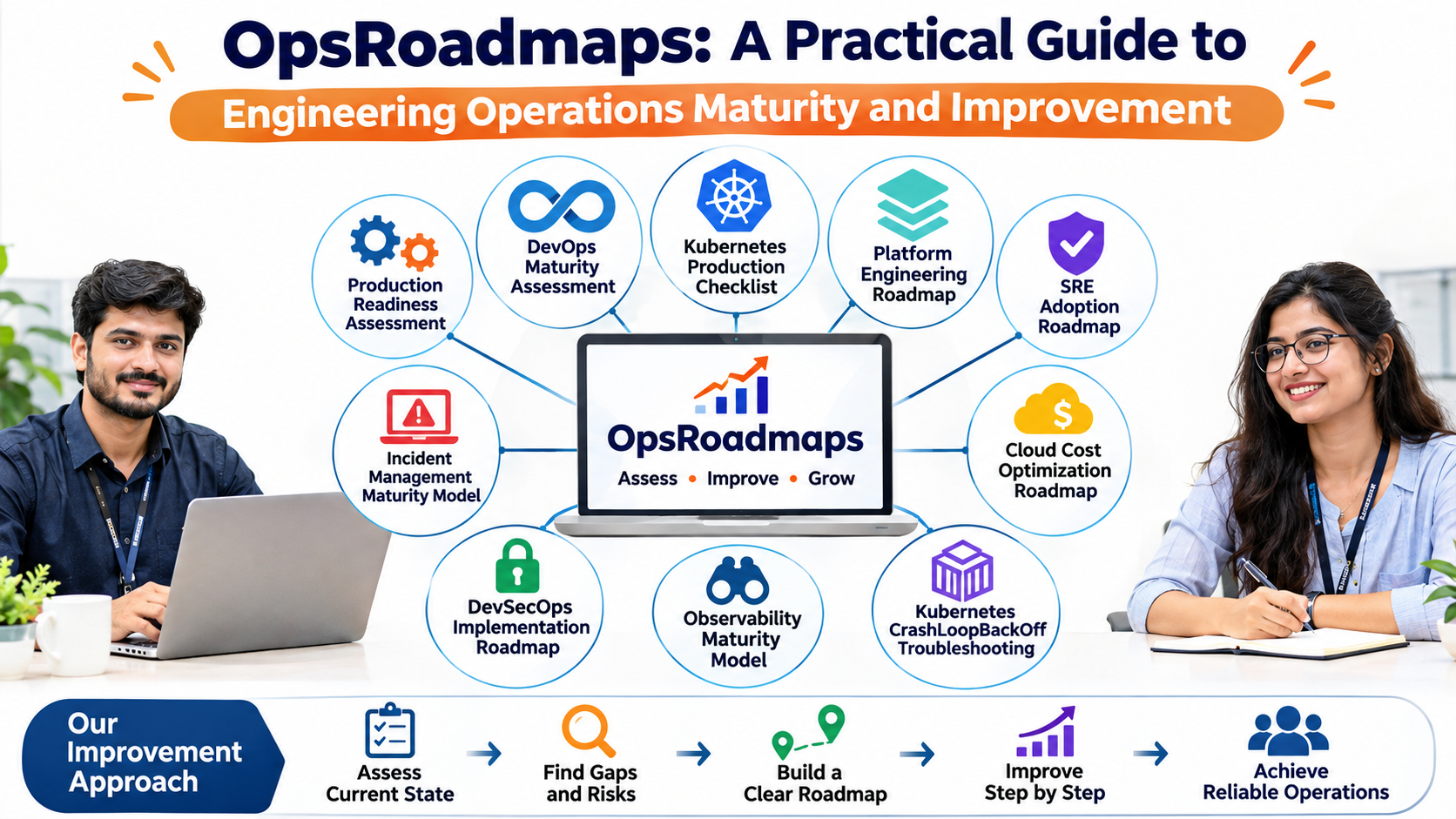
Introduction
Software teams face many challenges every day. They must build apps, fix bugs, protect data, and keep services running. But good software needs more than coding skills.
Teams also need clear plans, useful tools, and strong working habits. Without these things, small problems can become large failures. Engineers may spend hours fixing the same issues again and again.
OpsRoadmaps helps teams understand these problems. It gives them ways to check their work and find areas for improvement. Teams can review their skills, tools, systems, and daily processes.
The platform focuses on engineering operations. It helps teams move from unclear problems to clear action plans. This makes it useful for engineers, managers, cloud teams, and technology leaders.
Why Teams Need Better Engineering Operations
Imagine a team that builds a new application. The app works during testing. However, it crashes when real users visit.
The team may not have tested backups. It may also lack useful alerts or clear recovery steps. These gaps can cause long outages and unhappy users.
Good engineering operations help teams avoid such problems. Teams can prepare for failures before they happen. They can also learn from past mistakes.
OpsRoadmaps helps organizations review their operations. Its assessments and improvement plans can help teams find weak areas. Then, teams can decide which problems need attention first.
1. production readiness assessment: Prepare Your Software Before Real Users Arrive
A production readiness assessment helps teams check software before launch. It asks whether the system can handle real users and real problems.
Testing a feature is only one part of the work. Teams must also check security, speed, backups, alerts, and recovery plans.
For example, an online store may work well with ten users. But it may slow down during a large sale. A readiness review can help the team find this risk before launch.
Teams should review:
- Application speed
- User access and security
- Backup plans
- Recovery steps
- Error alerts
- Database performance
- Deployment safety
A production readiness assessment gives teams a clear list of problems. They can then fix the most serious risks first.
OpsRoadmaps helps teams review these areas through structured assessments. Its findings can help teams plan safer releases.
2. DevOps maturity assessment: Find Gaps in Your Software Delivery Process
DevOps helps development and operations teams work together. It also helps teams build and release software faster.
However, using DevOps tools does not mean a team has strong DevOps practices. A team may use a pipeline but still face manual errors. It may also struggle with testing, teamwork, or release planning.
A DevOps maturity assessment helps teams review their current practices. It can show where teams work well and where they need help.
Teams can review:
- Automated testing
- Build and release pipelines
- Team communication
- Infrastructure automation
- Code review practices
- Security checks
- Feedback systems
For example, a team may deploy software every week. But each release may need many manual steps. The assessment can help the team find ways to reduce this work.
OpsRoadmaps helps teams understand their current operational maturity. This can support better learning and improvement plans.
3. Kubernetes production readiness checklist: Build Safer Container Environments
Kubernetes helps teams run containers across many machines. Containers package an application and its needs together.
However, Kubernetes can become difficult to manage without proper planning. Teams must understand storage, networking, security, scaling, and system health.
A Kubernetes production readiness checklist helps teams review these areas before launch.
A useful checklist should include:
- Container resource settings
- Health checks
- Network rules
- Secret storage
- Access permissions
- Persistent storage
- Backup plans
- Monitoring
- Scaling rules
For example, a container may use too much memory. Kubernetes may stop it when the system runs out of resources. Teams can avoid this by setting suitable limits.
A checklist gives engineers a simple way to review their clusters. It also helps new team members understand production needs.
4. platform engineering adoption roadmap: Make Developer Work Easier
Platform engineering creates shared tools for software developers. These tools help developers complete common tasks without asking another team.
For example, developers may need a new testing environment. A platform can create it through a simple request.
A platform engineering adoption roadmap helps teams build this system carefully.
Teams should first learn what developers need. Next, they should create services that solve common problems.
A platform may include:
- Self-service tools
- Standard project templates
- Automated deployments
- Cloud resource requests
- Monitoring dashboards
- Security controls
- Helpful documentation
The goal is to make development easier. A platform should reduce repeated work, not add more steps.
Teams should also ask developers for feedback. This helps them improve the platform over time.
5. SRE adoption roadmap: Improve Service Reliability Step by Step
Site Reliability Engineering, or SRE, helps teams keep services working. It uses software tools and clear practices to reduce failures.
An SRE adoption roadmap helps teams build these practices slowly. Teams can begin by measuring service health.
They should understand:
- Service availability
- Response time
- Error rates
- User experience
- Incident response
- Service goals
- Automation needs
For example, a team may set a goal for website availability. It can then measure how often the website works correctly.
This information helps teams make better decisions. They can focus on problems that affect users.
SRE also helps teams reduce repeated manual work. Engineers can automate common tasks and spend more time improving systems.
6. incident management maturity model: Respond to Problems With Confidence
Every software system can face problems. Servers may fail, databases may slow down, or applications may stop working.
Incident management helps teams respond in an organized way. It also helps them restore services quickly.
An incident management maturity model shows how teams can improve their response process.
Teams should review:
- How they detect problems
- How they send alerts
- Who responds
- How they share updates
- How they restore services
- How they record incidents
- How they learn afterward
For example, a payment service may stop working. The team needs clear roles and steps. This helps everyone avoid confusion during a stressful event.
After the problem ends, teams should review what happened. They should find ways to prevent similar failures.
7. DevSecOps implementation roadmap: Make Security Part of Everyday Work
Security should not be a last-minute task. Teams should check security while they build and test software.
DevSecOps brings security into the development process. It helps teams find risks earlier.
A DevSecOps implementation roadmap can include:
- Code security checks
- Dependency reviews
- Secret detection
- Container security
- Access control
- Infrastructure checks
- Security testing
For example, a developer may add an unsafe package. A security tool can find it before the team releases the application.
Teams should start with simple security checks. They can then add more checks as their needs grow.
This approach helps teams protect applications without slowing down every task.
8. observability maturity model: Understand What Happens Inside Your Systems
Observability helps engineers understand system behavior. It uses logs, metrics, and traces.
Logs show events. Metrics show measurements. Traces show how requests travel through different services.
An observability maturity model helps teams improve how they collect and use this information.
Teams should review:
- Service dashboards
- Error messages
- Useful alerts
- Performance metrics
- Request traces
- Log storage
- System health
For example, a website may become slow. Engineers can use traces to find which service causes the delay.
However, collecting too much data can create confusion. Teams should focus on information that helps them solve problems.
Good observability makes troubleshooting faster. It also helps teams spot risks before users report them.
9. cloud cost optimization roadmap: Spend Cloud Money Wisely
Cloud services help teams create resources quickly. But unused resources can waste money.
A cloud cost optimization roadmap helps teams review their cloud spending. It also helps them find ways to reduce waste.
Teams should check:
- Unused servers
- Large storage volumes
- Extra network costs
- Old snapshots
- Oversized resources
- Idle databases
- Cloud spending alerts
For example, a test server may run all day. But the team may use it only during work hours. Turning it off at night can save money.
Teams should also review resource sizes. A small application may not need a large server.
Cost savings should not reduce service quality. Teams must balance cost, speed, security, and reliability.
10. Kubernetes CrashLoopBackOff troubleshooting: Find Why Containers Keep Restarting
CrashLoopBackOff happens when a Kubernetes container keeps failing. Kubernetes tries to restart it but waits longer between attempts.
This problem can have many causes. The application may have bad settings, missing files, or resource problems.
Engineers can start with these steps:
- Check the pod status.
- Read the container logs.
- Review Kubernetes events.
- Check environment settings.
- Review memory limits.
- Verify the application command.
- Check health probes.
For example, an application may need a database connection. If the connection settings are wrong, it may fail during startup.
Logs can show the cause. Engineers should review them before making changes.
A troubleshooting guide helps teams solve problems faster. It also gives beginners a clear process to follow.
How to Create a Useful Engineering Improvement Plan
Teams do not need to fix every problem at once. They should choose the most important issues and work on them step by step.
A simple plan can follow these actions:
Step 1: Review the current system
Check tools, processes, security, and reliability.
Step 2: Find important gaps
Look for problems that affect users or team work.
Step 3: Choose clear goals
Decide what the team wants to improve.
Step 4: Create small tasks
Break large goals into simple actions.
Step 5: Assign responsibility
Make sure every task has an owner.
Step 6: Review the results
Check whether the changes helped.
This process keeps improvement work simple. It also helps teams stay focused.
A Realistic Example: Improving a Small Engineering Team
Imagine a team that manages an online shopping application. The team faces slow releases and frequent errors.
It also lacks clear monitoring. Engineers often discover problems through customer complaints.
The team could begin with an operational assessment. It may find gaps in testing, alerts, backups, and deployment safety.
The team can then create a simple improvement plan:
- Add automated tests.
- Create useful alerts.
- Review backup plans.
- Improve deployment steps.
- Track application performance.
After completing these tasks, the team can review its results. It may then find new areas that need attention.
This example shows how small changes can create better operations.
How OpsRoadmaps Helps Engineering Teams
OpsRoadmaps focuses on engineering operations improvement. It offers assessments, maturity scores, findings, and improvement roadmaps.
Its resources cover many engineering disciplines. These include DevOps, GitOps, SRE, DevSecOps, cloud operations, platform engineering, FinOps, MLOps, and LLMOps.
Teams can use its resources to:
- Review operational health
- Find technical gaps
- Understand maturity levels
- Build improvement plans
- Learn troubleshooting steps
- Compare technical choices
- Review common practices
The platform also provides technical guides, checklists, runbooks, templates, and decision resources.
This can help teams move from unclear problems to useful action plans. Instead of guessing, teams can use structured information to guide their next steps.
Frequently Asked Questions About OpsRoadmaps
1. What is OpsRoadmaps?
OpsRoadmaps is an engineering operations assessment and improvement platform. It helps teams review their systems, find gaps, and create practical improvement plans.
2. Who should use OpsRoadmaps?
DevOps engineers, SREs, platform engineers, cloud architects, security professionals, and engineering managers can use it. Technology leaders can also use it to review team operations.
3. What is a production readiness assessment?
It checks whether software is ready for real users. It reviews security, performance, backups, monitoring, and recovery plans.
4. What is a DevOps maturity assessment?
It helps teams review their software delivery practices. It checks automation, testing, teamwork, security, and deployment processes.
5. Why do teams need Kubernetes checklists?
Kubernetes checklists help teams review important settings before production. They can check security, storage, scaling, monitoring, and resource limits.
6. What does platform engineering do?
Platform engineering creates shared tools and services. These tools help developers complete common tasks faster and more easily.
7. How does SRE improve reliability?
SRE helps teams measure service health and reduce failures. It also encourages automation and clear service goals.
8. What is an incident management maturity model?
It helps teams review how they detect, respond to, and learn from incidents. It can show where teams need better processes.
9. How can teams reduce cloud costs?
Teams can remove unused resources, choose suitable resource sizes, review storage, and track spending. Regular cost reviews can also help.
10. How can OpsRoadmaps support improvement?
It helps teams assess their current state, understand gaps, and create improvement plans. Teams can use its resources to guide practical changes.
Final Thoughts
Good engineering operations do not happen by chance. Teams need clear goals, useful tools, and simple processes.
They should first understand their problems. Next, they should choose the most important improvements. Then, they should measure progress.
A production readiness assessment can help teams prepare for launch. A DevOps maturity assessment can show process gaps. Checklists and roadmaps can help teams improve step by step.
OpsRoadmaps brings these ideas together through assessments and technical resources. It helps teams understand their operations and plan better changes.



Top comments (0)