
Introduction
Smart businesses rely on precise operational insights to outmaneuver competitors in fast-shifting markets. Yet data engineering groups continually fight brittle pipelines, unpredictable schema migrations, and manual script rollouts that cause frequent downtime. This chronic instability burns out talented developers, frustrates executive sponsors, and deprives decision-makers of timely intelligence.
To solve this persistent operational logjam, high-performing enterprises infuse disciplined software delivery methods directly into their analytical systems. This practical transition installs automated quality barriers, eliminates manual database maintenance, and unites disjointed engineering groups into cohesive delivery engines. DataOpsSchool provides the hands-on education, role-focused credentials, and specialized consulting engagements that technical teams require to convert fragile scripts into resilient production pipelines.
What is DataOps?
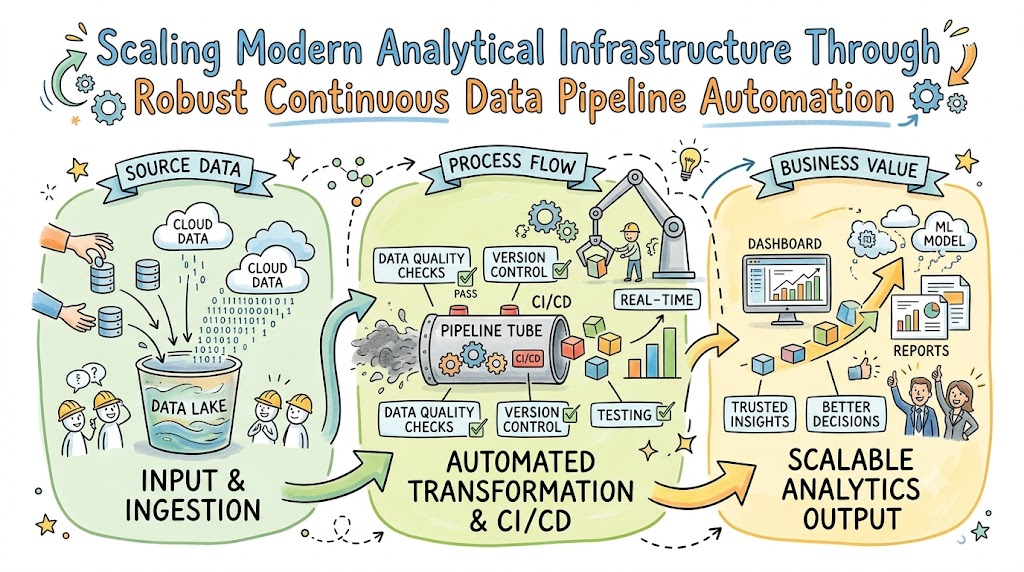
DataOps combines agile software development practices, continuous delivery workflows, and statistical process controls to streamline enterprise data operations. It creates a collaborative operational bridge between data platform creators and downstream business users, ensuring that raw transactional records rapidly transform into reliable executive intelligence.
Furthermore, this operational discipline replaces error-prone human handoffs with declarative configuration models, version-controlled transformations, and automated deployment pipelines. Engineers execute rigorous regression test suites before merging code into main branches, accelerating release cadence while safeguarding pristine data reliability across every analytical table.
Why DataOps Matters for Modern Data Teams
Uncontrolled pipeline outages waste critical sprint bandwidth and destroy stakeholder confidence across the organization. When database jobs fail without warning, analytics teams must abandon productive feature work to trace broken lineage graphs and repair malformed tables manually.
Empirical research shows that engineering squads lacking automated deployment workflows waste upwards of forty percent of their weekly capacity patching broken data models. Implementing continuous delivery protocols dramatically reduces pipeline downtime, ensures strict regulatory compliance, and frees up talented engineers to build impactful business features rather than extinguish operational fires.
Core Components of a DataOps Environment
Scaling an analytics platform demands comprehensive structural safeguards rather than ad-hoc terminal scripts executed in isolation. High-velocity engineering organizations maintain peak pipeline health by orchestrating six mission-critical architectural elements:
- Continuous Integration and Continuous Deployment (CI/CD): Developers test SQL transformations and ingestion pipelines automatically inside isolated containers before pushing changes into production branches.
- Pipeline Orchestration: Dynamic schedulers coordinate complex dependency trees, allocate cloud compute resources efficiently, and trigger downstream processes smoothly.
- Pre-Ingestion Quality Validation: Automated test suites execute boundary tests, null checks, and schema contracts before datasets land in analytical warehouses.
- Deep Platform Observability: Centralized monitors track runtime statistics, schema mutations, volume shifts, and complete lineage graphs across the entire architecture.
- Metadata Cataloging & Governance: Declarative frameworks assign model ownership, track schema revisions, and document analytical definitions systematically.
- Automated Environment Provisioning: Cloud orchestration modules construct disposable staging environments on demand, empowering developers to run integration tests safely.
Understanding DataOps Tools
Selecting an integrated toolchain determines how effectively your organization automates daily pipeline maintenance tasks. Modern teams combine declarative transformation engines like dbt with continuous deployment runners, distributed schedulers like Apache Airflow, and proactive telemetry monitors.
Contrasting outdated procedures with a modern delivery stack highlights the immense efficiency gains that automated architectures unlock:
| Operational Area | Legacy Data Management | Modern Automated Architecture |
|---|---|---|
| Validation Strategy | Manual, reactive spot audits | Automated continuous assertion tests |
| Pipeline Deployment | Manual terminal executions | Automated Git-triggered CI/CD flows |
| Incident Awareness | Direct consumer complaint tickets | Automated metric and threshold alerts |
| Data Governance | Unversioned spreadsheets and docs | Version-controlled declarative models |
How DataOps Changes the Data Engineering Workflow
Legacy engineering habits forced developers to modify SQL procedures locally, test scripts against random production samples, and run dangerous migration commands directly on operational servers. This unstructured habit routinely introduced corrupted tables, broke client-facing dashboards, and triggered lengthy rollback sessions.
Conversely, modern engineering frameworks instruct developers to create isolated feature branches, execute comprehensive test suites against disposable staging tables, and deploy updates through automated code pipelines. Consequently, developers identify regressions immediately, safeguard analytical models, and shield downstream dashboards from toxic upstream changes.
DataOps Training: What Should You Learn?
Targeted DataOps Training shows engineers how to incorporate standard DevOps methodologies directly into cloud analytical ecosystems. A practical curriculum explores distributed database design, automated pipeline testing, dynamic ELT workflows, and advanced multi-branch version control strategies.
Furthermore, students study automated data contracts, secrets orchestration, and containerized runtime management using Docker and Kubernetes. DataOpsSchool structures its educational tracks around hands-on terminal sandboxes, ensuring participants resolve actual architectural bottlenecks rather than absorb passive theory.
Using a DataOps Tutorial to Build Practical Skills
Following an end-to-end DataOps Tutorial offers direct technical practice that theoretical manuals cannot match. In this hands-on workshop, you build an automated ingestion pipeline that inspects incoming JSON payloads, executes continuous assertions, and delivers execution summaries to development channels:
Upstream Source ──> [Schema Contract Check] ──> [Automated Test Suite] ──> [Analytical Warehouse]
                             │                              │
                     (Alert & Quarantine)           (Halt & Rollback)
To execute this pattern, apply the following systematic implementation blueprint across your local development setup:
- Repository Configuration: Establish a central Git repository containing automated pre-commit linters and SQL syntax checkers.
- Contract Creation: Author clear YAML contracts defining column datatypes, acceptable ranges, and mandatory relational keys.
- Disposable Environment Setup: Automate continuous integration steps that spin up isolated test schemas for every incoming pull request.
- Automated Quality Execution: Execute data transformation logic alongside statistical profiling tests before permitting branch merges.
- Telemetry Integration: Route job run summaries, pipeline durations, and anomaly alerts straight into collaboration dashboards for immediate review.
DataOps Certification and Professional Development
Securing an industry-recognized DataOps Certification demonstrates your practical capacity to construct resilient data architectures within fast-moving enterprises. Technical hiring leads actively seek talent that can uphold continuous platform uptime while simultaneously controlling cloud compute expenses.
Additionally, professional certifications benchmark your technical capabilities against established industry best practices. Holding verified credentials demonstrates your ability to configure disaster recovery strategies, enforce data compliance rules, and build self-repairing analytical pipelines.
Becoming a Certified DataOps Engineer
The Certified DataOps Engineer path targets data engineers, analytics developers, and reliability specialists who construct, automate, and monitor day-to-day data infrastructure. Candidates learn to implement robust test suites, maintain CI/CD pipelines, and configure comprehensive platform telemetry.
Earning this practical credential proves that you can automate ingestion models, prevent bad data from reaching production, and maintain orchestration systems independently. It demonstrates that you can deliver clean, dependable analytical assets without resorting to manual interventions.
Becoming a Certified DataOps Architect
The Certified DataOps Architect credential challenges senior leaders who direct large-scale, multi-cloud data operations. Candidates discover how to design distributed data mesh ecosystems, implement cross-departmental data governance, and manage multi-tenant infrastructure.
Furthermore, this certification proves your strategic competence in coordinating engineering roadmaps, minimizing infrastructure sprawl, and aligning data reliability with core business outcomes. You demonstrate the skills needed to build resilient analytical frameworks that support massive corporate expansion.
DataOps Consulting for Organizations
Enterprises regularly suffer from brittle, tangled collections of legacy scripts that cause constant system downtime and inflate monthly cloud expenditures. Professional DataOps Consulting helps engineering executives locate delivery bottlenecks, audit existing architectures, and remove accumulated technical debt.
Through tailored operational audits, consultants build standardized automation playbooks that align distributed development teams behind shared deployment workflows. This targeted guidance eliminates costly platform friction, prevents proprietary vendor lock-in, and builds dependable data systems that support long-term company goals.
DataOps Services for Growing Teams
Scaling data platforms during accelerated business expansions strains engineering teams that lack specialized reliability personnel. Engaging external DataOps Services allows leadership to delegate pipeline refactoring, continuous monitoring setup, and automated testing integrations to seasoned practitioners.
Consequently, internal engineers focus their complete attention on shipping proprietary business features and training predictive models. Dedicated operational service engagements keep your underlying data infrastructure robust, optimized, and performant around the clock.
Who Can Benefit From Learning DataOps?
Applying continuous automation principles provides immediate operational advantages across a wide variety of engineering specialties:
- Data Engineers: Replace brittle terminal scripts with automated assertions, continuous delivery pipelines, and declarative data models.
- DevOps & SRE Specialists: Extend battle-tested infrastructure management, deployment observability, and incident escalation practices into database environments.
- Analytics Engineers: Build version-controlled, fully documented data pipelines that empower business analysts to query information safely.
- Platform Architects: Standardize multi-cloud architectures, implement cross-domain data contracts, and optimize expensive warehouse compute workloads.
A Practical DataOps Learning Roadmap
Engineers must adopt a progressive, skills-based trajectory rather than attempting to master dozens of complex tools all at once:
[Phase 1: Foundations]   ──> Git Branching, Linux Shell, Unit Testing
          │
[Phase 2: CI/CD & DAGs]  ──> Automated Deployments & Airflow Orchestration
          │
[Phase 3: Observability] ──> Anomaly Detection, Metrics & Lineage Tracing
          │
[Phase 4: Architecture]  ──> Data Mesh, Contracts & Scalable Cloud Platforms
- Phase 1: Core Foundations: Master distributed Git branching models, container fundamentals, and basic pipeline assertion tests.
- Phase 2: Orchestration & CI/CD: Build automated deployment workflows that spin up disposable test databases and validate transformation queries.
- Phase 3: Observability & Monitoring: Configure automated row-count assertions, end-to-end lineage visualizations, and proactive latency monitors.
- Phase 4: Advanced Architecture: Architect autonomous pipelines, manage cross-cloud access rules, and deploy decentralized data contracts across teams.
Common DataOps Mistakes to Avoid
Organizations often stumble by investing heavily in proprietary SaaS tools before instilling strong testing disciplines across their engineering squads. Software platforms cannot compensate for sloppy commit habits, unversioned database schemas, or nonexistent integration tests.
Similarly, engineering pods frequently over-complicate initial setups by introducing too many complex components simultaneously. Instead, begin with simple continuous integration checks, write baseline schema validations, and expand your tooling stack incrementally as your delivery maturity deepens.
How DataOpsSchool Can Support Your Learning Journey
DataOpsSchool provides a dedicated learning and advisory ecosystem built to foster operational excellence across analytical platforms. The platform delivers interactive terminal sandboxes, real-world case studies, and structured career curricula designed by experienced infrastructure veterans.
Whether you want an in-depth DataOps Course or seek enterprise DataOps Consulting, our targeted training bridges software engineering principles with data engineering realities. You gain practical skills that immediately eliminate pipeline downtime and accelerate your technical career trajectory.
Frequently Asked Questions About DataOpsSchool
- How does DataOpsSchool set itself apart from typical data science bootcamps?
Our modules teach automated deployment, observability, platform reliability, and pipeline testing rather than solely focusing on basic exploratory queries.
- Can beginners in data engineering successfully complete these courses?
Our fundamental tracks introduce foundational Git concepts and testing strategies before progressing into distributed orchestration and cloud delivery pipelines.
- Which primary concepts does the DataOps Course curriculum explore?
The curriculum covers declarative data transformations, continuous integration runners, pipeline containerization, orchestration scheduling, and observability frameworks.
- In what manner do students gain practical experience?
Learners build functional, automated pipelines within sandbox environments designed to replicate actual production disruptions, latency spikes, and schema breaks.
- Which factors distinguish the engineer track from the architect certification?
The engineer credential validates hands-on test construction and pipeline automation, while the architect certification evaluates enterprise topology, governance, and cloud scalability.
- Can enterprise organizations book private corporate upskilling sessions?
Our instructional team designs tailored training workshops mapped directly to your specific technical toolchain, cloud provider, and day-to-day pipeline pain points.
- How do consulting engagements assist internal technical departments?
Consultants diagnose deployment roadblocks, implement automated continuous integration frameworks, and mentor your engineers to sustain pipeline stability independently.
- Must students buy expensive cloud database subscriptions to complete tutorials?
Every tutorial runs on open-source frameworks and bundled lab environments, ensuring you practice advanced techniques without accumulating cloud costs.
- Why should practicing engineers pursue formal certification credentials?
Holding verifiable credentials offers tangible proof to employers that you possess the skills to build automated, cost-efficient, and resilient enterprise data pipelines.
- How regularly do instructors update platform course materials?
We refresh course content and practical lab assignments continuously to align with modern orchestration frameworks, emerging observability tools, and industry standards.
Final Thoughts
Constructing automated, self-healing data supply chains separates thriving analytical teams from departments overwhelmed by reactive maintenance chores. Embracing continuous testing, declarative transformations, and proactive observability prevents bad inputs from corrupting downstream executive decisions.
DataOpsSchool supports your operational evolution through immersive tutorials, rigorous training courses, recognized certifications, and strategic enterprise consulting. Master these modern engineering practices today to build scalable, fault-tolerant analytical pipelines that reliably fuel business growth.



Top comments (0)