
Returning traits with dyn (Trait Objects) in Rust
Theory (why it’s needed)
In Rust, traits are not concrete types. A function must return one concrete sized type.
But sometimes you want:
to return different concrete types from the same function (based on if, config, feature flags)
to store mixed types in one collection (Vec<...>) as long as they share behavior
That’s where trait objects come in:
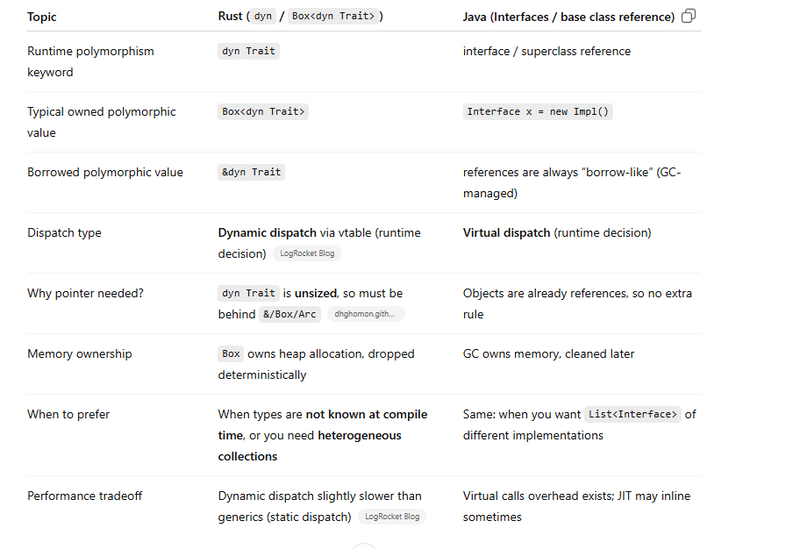
Box = “a heap-allocated value of some type that implements Trait”
Uses dynamic dispatch (runtime method lookup), like interface calls in Java
Needed because different concrete types have different sizes, but Box has a fixed size (a pointer + vtable)
Important comparison:
-> impl Trait can return only one concrete type

-> Box<dyn Trait> can return many different types
Rust: Full code (shows why dyn is needed)
use std::fmt;

// A trait = behavior contract
trait Notifier {
    fn notify(&self, msg: &str);
}

// Two different concrete types implementing the same trait
struct EmailNotifier {
    to: String,
}

struct SmsNotifier {
    phone: String,
}

impl Notifier for EmailNotifier {
    fn notify(&self, msg: &str) {
        println!("EMAIL to {} => {}", self.to, msg);
    }
}

impl Notifier for SmsNotifier {
    fn notify(&self, msg: &str) {
        println!("SMS to {} => {}", self.phone, msg);
    }
}

// ✅ Returning a TRAIT OBJECT: can return different concrete types
fn build_notifier(kind: &str) -> Box<dyn Notifier> {
    match kind {
        "email" => Box::new(EmailNotifier {
            to: "ashwani@example.com".to_string(),
        }),
        _ => Box::new(SmsNotifier {
            phone: "+91-99999-11111".to_string(),
        }),
    }
}

// ✅ Also useful to store mixed types in one Vec
fn demo_vec_of_trait_objects() {
    let list: Vec<Box<dyn Notifier>> = vec![
        Box::new(EmailNotifier {
            to: "a@demo.com".to_string(),
        }),
        Box::new(SmsNotifier {
            phone: "+91-88888-22222".to_string(),
        }),
    ];

    for n in list {
        n.notify("Server is UP");
    }
}

// ❌ Why impl Trait doesn't work here (explanation)
// fn build_notifier_impl(kind: &str) -> impl Notifier {
//     if kind == "email" {
//         EmailNotifier { to: "...".to_string() }
//     } else {
//         SmsNotifier { phone: "...".to_string() } // ERROR: different type
//     }
// }

fn main() {
    println!("--- Returning traits with dyn ---");
    let n1 = build_notifier("email");
    let n2 = build_notifier("sms");

    n1.notify("Payment received");
    n2.notify("OTP: 123456");

    println!("\n--- Vec<Box<dyn Trait>> example ---");
    demo_vec_of_trait_objects();
}
Output (Rust)
--- Returning traits with dyn ---
EMAIL to ashwani@example.com => Payment received
SMS to +91-99999-11111 => OTP: 123456

--- Vec<Box<dyn Trait>> example ---
EMAIL to a@demo.com => Server is UP
SMS to +91-88888-22222 => Server is UP
What exactly is happening (simple explanation)
EmailNotifier and SmsNotifier have different sizes
Rust cannot return “sometimes EmailNotifier, sometimes SmsNotifier” directly
Box has a fixed size pointer
Inside the box is the actual object
dyn Notifier uses a vtable so at runtime it knows which notify() to call
Java comparison (interfaces = Rust trait objects)
Java’s interface references are basically like Box:
you can return different classes as the interface type
you can store mixed implementations in a list
Java: Full code + output
import java.util.*;

public class Main {

    interface Notifier {
        void notify(String msg);
    }

    static class EmailNotifier implements Notifier {
        String to;
        EmailNotifier(String to) { this.to = to; }
        public void notify(String msg) {
            System.out.println("EMAIL to " + to + " => " + msg);
        }
    }

    static class SmsNotifier implements Notifier {
        String phone;
        SmsNotifier(String phone) { this.phone = phone; }
        public void notify(String msg) {
            System.out.println("SMS to " + phone + " => " + msg);
        }
    }

    // Return interface type (same idea as Box<dyn Notifier>)
    static Notifier buildNotifier(String kind) {
        if ("email".equals(kind)) {
            return new EmailNotifier("ashwani@example.com");
        } else {
            return new SmsNotifier("+91-99999-11111");
        }
    }

    static void demoList() {
        List<Notifier> list = Arrays.asList(
            new EmailNotifier("a@demo.com"),
            new SmsNotifier("+91-88888-22222")
        );

        for (Notifier n : list) {
            n.notify("Server is UP");
        }
    }

    public static void main(String[] args) {
        System.out.println("--- Returning interface ---");
        Notifier n1 = buildNotifier("email");
        Notifier n2 = buildNotifier("sms");

        n1.notify("Payment received");
        n2.notify("OTP: 123456");

        System.out.println("\n--- List<Notifier> example ---");
        demoList();
    }
}
Output (Java)
--- Returning interface ---
EMAIL to ashwani@example.com => Payment received
SMS to +91-99999-11111 => OTP: 123456

--- List<Notifier> example ---
EMAIL to a@demo.com => Server is UP
SMS to +91-88888-22222 => Server is UP



Top comments (0)