
You need a combination of
AI + backend + RAG + agents + tools/APIs + production engineering.
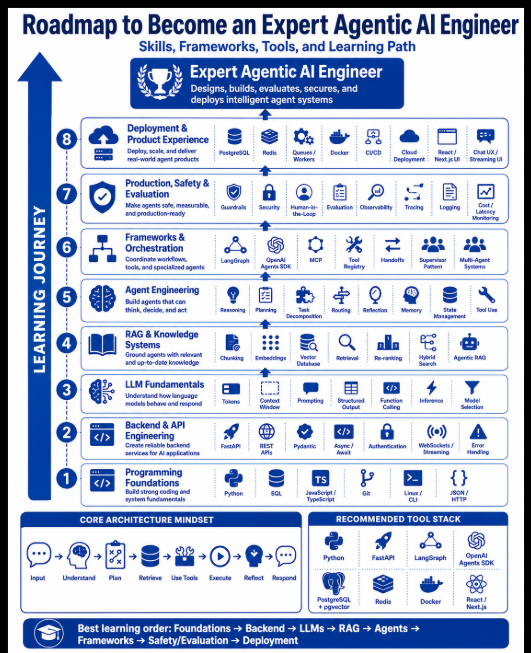
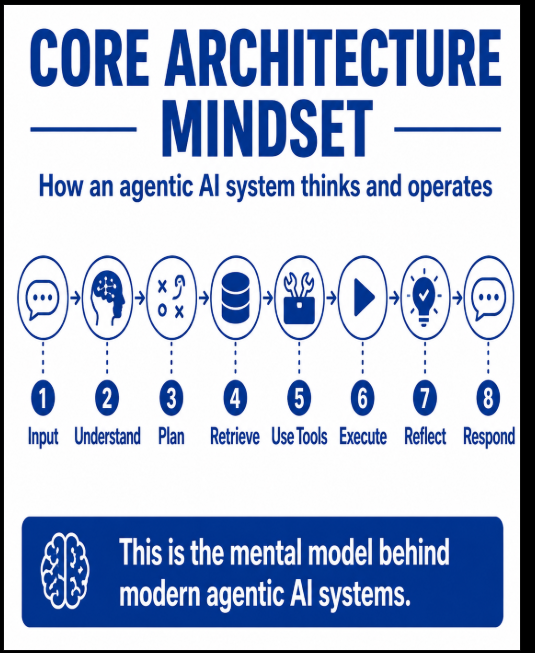
Python → FastAPI → LLM APIs → RAG → LangGraph → OpenAI Agents SDK → MCP → PostgreSQL/Vector DB → Redis → Docker → Observability/Evaluation → React/Next.js or your existing frontend
Diagram of Learning journey
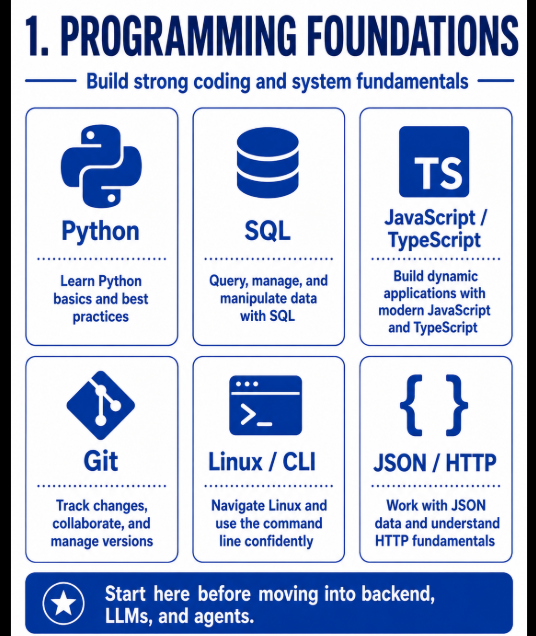
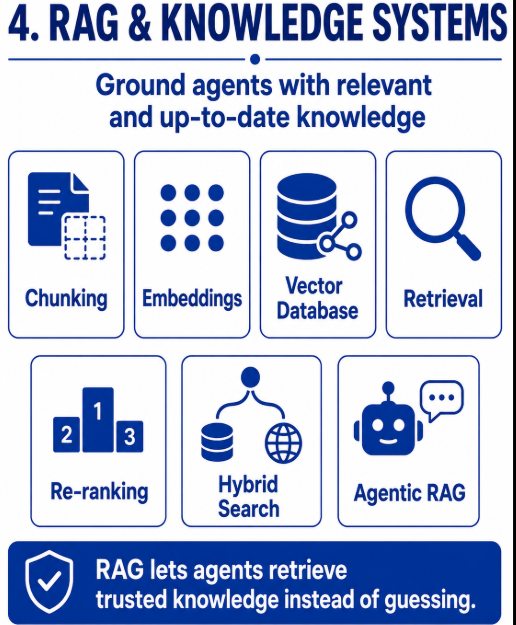
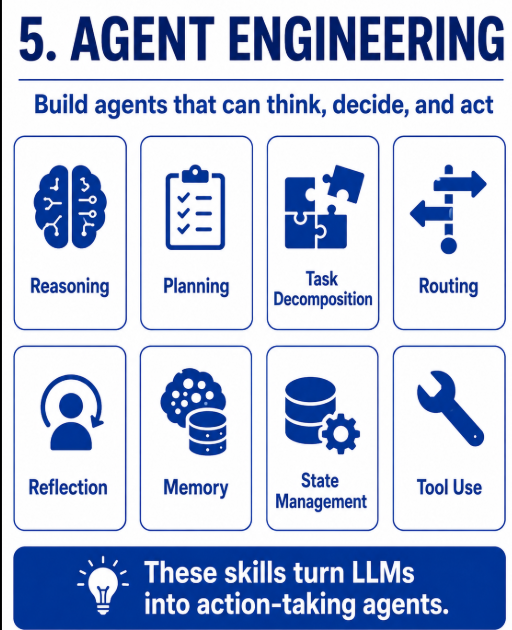
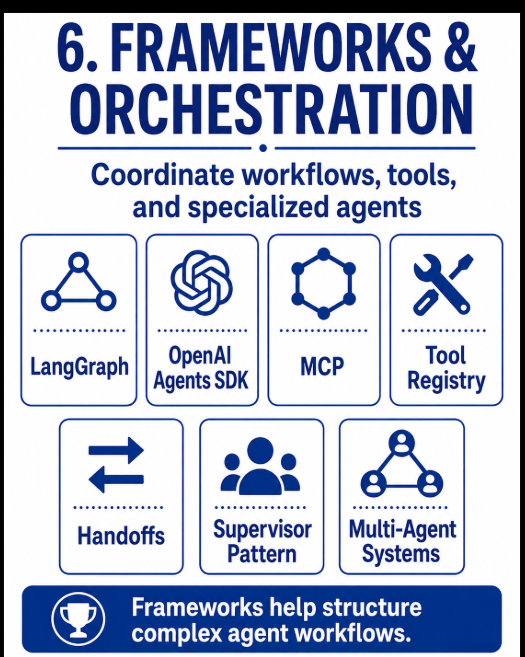
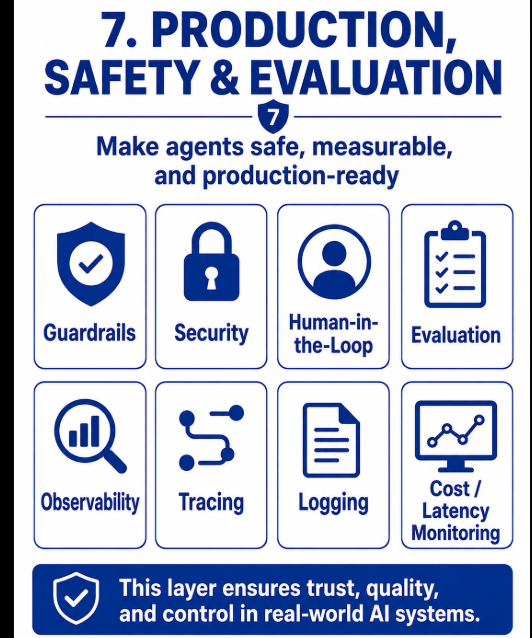
Programming Languages
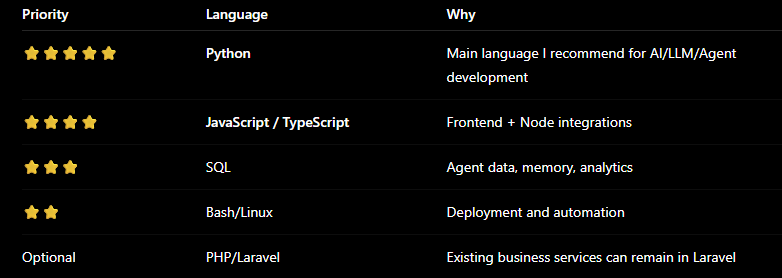
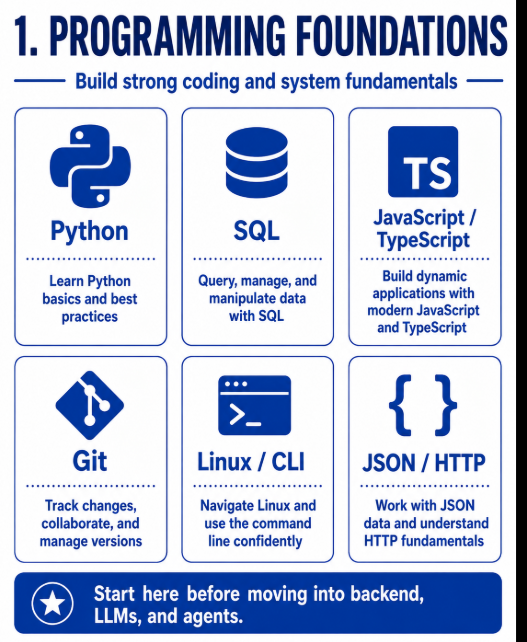
For you, I would not abandon Laravel.
Instead:
Existing Application
Laravel
     │
     │ REST API
     ↓
Agentic AI Service
Python + FastAPI
Python Skills
Before learning agent frameworks, become comfortable with:
Python Basics
│
├── Variables
├── Lists / Dicts / Sets
├── Functions
├── Classes / OOP
├── Exceptions
├── Modules
├── Type Hints
├── Decorators
│
├── JSON
├── HTTP requests
│
├── async / await
└── Environment variables
Pay special attention to:
async / await
Agent systems frequently wait on APIs, databases, LLM calls, search, and tools. FastAPI is based on Python type hints and supports asynchronous application patterns.
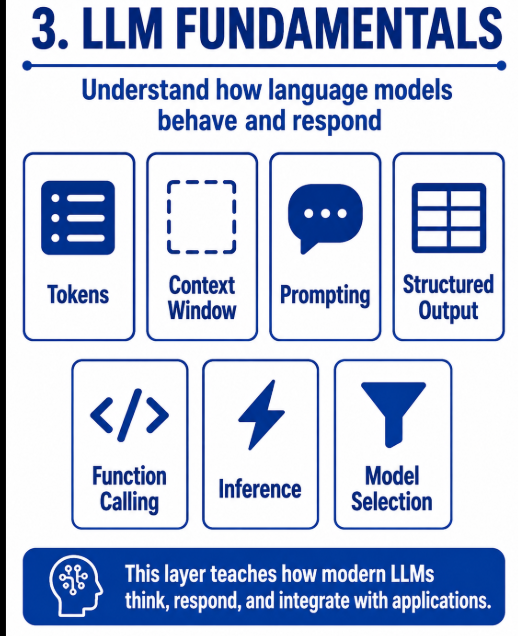
LLM Fundamentals
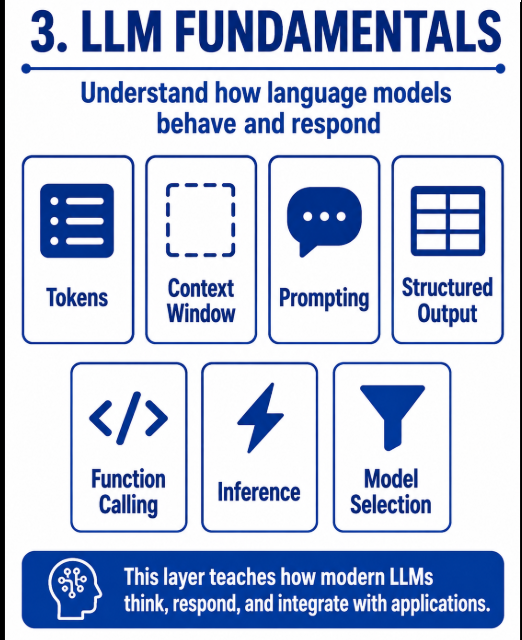
Before Agentic AI, understand the LLM itself.
Learn:
LLM
│
├── Prompt
├── System Prompt
├── Tokens
├── Context Window
├── Temperature
├── Structured Output
├── JSON Output
├── Function Calling
├── Tool Calling
├── Streaming
└── Model Selection
You should understand this basic interaction:
Prompt
  ↓
LLM
  ↓
Response
Then:
Prompt
  ↓
LLM
  ↓
Structured JSON
Then:
Prompt
  ↓
LLM
  ↓
Tool Decision
  ↓
Tool Call
  ↓
Result
  ↓
LLM
That third flow is where agent development starts becoming interesting.
Prompt Engineering
You don't need to become only a "prompt engineer", but you need strong prompting skills.
Learn:
System Instructions
User Prompt
Context
Few-shot Examples
Structured Output
Prompt Templates
Prompt Versioning
Tool Instructions
Agent Instructions
For example:
You are a hospital research agent.
Goal:
Find hospitals matching the user's requirements.
You may use:
- hospital_search
- web_search
- price_lookup
Return:
{
 hospital_name,
 location,
 price,
 rating
}
Structured Output + Pydantic
This is very important for production AI.
Don't build systems that return random free text everywhere.
Prefer:
LLM
 ↓
Validated structure
 ↓
Application
For example:
class HospitalResult:


    name: str
    city: str
    price: float
    rating: float
This allows AI output to become usable by backend applications.
Tool / Function Calling
This is one of the most important Agentic AI skills.
Understand:
Agent
 ↓
Decides tool
 ↓
Calls function
 ↓
Function executes
 ↓
Result returns
 ↓
Agent reasons again
Example:
User:
"Check my booking."
Agent
 ↓
get_booking_status()
 ↓
Booking API
 ↓
Status = Confirmed
 ↓
Agent
 ↓
Response
The OpenAI Agents SDK supports tools as part of its core agent model along with guardrails, handoffs, sessions, and orchestration.
APIs
An Agentic AI expert should be very comfortable with APIs.
Learn:
REST APIs
GET
POST
PUT
PATCH
DELETE
JSON
Headers
Bearer Tokens
OAuth
API Keys
Webhooks
Retries
Timeouts
Rate Limits
Because eventually:
AI Agent
   │
   ├── Gmail API
   ├── Calendar API
   ├── Payment API
   ├── CRM API
   ├── Hospital API
   ├── Booking API
   └── Internal Microservices
Your existing backend/API experience gives you a strong advantage here.
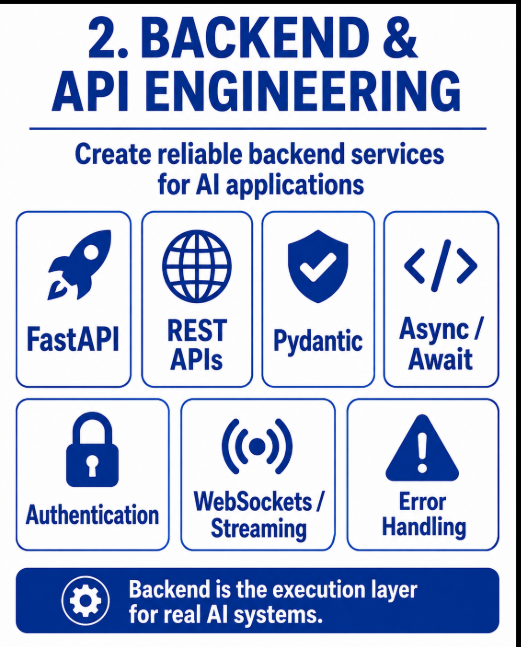
Backend — FastAPI
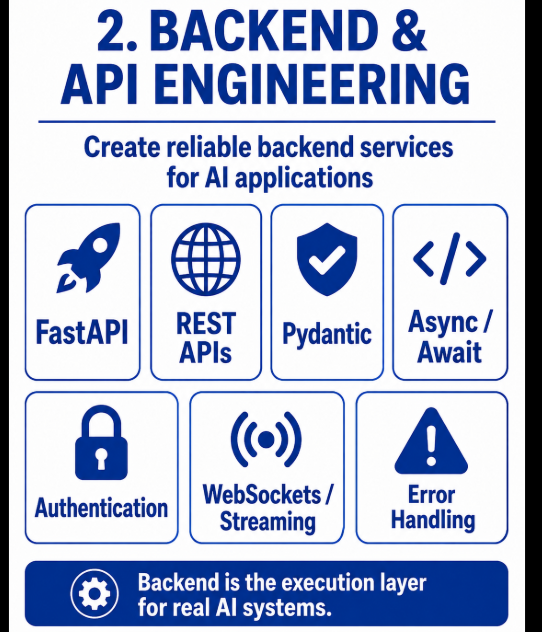
For Agentic AI development, I recommend:
Python + FastAPI
FastAPI describes itself as a modern Python framework for building APIs using Python type hints, and it supports async endpoints and streaming responses.
Architecture:

Frontend
   ↓
FastAPI
   ↓
Agent Service
   ↓
LangGraph
   ↓
LLM
Learn:
FastAPI
│
├── Routes
├── Request/Response
├── Pydantic
├── Dependency Injection
├── Authentication
├── Middleware
├── async/await
├── Streaming
├── Background Tasks
├── WebSockets/SSE
└── Error Handling
RAG
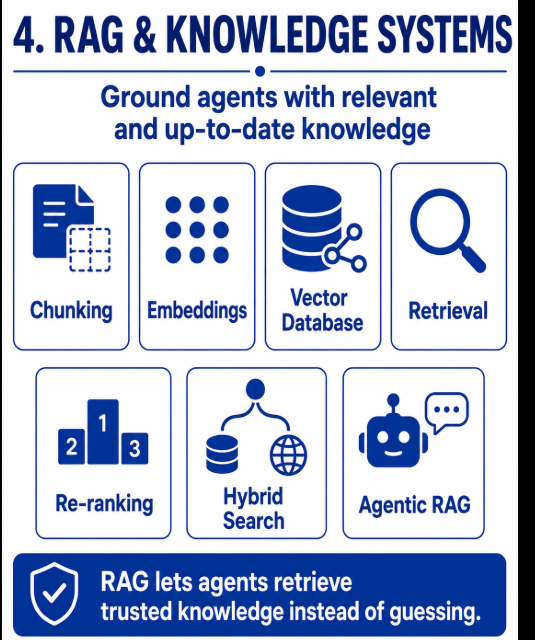
RAG is a core skill, not a separate career you should learn instead of Agentic AI.
Learn:
Documents
 ↓
Chunking
 ↓
Embedding
 ↓
Vector DB
 ↓
Retriever
 ↓
Relevant Context
 ↓
LLM
Then move into:
Advanced RAG
Query Rewriting
Hybrid Search
Metadata Filtering
Re-ranking
Multi-query Retrieval
Agentic RAG
RAG Evaluation
LangGraph's official documentation includes retrieval-agent patterns where an LLM can decide whether it needs to retrieve context from a vector store or answer directly.
Vector Databases
Learn the concepts before learning ten products.
Understand:
Embedding


Similarity Search


Cosine Similarity


Top-K


Metadata Filtering


Hybrid Search
For your stack, a practical starting point is:
PostgreSQL
+
pgvector
You can later explore dedicated vector systems depending on the project.
Agent Framework — LangGraph
This should be one of your main frameworks.
LangGraph focuses on orchestration for long-running, stateful agents and represents workflows using state and graph-based execution.
Learn:
LangGraph
│
├── State
├── Nodes
├── Edges
├── Conditional Edges
├── Graph
├── Tool Nodes
├── Checkpoints
├── Memory
├── Persistence
├── Human-in-the-loop
└── Multi-agent workflows
Conceptually:
START
  ↓
Understand
  ↓
Plan
  ↓
Need RAG?
 /       \
Yes       No
 ↓         ↓
Retrieve  Reason
  \       /
   ↓
Call Tool?
 /       \
Yes       No
 ↓         ↓
Tool      Respond
 ↓
Reflect
 ↓
END
That's why LangGraph fits your architecture extremely well.
OpenAI Agents SDK
After understanding agent fundamentals, learn the OpenAI Agents SDK too.
Its official SDK covers:
Agents
Tools
Guardrails
Handoffs
Sessions
Agent orchestration
Tracing
For example:
Triage Agent
     ↓
 ┌───┼──────────┐
 ↓   ↓          ↓
Sales Research Support
Agent Agent     Agent
So I would learn:
LangGraph first for deep orchestration concepts + OpenAI Agents SDK for another production agent-development approach.
State & Memory
This is critical.
Understand the difference between:
Context
≠
Memory
≠
State
Learn:
Short-term
Current conversation
Current workflow
Current task
Long-term
User preferences
Previous interactions
Historical information
Agent state
Current step
Completed tasks
Pending tasks
Tool results
Errors
The OpenAI Agents SDK also provides sessions for maintaining conversation history across agent runs.
MCP — Very Important
Add Model Context Protocol (MCP) to your roadmap.
MCP provides standardized mechanisms for servers to expose capabilities such as tools, resources, and prompts to AI applications.
Conceptually:
AI Agent
   ↓
MCP Client
   ↓
MCP Server
   │
   ├── Tools
   ├── Resources
   └── Prompts
For example:
Agent
 ↓
GitHub MCP
 ↓
Repositories / Issues / PRs
or:
Agent
 ↓
Database MCP
 ↓
SQL Database
An Agentic AI engineer should know MCP.
Multi-Agent Systems
Don't jump here immediately.
First master single agents.
Then:
Coordinator Agent
       │
       ├── Planner Agent
       ├── Research Agent
       ├── RAG Agent
       ├── Tool Agent
       ├── Analyst Agent
       └── Reviewer Agent
Learn:
Agent Routing


Agent Handoffs


Supervisor Pattern


Planner-Executor Pattern


Reviewer Pattern


Parallel Agents


Sequential Agents


Agent-as-Tool
Workflow Engineering
This skill separates demos from real enterprise agents.
Learn:
Workflow Engine
       ↓
Business Rules
       ↓
Approval
       ↓
Tool Execution
       ↓
Background Job
       ↓
Event Trigger
       ↓
Notification
LangGraph explicitly distinguishes predefined workflows from dynamic agents and supports persistence and workflow/agent patterns.
Databases
You should know:
SQL
PostgreSQL
MySQL
Cache / temporary state
Redis
Vector storage
PostgreSQL + pgvector
You already understand MySQL/MariaDB, so PostgreSQL would be a natural additional skill for AI-oriented systems.
Frontend
Frontend is useful but not the main skill for becoming an Agentic AI expert.
You need enough frontend knowledge to create good AI interfaces.
You can use:
React
+
Next.js
+
TypeScript
or continue using:
HTML
Tailwind CSS
JavaScript
Alpine.js
for simpler AI dashboards.
Important AI frontend concepts are:
Streaming responses


Chat UI


Tool execution status


Agent progress


Human approval UI


File upload


Conversation history


Citation display


Error/retry UI
For example:
AI is working...
✓ Understanding request
✓ Searching knowledge base
✓ Calling Hospital API
⟳ Comparing results
□ Generating report
That is much more useful for Agentic AI than simply creating a chatbot box.
Authentication & Authorization
Enterprise AI agents need security.
Learn:
OAuth 2.0


JWT


API Keys


RBAC


Permissions


Service Accounts


Secrets Management
Example:
Agent wants:
delete_user()


        ↓


Permission check


        ↓


Admin?
 /   \
Yes   No
 ↓     ↓
Run   Deny
Your existing Keycloak knowledge will be valuable here.
Human-in-the-Loop
Very important for real applications.
Example:
Agent
 ↓
Refund ₹50,000
 ↓
Approval Required
 ↓
Manager
 ↓
Approve
 ↓
Agent executes refund
Learn how to:
Pause workflow
Save state
Request approval
Resume workflow
Reject action
Override agent decision
Guardrails & AI Security
Learn:
Prompt Injection


Jailbreak Protection


Data Leakage


Tool Permissions


Input Validation


Output Validation


PII Protection


SQL Injection


Tool Abuse


Unsafe Code Execution
Production Agentic AI is as much security engineering as AI engineering.
Evaluation
Many developers skip this.
Don't.
Learn to evaluate:
Agent accuracy


RAG quality


Tool selection


Tool success rate


Hallucinations


Task completion


Latency


Token usage


Cost
Think:
Did the agent answer correctly?


Did it choose the correct tool?


Did the workflow finish?


Did retrieval return useful information?
Observability / Tracing
You should be able to see:
User Request
      ↓
Agent
      ↓
LLM call #1
      ↓
Tool call
      ↓
RAG search
      ↓
LLM call #2
      ↓
Final result
And measure:
Latency


Tokens


Errors


Tool calls


Cost


Workflow duration
Background Processing
Many agents execute jobs that take longer than a normal HTTP request.
Learn concepts around:
Queues


Workers


Retry


Scheduled Jobs


Event-driven execution
Typical architecture:
FastAPI
   ↓
Queue
   ↓
Worker
   ↓
Agent Workflow
   ↓
Database
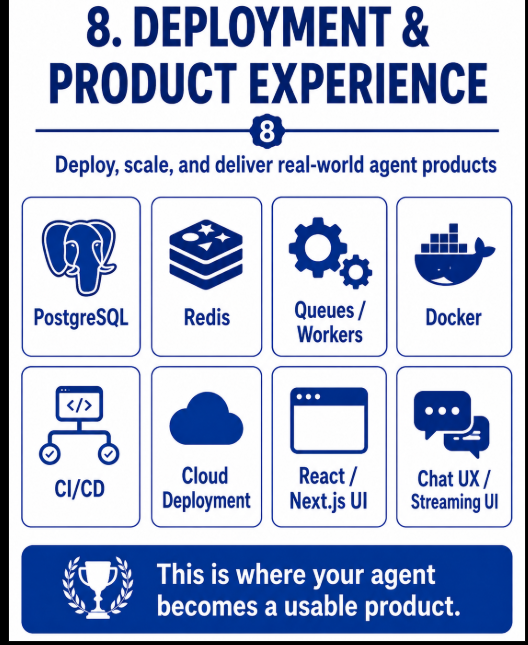
DevOps
To become an expert rather than only a prototype developer, learn:
Docker


Linux


Nginx


CI/CD
GitHub Actions
Environment Variables


Secrets


Logging


Monitoring
Later:
Kubernetes


Cloud deployment


Autoscaling
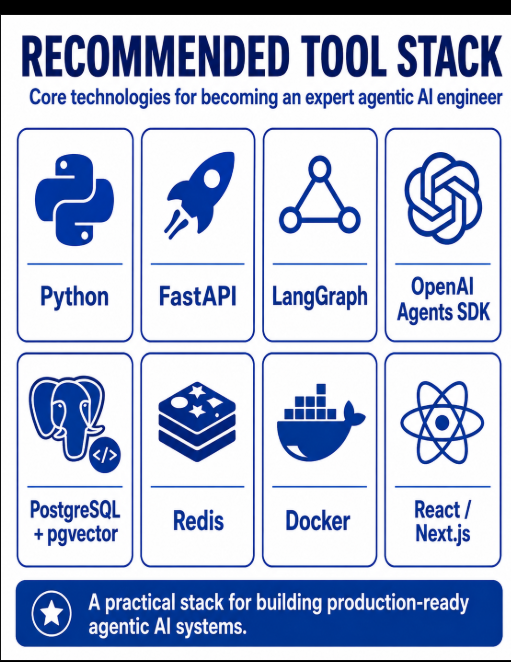
Your Recommended Agentic AI Stack
For your path, I would build around this:
 FRONTEND
                   │
       React / Next.js / Tailwind
          OR existing frontend
                   │
                   ↓
               FastAPI
                   │
        ┌──────────┴─────────┐
        ↓                    ↓
   Authentication        Agent API
                           │
                           ↓
                       LangGraph
                           │
          ┌────────────────┼───────────────┐
          ↓                ↓               ↓
         LLM              RAG             Tools
          │                │               │
          │          Embeddings            ├── REST API
          │                │               ├── Laravel APIs
          │           Vector DB            ├── Database
          │                │               ├── Email
          │           Documents            ├── Calendar
          │                                └── Browser
          │
          ├──────── Memory / State
          │
          ├──────── MCP
          │
          ├──────── Multi-Agent
          │
          └──────── Guardrails
                   │
                   ↓
             PostgreSQL
              + Redis
              + pgvector
                   │
                   ↓
               Docker
                   │
                   ↓
           Monitoring / Evals
What you should learn first
Don't try to learn everything simultaneously.
Follow this sequence:
PHASE 1
Python
 ↓
FastAPI
 ↓
LLM APIs
 ↓
Prompting
 ↓
Structured Output
 ↓
Tool Calling
PHASE 2
Embeddings
 ↓
Vector DB
 ↓
RAG
 ↓
Advanced RAG
PHASE 3
Agent Fundamentals
 ↓
LangGraph
 ↓
State
 ↓
Memory
 ↓
Tool Routing
 ↓
Human-in-the-Loop
PHASE 4
OpenAI Agents SDK
 ↓
Agent Handoffs
 ↓
Multi-Agent
 ↓
MCP
PHASE 5
Evaluation
 ↓
Guardrails
 ↓
Observability
 ↓
Security
 ↓
Docker
 ↓
Production Deployment
What NOT to spend too much time on initially
You do not need to become an expert in:
TensorFlow
PyTorch
Training huge LLMs
Advanced Data Science
Advanced Mathematics
Computer Vision
Model architecture research
before becoming productive in Agentic AI.
Understand the fundamentals of ML, deep learning, transformers, embeddings, and inference, but your main specialization should be:
building AI applications and autonomous workflows around foundation models.
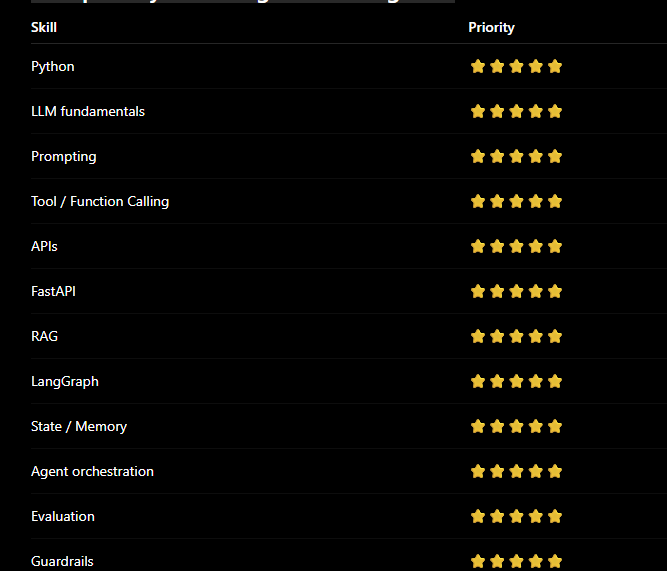
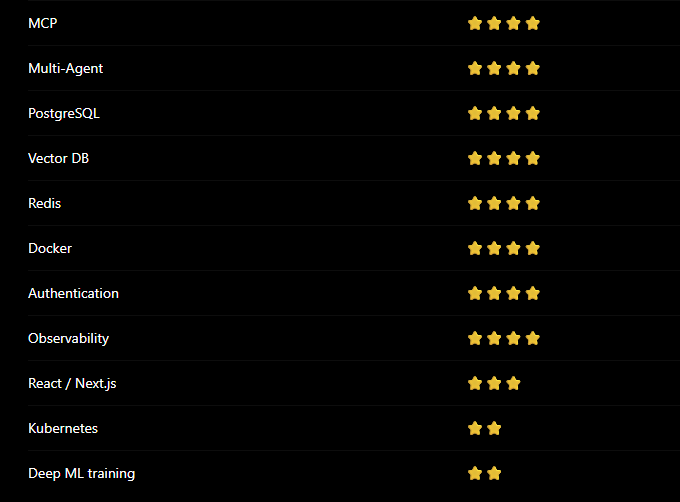
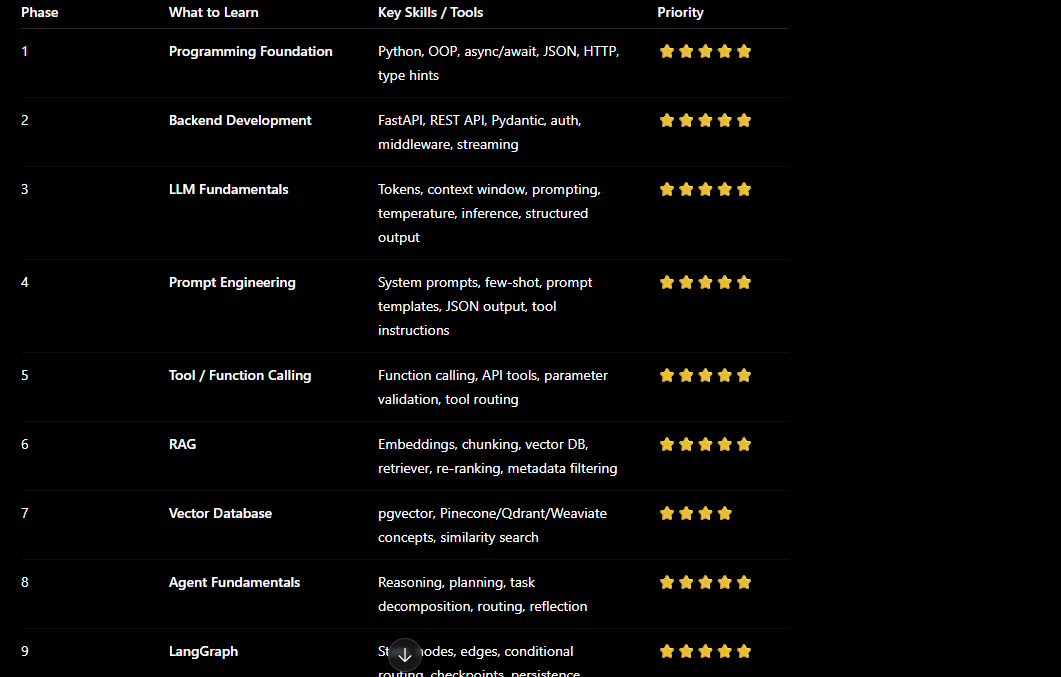
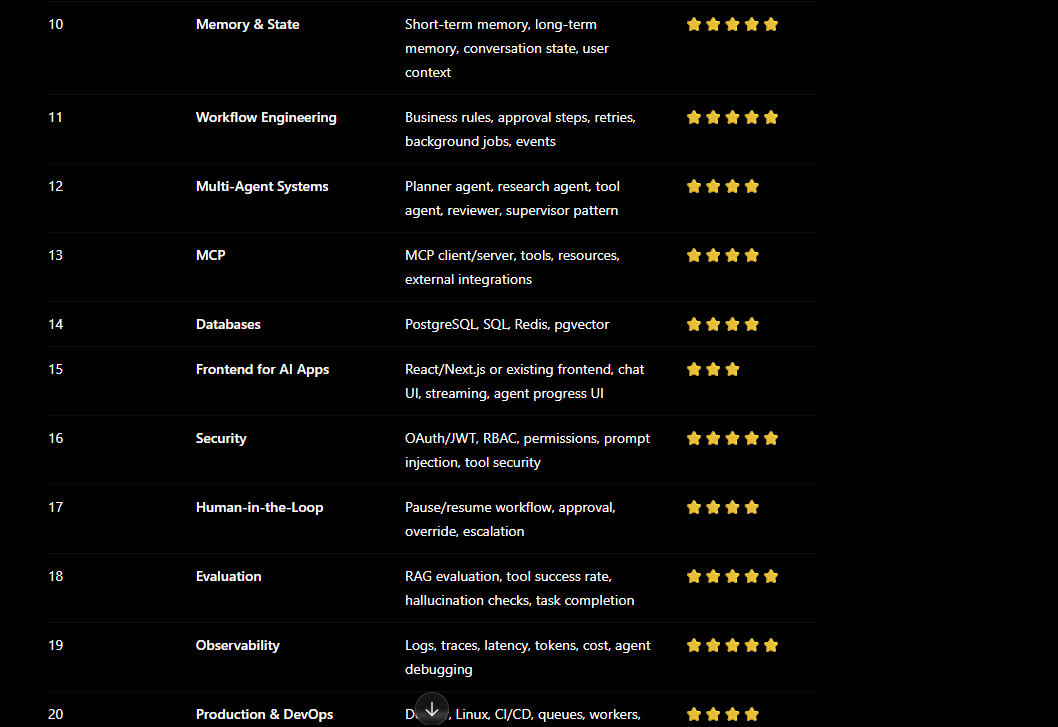
Skill priority for an Agentic AI Engineer
The main idea
For you, I would target this professional profile:
Full-Stack Developer → Python/FastAPI Developer → GenAI Developer → RAG Engineer → Agentic AI Engineer → Production AI Engineer
Best learning order
Python
   ↓
FastAPI
   ↓
LLM Fundamentals
   ↓
Prompt Engineering
   ↓
Structured Output
   ↓
Tool / Function Calling
   ↓
Embeddings
   ↓
Vector Database
   ↓
RAG
   ↓
Advanced RAG
   ↓
Agent Fundamentals
   ↓
LangGraph
   ↓
State + Memory
   ↓
Workflow Execution
   ↓
Human-in-the-Loop
   ↓
Multi-Agent Systems
   ↓
MCP
   ↓
Security + Guardrails
   ↓
Evaluation
   ↓
Observability
   ↓
Docker + Production Deployment
       Agentic AI Engineer
                       │
        ┌──────────────┼──────────────┐
        ↓              ↓              ↓
      LLM             RAG          Backend
        │              │              │
   Prompting       Embeddings      FastAPI
   Reasoning       Vector DB       APIs
   Tools           Retrieval       Database
        │              │              │
        └──────────────┼──────────────┘
                       ↓
                 Agent Framework
                   LangGraph
                       ↓
              State + Memory
                       ↓
                 Tool Calling
                       ↓
                  Workflows
                       ↓
                 Multi-Agent
                       ↓
              MCP + Integrations
                       ↓
          Security + Evaluation
                       ↓
             Production / DevOps



Top comments (0)