
What Is Performance Marketing? A Complete Beginner’s Guide
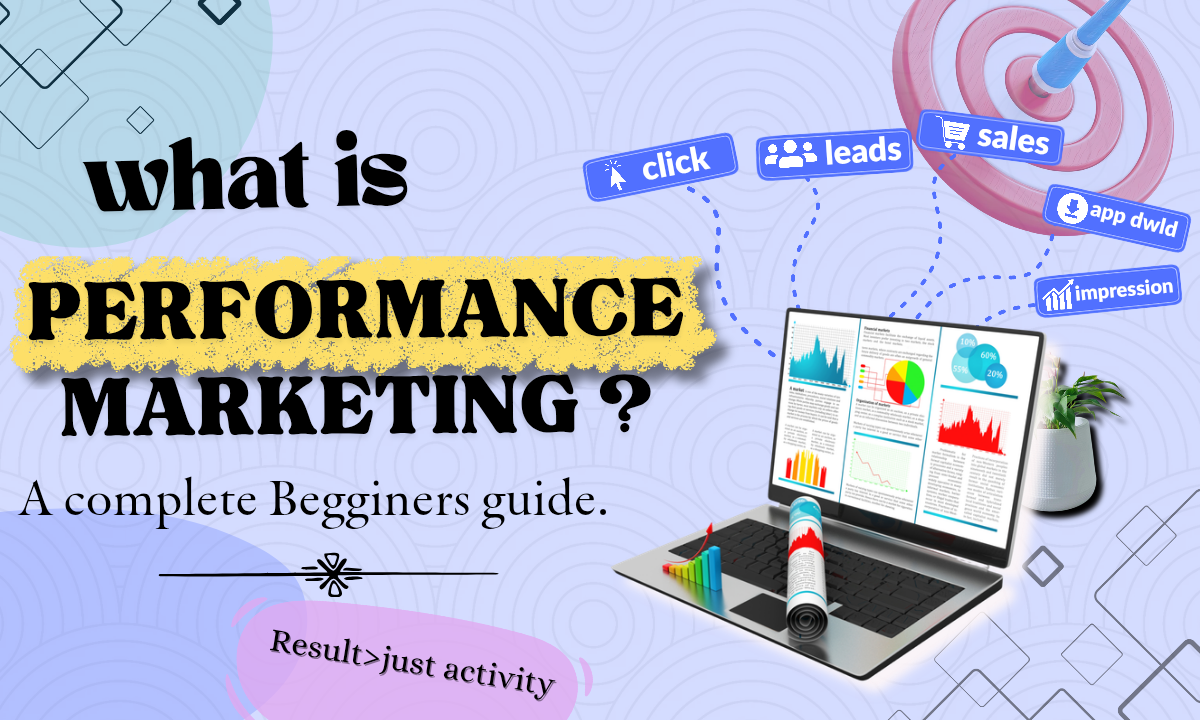
In today’s world, businesses do not just want their advertisements to get views and impressions. They want action — leads, sales, hits, or enquiries — to know how their marketing campaign is performing and what they get in exchange for their investment.
This is a brief introduction to what is performance marketing, how does it work, its channels, benefits, metrics, strategy, and examples — for complete beginners.
What Is Performance Marketing?
Performance marketing is a type of digital
marketing where marketers track results — clicks, impressions, leads, sales, app downloads, and other actions.
For example, a marketer spends ₹10,000 on a digital ad campaign and gets 50 leads. They can calculate how much it costs per lead and which ads performed better to get more leads.
A simple definition of performance marketing would be focusing on results, not just marketing activity.
Performance Marketing Explained: How Does It Work?
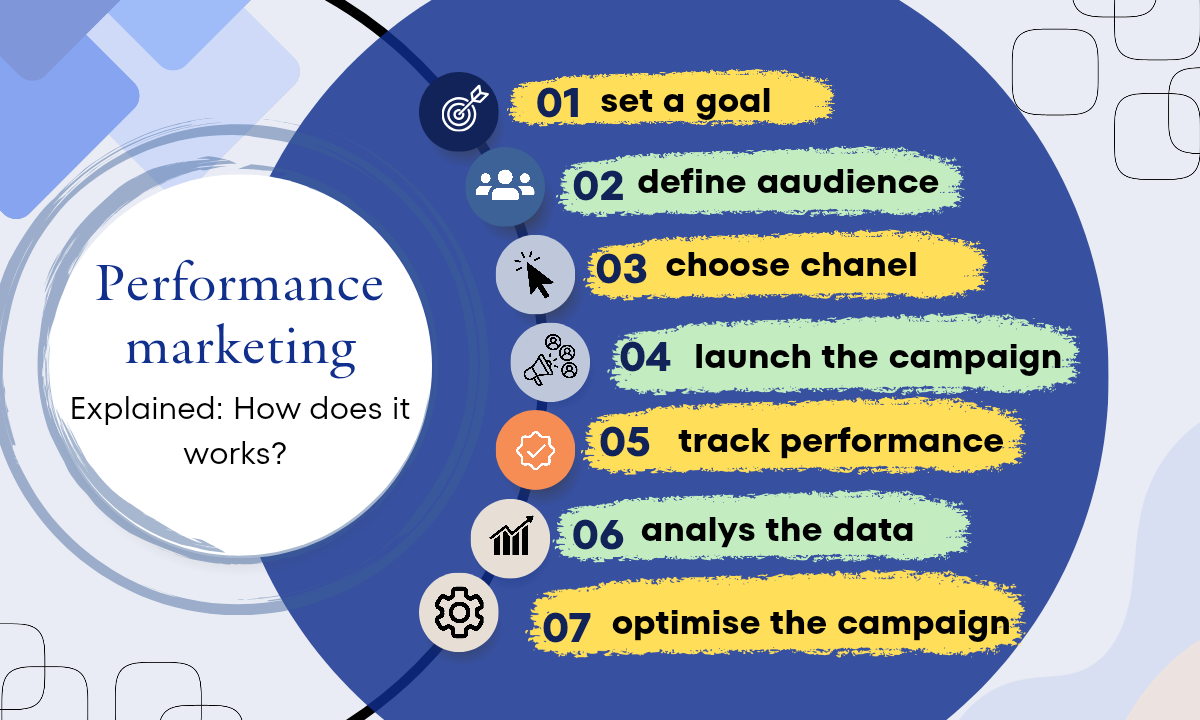
There are several steps to any performance marketing activity.
First, marketers set the goal — what they want — leads, impressions, app downloads, sales, enquiries, etc.
Then they define the target audience and research their characteristics.
After that, marketers choose the most appropriate marketing channel — Google, social media, affiliate marketing, display ads, or other.
Marketers launch the campaign, set the budget, prepare the advertisement, and install tracking.
Then, they follow the marketing campaign’s performance — how many clicks, impressions, or other actions it gets.
Marketers analyse the collected data — how much budget they spent, how much revenue the campaign earned, how many leads were acquired, and other metrics.
Finally, they optimize the campaign — change the marketing strategy according to research and analytics.
What Is Performance Marketing in Digital Marketing?
A common beginner’s question about performance marketing is: what is performance marketing in digital marketing? Simply put, digital marketing is a broad term encompassing SEO, social media, content, email, online advertising, and other marketing types. Performance marketing is one way of organizing marketing campaigns around specific goals.
While such digital marketing activities as SEO are aimed at a rather broad goal (increasing traffic), performance marketing practices are organized around more specific objectives (e.g., leads, sales). In this sense, the distinction between digital marketing and performance marketing is helpful in that it allows newcomers to grasp the two areas.
Performance Marketing Channels
Multiple marketing channels can be used in performance marketing campaigns, such as:
Search Advertising
Google Ads and other search advertising is ideal for audiences already searching for a product or service.
Social Media Advertising
Facebook, LinkedIn, and other social media platforms’ advertising tools give a wide range of targeting options.
Affiliate Marketing
Affiliate marketing channels involve other websites or influencers promoting your brand and earning a percentage of sales or other actions.
Display Advertising
Display ads are graphic banners that appear on various websites and are great for remarketing and impressions.
Email Marketing
Email marketing campaigns can also be organized as performance marketing. For example, a marketer can measure how many email subscribers sign up for a newsletter or shop.
Influencer Marketing
Influencer campaigns can organize performance marketing around sales, enquiries, or other narrow goals.
Performance Marketing Examples
Imagine that you are the owner of a clothing retailer shop. You decide to invest ₹20,000 in a performance marketing campaign. As a result, you get 2000 clicks, 150 purchases, and ₹80,000 in revenue.
Now you are fully aware of the value brought by your marketing campaign. You can easily calculate the cost per link click, cost per conversion, and return on investment.
Unlike in the past, when you might have stated something like “our marketing campaign got plenty of clicks,” now you can say that you have got 2000 clicks and 150 purchases worth ₹80,000 within the ₹20,000 budget..
Benefits of Performance Marketing
Performance marketing has several benefits for businesses that employ it.
Measurable Results
Performance marketing lets businesses know how their marketing campaign performs.
Budget-Friendly
With performance marketing, businesses get actionable data to tweak their campaigns. For example, if one channel gives more traffic per budget than others, the business can reallocate the budget towards it. That way, performance marketing helps businesses get the most value for their marketing budget.
Targeted Advertising
Thanks to modern digital marketing tools, companies can use performance marketing to get highly-targeted advertising.
Easy Optimization
Performance marketing campaigns are relatively easy to optimize. If one marketing channel or strategy is not performing well, businesses can try different options.
Scalability
Performance marketing lets businesses scale the most successful campaigns.
Performance Marketing Metrics You Should Know
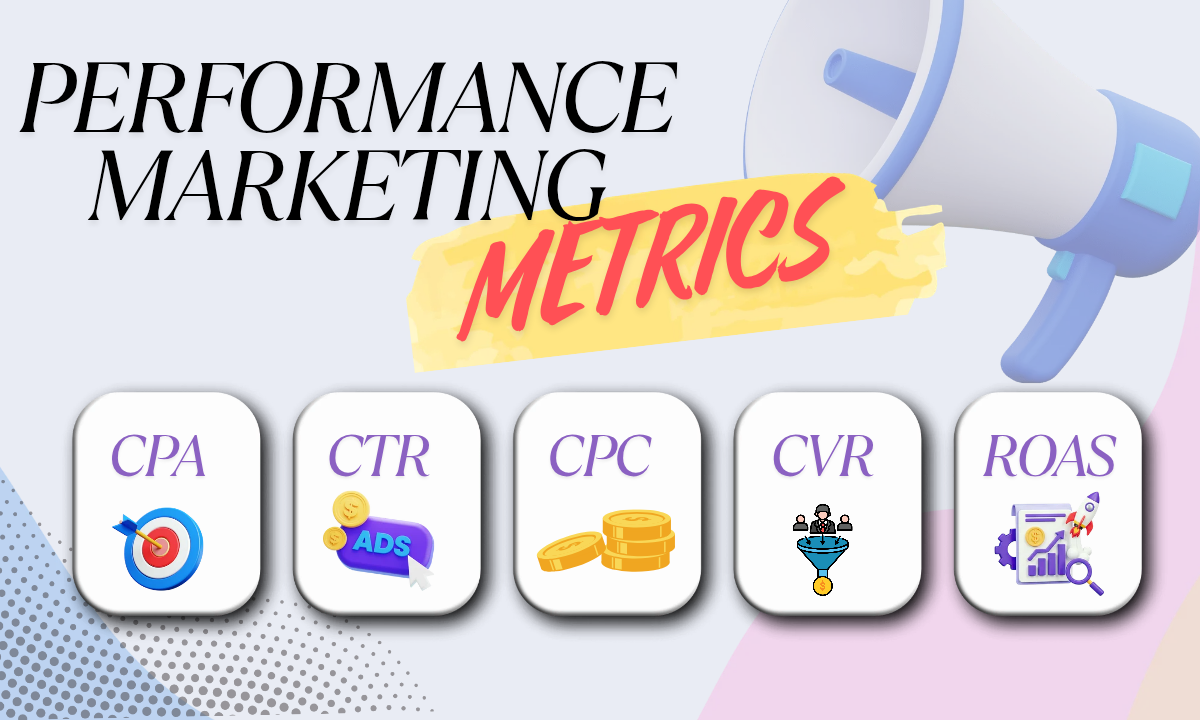
Performance marketing campaigns have several essential metrics that measure their performance.
Some of the most important KPIs to measure the performance marketing success are:
1.CTR (Click-Through Rate) is the ratio of users who clicked on the advertisement to the number of users who saw it.
2.CPC (Cost Per Click) is the cost of the advertising campaign per click.
3.Conversion rate is the measurement of the percentage of website visitors who took a specific action such as filling the form.
4.CPA (Cost Per Acquisition) is the ad cost per conversion.
5.ROAS (Return On Ad Spend) represents the ratio of revenue from an advertising campaign to the cost of this advertising. For example, if the company’s advertising cost ₹10,000, and the total revenue from the ads was ₹40,000, it means that the ROAS is 4x. Therefore, the ratio is 4:1.
Performance Marketing Strategy
An essential part of performance marketing is strategy — what marketers should do to reach their goals. The most significant element of the performance marketing strategy is the goal. After setting the marketing objectives, the marketer creates the rest of the strategic framework around it, including the target audience, offer, marketing channel, landing page, ad, tracking, analysis, and optimization.
For instance, to get student inquiries, the marketer identifies their target audience and develops their offer (a training course), selects the marketing channel, creates the advertisement and directs traffic to the landing page. Then, he analyzes the campaign performance and optimizes the marketing funnel.
Performance Marketing Tools and Platforms
Performance marketing requires marketers to use a variety of tools and platforms.
Some of the most important performance marketing tools and platforms are:
- Google Ads
- Meta Advertising
- Google Analytics
- Google Tag Manager
- Google Search Console
- Looker Studio
- CRM and lead management tools
- Keyword research tools
- Conversion tracking tools
Performance Marketing vs Digital Marketing
Performance Marketing vs Digital Marketing is also a common beginner question. As mentioned at the beginning of the article, digital marketing is a broad subject that covers multiple areas, including SEO, social media, content, email, and advertising. Performance marketing is an advertising approach that focuses on achieving specific, narrow goals — impressions, leads, sales, conversions, and other performance indicators.
Performance Marketing Career: Skills You Need
Performance marketing can be a great professional field for people who enjoy business, marketing, creativity, and analytics. Some of the most essential performance marketing skills are:
- Google Ads
- Meta Advertising
- Audience Research
- Copywriting
- Analytics
- Conversion Tracking
- Landing Pages Optimization
- A/B Testing
- Campaign Optimization
- Marketing Strategy
- Customer Behaviour Research
Performance Marketing Course At Royalfinity Academy
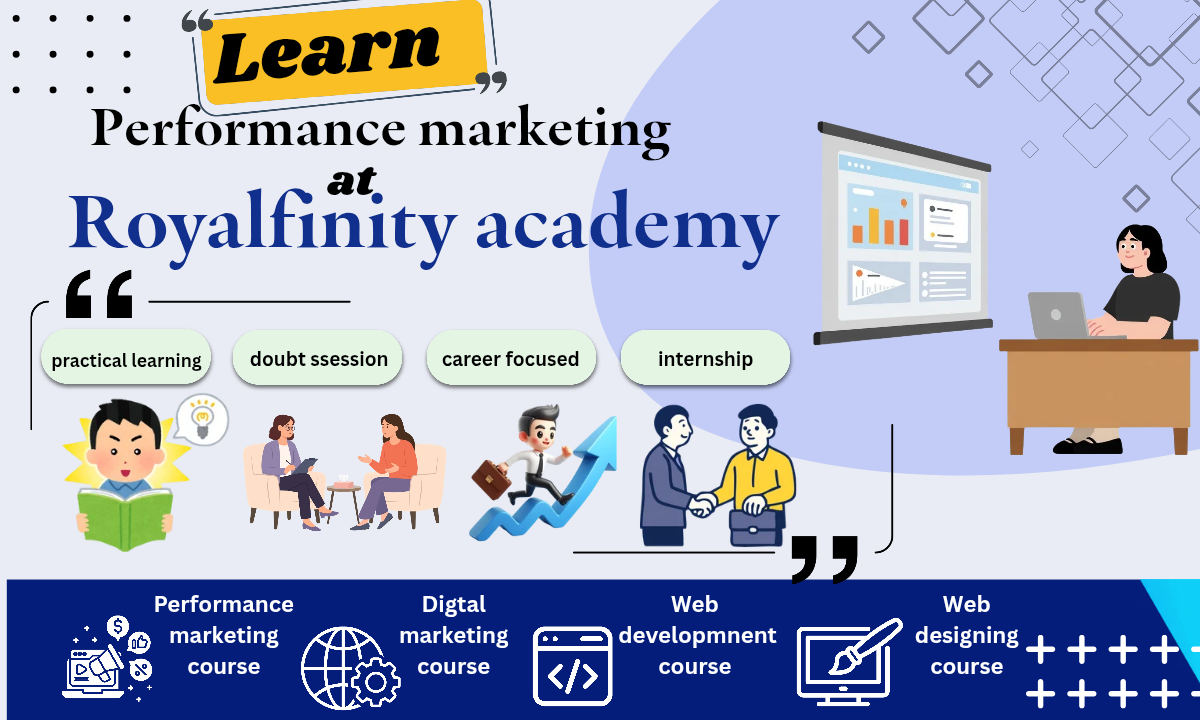
Learning performance marketing from books and videos is great, but actual practice helps one realize what theoretical concepts apply to practice. That is why at Royalfinity Academy we teach performance marketing, digital marketing, web development, and web designing.
The key features of learning performance marketing at Royalfinity Academy are:
Practical Learning: We believe that the best way to learn performance marketing is in practice. Therefore, our students do not only listen to theoretical concepts but apply them in practice.
Doubt Sessions: Our trainers are always available to answer students’ questions and help them understand the subject better.
Beginner-Friendly: Our performance marketing course is perfect for complete beginners. We provide them with all the tools and knowledge that help them become experts in the field.
Multiple Digital Skills: In addition to performance marketing, our students can also learn digital marketing, web development, and web designing.
Career-Friendly Learning: We help students learn how they can turn their skills into a profitable career. Our students learn how to run successful freelancing or business as entrepreneurs.
If you are looking for a performance marketing course or performance marketing institute to learn valuable digital marketing skills for a career as a marketer, advertiser, or marketer, you can select Royalfinity Academy as your choice for practical performance marketing training.
Explore Courses at royalfinity academy
You can also visit the courses links on our page:
For contact click this link:- Contact Royalfinity Academy
Is Performance Marketing a Good Career Option?
Performance marketing provides various opportunities as it helps companies to get more value for their money spent on marketing activities. In other words, organizations seek clicks, impressions, leads, sales, conversions, and others. Therefore, they try to find experienced people who can offer them a higher ratio of these or that performance marketing services can provide.
However, the marketer must constantly update their skills. The performance marketing landscape is always changing, and those who stop learning and practising eventually fall behind.
A successful performance marketer is a creative, analytical, and business-savvy individual who knows how to advertise and understands the audience. With that being said, let’s summarize what we discussed about performance marketing in this beginner’s guide.
Conclusion.
So, what is performance marketing? In brief, it is a discipline that focuses on achieving specific marketing goals — impressions, clicks, leads, sales, conversions, etc. Its greatest strength is that it helps businesses optimize their marketing budget — understand what they spend the money on and what results they get from it.
As a beginner, the best way to start learning performance marketing is to learn its theoretical concepts — the fundamentals. After that, practical application of the learned theoretical concepts using actual marketing campaigns, projects, tools, and case studies will help you further develop your performance marketing skills.
If you are looking to learn performance marketing, digital marketing, web development, or web designing, you can consider the courses provided by the Royalfinity Academy.
Learn the concept, practise the skill, analyse the results, improve constantly.
Frequently Asked Questions(FAQs)
1.What is performance marketing in simple words?
Performance marketing is a type of digital advertising where businesses get charged for specific marketing results — clicks, impressions, leads, sales, etc.
2.How does performance marketing work?
Performance marketing works by first defining the goal — what action the business wants the target audience to make. Then, the marketer sets the budget, defines the target audience, chooses the advertising channel, launches the campaign, tracks the results, analyses the data, and optimizes the advertising campaign.
3.What are the main performance marketing channels?
The main performance marketing channels are search advertising, social media advertising, affiliate marketing, display, email marketing, influencer marketing, and many others.
4.What skills are required for performance marketing?
Some of the essential skills required for performance marketing are advertising, audience research, analytics, copywriting, conversion tracking, and campaign optimization.
6.Can beginners learn performance marketing?
Yes, beginners can certainly learn performance marketing. The best way for them to do it is by learning the fundamentals and gradually practising, analyzing, and improving their practical skills in performance marketing.
7.Where can I learn performance marketing?
You can learn performance marketing by enrolling in the Performance Marketing Course at Royalfinity Academy. Additionally, you can also pursue a career in digital marketing, web development, and web designing.



Top comments (0)