
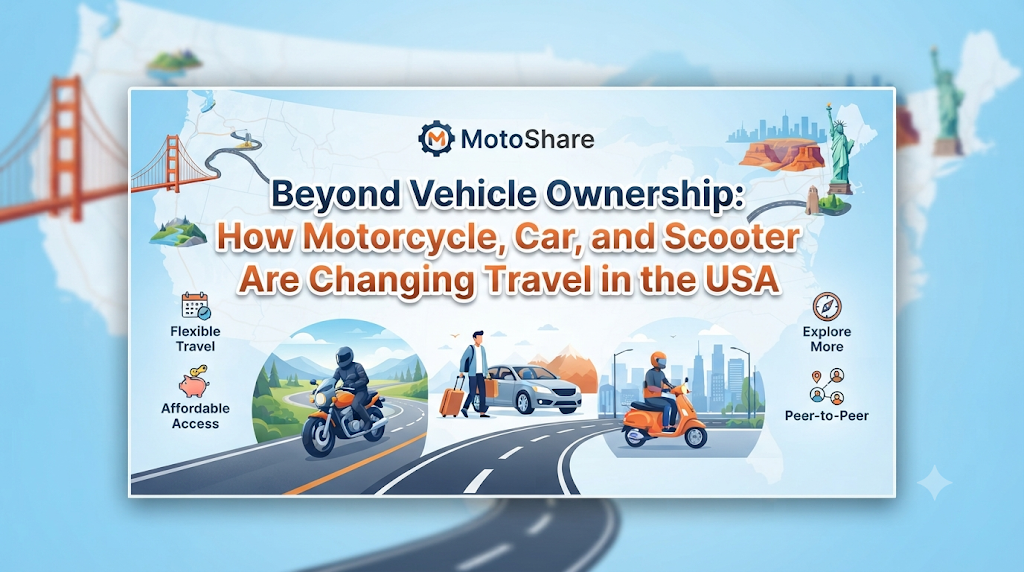
For many people, having access to a vehicle is more important than owning one.
Consider someone planning a weekend trip along a scenic American highway. They may want to experience the freedom of riding a motorcycle without purchasing one. Another traveler might arrive in a new city and need a car for a few days. A local visitor could simply require a scooter for short-distance transportation.
These situations highlight a shift in how people approach mobility. Purchasing a vehicle involves ongoing expenses such as insurance, maintenance, registration, and depreciation. Renting, on the other hand, can provide access to transportation for a specific purpose and duration.
This is one reason searches for motorcycle rentals near me have become relevant to travelers looking for convenient ways to explore their surroundings.
Vehicle-sharing marketplaces are creating additional possibilities by connecting people who need transportation with individuals and businesses that have vehicles available for rental.
MotoShare operates within this evolving landscape, bringing together renters, independent vehicle owners, and rental service providers across the United States.
The concept extends beyond motorcycles. Cars and scooters can also serve different transportation needs, making vehicle sharing an option worth considering for travelers, local residents, and vehicle owners.
Every Rental Decision Begins With a Different Requirement
A vehicle is rarely the destination itself. It is a way to reach a destination, complete an activity, or make a journey more convenient.
Understanding this distinction helps explain why rental searches vary considerably.
A person traveling alone for a weekend adventure may want a motorcycle that offers a comfortable riding experience. Someone visiting family with children may need a spacious car. A tourist staying near local attractions might prefer a scooter for shorter trips.
For these travelers, the search process begins with identifying the transportation problem they want to solve.
When a Motorcycle Makes Sense
Motorcycles appeal to people who enjoy riding, exploring scenic roads, and experiencing a journey from a different perspective.
A rider searching for motorcycle rentals near me may be interested in a weekend trip, a recreational ride, or an opportunity to experience a particular motorcycle before purchasing one.
The decision should consider riding experience, comfort, engine size, weather conditions, and the nature of the planned route.
When a Car Is the More Practical Choice
Families, business travelers, and groups often require more passenger capacity and luggage space.
A search for car rentals near me may reflect a need for temporary transportation during a vacation, a business visit, or a period when a personal vehicle is unavailable.
The right car depends on passenger requirements, luggage, travel distance, and the rental budget.
When a Scooter Can Be Convenient
Scooters may be suitable for short local journeys where maneuverability and convenient parking are important.
People searching for scooter rentals near me might be looking for a way to explore nearby attractions or travel between local destinations.
However, scooter rentals require careful consideration of licensing, road conditions, weather, and local regulations.
The vehicle that works best for one journey may not be suitable for another. A thoughtful rental decision begins with the traveler's actual requirements.
How Peer-to-Peer Vehicle Sharing Connects Renters and Owners
Traditional rental businesses generally maintain their own fleets. Peer-to-peer sharing introduces another model in which independent vehicle owners can make eligible vehicles available to renters.
A peer-to-peer motorcycle rental typically begins with an owner creating a listing that describes the motorcycle, its condition, availability, and rental conditions.
A potential renter discovers the listing, reviews the information, and determines whether the vehicle meets their requirements.
The next steps involve confirming the rental period, understanding the applicable terms, and coordinating the pickup and return.
A similar process applies to a peer-to-peer car rental.
For example, an independent owner may have a car that is used primarily during weekdays. Another person may need a vehicle for a short weekend trip.
A marketplace can help connect these two parties, provided the rental arrangement is legally and operationally appropriate.
The process depends on several important factors:
- Vehicle information: Listings should contain accurate specifications, photographs, and condition details.
- Rental schedules: Pickup and return dates must be agreed upon.
- Communication: Owners and renters should clarify expectations before confirming arrangements.
- Eligibility: Renters must meet the applicable licensing and age requirements.
- Insurance: Both parties should understand the coverage and responsibilities associated with the rental.
- Vehicle handover: Pickup and return should include appropriate condition checks and documentation.
Peer-to-peer sharing can expand transportation choices, but it also requires both parties to participate responsibly.
Choosing the Right Vehicle for the Journey
Different vehicles provide different advantages. The important question is not which category is universally better, but which one fits the planned journey.
Motorcycles: A Different Way to Experience the Road
Motorcycles can be appealing for individual travelers and recreational riders who want to explore scenic routes.
A motorcycle rental may be appropriate for a short leisure ride or a weekend trip, particularly when luggage requirements are limited.
However, the rider should evaluate the motorcycle's comfort, handling, and suitability for the intended route.
Protective equipment, weather conditions, traffic, and riding experience should all influence the decision.
A motorcycle that is suitable for an experienced rider may not be appropriate for someone who has recently obtained a license.
Cars: Flexibility for Families and Longer Journeys
Cars offer passenger capacity, luggage space, and protection from changing weather conditions.
They can be useful for family vacations, business travel, road trips, and situations where several destinations need to be reached.
A renter should consider the vehicle's size, fuel requirements, mileage restrictions, and overall rental conditions.
For longer journeys, comfort and reliability can be just as important as the initial rental price.
Scooters: Practical Transportation for Short Trips
Scooters may provide a convenient option for local transportation when the destination, road conditions, and applicable regulations make them suitable.
They can be useful for short journeys where a larger vehicle may be unnecessary.
Nevertheless, riders should confirm licensing requirements, safety equipment expectations, and whether the scooter is appropriate for the intended route.
The final decision should reflect the distance, destination, passenger needs, and the renter's experience.
Hilton Head Island: A Practical Example of Local Rental Searches
Hilton Head Island in South Carolina illustrates how destination-based travel can influence transportation choices.
Visitors may arrive for a beach vacation, a family getaway, or a weekend trip. Their transportation requirements can vary depending on where they are staying and which attractions they intend to visit.
Some travelers may need a car for a longer itinerary, while others may be interested in a motorcycle ride during their visit.
Understanding the Search for Car Rental Hilton Head Island
A person searching for car rental Hilton Head Island may be planning to explore the island with family, carry luggage, or visit several destinations during a vacation.
Before selecting a rental, the traveler should evaluate:
- The rental period and travel dates
- Passenger capacity and luggage requirements
- Pickup and return arrangements
- Vehicle condition and comfort
- Mileage policies and fuel expectations
- Total rental cost
- Deposits and cancellation conditions
The pickup location can significantly influence convenience. A vehicle that meets every other requirement may still be unsuitable if its collection arrangements do not fit the traveler's schedule.
What Motorcycle Renters Should Consider
The search for motorcycle rental Hilton Head Island may come from someone interested in experiencing the destination on two wheels.
Before booking, riders should consider their experience, licensing eligibility, motorcycle condition, and intended route.
Local regulations, insurance arrangements, and rental restrictions should also be reviewed.
A motorcycle should be selected according to the rider's ability and the nature of the journey.
Importantly, location-based search results do not establish that a particular vehicle is available. Actual rental options depend on genuine listings, rental dates, and confirmed availability.
A Smarter Booking Process Starts With Better Questions
A rental may appear convenient at first, but the details can influence the overall experience.
Before confirming a reservation, renters should understand what they are agreeing to and which responsibilities they will have.
Here are several questions worth asking.
Is the vehicle available for the requested dates?
Confirm the complete rental period, including pickup and return times.
Does the listing accurately represent the vehicle?
Review photographs, specifications, and condition information. Ask questions if anything appears unclear.
What is the complete rental cost?
Check whether the price includes applicable taxes, deposits, delivery charges, additional mileage, or other fees.
Are there mileage limits or usage restrictions?
Some rental arrangements may restrict mileage, destinations, or certain types of vehicle use.
What insurance arrangements apply?
Understand the applicable coverage, exclusions, deductibles, and responsibilities before taking possession of the vehicle.
What documents are required?
Confirm the licensing, identity, and eligibility requirements associated with the rental.
How does the handover work?
Understand the pickup location, return procedure, inspection requirements, and deposit arrangements.
What happens if plans change?
Review cancellation policies, extension procedures, and the appropriate contact for unexpected problems.
The actual rental agreement should always be reviewed before confirmation. Important conditions should be clearly understood rather than assumed.
Vehicle Owners: Turning an Underused Asset Into a Rental Opportunity
Vehicle sharing also creates opportunities for people who own motorcycles, cars, or scooters.
Some vehicles remain unused for extended periods. A motorcycle may be ridden only on weekends, while a second car may be needed occasionally.
For certain owners, making a suitable vehicle available for rental could be a way to use that asset more actively.
However, rental participation involves responsibilities that should be considered before creating a listing.
Preparing a Motorcycle or Car for Rental
An owner asking, "How can I rent out my motorcycle?" should begin by evaluating whether the vehicle is suitable for rental use.
Its mechanical condition, safety equipment, maintenance history, and legal eligibility should be reviewed.
The same applies to someone planning to list my car for rent.
Owners should verify applicable registration, insurance, and rental-use requirements before making a vehicle available.
Creating an Accurate Listing
A useful listing should include:
- Clear and current photographs
- Accurate vehicle specifications
- Honest condition information
- Rental availability
- Pickup and return arrangements
- Relevant restrictions
- Understandable rental terms
Accurate information helps renters make informed decisions and reduces the likelihood of disputes.
Coordinating Rentals Responsibly
Owners may need to respond to inquiries, review renter eligibility, confirm booking dates, and coordinate handovers.
Documenting the vehicle's condition before and after a rental can help establish a clear record.
Maintenance schedules, inspection records, and rental documentation should also be organized.
Vehicle sharing may create opportunities for owners, but it does not guarantee rental demand or income. Participation should be based on realistic expectations and appropriate preparation.
Rental Management Becomes More Complex as Operations Grow
An independent owner managing one vehicle may be able to organize reservations through a simple calendar.
However, a rental business managing several vehicles and customers may require a more structured approach.
Operators need to know which vehicles are available, which bookings are confirmed, and when maintenance is required.
They may also need to manage customer information, rental documentation, and communication across multiple reservations.
Common operational responsibilities include:
- Maintaining vehicle and fleet records
- Managing booking calendars
- Tracking reservation status
- Organizing customer details
- Monitoring maintenance schedules
- Maintaining rental documentation
- Coordinating customer communication
Some businesses investigate free car rental software when searching for affordable rental-management solutions.
Before choosing a tool, operators should evaluate whether it supports their actual requirements.
Important considerations include feature restrictions, data security, customer-record management, support availability, and limitations on vehicles or reservations.
A free offering may have restrictions or require an upgrade for additional capabilities. Businesses should understand these conditions before depending on the software for daily operations.
The goal is to create an organized rental process without introducing unnecessary administrative work.
Trust Is the Foundation of Vehicle Sharing
Vehicle sharing involves a transaction between people who may not have interacted previously.
For renters, confidence comes from knowing that a vehicle is accurately described and that the rental terms are understandable.
For owners, confidence comes from knowing that renters meet the relevant requirements and understand their responsibilities.
Several factors can support a more dependable rental experience.
Transparent pricing helps renters understand the complete cost before booking.
Accurate vehicle descriptions and genuine photographs establish realistic expectations.
Clear rental terms explain the booking period, restrictions, deposits, and cancellation conditions.
Appropriate identity and eligibility checks can help establish confidence when required by the applicable arrangement.
Insurance information should be communicated clearly so that both parties understand the relevant responsibilities.
Reliable pickup and return arrangements also contribute to a smoother experience.
A rental marketplace should prioritize accurate information and realistic expectations rather than relying only on attractive offers.
Preparing for the Challenges of Vehicle Rentals
Even a carefully planned rental can encounter unexpected situations.
Travelers may change their plans. Vehicles may require maintenance. Booking schedules can overlap, and misunderstandings about insurance or return times may occur.
These challenges highlight the importance of preparation.
Changes to Travel Plans
Renters should understand cancellation and modification policies before confirming a reservation.
Owners should communicate promptly when changes affect a booking.
Unexpected Vehicle Problems
Vehicles should receive appropriate maintenance and inspections.
Renters should understand whom to contact if a vehicle develops a problem and what roadside assistance arrangements apply.
Insurance Confusion
Insurance conditions should be clarified before the rental begins.
Neither party should assume that personal insurance automatically covers every rental arrangement.
Availability Conflicts
Owners should maintain accurate booking schedules and review availability before confirming reservations.
Late Returns
Rental terms should establish return times and procedures for requesting extensions.
Both parties should communicate promptly if delays occur.
Local Requirements
Vehicle-sharing regulations and eligibility requirements may differ by location and vehicle category.
Renters and owners should confirm the rules applicable to their particular situation.
Preparation cannot eliminate every issue, but clear communication and accurate information can help reduce avoidable problems.
The Changing Direction of Vehicle Sharing in the USA
Vehicle sharing may continue to develop as travelers explore different ways to access transportation.
Local discovery could become more convenient as people search according to vehicle type, location, travel dates, and specific requirements.
Digital booking processes may also help organize communication, documentation, and reservation management.
Independent owners and small rental businesses could benefit from improved tools for managing vehicles, schedules, and customer information.
At the same time, the industry faces important challenges.
Insurance arrangements must remain understandable. Vehicle safety needs to be maintained. Regulations may influence how rentals operate, and marketplaces must continue building confidence among users.
The future of vehicle sharing will depend on balancing convenience with responsible participation.
Rather than replacing every traditional transportation option, rental marketplaces may become another useful part of the transportation ecosystem.
A Marketplace Built Around Different Transportation Needs
The way people travel continues to change.
One person may need a motorcycle for a weekend ride. Another may require a car for a family vacation. Someone else might prefer a scooter for a short local journey.
At the same time, independent vehicle owners and rental providers may have suitable vehicles available for these needs.
Online marketplaces can help connect these groups by making rental options easier to discover and supporting the arrangements necessary for a rental experience.
MotoShare focuses on connecting renters, independent vehicle owners, and rental service providers across the United States.
For renters, this marketplace approach creates an opportunity to explore different vehicle categories according to their travel requirements.
For owners, it provides a way to participate in the vehicle-sharing ecosystem by making suitable vehicles available to potential renters.
The underlying idea is simple: transportation does not always require ownership.
When vehicle information is accurate, rental conditions are clear, and both parties understand their responsibilities, sharing can become a practical option for a wide range of journeys.
Whether someone is planning a scenic motorcycle ride, arranging a family trip, or exploring local transportation options, the right rental begins with understanding the journey and choosing a vehicle that genuinely fits the need.



Top comments (0)