
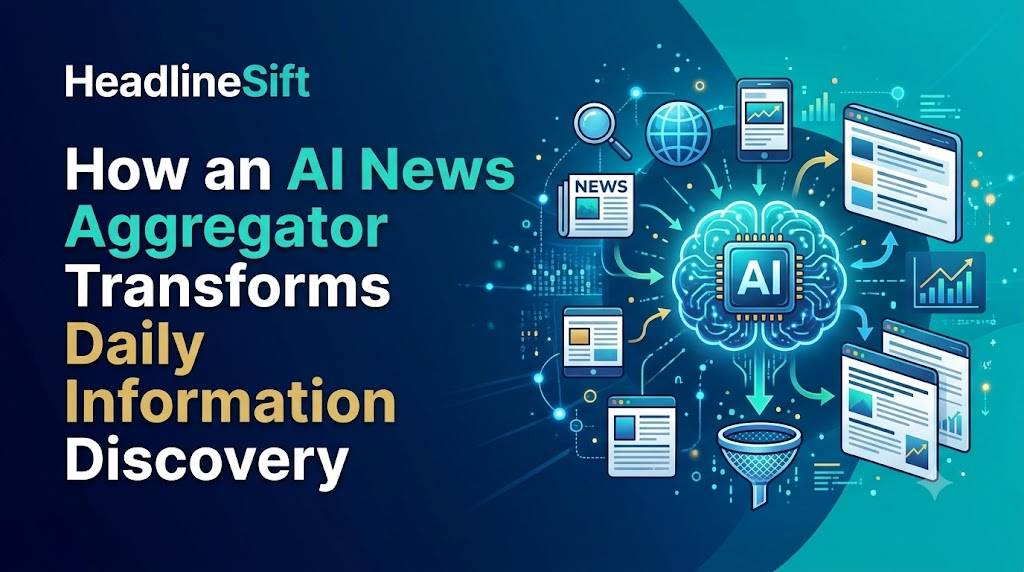
Every morning, millions of readers open their laptops and smartphones intending to catch up on the world, only to find themselves drowning in a chaotic stream of notifications, newsletter dispatches, social feeds, and syndicated press releases. The challenge facing modern readers is rarely a shortage of journalism. Instead, it is an overwhelming volume of fragmented data. A single policy announcement or major corporate earnings report can trigger thousands of near-identical articles across different websites within minutes, burying substantive context beneath sensationalist headlines and rapid-fire commentary.
For working professionals, researchers, and everyday news consumers, keeping up with critical events across multiple industries has become an exhausting exercise in sorting, filtering, and cross-checking. Sifting through dozens of open browser tabs simply to understand a single developing event consumes valuable time and mental energy.
This growing friction has driven interest in smarter approaches to digital information management. Platforms like HeadlineSift illustrate how modern digital platforms are approaching this issue, exploring how intelligent systems can help readers organize the daily news cycle without surrendering editorial nuance. At the core of this transition is the AI news aggregator—an evolving category of tools designed to transform how we collect, organize, and absorb the news of the day.
Moving Beyond Traditional Feeds to Intelligent News Discovery
To understand the value of modern news discovery, it helps to recall how older systems functioned. The earliest digital news aggregators relied almost entirely on static RSS feeds, basic keyword tags, and strict chronological ordering. If a user subscribed to twenty technology feeds, the aggregator simply listed every article as it was published, newest first.
While straightforward, this approach had significant weaknesses. If fifteen distinct outlets republished the same syndicated wire report, the reader's feed was flooded with fifteen identical updates. If a major, long-term story evolved over several weeks, older systems struggled to connect background context with new developments. Readers were left to assemble the narrative puzzle on their own.
Traditional RSS / Keyword Feeds:
[Source A] ──> Chronological List ──> Duplicate Headlines ──> Reader Overload
[Source B] ──> (No Context)       ──> Fragmented Updates ──> Manual Filtering

Modern AI News Aggregator:
[Source A] ┐
[Source B] ─┼─> Natural Language Processing ─> Topic Clustering ─> Curated Digest
[Source C] ┘    (Entity Recognition)           (Duplicate Removal) (Context & Impact)
An AI news aggregator represents a fundamental shift from chronological syndication to conceptual understanding. Rather than treating an article as merely a timestamp and an isolated bundle of text, an intelligent aggregator uses natural language processing (NLP) and machine learning models to analyze what a story is actually about.
Key technical differentiators include:
- Automated Multi-Source Ingestion: Continuously parsing diverse digital publications, official releases, and specialized trade journals without relying solely on manual feed submissions.
- Semantic Topic Classification: Identifying core entities, industries, geographies, and themes rather than depending on simple keyword matches.
- Duplicate-Story Grouping: Recognizing when fifty outlets are covering the exact same press briefing and collapsing those reports into a unified story cluster.
- Dynamic Relevance Detection: Evaluating whether a new development introduces genuinely fresh facts or merely rephrases earlier reporting.
- Adaptive Content Discovery: Learning a reader's informational priorities over time while maintaining visibility into significant external developments.
Instead of presenting an unfiltered river of noise, intelligent aggregation aims to surface structured knowledge.
Behind the Screen: How an AI-Powered News Feed Works
The journey from a published article to a clean, contextual entry in an intelligent news platform involves several interconnected processing stages.
┌────────────────────────────────────────────────────────┐
│ 1. Continuous Ingestion (Webhooks, APIs, Web Feeds)    │
└──────────────────────────┬─────────────────────────────┘
                           ▼
┌────────────────────────────────────────────────────────┐
│ 2. Text Normalization & Entity Extraction (NLP)       │
└──────────────────────────┬─────────────────────────────┘
                           ▼
┌────────────────────────────────────────────────────────┐
│ 3. Semantic Clustering (Vector Similarity & Deduplication)
└──────────────────────────┬─────────────────────────────┘
                           ▼
┌────────────────────────────────────────────────────────┐
│ 4. Synthesis & Summarization (Key Takeaways Generated) │
└──────────────────────────┬─────────────────────────────┘
                           ▼
┌────────────────────────────────────────────────────────┐
│ 5. Delivery (Personalized Digests, Breaking Alerts)    │
└────────────────────────────────────────────────────────┘
1. Ingestion and Content Extraction
The system continuously ingests public reporting from thousands of global sources via direct web feeds, content APIs, and structured web scraping. As articles arrive, the aggregator removes boilerplate website code, navigation bars, and advertisements, isolating the core headline, byline, publication timestamp, and body copy.
2. Entity and Sentiment Processing
Next, natural language algorithms evaluate the cleaned text. The model identifies named entities such as people, public companies, government bodies, geographic locations, and product lines. It maps these entities against contextual knowledge graphs to distinguish, for example, between the tech firm Apple and agricultural commodities.
3. Semantic Clustering and Deduplication
Instead of matching exact phrases, the system converts text into mathematical vector representations that capture semantic meaning. This allows the system to determine whether two differently worded headlines refer to the same event.
Consider a practical example: a major cloud provider announces a breakthrough quantum processor. Within an hour:
- Publication A writes: "Tech Giant Unveils 1,000-Qubit Quantum Chip."
- Publication B writes: "Breakthrough Quantum Architecture Announced at Annual Developer Summit."
- Publication C writes: "Enterprise Cloud Provider Accelerates Hardware Roadmap with New Processor."
A traditional keyword aggregator treats these as three separate subjects because the wording differs. An AI aggregator identifies that the core entities, event location, and technical metrics match. It groups all three into a single event cluster, designating one as the primary entry point while linking the others as supplementary viewpoints.
4. Synthesis and Contextual Display
Once clustered, the system can generate structured overviews, highlight consensus facts, note conflicting details between sources, and present the user with a single, comprehensive briefing entry.
Core Capabilities for Faster, Clearer Understanding
Modern aggregation platforms rely on specific automated tools designed to preserve a reader's time while safeguarding information accuracy. Understanding these capabilities helps users get the most value from their reading workflow.
| Feature | Primary Function | Practical Benefit | Human Verification Requirement |
|---|---|---|---|
| AI News Summarizer | Condenses long-form articles into core takeaways and bullet points. | Allows readers to assess the main substance of an event in seconds. | Check original text for complex policy nuances or direct quotes. |
| Curated News Headlines | Organizes and edits feeds to surface high-substance reporting over clickbait. | Cuts through sensational phrasing to highlight factual events. | Compare alternative headlines across independent outlets. |
| Semantic Deduplication | Identifies and collapses overlapping coverage of identical events. | Eliminates repetitive clutter across feeds. | Review clustered secondary sources to catch unique investigative details. |
| Topic-Based Discovery | Maps stories dynamically to industries, technologies, and macroeconomic trends. | Delivers comprehensive topical depth without requiring manual keyword setup. | Adjust topic boundaries periodically to avoid over-filtering. |
| Breaking News Alerts | Distinguishes urgent, high-impact events from standard daily updates. | Flags critical developments as they happen without notification fatigue. | Verify emerging claims as details solidify over several hours. |
While an AI news summarizer can extract the core tenets of an antitrust ruling or an earnings call, human discretion remains irreplaceable. Automated summaries are designed to guide your attention, not eliminate the need to read in-depth investigative reporting when a situation demands thorough scrutiny.
Serving Distinct Information Needs Across Industries
Different professions interact with the news cycle through fundamentally different lenses. A corporate strategist evaluates an acquisition for market consolidation, an engineer tracks architectural shifts, and an investor monitors capital flows. Intelligent aggregation accommodates these differing requirements through specialized categorization.
Technology News Aggregator: Tracking Deep Innovation
For software engineers, product leaders, and cybersecurity specialists, tracking the tech sector can feel like chasing a moving target. A dedicated technology news aggregator organizes updates across machine learning research, software vulnerabilities, open-source releases, and regulatory policies.
Instead of wading through general consumer gadget reviews, technical professionals can focus on specialized threads: an open-source model weight release, critical zero-day exploit patches, or shifts in data privacy legislation.
Business News Aggregator: Monitoring Market Moves and Operations
Executives and entrepreneurs must maintain an unvarnished view of operational landscapes. Operating as a business news aggregator, an intelligent system monitors supply chain disruptions, executive departures, corporate restructuring, and competitive product launches.
By grouping vendor announcements alongside customer reactions and industry analysis, business readers gain a 360-degree perspective on how markets are responding to industry transitions.
Financial News Headlines: Interpreting Fast-Paced Economic Signals
Financial analysts, retail investors, and asset managers require structured clarity when parsing macroeconomic indicators and earnings announcements. Scanning raw financial news headlines across multiple financial wires often yields fragmented noise.
An intelligent aggregator groups earnings releases alongside independent balance-sheet analyses, central bank interest rate statements, and sector-wide sentiment shifts. This grouping helps analysts assess whether an equity movement reflects broader macroeconomic headwinds or company-specific fundamentals.
       ┌──────────────────────────────────────────────────────────┐
       │                Core Enterprise Event                     │
       │    (e.g., Semiconductor Export Control Revisions)        │
       └──────┬────────────────────┬────────────────────┬─────────┘
              │                    │                    │
              ▼                    ▼                    ▼
   [Tech Aggregator]      [Business Aggregator]  [Financial Aggregator]
   Architectural changes   Supply chain rerouting  Semiconductor equity
   and alternative chip    and global foundry      valuation adjustments
   design roadmaps.        contract revisions.     and margin forecasts.
Global News Aggregator: Navigating Geopolitical Developments
In an interconnected economy, regional decisions carry worldwide consequences. A global news aggregator pulls international coverage across languages and geographies, enabling domestic readers to evaluate how foreign media outlets cover international summits, regional trade agreements, and energy supply shifts. Viewing global events through diverse regional publications provides essential balance that single-source domestic reporting frequently overlooks.
Breaking News Aggregator: Making Sense of Rapidly Unfolding Events
During crises, natural disasters, or unexpected political developments, early reports are notorious for containing inaccuracies, premature speculation, and conflicting timelines. A modern breaking news aggregator helps counter this confusion by anchoring evolving stories to clear timelines. As verified details emerge, the system updates event clusters, deprecates refuted claims, and surfaces authoritative dispatches from journalists on the ground.
Moving Beyond Headlines: The Value of News Impact Analysis
One of the most promising developments in news aggregation is the shift from passive categorization to news impact analysis. Rather than merely reporting that an event occurred, analytical tools evaluate how an event connects to broader historical trends and related industries.
Raw Headline:
"Major Shipping Canal Temporarily Closes Due to Infrastructure Maintenance."

Contextual News Impact Analysis:
├── Immediate Effect: Maritime freight transit times increase by 8–12 days.
├── Secondary Impact: Spot container rates adjust across affected trade routes.
└── Sector Relevance: Upstream manufacturing inventories face localized delays.
By identifying the industries, supply chains, and regulatory frameworks tied to a specific development, an aggregator can highlight potential downstream implications.
However, it is critical to distinguish between organizing contextual data and establishing definitive causation. Machine learning models identify correlations and historical associations; they do not possess crystal balls. A model can surface that rising petroleum prices historically correlate with shifting airline operating margins, but it cannot definitively predict quarterly earnings.
Readers must treat automated impact assessments as structured starting points for deeper inquiry, cross-referencing automated insights against seasoned industry analysts, regulatory filings, and primary source documents.
Balancing Personalization with the Bigger Picture
Modern news platforms often prioritize extreme personalization, tailoring feeds precisely to an individual's browsing history, professional specialty, and geographic location. A personalized news digest offers undeniable daily utility: a biomedical researcher receives priority updates on clinical trial methodology, while a municipal urban planner sees updates on zoning legislation and infrastructure grants.
Yet unchecked personalization introduces well-documented hazards:
Personalization Benefits:               Systemic Risks:
┌──────────────────────────────┐        ┌──────────────────────────────┐
│ • High daily efficiency      │        │ • Algorithmic filter bubbles │
│ • Targeted professional data │  VS.   │ • Deprivation of context     │
│ • Less irrelevant noise      │        │ • Notification fatigue       │
│ • Custom topical depth       │        │ • Data tracking/privacy loss │
└──────────────────────────────┘        └──────────────────────────────┘
When an algorithm exclusively serves content matching historical click patterns, it risks creating an intellectual echo chamber. Readers may miss monumental international stories simply because those stories do not fall into their predefined preference profiles. Furthermore, hyper-personalized systems frequently incentivize engagement over substance, delivering sensationalist stories that provoke emotional reactions.
Responsible news consumers counter this tendency by structuring their feeds intentionally:
- Maintain a core primary focus (60–70% of intake) dedicated to specialized professional interests.
- Reserve a deliberate portion (30–40%) for broad, unpersonalized global reporting, investigative journalism, and alternative editorial viewpoints.
- Periodically audit account preferences to ensure outdated search habits are not narrowing the feed's scope.
When Algorithms Fall Short: Navigating System Limitations
No automated system is immune to error. Understanding the structural limitations of algorithmic content aggregation allows readers to spot anomalies before drawing faulty conclusions.
Common Algorithmic Failure Modes:
┌─────────────────────────┬────────────────────────────────────────────────────────┐
│ Issue                   │ Practical Manifestation                                │
├─────────────────────────┼────────────────────────────────────────────────────────┤
│ Hallucinatory Summaries │ Condensing tools misattributing quotes or findings.    │
│ Clickbait Susceptibility│ Models ranking engagement-heavy headlines as critical. │
│ Semantic Conflation     │ Grouping unrelated events due to shared vocabulary.    │
│ Outdated Persistence    │ Surfacing retracted or resolved stories as current.    │
└─────────────────────────┴────────────────────────────────────────────────────────┘
Early reporting around complex legal judgments, medical trials, or geopolitical incidents is particularly susceptible to algorithmic distortion. An automated system might scan initial wire headlines, draft an oversimplified bulleted summary, and miss a critical judicial dissent or research caveat that completely alters the story's real-world meaning.
To protect your daily information intake:
- Check the primary source for high-stakes claims: When a summary makes a dramatic assertion regarding market regulations, corporate leadership, or public health, open the embedded original reporting or source documentation.
- Observe source variety within clusters: If an event cluster cites only one primary report republished across multiple websites, treat the claim as single-source reporting until independent confirmations appear.
- Watch for developing tags: Treat breaking summaries as active working documents subject to immediate revision as verified facts solidify.
A Reader's Framework for Evaluating News Aggregators
With numerous platforms offering automated feeds, choosing an effective discovery tool requires careful evaluation. More content does not inherently equate to better insight; volume without rigorous organization merely accelerates fatigue.
Aggregator Evaluation Checklist:
[ ] Source Diversity: Transparent indexing of regional, global, and trade outlets.
[ ] Deduplication Quality: Effective collapsing of identical wire reports.
[ ] Summarization Integrity: Factual fidelity without editorializing.
[ ] Direct Attribution: Immediate, clear pathways to original reporting.
[ ] Customization Control: User agency over topics, frequency, and breadth.
[ ] Privacy Safeguards: Minimal behavioral data collection and tracking.
Evaluate any platform using these primary criteria:
1. Source Transparency and Direct Attribution
A dependable aggregator should never act as a walled garden. It must clearly disclose where each report originates, display original publication timestamps, and provide immediate pathways to the original reporting. If a platform obscures the originating publication, its utility as an objective research tool diminishes.
2. Algorithmic Restraint and Noise Reduction
Notice how the platform handles viral, low-substance news. Does the system reward sensationalism, or does it effectively consolidate clickbait variants into clean, factual representations? A well-calibrated platform prioritizes clarity over perpetual engagement.
3. User-Governed Customization
Readers should hold direct control over their information architecture. You should be able to blacklist low-credibility sources, expand coverage of niche industries, dial notification frequencies up or down, and review unfiltered global feeds whenever desired.
The Horizon of Intelligent News Discovery
As underlying language models and knowledge graphs evolve, news aggregation systems will likely become significantly more contextual and adaptive.
Future developments may include:
- Cross-Lingual Event Tracking: Translating and cross-referencing foreign-language coverage in real time, allowing readers to observe how an event in Tokyo is covered locally versus how it is interpreted in London or New York.
- Longitudinal Story Timelines: Automatically linking new developments to contextual timelines that map the evolution of legislation, corporate mergers, or geopolitical negotiations across months or years.
- Conversational News Queries: Replacing rigid keyword search fields with natural queries, such as: "What regulatory hurdles have passed for offshore wind projects over the last six months?"
- Visual Information Synthesis: Generating comparative tables and structured data overviews directly from disparate statistical releases and regulatory disclosures.
Crucially, these technological strides will not render professional journalism obsolete. Algorithms cannot attend city council meetings, interview confidential sources, evaluate battlefield conditions, or write deeply investigated exposés. The role of intelligent aggregation is not to replace human reporting, but to ensure that the vital journalism produced around the world reaches the people who need it, cleanly and with essential context intact.
Cultivating Informed Perspectives
Digital tools shape how we interpret our world. While an AI news aggregator can parse thousands of publications, eliminate redundant wire reports, extract key points, and structure our daily intake, it remains a tool in service of human intellect.
Platforms like HeadlineSift reflect the ongoing evolution toward a more organized digital landscape, helping readers cut through continuous chatter to identify the developments that truly matter. By pairing the speed and structural power of modern technology with personal curiosity, source diversity, and a critical mindset, readers can move away from passive media consumption and build an informed, comprehensive understanding of our world.



Top comments (0)