
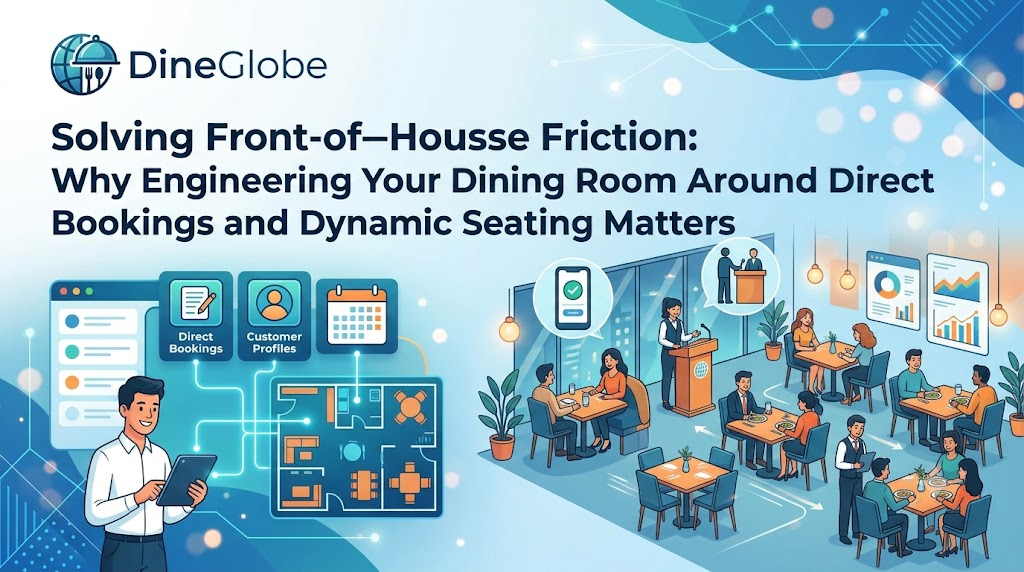
Every restaurant operation faces a stress test when peak service hits maximum velocity. In the entryway, guests line up with reservation confirmations in hand; across the dining room, a four-top lingers over an espresso, delaying the next turn; and at the door, walk-ins wait to hear if a table will clear. When a host podium relies on physical binders, fragmented notes, or external consumer portals to manage this flow, service breakdowns happen fast.
Executing a flawless service is an operational challenge rooted in pacing, capacity tracking, and spatial layout. Implementing comprehensive restaurant reservation software has become a core operational requirement for dining rooms aiming to operate smoothly under pressure. Connecting digital reservation channels directly to real-time table turnover, dynamic floor maps, and waitlists enables venues to eliminate front-door confusion, protect their margins, and maintain direct control over diner data.
Breaking Down Common Front-of-House Operational Failures
When front-of-house workflows operate in silos, minor timing errors rapidly cascade into wide-ranging service delays.
Key breakdown points include:
- Third-Party Commission Leakage: Discovery aggregators often charge per-cover fees and recurring subscriptions simply for delivering diners who intended to visit your venue anyway. This model drains revenue and cuts operators off from direct communication with their clientele.
- Capacity Desynchronization and Double Bookings: If digital booking calendars do not reflect actual dining room velocity, hosts inevitably overcommit tables, leaving arriving guests stranded in crowded entryways.
- Unstructured Walk-In Queues: High foot-traffic shifts quickly spiral out of control when door teams lack a systematic tool to log walk-ins and project wait times, driving potential diners to competitors nearby.
- Imbalanced Server Station Loads: Manual seating decisions frequently cluster new arrivals into a single station while others sit empty. This imbalance overwhelms specific staff members and backs up the kitchen pass.
Resolving these issues requires moving away from makeshift tools toward a centralized front-of-house operational system.
Architectural Pillars of a Synchronized Dining Room
An effective table and booking setup aligns customer-facing booking portals directly with the physical geometry of the dining room floor.
Direct Booking Channels That Safeguard Independence
Adopting an autonomous direct restaurant booking system enables operators to capture reservations across their proprietary web footprint. Operating a dedicated online restaurant booking system on your own booking page delivers substantial strategic advantages:
- Unrestricted Guest Data Ownership: Capture guest contact details, dining notes, and dietary restrictions without third-party gatekeepers.
- Custom Operational Parameters: Establish turn-time rules, minimum party sizes, deposit policies, and cancellation windows that match your kitchen's true throughput.
Dynamic Floor Plans and Real-Time Table Mapping
A reservation queue is only functional if it matches physical dining room constraints. Modern restaurant floor plan software bridges this gap by linking bookings to real-world floor arrangements.
Key practical benefits include:
- Intelligent Table Combinations: Pair adjoining two-tops into larger party configurations on demand without generating unfillable orphan seats.
- Automated Turnover Buffers: Automatically program transition buffers between seatings, giving service teams adequate time to bus, sanitize, and reset place settings.
- Live Shift Visibility: Color-coded status updates let hosts quickly check whether tables are freshly seated, mid-course, or settling their checks.
Coordinated Walk-In and Waitlist Management
Even the most organized reservation books encounter sudden cancellations and schedule shifts. Specialized restaurant waitlist management software helps front-of-house staff project accurate wait times based on live table turnover rather than guesswork.
Supported by dedicated restaurant walk-in management software, reception teams can log spontaneous arrivals, maintain an orderly queue, and ping guests the moment a table clears. This captures high-margin foot traffic without disrupting pre-booked arrivals.
Upgrading the Host Stand into an Operations Center
The host stand is the command center for dining room flow. Equipping front-desk teams with modern restaurant host stand software replaces chaotic coordination with clear, organized execution.
With a unified operational screen, hosts and floor managers can:
- Monitor upcoming reservations, immediate arrivals, and current table occupancy side by side.
- Pace seatings evenly across server stations to maintain a balanced, sustainable ticket flow for the kitchen.
- Reallocate tables immediately whenever a party arrives early or departs ahead of schedule.
Online Guest Booking / Door Walk-In
                │
                ▼
   [ Central Host Stand Overview ]
   ├── Custom House Reservation Rules
   ├── Live Floor Geometry & Reset Buffers
   └── Synchronized Waitlist Queue
                │
                ▼
  Balanced Section Loads & Controlled Turns
Streamlining Service Operations with DineGlobe
For operators seeking an alternative to fragmented software setups and costly middleman fees, DineGlobe provides an integrated front-of-house hospitality management platform. Designed for independent venues and expanding operators looking for practical restaurant reservation software for small restaurants, DineGlobe unifies every stage of front-desk operations into one intuitive system.
Connected Operations in a Single Workspace
DineGlobe links guest reservations directly to dining room execution:
- Direct, Autonomous Reservations: Diners reserve through a clean, branded booking page, eliminating dependencies on external marketplace apps and per-seat fees.
- Synchronized Floor and Table Allocation: Dedicated restaurant table management software uses physical room mapping, combined seating setups, reservation holds, and turnover buffers to keep digital bookings aligned with real dining room capacity.
- Complete Host Stand Oversight: Front-of-house staff maintain clear visibility over approaching bookings, guest arrivals, current table occupancy, and shift flow from a single interface.
- Coordinated Waitlist and Walk-In Tools: Front-desk teams can log spontaneous foot traffic, track visit trends, estimate wait times accurately, and seat waiting diners the moment a check settles.
- Self-Service and International Accessibility: DineGlobe includes direct guest self-service links, confirmation codes, role-based staff permissions, operational analytics, and multilingual interfaces in English, Japanese, and Arabic.
To allow venues to experience an organized front-of-house workflow firsthand, DineGlobe offers a free restaurant reservation system during its pilot program, providing complete access to its suite of table management, reservation, and waitlist features without early software barriers.
Best Practices for Frictionless Dining Room Flow
Software provides the infrastructure, but disciplined operational routines deliver consistent results:
- Differentiate Dining Durations by Party Size: Avoid setting blanket turn times across all tables. Define clear windows—such as 60 minutes for pairs, 90 minutes for four-tops, and two hours for larger groups—to maximize capacity without rushing diners.
- Enforce Turnover Intervals: Program automatic 10-to-15-minute buffers between consecutive bookings on high-demand tables. This buffer accommodates table resetting and minor service delays without pushing back subsequent seatings.
- Prioritize Direct Booking Links: Add your direct reservation link to social profiles, local map listings, and your website. Encouraging guests to book through your direct channel preserves margins and keeps diner data in-house.
- Provide Straightforward Guest Self-Service: Send automated confirmations containing instant modification and cancellation links. When diners can easily adjust their plans, host teams receive early notice to reassign open slots to waiting walk-ins.
Frequently Asked Questions
What makes a direct booking system different from an aggregator marketplace?
A direct booking system routes reservations through your own channels, allowing you to retain all guest information, set customized house policies, and avoid third-party commissions. Dining aggregators place your restaurant on a shared directory, frequently taking per-cover fees while owning the primary customer relationship.
How does floor plan software prevent overbooking?
Floor plan software connects every digital reservation directly to physical tables and specific time windows. By factoring in physical seating rules, combined table configurations, and automatic reset buffers, the software stops confirming bookings once real dining capacity is reached.
Can modern reservation platforms coordinate both pre-booked tables and walk-in diners?
Yes. Contemporary platforms incorporate waitlist and walk-in tools directly into the host interface. Staff can log unscheduled arrivals alongside confirmed bookings, track table turns live, and seat walk-in diners as tables clear without disrupting upcoming seatings.
Why are automated seating buffers necessary for dining service?
Seating buffers schedule a short reset window between consecutive parties at the same table. This window gives bussers and servers sufficient time to clear, sanitize, and reset the table, preventing arriving diners from waiting in the entryway when previous guests take longer to settle their bills.
What should boutique or independent venues prioritize when selecting reservation software?
Independent venues should look for commission-free direct booking tools, straightforward floor mapping, transparent operating costs, and an uncluttered host interface. Practical platforms—like those offering full pilot access—allow operators to elevate their front-of-house coordination without dealing with enterprise bloat.
Elevate Your Front-of-House Standard
A successful dining service starts the moment a guest reaches your door. Depending on paper clipboards, fragmented spreadsheets, or expensive third-party platforms drains your revenue, complicates service, and leads to unnecessary bottlenecks during peak rushes.
With dedicated restaurant reservation software, hospitality operators take full command of their seating layout, safeguard profit margins with direct booking channels, and give their staff the clarity needed to deliver composed, attentive hospitality. Discover how DineGlobe links direct reservations, floor layouts, and waitlists together—and see how organized your next dinner service can be.



Top comments (0)