
Charting Your Path Beyond the Horizon
Taking the controls of an aircraft marks the beginning of an extraordinary voyage toward professional mastery and personal freedom. Ambitious individuals face critical choices long before stepping onto the tarmac for their initial instruction. Constructing a thorough strategy from the start safeguards your financial investment and accelerates your movement through flight academy.
Dependable insights empower you to choose accredited flight centers, plan for tuition expenses, clear medical checks, and target rewarding cockpit positions. This detailed guide walks you through every phase of flight education using active, direct language. You will learn practical strategies to compare flight centers, estimate overall expenses, earn advanced ratings, and secure pilot jobs.
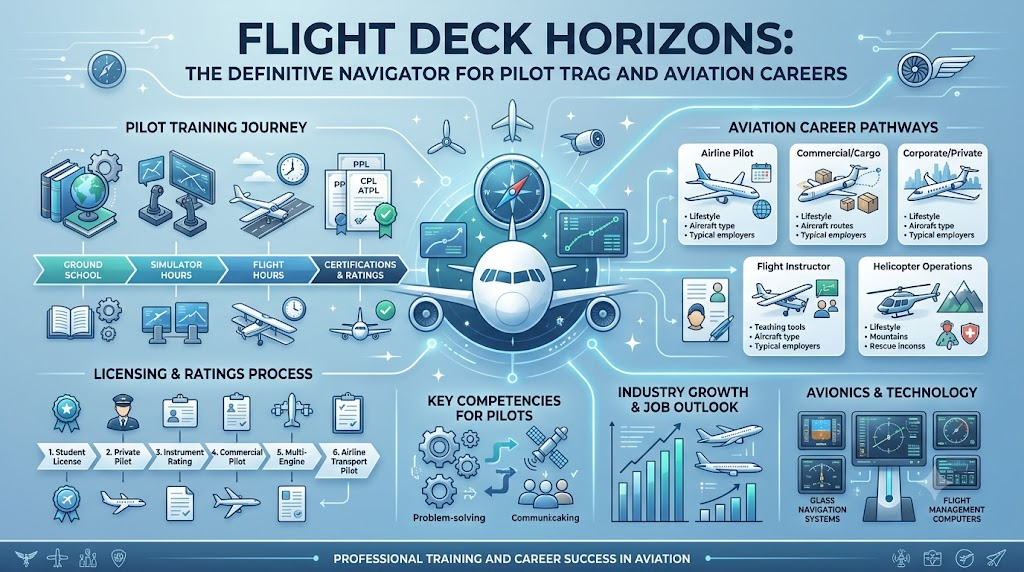
8 Essential Steps on How to Become a Pilot
Progressing from a complete beginner to a licensed captain requires a disciplined sequence of achievements. Follow this practical checklist to navigate your flight education smoothly:
- Define your flying objective: Determine whether you plan to fly for recreational pleasure or build an airline career.
- Verify initial eligibility: Confirm that you meet all age, language, education, and medical prerequisites.
- Study civil aviation rules: Learn the specific laws enforced by your national flight regulator.
- Evaluate accredited flight schools: Compare academies by examining fleet maintenance standards, instructor availability, and location.
- Complete ground school and flight hours: Master theoretical concepts while practicing maneuvers beside a certified instructor.
- Conquer written and practical exams: Clear your knowledge tests and complete checkrides with official examiners.
- Obtain your pilot license: Secure your official credentials to operate aircraft legally in designated airspace.
- Build hours and add advanced ratings: Expand your skills to qualify for corporate, charter, or commercial positions over time.
Exact flight hour requirements and regulatory guidelines depend on your country and local aviation authority.
How to Choose the Best Flight Schools
Selecting a top-tier flight academy ensures safe, efficient, and high-quality instruction. Analyze several key factors before signing training contracts or paying tuition fees.
First, check that the school holds active accreditation from your regional aviation governing body. Accredited academies follow standardized safety protocols and rigorous training curricula. Second, evaluate the aircraft fleet in person to confirm strict maintenance practices. Modern, well-maintained planes prevent costly training delays.
Next, interview flight instructors to gauge their background, teaching style, and total flight hours. Knowledgeable instructors build your confidence rapidly and prepare you for complex flying conditions. Evaluate local weather patterns as well, because clear skies allow year-round flying. Finally, request itemized tuition breakdowns so you understand all expenses upfront.
Exploring Core Pilot Training Courses
Flight academies offer various Pilot Training Courses tailored to different skill levels and long-term career goals.
Introductory flight sessions give beginners their first hands-on feel for airplane controls. Recreational programs teach fundamental maneuvers for casual flying without commercial intentions. These shorter courses require fewer flight hours, but they prohibit carrying paying passengers.
Professional career tracks cover advanced navigation, multi-engine operations, night flying, and emergency procedures. Specialized training centers also offer jet orientation courses and instrument ratings. Always choose a course that fits your budget, timeline, and professional ambitions.
Earning Your Private Pilot License Training
The Private Pilot License Training track serves as the initial major milestone for most aviators. This foundational program teaches you how to operate single-engine aircraft safely in various weather conditions.
During ground school, you study meteorology, flight planning, navigation, air law, and aerodynamics. Up in the air, your instructor guides you through takeoffs, landings, stalls, steep turns, and emergency procedures. You must also pass an aviation medical examination to prove physical health.
Earning your license requires passing a written knowledge test and a practical flight evaluation known as a checkride. A private license allows you to fly solo or transport friends and family. However, regulatory rules strictly forbid private pilots from accepting pay for flight services.
Moving Up to Commercial Pilot Training
Enrolling in Commercial Pilot Training enables you to turn your passion for flying into a lucrative profession. Commercial training demands greater flying precision, sharper decision-making, and deeper technical knowledge.
Key Definition: A Commercial Pilot holds an advanced qualification that legally permits them to receive financial compensation for piloting aircraft.
To earn this certificate, you must log extensive flight hours, including cross-country flights and night navigation. You must also pass strict medical checks and demonstrate mastery over advanced flight maneuvers.
Commercial aviators frequently add extra credentials to expand their career options. An instrument rating permits flying through low-visibility weather using cockpit instruments. Multi-engine ratings qualify you to fly aircraft equipped with two or more engines. Consult your national aviation authority for local flight hour requirements.
The Airline Pilot Training Pathway
Structured Airline Pilot Training prepares candidates to fly heavy transport aircraft for major passenger and cargo airlines. This fast-paced track emphasizes crew coordination, automated flight systems, and jet operations.
Many candidates enroll in integrated flight academies or specialized airline cadet programs. These programs combine ground school, multi-engine flight time, and simulator training into one streamlined curriculum. Students learn high-altitude aerodynamics, jet handling, and multi-crew cooperation.
Airlines use rigorous screening processes to evaluate candidate skills, decision-making, and teamwork ability. Completing a course does not guarantee employment, because hiring depends on market demand and company needs. Always review specific airline eligibility rules before enrolling in an academy.
Calculating Your Total Pilot Training Cost
Managing your Pilot Training Cost requires a clear understanding of every course expense. Building a complete budget prevents financial stress during your flight education.
| Expense Category | Covered Services | Questions for the School |
|---|---|---|
| Aircraft Rental | Hourly plane rental and fuel charges | What is the exact hourly rate for single and multi-engine aircraft? |
| Instruction Fees | Dual instruction in air and on ground | Do you charge instructor fees for pre-flight and post-flight briefings? |
| Examinations | Written tests and practical checkrides | What fees do designated pilot examiners charge for checkrides? |
| Medical Exams | Health screenings by certified doctors | Which authorized aviation medical examiner do you recommend? |
| Flight Supplies | Headsets, logbooks, charts, and plotters | What gear must I purchase before my first flight lesson? |
| Contingencies | Extra flight hours for skill mastery | How much buffer budget should I reserve if I need extra practice hours? |
Total costs vary significantly based on aircraft type, location, fuel rates, and individual learning speed.
Mastering Aircraft Type Rating Courses
Aviators must complete Type Rating Courses before flying complex or heavy turbine-powered aircraft. Standard commercial licenses do not grant automatic authority to command large transport jets.
A type rating course focuses exclusively on a single aircraft model, such as a Boeing 737 or Airbus A320. Trainees spend weeks in ground school mastering complex electrical, hydraulic, and fuel systems.
The primary phase of training occurs inside high-tech, full-flight simulators. These advanced simulators recreate real-world weather, systems failures, and emergencies safely on the ground. Pilots must pass a strict simulator checkride to secure their type rating endorsement.
Exploring Pilot Jobs and Career Prospects
Earning professional flying credentials opens doors to diverse career opportunities across the globe. Each role offers distinct lifestyle patterns, travel schedules, and hour requirements.
Commercial pilots fly for international passenger carriers, regional airlines, or global cargo networks. Corporate charter companies hire qualified pilots to transport business executives on private jets. Flight instruction serves as a popular, effective route for new commercial pilots to accumulate necessary flight hours.
Other specialized career paths include aerial firefighting, agricultural spraying, air medical transport, and pipeline surveillance. Your total logged hours, ratings, and medical standing determine your eligibility for these specialized positions.
Crucial Steps When Employers Hire a Pilot
Aviation operators conduct thorough evaluations whenever they plan to Hire a Pilot. Recruiting safety-conscious, highly trained aviators protects passengers, cargo, and multi-million-dollar aircraft assets.
Companies evaluate candidates by reviewing total flight hours, license categories, and medical certification validity. Recruiters check for verified multi-engine instrument experience and specific aircraft type ratings. They also examine past flight safety records and contact chief pilots for professional references.
Operators must verify license validity with aviation authorities before issuing official employment offers. Discovery platforms like Best Pilots Now develop pilot directories to help aviation companies connect with qualified candidates easily.
10 Common Mistakes to Avoid
Avoiding frequent mistakes saves precious time and protects your flight budget:
- Enrolling in unapproved flight schools: Training at unaccredited centers invalidates flight hours. Solution: Verify official regulatory approvals before paying any fees.
- Focusing only on cheap tuition: Low prices often hide old aircraft or surprise fees. Solution: Request itemized price sheets from multiple academies.
- Delaying aviation medical exams: Discovering medical issues late wastes time and money. Solution: Secure your aviation medical clearance before starting lessons.
- Misunderstanding license privileges: Private licenses forbid accepting payment for flights. Solution: Learn the exact legal boundaries of every license grade.
- Assuming uniform global rules: Aviation laws vary significantly across international borders. Solution: Confirm training rules directly with your local aviation authority.
- Underestimating required flight hours: Most students need extra hours beyond legal minimums. Solution: Add a 15–20% buffer to your overall flight budget.
- Training without clear objectives: Choosing the wrong program stalls career progress. Solution: Select a flight track that aligns with your specific career goal.
- Expecting automatic job offers: Flight certificates do not guarantee immediate employment. Solution: Network actively and build experience continuously.
- Ignoring instructor availability: Instructor shortages cause long scheduling delays. Solution: Ask flight schools about student-to-instructor ratios.
- Overlooking refund policies: Life changes can interrupt your flight training unexpectedly. Solution: Review the school's cancellation policy before making payments.
Side-by-Side Training Comparison
This comparison outlines the primary differences between major flight training options:
| Training Option | Main Purpose | Target Learner | Important Factors |
|---|---|---|---|
| Private Pilot | Personal travel and recreation | Hobbyists and beginners | Cannot fly for commercial pay or hire. |
| Commercial Pilot | Professional flying for compensation | Career-focused students | Requires higher flight hours and strict medical checks. |
| Airline Pathway | Command heavy passenger jets | Aspiring airline captains | Demands intensive study and simulator training. |
| Type Rating | Command specific large aircraft models | Licensed commercial pilots | Focuses on a single aircraft type via simulators. |
Each path builds upon previous flight experience as you advance through your aviation career.
How Best Pilots Now Directs Your Search
Best Pilots Now brings flight training resources and school discovery together into one intuitive platform. Aspiring aviators can research flight academies, explore licensing steps, and evaluate career options easily.
The platform helps you understand total training costs and compare different flight courses with clarity. Best Pilots Now is also building pilot directory features to help aviation employers discover qualified flight talent. Whether you are scheduling your first discovery flight or adding advanced ratings, the platform guides your progress every step of the way.
Real-World Training Scenarios
These fictional examples illustrate how smart decision-making helps student pilots succeed:
Scenario 1: Selecting a Flight Academy
David wants to start commercial pilot training. He visits two local academies to inspect their maintenance hangars. The first facility offers lower hourly rates but operates an aging fleet prone to maintenance delays. The second school charges slightly more but maintains modern aircraft and employs full-time instructors. David picks the second school to complete his flight training on schedule.
Scenario 2: Planning a Flight Budget
Rachel wants to earn her private license while working part-time. She calculates expenses for aircraft rentals, instructor fees, exams, and ground supplies. Rachel adds funds to cover ten extra practice hours in case she needs extra time before her checkride. Careful budgeting allows her to finish training without running out of funds.
Scenario 3: Earning a Jet Endorsement
Carlos holds a commercial license with 1,100 logged hours and targets business jet operations. He researches type rating prerequisites for popular corporate aircraft models. Carlos compares simulator training centers, course costs, and schedule options before choosing a program. This thorough research helps him secure a jet rating that leads to a charter pilot role.
Frequently Asked Questions
Which primary milestones launch flight education?
Commencing flight training demands identifying clear career goals and confirming age, language, and medical qualifications. Research accredited flight academies, enroll in a suitable program, and combine classroom ground school with cockpit instruction. Clear your written exams, log required flight hours, and pass your practical checkride to earn your pilot license.
How do I choose the Best Flight Schools?
Selecting a flight academy requires checking official accreditation certificates issued by your national civil aviation authority. Inspect the maintenance condition and size of the aircraft fleet, and interview active flight instructors. Compare total course expenses, review safety records, and consider local weather conditions before paying tuition fees.
What are the main Pilot Training Courses?
Main pilot training tracks include private pilot certificates, commercial pilot licenses, instrument ratings, multi-engine credentials, and aircraft type ratings. Private courses teach fundamental flight skills for non-commercial trips, while commercial tracks prepare candidates for paid aviation roles. Advanced courses focus on specific aircraft models, night operations, and flying in adverse weather.
What is Private Pilot License Training?
Private pilot training teaches fundamental aircraft handling, air navigation, emergency procedures, and weather reading. Students complete classroom ground school alongside dual flight instruction with a certified flight instructor. Earning this license requires passing an aviation medical examination, written knowledge tests, and a practical checkride test with an examiner.
What is the difference between private and commercial pilot training?
Private pilot training focuses on basic flying skills so you can carry friends and family for personal enjoyment. Commercial training demands higher flying precision, stricter medical checks, and deeper technical knowledge so you can fly for pay. Commercial certificates require significantly higher logged flight hour totals and harder practical flight tests.
How much does Pilot Training Cost?
Flight training expenses vary based on location, selected flight school, aircraft rental rates, and total hours required. Major costs include plane rentals, instructor hourly fees, ground school materials, medical checks, and exam fees. Additional expenses include flight headsets, charts, living costs, and extra practice hours needed to master maneuvers.
What is included in Airline Pilot Training?
Airline training covers multi-engine instrument flying, jet transition procedures, crew resource management, and high-altitude navigation. Programs rely heavily on full-flight simulators to practice normal operations, system failures, and adverse weather flying. Many courses follow structured airline cadet pipelines designed to prepare candidates for passenger jet cockpits.
What are Type Rating Courses?
Type rating programs train licensed commercial pilots to operate specific models of heavy or multi-engine aircraft. Training combines intensive classroom study of aircraft systems with extensive practical practice inside advanced flight simulators. Pilots must pass a comprehensive simulator checkride to earn the type rating endorsement required by airline operators.
How long does it take to become a pilot?
Training duration varies depending on program structure, weather conditions, personal study pace, and flight frequency. Earning a private license typically takes three to nine months of consistent part-time training. Integrated full-time commercial programs usually require twelve to twenty-four months, while gathering flight hours for airline roles takes additional time.
Can completing pilot training guarantee a job?
Completing a flight training course does not automatically guarantee employment with an airline or charter operator. Job placement depends on market demand, company hiring quotas, logged flight hours, and recruiter selection standards. Candidates increase their employment odds by maintaining clean safety records, networking continuously, and earning advanced ratings.
What qualifications are needed for Pilot Jobs?
Professional pilot roles require a commercial or airline transport certificate, along with a valid class-one medical check. Employers often require instrument ratings, multi-engine credentials, or specific aircraft type ratings depending on the position. Recruiters also assess total logged flight hours, safety history, decision-making skills, and professional references.
How can an aviation employer Hire a Pilot?
Aviation businesses must define clear job criteria, including required flight hours, license categories, and specific ratings. HR teams must verify applicant credentials, legal work status, background history, and medical validity before hiring. Platforms like Best Pilots Now build candidate directories to help companies connect with qualified pilots efficiently.
Actionable Strategy for Your Aviation Career
Realizing your dream in aviation requires thorough research, disciplined study, and sound financial organization. Always verify flight school accreditations, calculate complete training expenses, and review regional regulatory rules before committing funds. Best Pilots Now delivers practical resources to help you evaluate flight academies, understand training requirements, and discover aviation career opportunities. Evaluate your options thoroughly, build your skills methodically, and pursue your passion for flight with total confidence.



Top comments (0)