
Introduction
Everyday tasks across homes, classrooms, and workplaces depend on Apple hardware for smooth communication and steady productivity. Getting reliable performance from these devices requires clear answers on software updates, hardware compatibility, initial setup, troubleshooting, backups, and personal security.
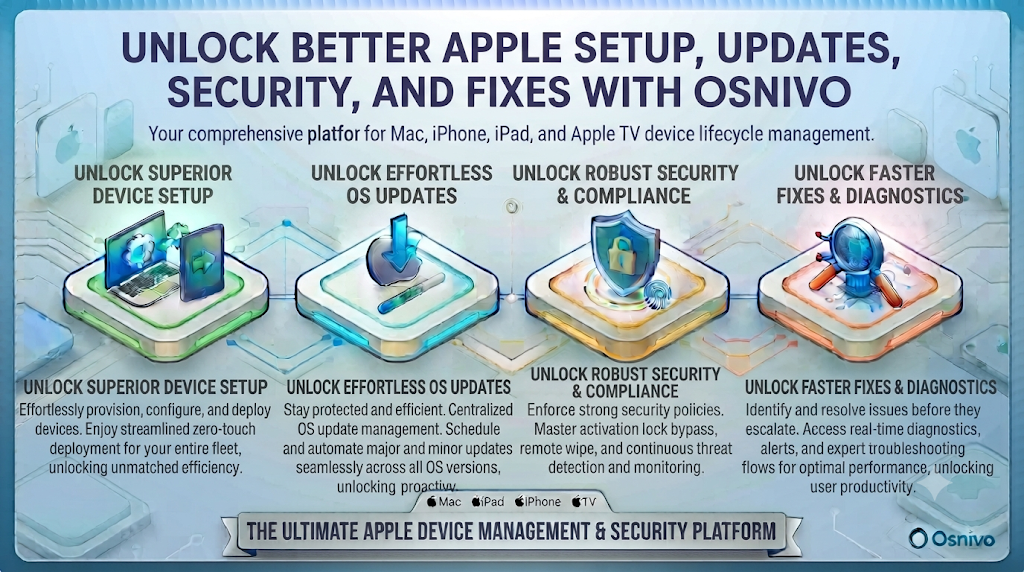
Instead of sifting through scattered forum threads, you gain practical direction from tools built around your exact hardware. Osnivo acts as an independent Apple ecosystem knowledge platform uniting hands-on tutorials, interactive utilities, repair steps, and community insights. Consequently, you make confident choices throughout your Apple device ownership journey.
What Is Osnivo?
Osnivo operates as an independent Apple ecosystem knowledge platform created to deliver practical, device-specific guidance across your ownership lifecycle. Rather than chasing daily tech news cycles, the platform supports iPhone, iPad, Mac, Apple Watch, Apple TV, and Apple Vision Pro.
Through structured guides and interactive utilities, Osnivo helps you explore device features, check software versions, verify compatibility, customize settings, and resolve everyday technical glitches. Moreover, its coverage spans six core operating systems:
| Platform Group | Covered Apple Operating Systems |
|---|---|
| Handset & Tablet | iOS and iPadOS |
| Desktop & Laptop | macOS |
| Wearables, Home & Spatial | watchOS, tvOS, and visionOS |
Why Apple Users Need Reliable Device Guidance
Even intuitive hardware sparks daily questions about configuration, software updates, compatibility, wireless connections, privacy, and routine care. First-time owners seek clear starting steps, while students and professionals count on steady performance for coursework and deadlines.
Meanwhile, families coordinate shared devices, and experienced tech fans still encounter model-specific quirks. Because menus and capabilities vary across hardware generations, instructions deliver the best results when they match your exact device model and installed operating system version.
Understanding iOS 27 Compatible iPhones
Before you install a major release, reviewing iOS 27 compatible iPhones saves time and prevents unexpected roadblocks. Start by identifying your exact iPhone model inside your device settings or hardware details. Next, compare your model against official supported device lists to confirm baseline eligibility.
Hardware specs also govern software requirements and feature availability. Furthermore, free storage space impacts large downloads, and specific features differ by region. Always confirm compatibility through current official Apple documentation, and use a device Compatibility Checker to simplify your research without guessing supported models.
Should I Update to iOS 27? What Users Should Consider
Deciding should I update to iOS 27 involves weighing practical trade-offs rather than rushing or delaying blindly. Balance your device compatibility, security patches, new features, and bug fixes against your daily schedule.
Before starting an upgrade, inspect available storage, battery condition, app compatibility, backup readiness, and any known update issues. Reading official release notes and security details provides clear context for your choice. You can also consult Osnivo's Should I Update tool to evaluate software updates for your specific device and situation.
How to Set Up a New iPhone Step by Step
Learning how to set up a new iPhone feels straightforward when you follow a logical sequence. A guided setup companion also helps first-time owners complete every stage smoothly:
- Power and region: Charge your new phone, gather Wi-Fi and account details, hold the side button until the Apple logo appears, and pick your language and region.
- Connection and Quick Start: Join a reliable Wi-Fi network, use Quick Start where supported alongside an existing iPhone or iPad, and sign in with your Apple Account.
- Biometrics and passcode: Configure Face ID or Touch ID where available, and create a strong device passcode.
- Data transfer and privacy: Restore from a backup or move data from your previous phone, then review privacy and security settings.
- Updates and final checks: Install necessary software updates, and test core features like calls, messages, and email.
Transfer Data from Android to iPhone
Moving between platforms runs smoothly when you prepare early to transfer data from Android to iPhone. Begin by charging both phones, connecting them to stable Wi-Fi, and confirming that your target iPhone holds enough storage and compatible software.
Next, organize key data categories including contacts, messages, photos, videos, calendar entries, email accounts, supported files, and other transferable items. Follow Apple's supported transfer methods step by step, and keep in mind that some third-party apps require fresh downloads. Finally, verify that all transferred information appears accurately before you erase or sell your old Android phone.
iPhone Won't Connect to Wi-Fi: Common Causes and Fixes
Facing an iPhone won't connect to Wi-Fi issue interrupts messaging, browsing, and streaming. Frequent causes include an incorrect Wi-Fi password, router hiccups, weak signal strength, network configuration errors, temporary software glitches, VPN or network settings, outdated software, or network restrictions.
Work through safe troubleshooting steps in sequence:
- Power cycle hardware: Restart both your iPhone and your router to clear temporary connection bugs.
- Confirm network details: Verify your Wi-Fi password, forget and rejoin the network if needed, and test another Wi-Fi network.
- Check software and VPNs: Inspect VPN configurations, network settings, and pending software updates.
If connection failures continue across multiple networks, contact your internet provider or Apple Support. Skip advanced network resets until you understand how they erase saved Wi-Fi passwords and custom configurations.
iPhone Settings Guide: Important Features Every User Should Know
A practical iPhone settings guide helps everyday owners customize their device without confusion. Core menus include Wi-Fi and Bluetooth for wireless links, Notifications for alert control, and Display and brightness for screen comfort.
You should also review Battery for power habits, Accessibility for visual or motor assistance, Location Services for map and app permissions, and Privacy for personal data controls. Furthermore, inspect Face ID and passcode, Apps, Storage, and Software updates regularly. Understanding what each toggle does prevents accidental disruptions, while Osnivo's Settings Pathfinder helps locate and clarify specific options.
How to Back Up an iPhone and Protect Important Data
Mastering how to back up an iPhone shields your photos, messages, and app data against accidental loss. You can run wireless iCloud backups or save local computer backups using supported methods.
Before starting, verify free storage space, check automatic backup schedules, and review how backup encryption safeguards sensitive records. Always confirm that your backup finishes without errors, and verify your restoration options ahead of time. Routine backups protect you before major updates, hardware repairs, device replacements, or troubleshooting.
iPhone Security Settings Checklist
Applying an iPhone security settings checklist strengthens daily protection across your device and account. Because no single toggle provides complete defense, layering multiple safeguards works best:
- Strong device passcode & biometrics: Block unauthorized physical access and enable Face ID or Touch ID where supported.
- Two-factor authentication & account safety: Require a second verification step on new sign-ins and update account recovery contacts.
- Find My & Stolen Device Protection: Track misplaced phones and enforce extra theft checks away from familiar places where supported.
- Location & app permissions: Limit when apps read your location or access your camera, microphone, contacts, and photos.
- Software updates & auto-lock: Install timely security patches and set your screen to lock promptly when idle.
- Safe browsing & backups: Avoid suspicious links and maintain regular backups for recovery.
Understanding macOS 27 Compatible Macs
Researching macOS 27 compatible Macs helps you plan desktop or laptop upgrades without guesswork. Start by identifying your exact Mac model and chip details in system settings, then review official supported Mac lists and hardware requirements.
Before downloading a major macOS release, verify available disk space, software compatibility, potential feature limits, and third-party app requirements. Completing a fresh backup first safeguards your documents and projects. Osnivo's Compatibility Checker and Version Compare tools help you verify model eligibility and compare operating system versions side by side.
QuickTime Player Screen Recording Mac: A Practical Guide
Using QuickTime Player screen recording Mac features gives beginners and everyday Mac owners a built-in way to capture tutorials or demos. Launch QuickTime Player from your Applications folder, and click File > New Screen Recording.
Adjust the on-screen controls to review recording options, choose full-screen capture or a selected area where supported, and pick your microphone input. Start recording, click the stop icon in the menu bar when finished, save your file, and watch the playback. If capture stalls or audio drops, verify microphone permissions, free disk space, and current macOS screen recording permissions.
Common Apple Device Problems and How to Troubleshoot Them
Across the Apple ecosystem, everyday owners frequently run into iPhone charging issues, Wi-Fi connection failures, Face ID errors, and Bluetooth pairing problems. Frequent hurdles also include Apple Watch connectivity drops, Mac startup issues, storage limits, software update stalls, and crashing apps.
Start every fix with simple steps like restarting your device, inspecting cables, or freeing storage before trying deeper changes. Working methodically prevents unnecessary resets, and Osnivo Fix organizes structured troubleshooting guides for common issues.
How Osnivo's Interactive Tools Help Apple Users
Osnivo's interactive utilities turn complex device questions into clear, guided steps. The Apple Device Compatibility Checker shows supported operating system versions for specific models, while the Should I Update tool evaluates update factors alongside Apple's published release notes and security details.
Visitors can also use Settings Pathfinder, Version Compare, Setup Companion, and Update Readiness Checker to compare releases, locate menus, and prepare for upgrades. Moreover, Migration Planner, Osnivo Fix, Security Checkups, and Backup Planning support transfers, troubleshooting, privacy checks, and backup routines.
Apple Device Compatibility vs Software Update Readiness
Compatibility shows whether your hardware supports an operating system version, whereas update readiness checks whether your device and files stand ready for installation right now. Even a compatible model needs preparation so an upgrade runs smoothly.
| Comparison Area | Software Update Readiness | Device Compatibility |
|---|---|---|
| Main purpose | Helps prepare for installation | Checks supported software versions |
| Device model | Important | Important |
| Storage | Important preparation factor | May affect installation |
| Backup | Important before updating | Recommended |
| Software requirements | Central | Central |
| Security information | Important decision factor | Useful context |
A compatible iPhone or Mac might still lack free storage, hold an outdated backup, or rely on an app that needs a developer update first. Checking readiness ahead of time prevents stalled installs and data headaches.
How to Manage Multiple Apple Devices
Coordinating several Apple devices works smoothly when you align accounts, updates, backups, and privacy across your setup. Whether you carry an iPhone and iPad, work on a Mac and MacBook, wear an Apple Watch, or use an Apple TV and Apple Vision Pro, consistent habits keep everything connected.
Sign in with your Apple Account properly, coordinate updates and backups across devices, and review privacy and wireless settings on each screen. Always verify device-specific requirements rather than assuming every feature works identically across all models.
Privacy, Security, and Safe Apple Device Usage
Protecting personal data across Apple hardware relies on steady everyday habits. Lock down account security, audit app permissions and location sharing, and enforce strong screen access controls.
Install software updates promptly, maintain secure backups, and enable lost-device tools before an emergency strikes. Watch out for phishing messages, stick to trusted downloads, and maintain a clear data recovery plan for critical records.
Preparing an Apple Device Before Selling or Trading It In
Before you sell, trade in, or give away an iPhone, iPad, or Mac, clear your personal data thoroughly. Begin by creating a fresh backup and transferring important files to your replacement device.
Next, sign out of active accounts, turn off applicable device protections when required, and erase your personal content. Remove the device from your account associations where appropriate, and inspect cables, chargers, and physical condition. Always follow the official preparation process for your specific device model.
How to Choose Reliable Apple Device Information
Dependable Apple tutorials match your specific device model and operating system version rather than offering vague advice. Look for clear step-by-step instructions, accurate compatibility notes, realistic troubleshooting boundaries, and current technical explanations.
Whenever updates, security, backups, or device recovery come into play, check instructions against official Apple documentation. Independent guides clarify everyday steps, yet they never replace official Apple support when you need authoritative help.
AEO, GEO, LLMO, AISEO, and E-E-A-T for Apple Technology Content
Thoughtful organization helps both everyday readers and modern search systems locate accurate answers fast. Publishers often pair AEO (Answer Engine Optimization), GEO (Generative Engine Optimization), LLMO (Large Language Model Optimization), and AISEO (AI Search Optimization) with E-E-A-T (Experience, Expertise, Authoritativeness, and Trustworthiness).
Direct answers, accurate hardware facts, actionable steps, and version-specific guidance make technical articles truly helpful. Although no approach guarantees search rankings or AI visibility, clarity and accuracy build genuine reader trust.
Practical Apple Device Maintenance Checklist
A steady maintenance routine keeps your Apple devices fast, secure, and organized:
- Updates & compatibility: Check software compatibility before planning major upgrades, and review available updates and official release notes.
- Backups & recovery: Back up important information regularly, confirm completion status, and keep recovery details accessible.
- Privacy & security: Review privacy settings, check account security, and audit app permissions periodically.
- Storage & connectivity: Manage device storage, remove unnecessary apps, check battery health where supported, and test Wi-Fi, Bluetooth, and sync connections routinely.
Why Osnivo Is Worth Exploring
Osnivo brings together compatibility checks, software update guidance, setup instructions, migration help, troubleshooting paths, security resources, interactive utilities, tutorials, and community Q&A in one hub. Both newcomers and seasoned Apple users find practical answers throughout their ownership journey.
True to its core message, Know your Apple ecosystem. Exploring Osnivo's tools and guides gives you a clear, practical foundation for daily device care.
FREQUENTLY ASKED QUESTIONS
Which iPhones support iOS 27?
Consult official Apple compatibility documentation for the current supported iPhone list, or enter your model into Osnivo's Compatibility Checker.
Should I update my iPhone to iOS 27?
Compare your device compatibility, free storage, battery health, backup status, app needs, and release notes, or check Osnivo's Should I Update tool before installing.
How do I set up a new iPhone?
Power on the device, pick your language and region, join Wi-Fi, use Quick Start if available, sign in with your Apple Account, set up Face ID or Touch ID and a passcode, restore or transfer data, review privacy and updates, and test core features.
What should I do if my iPhone won't connect to Wi-Fi?
Restart your iPhone and router, confirm your Wi-Fi password, test another network, and inspect VPN settings, network configurations, or software updates before contacting your provider or Apple Support.
How can I transfer data from Android to iPhone?
Charge both phones, join stable Wi-Fi, verify available storage and software compatibility, move contacts, messages, photos, videos, calendars, mail, and supported files through Apple's supported transfer methods, and confirm your data before wiping the old phone.
Which Macs support macOS 27?
Identify your exact Mac model and check official Apple supported Mac lists or Osnivo's Compatibility Checker and Version Compare tools before upgrading.
How can I find important iPhone settings?
Open the Settings app to manage Wi-Fi, Bluetooth, Notifications, Display, Battery, Accessibility, Location Services, Privacy, Face ID and Passcode, Apps, Storage, and Software Updates, or use Osnivo's Settings Pathfinder.
What is the best way to back up an iPhone?
Run iCloud backups or local computer backups with sufficient storage and proper encryption settings, and confirm complete backup status before major updates or repairs.
Which iPhone security settings should I enable?
Combine a strong passcode, Face ID or Touch ID where available, two-factor authentication, Find My, Stolen Device Protection where supported, strict app and location permissions, timely updates, automatic locking, safe browsing habits, and regular backups.
How do I record my Mac screen using QuickTime Player?
Launch QuickTime Player, click New Screen Recording, adjust capture and microphone options, start and stop recording from the menu bar, save the file, and review the playback.
FINAL THOUGHTS
Prioritizing compatibility checks, software updates, initial setup, troubleshooting, backups, privacy, and security removes guesswork from everyday Apple device ownership. Clear guides and practical tools help you stay organized as your hardware and needs evolve.
Osnivo offers an accessible destination for Apple ecosystem guidance, interactive utilities, tutorials, and troubleshooting help. Make time to understand your exact device and verify critical technical steps against applicable official Apple documentation.



Top comments (0)