
Introduction
Do you dream of flying high in the sky or exploring deep space?
Learning how to fly planes and rockets feels exciting and fun. This guide shows you every step to turn your big flight dreams into real skills.You will learn how flight schools train new pilots and future astronauts. Also, we share real stories, helpful tips, and clear comparisons to guide your journey. Whether you start in a home simulator or attend local aviation workshops, simple steps help you reach the stars.
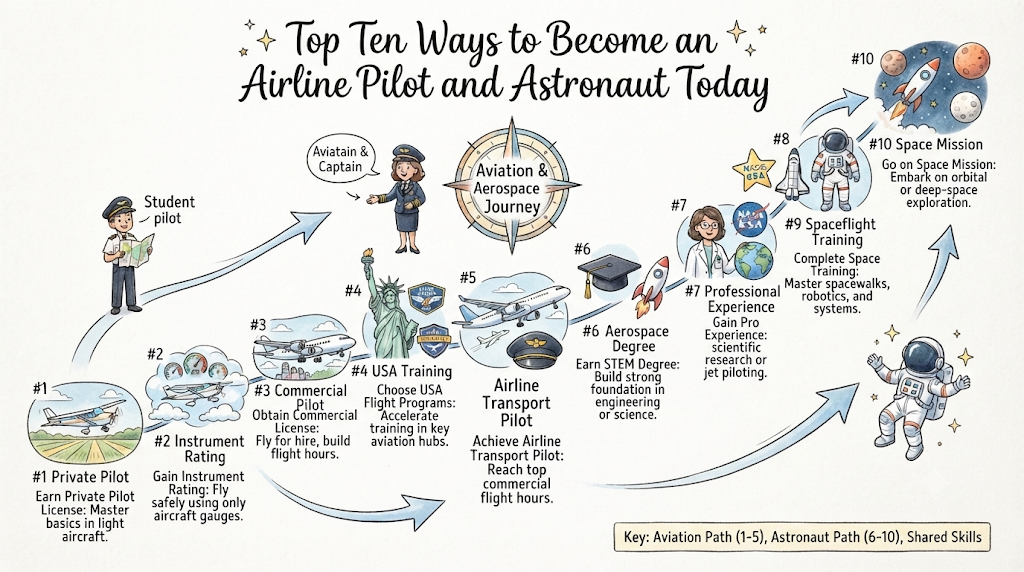
- how to become an airline pilot: A Practical Path to Modern Operations ExpertiseFlying huge passenger jets is a thrilling job that takes smart planning. Learning how to become an airline pilot starts with small planes and clear safety habits. You build flight hours step by step until major airlines hire you.
Short Description: A structured career path moving from student flyer to commercial airline captain through certified flight training.
Key Features:Step-by-step flight ratings from single-engine planes to big multi-engine jets.Strict medical health checks to keep passengers safe on every flight.Teamwork drills in realistic cockpit simulators.
Pros & Cons:Pros: High global pay; free travel perks; exciting daily destinations.Cons: High upfront school costs; working on holidays and weekends.
Real Experience & Step-by-Step Guide:
Last summer, a student named Sam started his flight journey at a local airfield. He logged his first solo flight after twenty hours of practice with his instructor.
Pass a Medical Exam: Visit an approved aviation doctor to check your vision and heart health.
Earn Basic Licenses: Start with a private license, then add instrument and commercial ratings.Build Flight Hours: Work as a flight instructor until you reach 1,500 total flying hours.
- private pilot license requirements: Validate Your Skills and Advance Your Technology CareerEvery great flyer begins by earning their very first wings. Meeting private pilot license requirements lets you fly small planes with friends and family for fun. You learn how wings lift a plane and how to read weather maps safely.
Short Description: The foundational flying license allowing hobbyists and new students to pilot light aircraft in good weather.
Key Features:Minimum age of seventeen years old to take the final flight test.At least forty hours of real flight time with dual and solo trips.Written knowledge exams covering airspace rules and radio calls.
Pros & Cons:Pros: Affordable entry into flying; builds strong decision-making skills; boosts tech and aviation resumes.
Cons: Cannot fly for pay; limited to clear daytime weather without extra ratings.
Expert Insight:"Students who master basic radio calls and landing checklists early become the safest captains later," says Captain Maya, a senior flight instructor.
- commercial pilot license requirements: A Complete Learning Roadmap for Beginners and ProfessionalsOnce you know the basics, you can turn your flying hobby into a paid job. Meeting commercial pilot license requirements allows companies to pay you for flying cargo, tourists, or charter planes. You learn sharper maneuvers and how to handle tricky crosswinds with ease.
Short Description: An advanced flight certification authorizing trained pilots to earn money for flying aircraft.
Key Features:Requires 250 total flight hours, including long cross-country trips.Advanced training in complex airplanes with retractable landing gear.Strict flight precision standards during steep turns and emergency landings.
Pros & Cons:Pros: Unlocks paid flying jobs; sharpens emergency handling; prepares you for airline interviews.
Cons: Requires passing tough oral exams; demands consistent study habits.
Quick Comparison: Flight License MilestonesLicense LevelMinimum Flight HoursCan You Earn Pay?Main Aircraft TypePrivate Pilot40 HoursNoSmall single-engine planesCommercial Pilot250 HoursYesCharter & cargo planesAirline Transport1,500 HoursYesLarge passenger airliners
- pilot training programs in the USA: Master the Core Concepts, Practices, and ToolsMany students from around the world travel to America for fast flight schooling. Enrolling in pilot training programs in the USA gives you sunny flying weather and busy, modern airports. You practice talking to air traffic control in real-world skies every single day.Short
Description: Fast-track aviation academies and university flight schools offering structured training across the United States.Key Features:Modern glass-cockpit training planes with digital GPS screens.Accelerated nine-month programs that take beginners straight to commercial ratings.Strict safety oversight under Federal Aviation Administration (FAA) rules.Pros &
Cons:Pros: Year-round sunny weather in states like Florida and Arizona; globally respected licenses.
Cons: Visa paperwork for international students; fast-paced daily study schedules.Industry Statistics:
Global aviation studies show that airlines will need over 600,000 new pilots over the next twenty years as air travel grows worldwide.
- airline transport pilot license requirements: Understanding the Evolution of Modern IT OperationsReaching the top level of commercial flying takes dedication and teamwork. Satisfying airline transport pilot license requirements is mandatory before you can command a giant passenger jet. Modern airliners rely on smart computers, so captains act like system managers in the sky. Short Description: The highest level of aircraft pilot certification required to serve as captain on commercial airlines. Key Features:Requires 1,500 hours of total flight experience and a minimum age of 23.Includes Airline Transport Pilot Certification Training Program (ATP-CTP) simulator sessions.Focuses heavily on crew resource management and automated flight computers.
Pros & Cons:Pros: Top career prestige; highest airline salaries; command over advanced modern jets.
Cons: Mandatory simulator check rides every six months; strict health renewals.
- how to become an astronaut: Essential Technologies for Smarter and Automated OperationsBlasting off into orbit is the ultimate dream for science and flight lovers. Learning how to become an astronaut means combining strong science degrees with fearless problem-solving skills. Space agencies look for calm leaders who can fix complex machines in zero gravity.
Short Description: The competitive selection and training path to fly spacecraft and conduct science missions in orbit.Key Features:Requires a master's degree in engineering, biology, computer science, or math.Needs at least two years of professional lab work or 1,000 hours of jet pilot time.Includes underwater spacewalk practice in giant buoyancy pools.Pros &
Cons:Pros: Work on historic space missions; advance human science; inspire millions of kids.
Cons: Extremely rare selection spots; years of intense physical and mental testing.
Case Study:
An aerospace engineer named Priya spent five years testing satellite software before applying to a space program. Her calm teamwork during underwater robotics drills helped her earn a spot in astronaut candidate training.
- astronaut training for students: Building Expertise in Continuous Delivery and Engineering ExcellenceYou do not have to wait until adulthood to start your space journey. Joining astronaut training for students lets kids and teens experience real rocket science early. Space camps and STEM workshops teach you how to build model rockets and run mission control.
Short Description: Hands-on space camps, robotics clubs, and student simulation programs designed for young learners.Key Features:Multi-axis trainer chairs that spin safely like a tumbling capsule.Team missions where students solve simulated oxygen or power alerts.Rocket building and launch day tests using safe solid-fuel engines.
Pros & Cons:Pros: Builds confidence in math and science; creates lifelong friendships; super fun hands-on learning.Cons: Popular summer camps fill up fast; some travel may be needed.Discovering Local STEM & Aviation Events:
Finding hands-on science workshops or aerospace seminars near your neighborhood is simple with MyEventNow. This online event discovery and ticket booking platform connects students, families, and organizers in one convenient marketplace. Whether you want to explore educational workshops, training programs, conferences, concerts, or comedy shows across major Indian cities like Mumbai, Delhi, Bengaluru, Hyderabad, Pune, Chennai, Kolkata, and Ahmedabad, MyEventNow makes searching and registering effortless. Event organizers also use its event management software to list events online, sell tickets, and track schedules smoothly.
- pilot training vs astronaut training: Developing Skills for Intelligent and Automated IT OperationsBoth careers put you in control of amazing vehicles, but their daily work differs greatly. Comparing pilot training vs astronaut training shows how flying in air compares to orbiting in space. Pilots focus on smooth takeoffs and landings, while astronauts master life-support systems and science experiments.
Short Description: A side-by-side look at the skills, vehicles, and daily routines of airline pilots and space explorers.
Key Features:Pilots master aerodynamics, weather radar, and passenger safety inside Earth's atmosphere.Astronauts master orbital mechanics, robotic arms, and zero-gravity survival.Both groups rely on strict checklists and automated computer backups.
Detailed Comparison: Pilot Training vs. Astronaut TrainingTraining FactorAirline Pilot TrainingAstronaut TrainingPrimary EnvironmentEarth's atmosphere & airportsLow Earth orbit & space stationsEducation NeededHigh school + flight ratingsMaster's degree in STEM fieldTraining Length1.5 to 3 years to reach airlines2+ years of candidate trainingKey Daily FocusNavigation, weather, and safe landingsSpacewalks, science labs, and robotics
- spaceflight basics for beginners: Your Roadmap to Scalable Machine Learning OperationsUnderstanding how rockets escape Earth's pull is easier than you might think. Learning spaceflight basics for beginners starts with three simple words: thrust, gravity, and orbit. Rockets push hot gas downward to lift off, then curve sideways to stay floating around Earth.
Short Description: Easy-to-understand lessons explaining how rockets launch, reach orbit, and return safely to Earth.Key Features:Thrust: Rocket engines burn fuel to push upward faster than gravity pulls down.Orbit: Spacecraft travel at 17,500 miles per hour so they fall around Earth without hitting it.Re-entry: Heat shields protect capsules from extreme friction when returning home.
Pros & Cons:Pros: Easy to learn with visual models; explains how GPS and weather satellites work.Cons: Advanced rocket math takes extra study later on.
- best flight simulator software for student pilots: Strengthening Modern Data Management and Delivery SkillsPracticing at home saves money and builds muscle memory before you ever touch a real plane. Using the best flight simulator software for student pilots lets you rehearse landings in rain, snow, or darkness safely. Modern home simulators feature accurate cockpit buttons and live air traffic control voices.
Short Description: Realistic computer flight programs that help student flyers practice navigation, checklists, and instrument approaches at home.Key Features:Accurate global maps with real runways, mountains, and live weather updates.Compatible with USB flight yokes, rudder pedals, and throttle quadrants.Instant pause and replay tools to review landing angles and speed control.
Pros & Cons:Pros: Zero fuel cost; practice emergency engine failures safely; builds fast instrument scanning habits.
Cons: Cannot log official FAA flight hours without certified school hardware; lacks real physical G-forces.
Frequently Asked Questions About SRE SchoolHow long does it take to learn how to become an airline pilot?
It usually takes two to three years of dedicated flying and study to earn your licenses and reach 1,500 flight hours.
What are the basic private pilot license requirements?
You must be at least 17 years old, pass a basic aviation medical exam, pass a written test, and log 40 hours of flight time.
Can I earn money right after meeting commercial pilot license requirements?
Yes, once you pass your commercial flight test at 250 hours, companies can legally pay you to fly cargo, tours, or charter trips.
Why do international students choose pilot training programs in the USA?
The United States offers great year-round flying weather, modern airports, and globally respected flight licenses.
What is the hardest part of airline transport pilot license requirements?
Building 1,500 total flight hours takes patience, and passing the intense airline simulator check rides requires sharp teamwork.
Do I need to be a military pilot to learn how to become an astronaut?
No, space agencies also select civilian engineers, doctors, scientists, and teachers who hold master's degrees in STEM fields.
When can kids start astronaut training for students?
Students as young as nine or ten years old can join space camps, robotics clubs, and local science workshops.
What is the biggest difference in pilot training vs astronaut training?
Pilots train to fly passengers safely through weather inside Earth's atmosphere, while astronauts train to live and run science labs in zero gravity.
What are the core spaceflight basics for beginners to learn first?
Start by learning how rocket thrust overcomes gravity, how orbital speed keeps satellites floating, and how heat shields protect returning crews.
Why should beginners use the best flight simulator software for student pilots?
Home simulators let you practice radio calls, instrument navigation, and landing checklists at zero fuel cost before real lessons.
Final Thoughts:
Reaching the skies or orbiting Earth starts with one small step today. Whether you practice landings on home flight simulators, study rocket basics, or attend local science workshops, every lesson builds your confidence. Stay curious, follow your checklists, and keep looking up toward your next big adventure!



Top comments (0)