
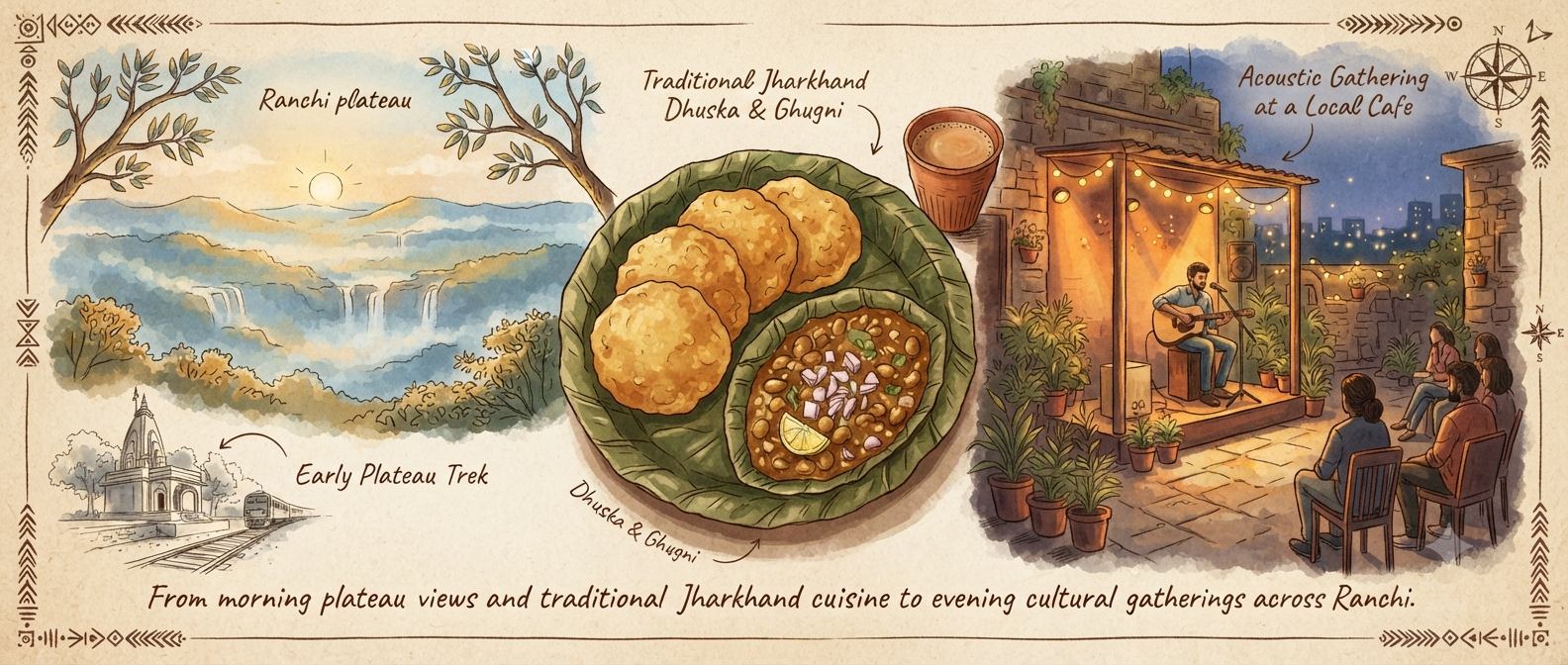
When a user opens a city-focused web platform on a Friday afternoon looking for something to do, the underlying software problem looks simple on the surface: fetch a list of upcoming activities and display them in chronological order. In practice, local discovery platforms face a classic information-retrieval challenge. Listings arrive with inconsistent descriptions, overlapping categories, incomplete venue details, and sharp time sensitivity—an event happening tonight loses most of its utility tomorrow morning.
Understanding how modern web applications model, index, and present local listings reveals why structured data design matters just as much as interface polish. Whether an application serves a large metropolis or a growing city hub like RanchiOrbit, turning fragmented community information into clear, searchable discovery depends on clean data schemas, predictable filtering logic, and careful separation between informational browsing and transactional workflows.
Why Chronological Feeds Alone Break Down
A naive event directory stores a title, a date string, and a block of free-form text. At low volume, a reverse-chronological feed feels adequate. Once dozens of listings overlap across different audiences and schedules, pure chronological sorting forces users to scan irrelevant entries manually.
Consider the difference between broad browsing and high-intent time queries. A user searching for things to do in Ranchi this weekend is applying an implicit temporal window—typically Friday evening through Sunday night—combined with an expectation that expired or next-month listings stay out of the way.
To support that intent reliably without expensive full-table scans, web applications normalize event timestamps into standardized UTC or timezone-aware datetime fields alongside explicit start and end boundaries. That normalization lets the query layer answer relative time filters deterministically rather than parsing ambiguous text phrases like "this Saturday" or "coming weekend."
Modeling Diverse Formats Through Multi-Faceted Taxonomy
Local happenings rarely fit cleanly into a single flat label. An evening session might combine acoustic music with spoken word, while a weekend gathering might blend food stalls, craft demonstrations, and performances. Relying solely on free-text keyword search fails whenever organizers describe similar formats differently.
Well-structured discovery platforms solve this with faceted classification—assigning orthogonal attributes such as format, audience suitability, recurrence, and location alongside full-text indexing. When indexing events in Ranchi, separating primary category tags from secondary attributes allows users to filter by intent without hiding cross-category experiences.
Different entertainment formats also carry distinct metadata requirements that affect how listings are displayed and compared:
- Performance-oriented listings: Users evaluating live music concerts in Ranchi typically look for performer details, start times, entry rules, and acoustic or seating context before deciding.
- Intimate stage formats: For stand up comedy shows in Ranchi, age guidance, language preference, and show duration often matter more than elaborate stage descriptions.
Separating structured attributes from descriptive prose keeps listing cards scannable on mobile screens while preserving rich detail on the individual event view.
Handling Educational, Cultural, and Family Metadata
Not every local listing is a night-out performance. Skill-building sessions, seasonal celebrations, and daytime family activities introduce distinct user questions that a rigid entertainment-only schema handles poorly.
For instance, workshops and training events in Ranchi benefit from structured fields covering prerequisites, materials required, skill level, and session format—details that help learners evaluate fit before committing time. Without dedicated schema fields, those critical constraints stay buried inside long paragraphs where filters cannot reach them.
Seasonal and community-driven gatherings introduce another modeling nuance: multi-day schedules and recurring traditions. When organizing festivals and cultural events in Ranchi, applications often distinguish between single-session entries and umbrella schedules spanning multiple days or sub-activities so users do not see duplicate clutter in primary feeds.
Audience suitability is equally important for household planning. Platforms surfacing family and kids events in Ranchi rely on explicit age-bracket flags, daytime timing indicators, and accessibility notes so parents can filter out late-night or adult-oriented programming in a single step.
Spatial Entities: Why Venues Deserve First-Class Records
A common schema mistake in early directory applications is storing a location as a plain text string on every event record. Over time, small variations—"Main Road," "Near Albert Ekka Chowk," or abbreviated hall names—split the same physical place into disconnected strings.
Treating physical locations as first-class relational entities solves both data hygiene and user navigation. Maintaining structured records for event venues in Ranchi allows a platform to attach neighborhood tags, landmark references, seating capacity context, and map coordinates once, then link multiple listings to that canonical venue record.
| Data Model Approach | Strengths | Limitations |
|---|---|---|
| Plain-text address per listing | Fast initial implementation; zero relational joins | Duplicate venue names; broken location filtering; inconsistent landmarks |
| Normalized venue entity + foreign key | Consistent neighborhood filtering; reusable venue pages; cleaner map integration | Requires deduplication workflow and basic moderation during submission |
On platforms like RanchiOrbit, pairing event listings with clear venue context helps residents and visitors understand not only what is happening, but where it sits within the city's geography.
Separating Discovery from Ticketing Workflows
From a systems perspective, browsing an event catalog and completing a transaction have fundamentally different engineering requirements. Discovery endpoints are read-heavy, cache-friendly, and tolerant of brief eventual consistency. Transactional flows, by contrast, require strict state validation, inventory locking, and clear audit trails.
Even when a platform offers configured event ticket booking in Ranchi, keeping the discovery layer decoupled from the checkout state prevents high browsing traffic from degrading transaction reliability. Browsing pages can serve cached listing metadata, while availability checks and tier selection run dynamically only when a user initiates a booking flow.
On the organizer side, enabling hosts to sell event tickets online in Ranchi requires clean role separation and structured configuration. Organizers need clear interfaces to define ticket tiers, capacity limits, and event policies without exposing underlying platform administration or mixing draft entries into public search indexes before validation.
Practical Takeaways for Web Builders
Designing a local discovery and community platform is less about complex algorithms and more about disciplined data modeling:
- Normalize time and place early: Store timezone-aware timestamps and canonical venue entities rather than relying on unvalidated strings.
- Use faceted attributes alongside full-text search: Combine structured categories, audience tags, and temporal windows so users can narrow results in two or three taps.
- Isolate read-heavy discovery from transactional state: Cache public listings aggressively while keeping ticket availability and checkout operations stateful and atomic.
- Design schemas for real-world variety: Account for workshops, multi-day cultural schedules, and family programming alongside performances so no category feels like an awkward afterthought.
When those foundations are solid, a city platform becomes genuinely useful—turning scattered announcements into structured, trustworthy local knowledge that serves both everyday explorers and community organizers.



Top comments (0)