
Event information often fails in one of two ways. It says too little, or it makes people hunt for the answer. A visitor who cannot find the start time moves on. An organizer who cannot see who has signed up cannot plan the day.
The same problem shows up for different people. Residents want something worthwhile to do nearby. Travelers want to know what a city offers. Professionals want conferences and networking evenings that suit their field. Organizers want a simple way to share details, offer tickets and keep records. MyEventsNow China is an event discovery and ticket booking platform that also gives organizers tools for registration and ticketing. This article covers what it offers, drawing on its published description.
What Is MyEventsNow China?
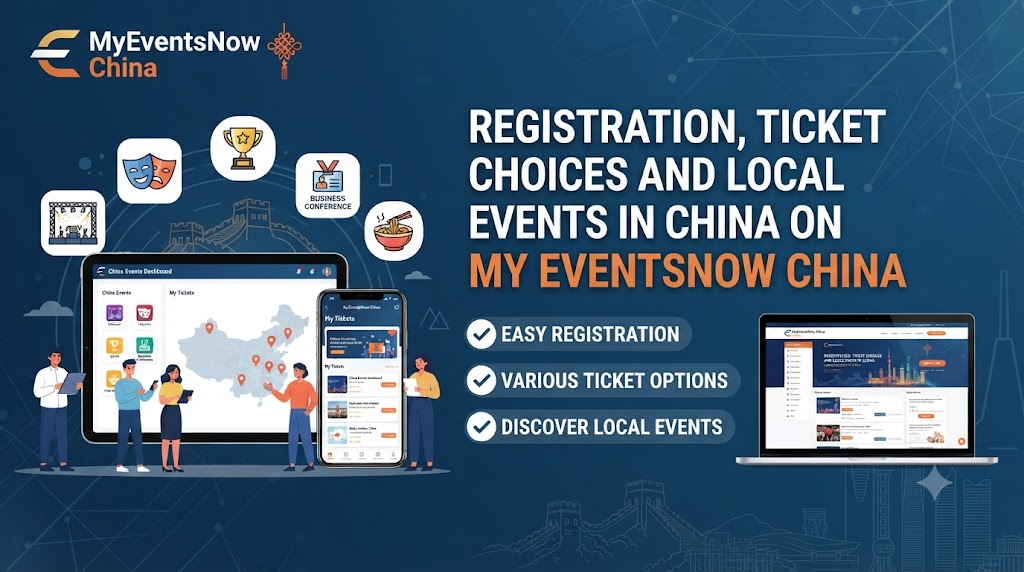
MyEventsNow China is a website that connects event organizers, businesses, communities and attendees across China. It does two things: it helps people find events, and it helps organizers run them.
Visitors can look through concerts, festivals, workshops, conferences, entertainment shows, networking events and community activities. Each listing shows information to read before deciding, plus the ticket or registration options.
Organizers can build event profiles, offer free or paid tickets, and manage participant information and schedules.
It also works as a multi-vendor marketplace. Independent organizers share the platform, so readers can compare events from many hosts in one place.
Why Online Discovery and Booking Matter
Online platforms help most when a choice depends on details. Someone choosing between two workshops needs the schedule, the location and the ticket terms side by side. A listing gives them these in a consistent form.
People who live in China can look beyond the events their own circle happens to mention. Visitors can learn what is on without local contacts. Professionals can compare conferences and learning programs before committing time and money.
Organizers gain a public page where interested readers can find them. This does not guarantee attendance, and nothing here claims anything about the size of the event market in China. The value is simply clarity: readers know what they are choosing, and organizers know who has chosen it.
A Hypothetical Example
Suppose a student society at a university in Beijing wants to hold an evening for students to meet working professionals. Here is how the organizers might use the platform.
| Organizer task | What they might do |
|---|---|
| Describe the event | Write who the evening is for, what happens and the timetable |
| Add details | Include the venue information and a few images |
| Set tickets | Offer free tickets for students, paid tickets for professionals and early-bird pricing for early sign-ups |
| Add extras | Create a VIP pass and state clearly what it includes |
| Publish | Release the event profile |
| Follow up | Keep the participant list organized as registrations arrive |
On the attendee side, a young professional who has recently moved to Beijing browses networking events. She finds the listing, reads the description, checks the venue and timetable, compares the ticket options and chooses a paid ticket. She completes the registration steps the platform shows.
Using the Platform in Five Steps
For attendees
- Visit the platform and look at the event categories.
- Search by location or interest.
- Read each listing's description, venue, schedule and ticket details.
- Choose the ticket or registration option that fits.
- Complete the booking or registration steps the platform provides.
For organizers
Prepare the title, description, venue, schedule and images. Create the event profile and set your ticket options. Publish the listing, then manage attendee information as people register. The exact screens and labels may differ from this description, so follow the platform's own guidance.
Features and Services in Detail
Registration Tools for Organizers
An event registration platform China organizers can depend on should help them know who is attending, not only sell tickets.
On MyEventsNow China, organizers can collect attendee registrations and manage participant information. They can coordinate event schedules, organize registration options and handle different participation needs. This suits conferences, workshops, educational programs, business events and community activities.
Take a training day with limited seats. The organizer needs a list of who has registered, which option each person took and when each session begins. Keeping this information in one place avoids confusion. The description does not mention advanced automation or integrations, so none are claimed.
Booking an Event as an Attendee
Online event ticket booking China visitors do on this platform follows a short path. You find an event, read its information, check the available tickets and complete the booking or registration steps shown.
The reading step is where most mistakes are avoided. A clear schedule prevents timing errors. Venue information prevents travel problems. Ticket information explains what the purchase includes.
The description does not mention payment methods, currencies, refund rules, mobile tickets or entry systems, so this article makes no claims about them. The booking page is the place to confirm exact steps and conditions.
Writing a Useful Event Listing
Organizers who want to list your event in China begin with an event profile. It can include the title and description, venue information, schedule, images and ticket information.
A useful listing answers the likely questions in advance. What is the event? Where is it? When does it start? What will a ticket cost and include? When these are clear, readers can decide without extra messages.
Independent organizers, event agencies, businesses, educational institutions and community groups can all use these tools. The platform does not promise audience reach or ranking. A complete page simply helps interested people understand the event.
Beijing Events for Different Kinds of Visitors
Beijing Events and Tickets listings cover live entertainment, professional meetups, conferences and community activities. The variety suits readers with different goals.
A resident may want a community event close to home. A business traveler may want a meetup that fits around meetings. A student may want a workshop. A visitor may want an evening of live entertainment.
Begin by naming the experience you want, then use categories and descriptions to narrow the options. Dates can change, so check each page for the latest details.
Conferences, Summits and Seminars
Professionals who look for business conferences in China will find several formats described. The description lists industry summits, business seminars, technology workshops, networking events and educational programs.
Each fits a different goal. A summit gives you a view of wider industry discussion. A seminar lets you study one topic. A workshop builds a practical skill. A networking event helps you meet people.
Match the format to what you want from the day. The platform does not describe speakers, organizers or partnerships, and it promises no business results.
Selling Tickets and Tracking Attendees
Organizers who want to sell event tickets online China can use the platform's ticketing and attendee management workflows. They can promote their listing, provide ticket information and manage attendee details.
Selling a ticket is one step in a longer process. Afterward, the organizer needs to know how many people are attending and which ticket each holds. Orderly records help with planning entry, seating and materials.
The description does not cover payment timelines, commissions or transaction charges. Organizers should confirm those directly with the platform.
Browsing by Category, Place and Date
People looking for upcoming events in China can start with the discovery marketplace. Events are grouped under categories such as concerts, festivals, workshops, conferences, entertainment shows and professional networking.
The categories tell you what type of event you are looking at. The location tells you how far you would travel. The schedule tells you whether the date works. The description tells you whether the event suits your interests.
The description gives no event counts or published calendars. What you see depends on what organizers have listed, and event types can vary between cities.
Music and Live Entertainment
People comparing concert tickets in China will find several kinds of entertainment described. The description names music festivals, DJ performances, live shows, music performances and other entertainment experiences.
A helpful routine is to read the listing in order. Start with the description to learn the style. Then check the date, start time and place. Finally, look at the ticket options.
The description does not name artists, prices or seating. Rely on each listing for those details, and do not assume a ticket is available until the page confirms it.
Free, Paid, VIP and Early-Bird Options
Event ticketing software China organizers choose has to work for both small gatherings and large shows. This platform supports free tickets, paid tickets, VIP passes, early-bird pricing and different registration options.
These options answer different needs. Free tickets can help a community event gather sign-ups. Paid tickets cover costs. VIP passes can offer extras, as long as the listing explains them. Early-bird pricing can encourage people to commit early.
Organizers decide the terms for their own events. The description gives no price rules, discount levels, service fees or ticket limits, so none are assumed.
Shanghai Events Across Music, Culture and Technology
Shanghai Events and Tickets listings can include music performances, nightlife, technology gatherings and cultural activities.
Residents can look for new things to try. Tourists can look for local culture. International visitors can scan the listings before they arrive and plan what to see.
Four details guide the decision. The description explains the event. The venue helps with getting there. The schedule shows timing. The ticket details show what you can buy.
One Marketplace for Independent Organizers
A multi-vendor marketplace lets independent organizers publish different events on a single platform. A promoter, a training company, a school and a neighborhood group can appear together.
The marketplace supports venue discovery, event categories, community discussions, event blogs and promotional opportunities. Venue discovery shows where events happen. Categories sort the listings. Discussions and blogs add background. Promotional opportunities give organizers ways to present events.
Together these features make browsing richer than a plain list. The description gives no community sizes, venue partnerships or promotion results, so none are claimed.
Mistakes to Avoid
- Skipping the schedule. Better habit: check the date and start time first.
- Ignoring the venue. Better habit: read the location and plan your route.
- Not reading ticket terms. Better habit: review what each ticket includes.
- Choosing the wrong ticket. Better habit: compare options side by side.
- Publishing a thin description. Better habit: cover the topic, audience and timetable.
- Leaving venue or schedule unclear. Better habit: state both plainly.
- Letting ticket information go stale. Better habit: keep it accurate when plans change.
- Leaving participant records untidy. Better habit: maintain one organized list.
Each habit helps attendees arrive ready and helps organizers spend their time on the event.
Frequently Asked Questions
Can I find free events?
Free tickets are one of the options organizers can offer. Check each listing to see what is available.
Are images and schedules part of a listing?
Yes. Event profiles can include images and schedules, along with the title, description, venue and ticket information.
What does "independent organizer" mean here?
It means an organizer who runs their own events and publishes them on the shared marketplace.
Why does venue information matter?
It lets you plan travel and judge whether the location suits you before you book.
How should I prepare before booking a workshop?
Read the description, check the schedule and venue, and compare the ticket options.
What should organizers do when event details change?
They should keep ticket and schedule information accurate and follow the platform's instructions for making updates.
Is a technology workshop the same as a conference?
Not quite. A workshop usually focuses on practical learning, while a conference gathers people to hear and discuss ideas.
Conclusion
MyEventsNow China brings event discovery, online ticket booking, registration and organizer tools into one marketplace. Attendees can explore music, conferences, workshops and community activities in places such as Shanghai and Beijing and check the key details before choosing. Organizers can publish event profiles, offer free, paid, VIP and early-bird tickets and keep participant information organized.
The platform works best when information is clear on both sides. Organizers who describe events well help readers decide with confidence, and readers who check the details avoid surprises. For anyone attending or hosting an event in China, it is a practical option to consider.



Top comments (0)