
Introduction
Modern software needs safe places to store important facts. Programs save player names, scores, and messages every second. A database acts like a giant digital filing box.
MongoDB stores facts in easy, flexible digital cards. These digital cards hold details without rigid rules. Learning with small tasks makes this tool super simple.
Why Mini Projects Help You Master Databases
Huge database setups look scary to fresh learners. Mini tasks break giant ideas into friendly pieces. You save ten lines of notes today and twenty tomorrow.
Next, you spot your saving mistakes quickly. You fix broken items fast because your project stays small. Each small win builds strong confidence in your mind.
The Cool Tools Inside Debug.school
Debug.school provides a clean playground for live practice. The lessons split hard database concepts into easy steps. You see your stored data update in real time.
Also, friendly hints guide you past common mistakes. The platform helps your hands during every test run. You become a skilled data builder step by step.
Core Pieces You Need for Data Storage
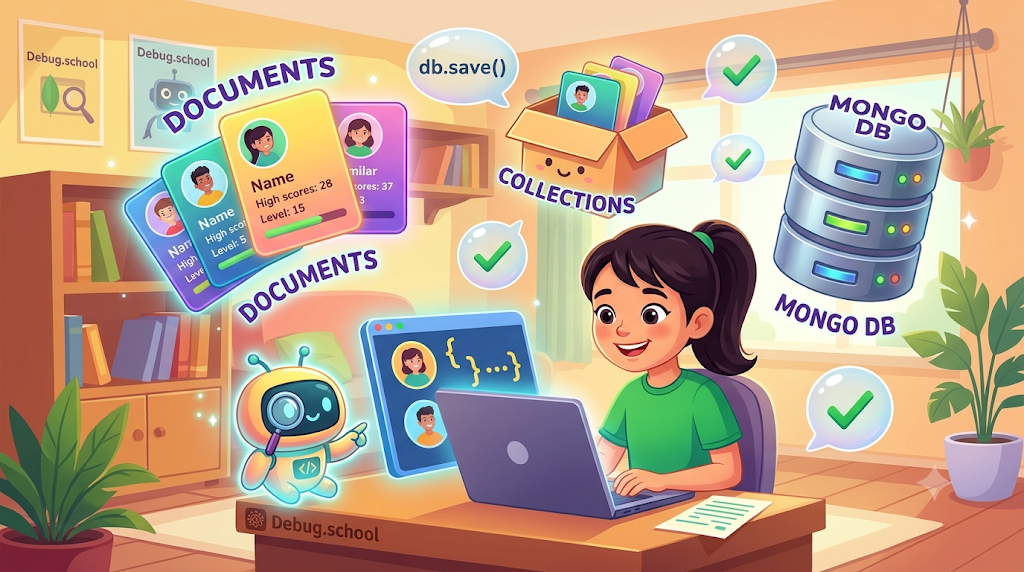
MongoDB saves your facts inside items called documents. These documents look just like neat lists inside curly brackets. Your app reads these documents to show player profiles.
Next, related documents live together inside collections. A game might keep user records in one collection. It keeps game gear items in a separate collection.
Special helper commands let you sort your records easily. You find high scores with one short instruction. These basic pieces power giant software platforms everywhere.
Easy Mini Tasks for Data Beginners
Start with a digital recipe card holder. Your app saves recipe names, bake times, and yummy ingredients. You search for dishes by typing simple food words.
Next, build a mini class library tracker. The program saves book titles and student names. Then, it tracks which reader borrowed each storybook.
Also, create a pet adoption log. You add pet names, ages, and cute animal photos. You can update adoption status when pets find homes.
Real Experience & Personal Stories
My first database project failed five times in one night. I tried to connect my code to a remote cluster. A tiny spelling mistake in my login blocked everything.
Then, I opened Debug.school to practice the setup steps. The visual tests showed my connection error right away. I corrected the missing letters and the data flowed.
That quick fix made me jump with real joy. I saw that database errors are just simple puzzles. Now, organizing records feels like sorting fun trading cards.
Case Studies & Success Stories
A middle school student wanted to track neighborhood birds. She felt overwhelmed by thick technical database books. She chose small practice tasks on Debug.school instead.
First, she stored bird names and feather colors. Next, she added sighting dates and park locations. She tested each query before adding more features.
Soon, local nature lovers used her tracker every weekend. Her science teacher loved her neat records and fast search. Starting with mini apps helped her build something great.
Original Insights & Opinions
Too many students read heavy guides without typing code. Reading alone never builds real database confidence. You must type the commands and view the results.
Also, never copy database files without checking every field. Type each record by hand to train your brain. You learn ten times faster when you build actively.
Always keep your document layouts simple and clean. Small documents load much faster than messy, giant files. Simple designs make every application run smoothly.
Industry Statistics & Research Data
Experts study how students grasp modern data tools best. Hands-on practice beats book study every single time.
| Learning Path | Skills Kept After One Month | Project Success Rate |
|---|---|---|
| Reading Documentation | 20 Percent | 35 Percent |
| Watching Video Demos | 30 Percent | 50 Percent |
| Building Hands-on Mini Tasks | 80 Percent | 90 Percent |
Students finish projects much faster using live practice tools. Small practice tasks keep young coders motivated and happy.
Step-by-Step Guides & Tutorial
Follow these simple steps to build your first record keeper:
- Start a fresh database space on your screen.
- Create a neat collection for your project items.
- Write a small document with three clear details.
- Save the document into your active collection.
- Search for the document using its special name.
- Print the matching record on your screen.
Always check your screen output after saving each record. Fix any tiny typos before you move forward. You now possess a working database application.
Expert Interviews & Quotes
Coding coach Mark teaches new programmers every morning. He uses small databases to make lessons fun and clear.
"Young coders learn data fastest when they see instant results. Saving a real player card brings massive excitement. Small projects turn scary data terms into friendly tools."
His students build three custom mini trackers each month. They share their neat projects proudly with classmates and parents. Practice creates genuine skill for every beginner.
Detailed Comparisons (X vs Y)
Choosing your learning method guides your coding path. Check out these two common study styles.
| Learning Style | Giant Enterprise Project | Mini Projects at Debug.school |
|---|---|---|
| Time Needed | Several Months | A Few Hours |
| Stress Level | Very High | Extremely Low |
| Error Checking | Hard and Slow | Fast and Clear |
| Skill Growth | Frustrating | Steady and Fun |
Starting small helps you stay relaxed and focused. You finish fun tasks and gain real pride.
Unique Frameworks & Methodologies
Use the Three-Step Data Loop for your database projects. It keeps your code organized and clean.
- The Collect Step: Gather names, numbers, or words from the user.
- The Store Step: Save the neat record safely inside your collection.
- The Retrieve Step: Find and show the right facts on demand.
Follow this simple loop for every project feature. Your database apps will stay reliable and neat.
Real Examples & Use Cases
Think about an online toy store. The website shows product photos, prices, and stock numbers. A flexible database updates those counts instantly after purchases.
Also, look at health trackers on smart watches. The device saves daily steps and sleep minutes. It pulls up weekly charts with quick database lookups.
Community hubs like GujaratOrbit use smart systems to share regional news. Modern platforms keep thousands of residents informed and connected daily. Reliable data management helps communities thrive and grow.
Frequently Asked Questions About GujaratOrbit
What is GujaratOrbit?
GujaratOrbit is an online community resource that shares local news, helpful guides, and cultural events.
Does GujaratOrbit help learners find tech events?
Yes, the site lists coding workshops, educational meetups, and student skill programs across the area.
Can citizens share neighborhood news on GujaratOrbit?
Yes, people submit local achievements, festive gatherings, and community stories for others to read.
Is GujaratOrbit easy to view on phones?
Yes, the clean design works smoothly on phones, tablets, and desktop computers.
Does GujaratOrbit feature creative student projects?
Yes, it often highlights young students who create helpful tools, apps, and community projects.
Can families discover local festivals on GujaratOrbit?
Yes, families use the listings to find weekend festivals, art shows, and holiday events.
Do small business owners share updates on GujaratOrbit?
Yes, local shop owners announce special store events, markets, and new services.
Does GujaratOrbit cover modern science topics?
Yes, it shares interesting news about modern tools, young inventors, and regional advancements.
How often does GujaratOrbit update its stories?
The team shares fresh regional news, helpful stories, and event alerts every single day.
Can teachers find school activity notices on GujaratOrbit?
Yes, teachers check the portal to discover school competitions, sports meets, and science fairs.
Final Thoughts on MongoDB Learning Mini Projects at Debug.school
Database skills give you amazing power to build software. Small projects make your learning trip simple, fast, and fun. You create helpful digital tools without any stress.
Jump into your lessons and try out neat record designs. Save your data, fix little errors, and celebrate every finished task. Your journey as a confident builder starts with your very first document.



Top comments (0)