
Relationship Between AI, ML, Data Science, GenAI, LLMs, and AI Agents
Learning flow
Developer Learning Roadmap
Best order for you to learn these concepts
The one-line formula to remember
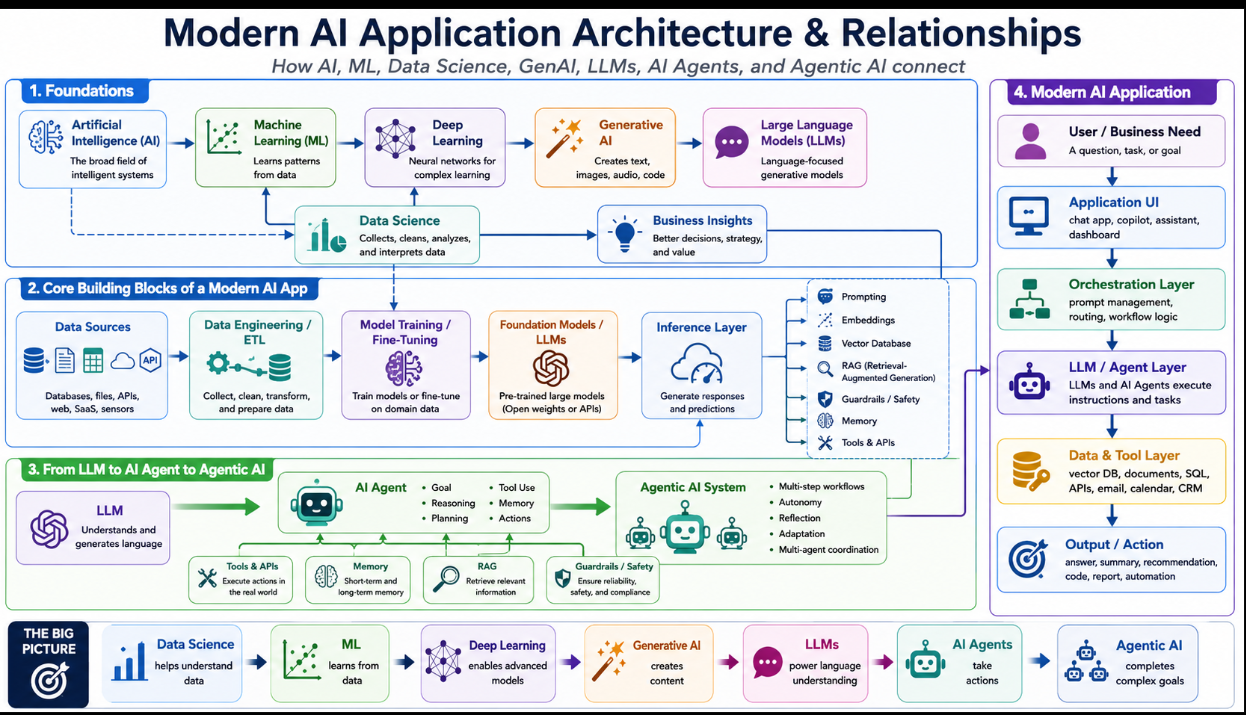
Archtecture diagram
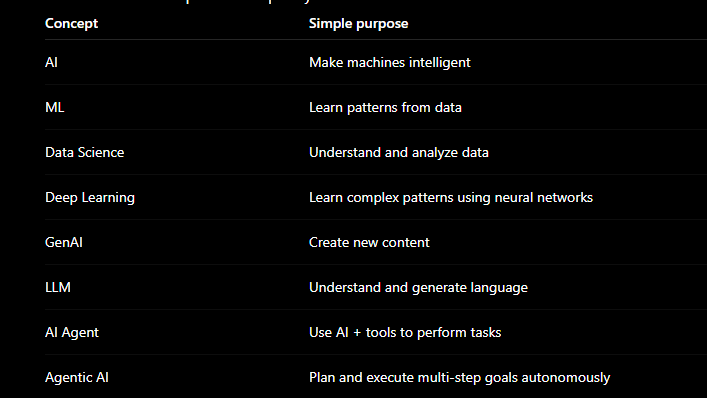
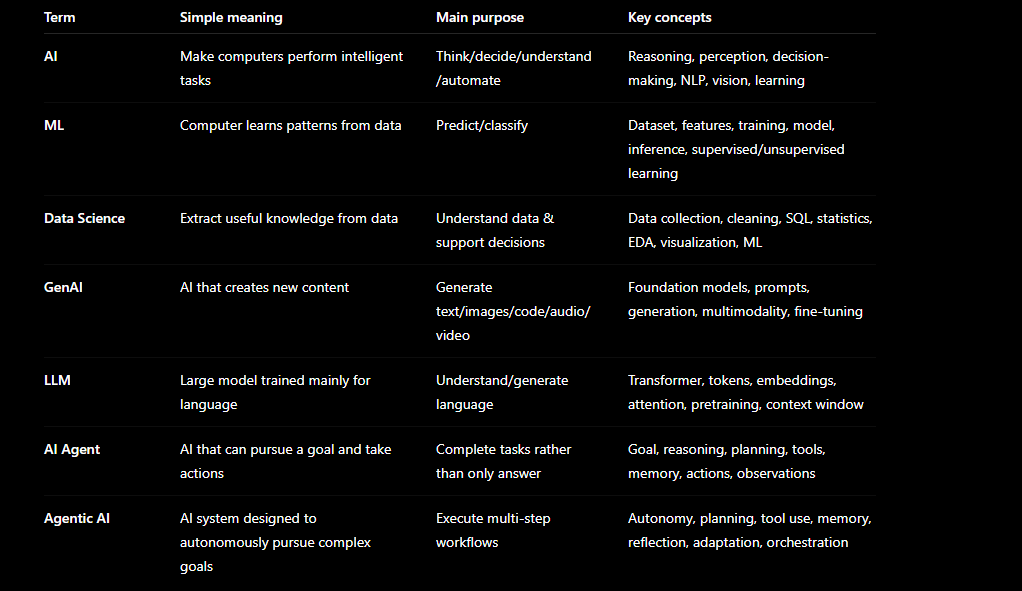
Tabular Explanation
AI — Artificial Intelligence
Machine Learning — ML
Data Science
Generative AI — GenAI
LLM — Large Language Model
AI Agent
Agentic AI
AI Agent vs Agentic AI — most important difference
GenAI vs AI Agent vs Agentic AI
One example that explains ALL terms
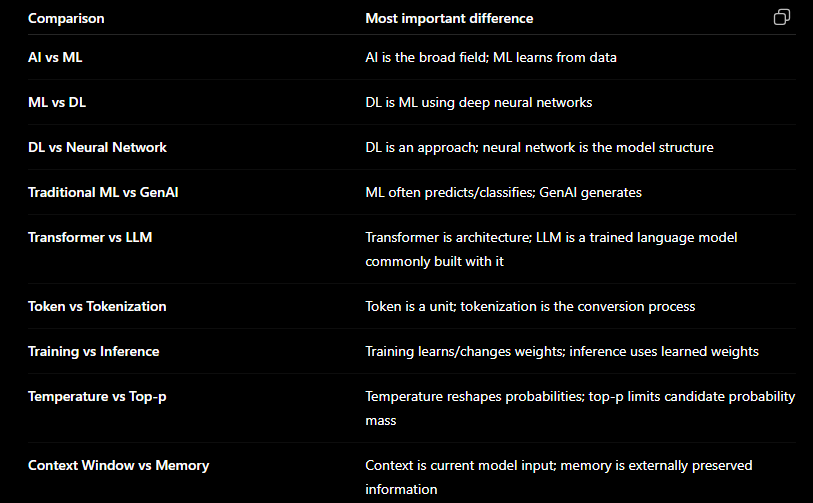
AI vs Machine Learning (ML)
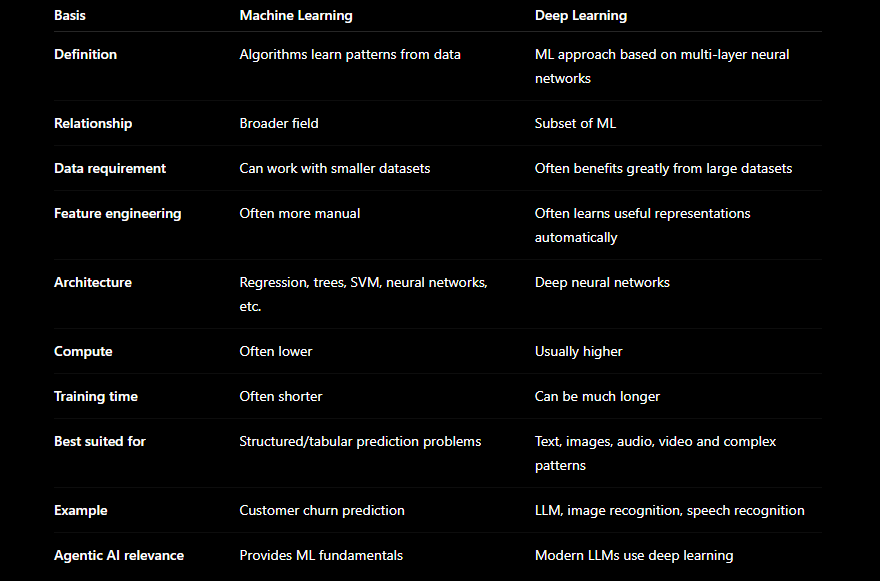
Machine Learning vs Deep Learning
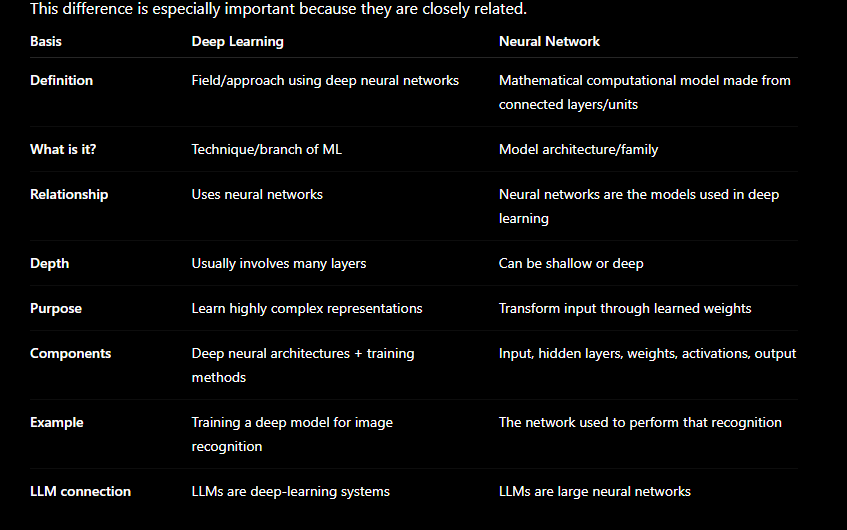
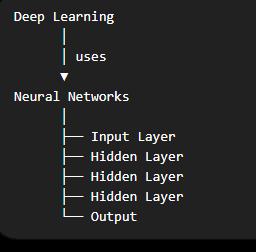
Deep Learning vs Neural Network
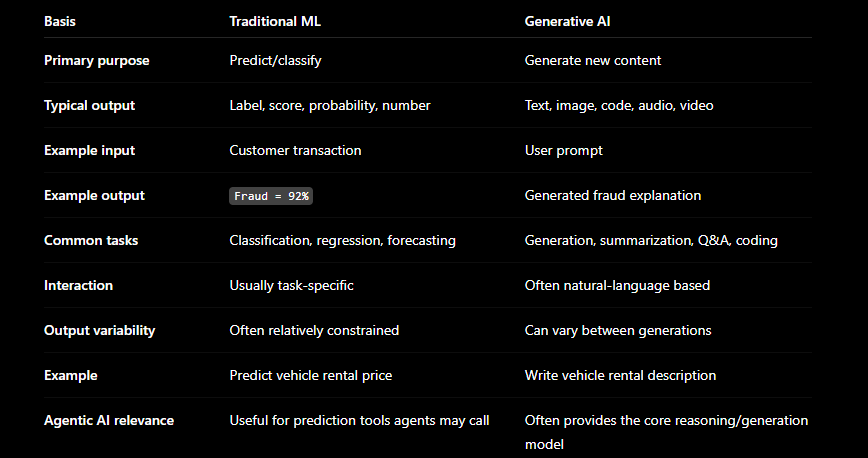
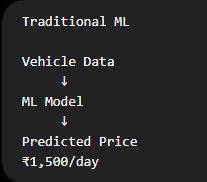
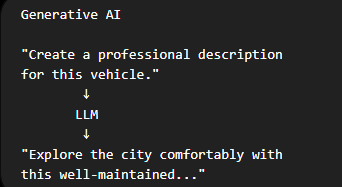
Traditional ML vs Generative AI
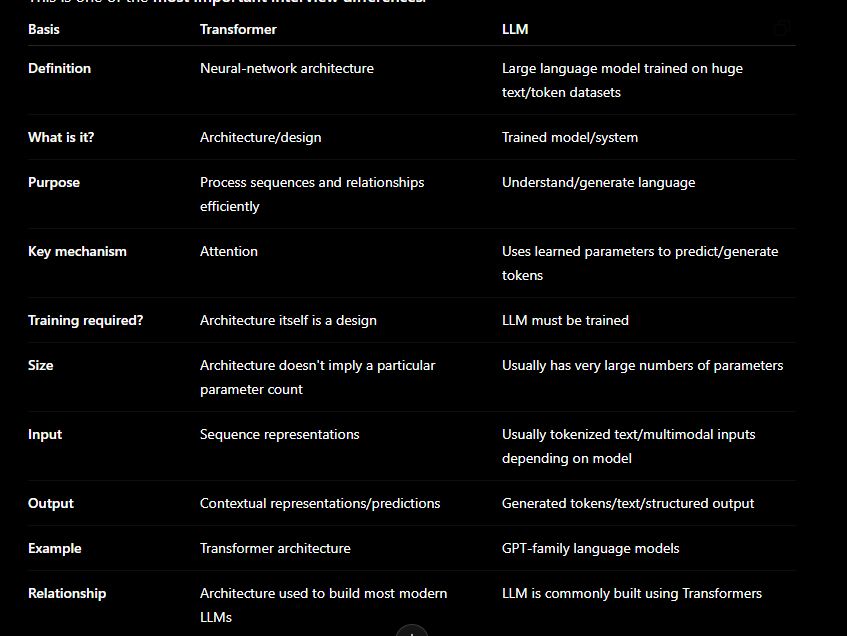
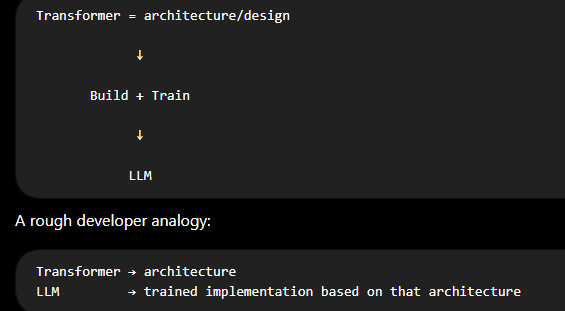
Transformer vs LLM
Token vs Tokenization
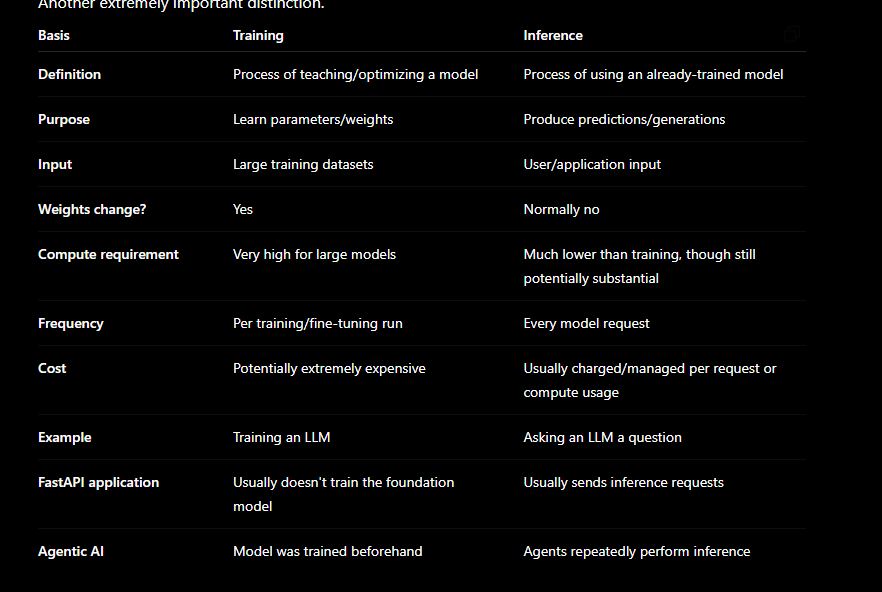
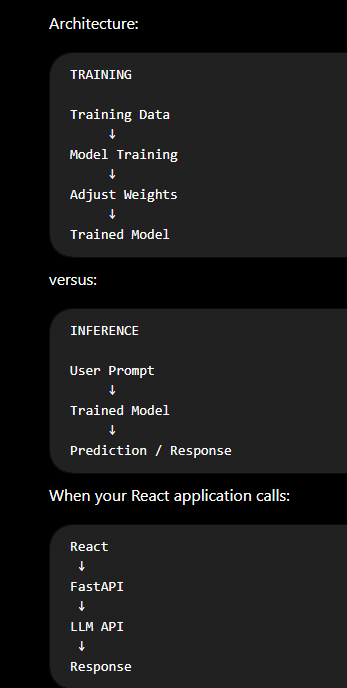
Training vs Inference
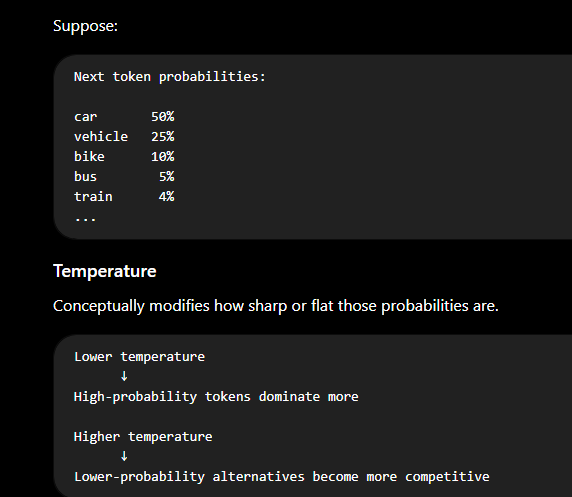
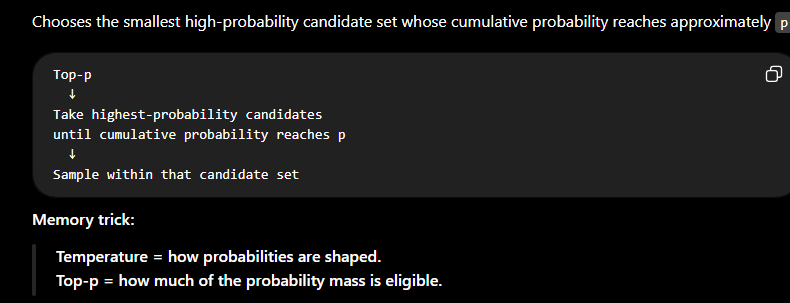
Temperature vs Top-p
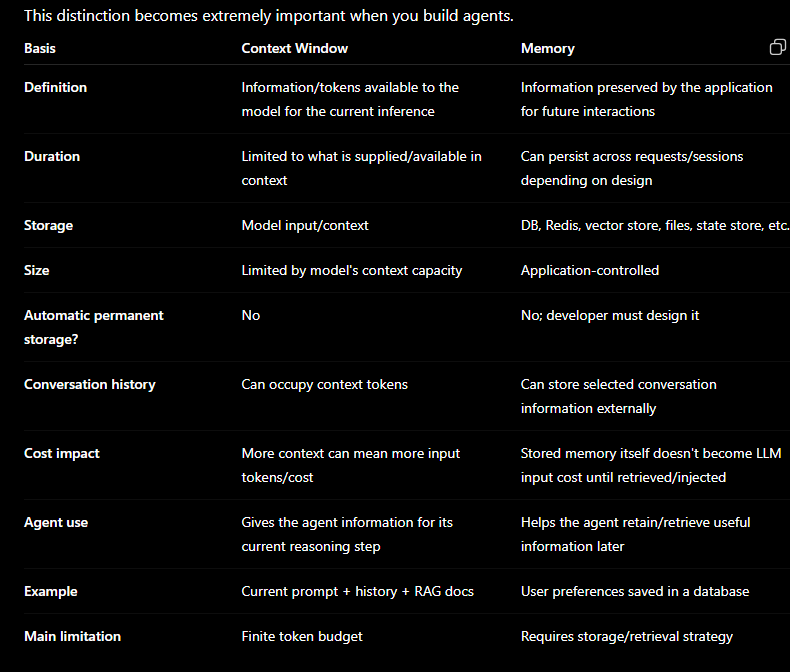
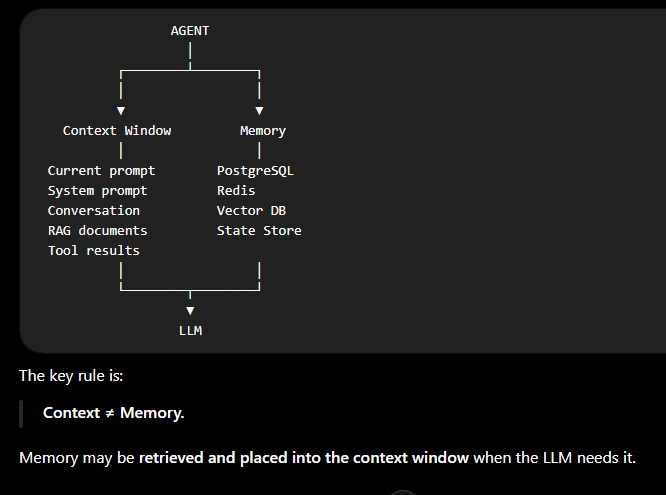
Context Window vs Memory
Final Week-1 Cheat Sheet
Relationship Between AI, ML, Data Science, GenAI, LLMs, and AI Agents
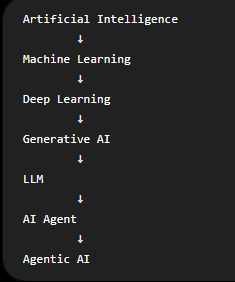
Think of the modern AI stack approximately like this:
ARTIFICIAL INTELLIGENCE (AI)
│
├── Machine Learning (ML)
│    │
│    └── Deep Learning
│          │
│          └── Generative AI
│                │
│                └── Large Language Models (LLMs)
│
└── AI applications
       │
       └── AI Agent
              │
              └── Agentic AI systems/workflows
Learning flow
1. What is Artificial Intelligence?
        ↓
2. Where Machine Learning Fits
        ↓
3. Where Data Science Fits
        ↓
4. Machine Learning → Deep Learning
        ↓
5. Deep Learning → Generative AI
        ↓
6. Generative AI → LLMs
        ↓
7. LLM → AI Agent
        ↓
8. AI Agent → Agentic AI
        ↓
9. Complete AI Relationship Diagram
        ↓
10. Real-World Example Connecting All Terms
        ↓
11. Comparison Table
        ↓
12. Developer Learning Roadmap
What is Artificial Intelligence?
AI is the biggest umbrella. It means making computers perform tasks that normally need human intelligence, like understanding language, recognizing images, making decisions, or solving problems.
Where Machine Learning Fits
Machine Learning is one way to build AI. Instead of writing every rule manually, we give the computer data and let it learn patterns.
Example: show thousands of spam and non-spam emails, and the model learns how to identify spam.
Where Data Science Fits
Data Science is about collecting, cleaning, analyzing, and understanding data. It often uses Machine Learning, but Data Science is not the same as ML.
Example: a company analyzes sales data to understand which products sell the most and may also build an ML model to predict future sales.
Machine Learning → Deep Learning
Deep Learning is a more advanced type of Machine Learning that uses neural networks with many layers. It is especially useful for complex tasks like image recognition, speech, and language.
Deep Learning → Generative AI
Generative AI is built using advanced deep-learning models that can create new content.
Instead of only saying, “This image contains a dog,” GenAI can create a new dog image, write text, generate code, or produce audio.
Generative AI → LLMs
LLM means Large Language Model. It is a type of Generative AI mainly focused on language.
You give it text like: “Explain Laravel middleware,” and it generates a useful answer.
LLM → AI Agent
An LLM normally answers your question. An AI Agent goes further: it can use an LLM as its “brain” and also use tools, APIs, memory, databases, search, calendars, files, and other systems.
So: LLM = answers, while Agent = can take actions.
AI Agent → Agentic AI
Agentic AI is the next level. Instead of doing only one action, the system can plan multiple steps, execute them, check results, correct itself, and continue toward a goal. It may also coordinate multiple agents.
Complete AI Relationship Diagram
The simple relationship is:
Developer Learning Roadmap
AI basics
   ↓
ML basics
   ↓
Neural Networks
   ↓
Deep Learning
   ↓
Transformers
   ↓
Tokens + Embeddings + Attention
   ↓
LLMs
   ↓
Generative AI
   ↓
Prompt Engineering
   ↓
RAG
   ↓
Tool Calling
   ↓
AI Agents
   ↓
Memory + Planning
   ↓
Agentic AI
   ↓
Multi-Agent Systems
The one-line formula to remember
ML
Learn from data → Predict
Data Science
Analyze data → Understand
GenAI
Learn patterns → Generate
LLM
Understand language → Generate language
AI Agent
Understand goal → Reason + use tools + act
Agentic AI
Understand goal → Plan + act + observe + adapt + continue autonomously
LLM
+ Prompt
= GenAI Application

LLM
+ Tools
+ Memory
+ Reasoning
+ Goal
= AI Agent

AI Agent(s)
+ Planning
+ Orchestration
+ Reflection
+ Autonomy
+ Repeated execution
= Agentic AI System
Archtecture diagram
Tabular Explanation
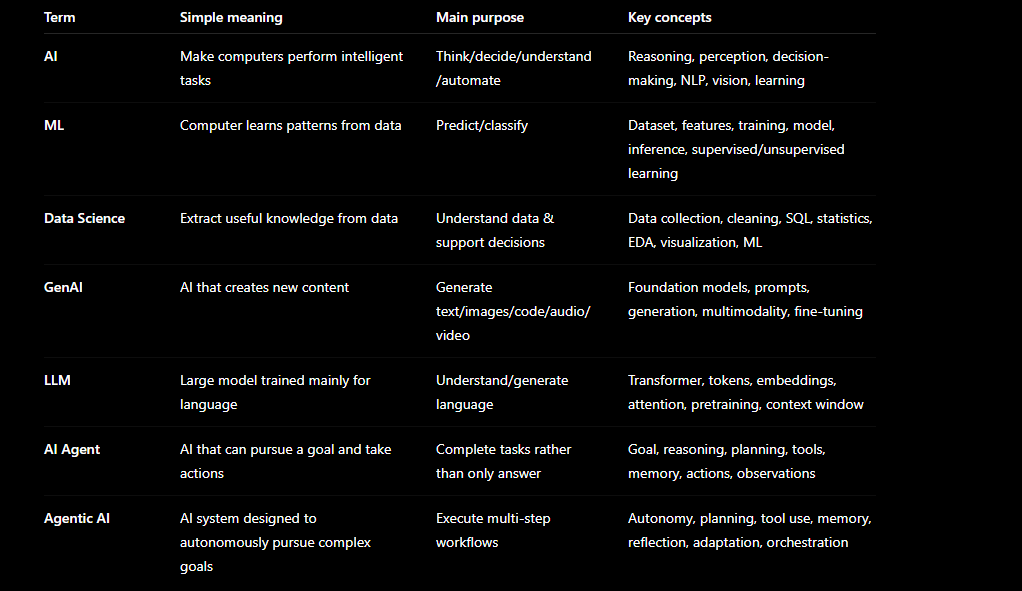
AI — Artificial Intelligence
Meaning
AI = machines performing tasks requiring intelligence.
Examples:
Google Maps route recommendation
Spam detection
Face recognition
Chatbot
Recommendation system
Self-driving systems
Fraud detection
IBM describes AI as technology enabling computers to perform abilities such as learning, comprehension, problem solving, decision making and creativity.
Key concepts to learn
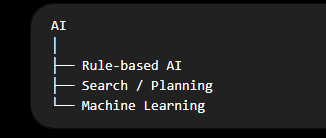
Artificial Intelligence
│
├── Machine Learning
├── Deep Learning
├── Natural Language Processing
├── Computer Vision
├── Robotics
├── Reasoning
└── Planning
Best simple example
Suppose Netflix recommends:
"You may like this movie."
That recommendation can be an AI capability.
Machine Learning — ML
Meaning
Machine Learning = instead of writing every rule manually, we give the machine data and let it learn patterns.
NIST describes ML as a field within AI focused on computers learning from provided data without needing explicit programming for each task.
Traditional programming:
Rules + Data
      ↓
   Program
      ↓
   Answer
Machine learning:
Data + Answers
      ↓
   Training
      ↓
    Model
      ↓
New Data → Prediction
Example
You have:
10,000 transactions


Amount
Location
Device
Time
Past Fraud
ML learns patterns and predicts:
Transaction
      ↓
ML Model
      ↓
Fraud probability = 94%
Key ML concepts
Learn these:
Dataset
Features
Labels
Training
Testing
Model
Algorithm
Inference
Supervised learning
Unsupervised learning
Reinforcement learning
Regression
Classification
Clustering
Model evaluation
Data Science
This one is often confused with ML.
Data Science = extracting useful information from data.
It combines statistics, programming, analytics, domain knowledge and often ML/AI to discover actionable insights.
Example:
Suppose a company has:
1 million customer records
A Data Scientist may:
Collect Data
     ↓
Clean Data
     ↓
Explore Data
     ↓
Visualize Data
     ↓
Find Patterns
     ↓
Build ML Model
     ↓
Generate Business Insight
Key concepts
Python
SQL
Pandas
NumPy
Statistics
Probability
Data Cleaning
EDA
Visualization
Feature Engineering
Machine Learning
Business Understanding
IBM's typical data-science lifecycle includes collecting data, preparing/processing it, analyzing it and communicating the resulting insights.
Important distinction
Data Science ≠ Machine Learning
Data Science may use ML.
Data Science
     ↓
Understanding data


Machine Learning
     ↓
Learning patterns/predictions
Generative AI — GenAI
Meaning
Traditional ML often:
predicts something
Generative AI:
creates something new
IBM defines GenAI as AI capable of creating content such as text, images, video, audio and software code in response to prompts.
Example
Input:
Write Laravel code for user registration.
Output:
public function register(Request $request)
{
    ...
}
That's generation, rather than simply predicting a fraud score or category.
GenAI can generate
Text
Images
Code
Audio
Video
Documents
Summaries
Key GenAI concepts
Learn:
Foundation Models
Prompts
Prompt Engineering
Tokens
Embeddings
Transformers
LLMs
Multimodal models
Fine-tuning
RAG
Vector databases
Hallucination
Inference
GenAI commonly relies on deep-learning foundation models, with LLMs being a major foundation-model category for text applications.
LLM — Large Language Model
This one is very important for Agentic AI.
Meaning
An LLM is:
A large deep-learning model trained on huge quantities of text/data so it can understand and generate language.
IBM describes LLMs as deep-learning models trained on very large datasets and commonly built using the Transformer architecture.
Examples include model families used behind modern conversational AI systems.
Conceptually
User Prompt
     ↓
Tokenization
     ↓
Tokens
     ↓
Embeddings
     ↓
Transformer
     ↓
Attention
     ↓
Next-token prediction
     ↓
Response
Key LLM concepts you should learn
These are especially important:
LLM
│
├── Tokens
├── Tokenization
├── Embeddings
├── Transformer
├── Attention
├── Parameters
├── Pre-training
├── Fine-tuning
├── Instruction tuning
├── Inference
├── Context Window
├── Temperature
├── Top-P
└── Hallucination
AI Agent
This is where AI becomes much more interesting for developers.
A normal LLM mainly:

User asks
     ↓
LLM thinks/generates
     ↓
Answer
An AI Agent can instead pursue a goal, reason about what to do, use tools and take actions. Google describes AI agents as software systems that use AI to pursue goals and complete tasks, with capabilities such as reasoning, planning, memory and autonomy.
Example:
You tell an agent:
Find me the cheapest suitable flight and prepare the itinerary.
Agent:
Goal
 ↓
Understand request
 ↓
Plan
 ↓
Search flights
 ↓
Compare results
 ↓
Check dates
 ↓
Use APIs/tools
 ↓
Prepare itinerary
 ↓
Return result
Main AI Agent architecture
      ┌──────────┐
                 │   Goal   │
                 └────┬─────┘
                      ↓
                 ┌──────────┐
                 │   LLM    │
                 │  Brain   │
                 └────┬─────┘
                      ↓
          ┌───────────┴───────────┐
          ↓                       ↓
       Memory                   Tools
          ↓                       ↓
   Conversation             API / Database
   User preferences         Search
   Previous actions         Email
                            Calendar
                            Code
          ↓                       ↓
          └───────────┬───────────┘
                      ↓
                    Action
                      ↓
                 Observation
                      ↓
                 Think again
Five concepts to remember
AI Agent =
LLM
+ Goal
+ Tools
+ Memory
+ Planning/Reasoning
+ Actions
Agentic AI
This is the term you should pay particular attention to if your goal is becoming an AI/Agentic developer.
Agentic AI emphasizes AI systems that can pursue goals with greater autonomy, plan multiple steps, interact with external tools/environment, adapt to results and continue working toward the objective. Google distinguishes individual AI agents from broader agentic systems that can coordinate agents for more complex workflows.
Instead of:
Prompt → Answer
Agentic AI works more like:
Goal
 ↓
Plan
 ↓
Execute
 ↓
Observe
 ↓
Evaluate
 ↓
Correct
 ↓
Continue
 ↓
Complete Goal
Example
Goal:
Build and deploy a simple website.
An agentic coding system could conceptually:
Understand requirements
        ↓
Create architecture
        ↓
Create files
        ↓
Write code
        ↓
Run tests
        ↓
Find errors
        ↓
Fix errors
        ↓
Run tests again
        ↓
Deploy
        ↓
Verify deployment
Google describes agentic coding similarly: autonomous agents can plan, write, test and modify code based on higher-level objectives.
AI Agent vs Agentic AI — most important difference
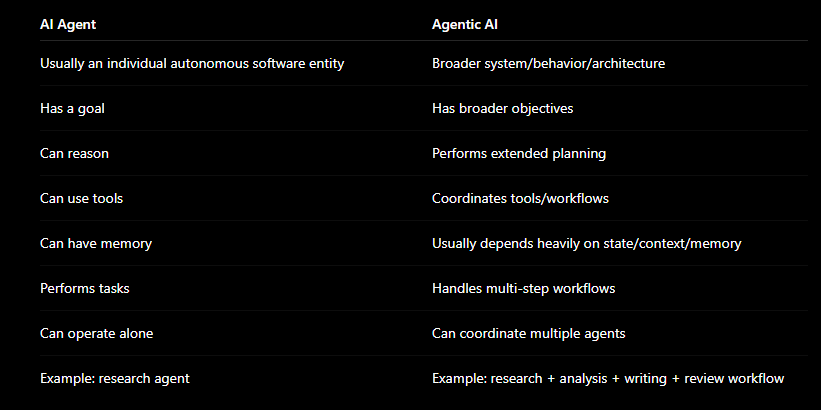
GenAI vs AI Agent vs Agentic AI
This is probably the main idea of the Short you shared.
GenAI
ASK → GENERATE
Example:
Write an email.
AI generates an email.
AI Agent
GOAL → THINK → USE TOOL → ACT
Example:
Find suitable customers.
Agent searches a database and prepares results.
Agentic AI
GOAL
 ↓
PLAN
 ↓
MULTIPLE ACTIONS
 ↓
OBSERVE
 ↓
REASON
 ↓
ADAPT
 ↓
ACT AGAIN
 ↓
ACHIEVE GOAL
Example:
Run a marketing campaign.
Possible workflow:
Market Research Agent
        ↓
Content Agent
        ↓
SEO Agent
        ↓
Social Media Agent
        ↓
Analytics Agent
        ↓
Optimization Agent
One example that explains ALL terms
Imagine an online shopping company.
Data Science
Analyze:
Who buys?
When?
Which products?
Average order value?
Customer churn?
ML
Predict:

Will this customer buy?
       ↓
YES / NO
AI
Recommend:
You may also like:
Laptop Bag
Wireless Mouse
Keyboard
GenAI
Generate:
Product description
Advertisement
Email
Image
LLM
Understand:
"Give me the best laptop under ₹70,000 for programming."
and generate a natural-language response.
AI Agent
Search products
    ↓
Compare specification
    ↓
Check reviews
    ↓
Check price
    ↓
Recommend product
Agentic AI
Understand requirement
        ↓
Research Agent
        ↓
Comparison Agent
        ↓
Budget Agent
        ↓
Review Agent
        ↓
Recommendation Agent
        ↓
Final Decision
That's the progression.
Best YouTube videos to watch
- Your original Short
GenAI vs AI Agents vs Agentic AI vs ML vs Data Science vs LLM
GenAI vs AI Agents vs Agentic AI vs ML vs Data Science vs LLM
- AI → ML → Deep Learning → GenAI
IBM Technology — AI, Machine Learning, Deep Learning and Generative AI Explained
AI → ML → Deep Learning → GenAI
I recommend watching this first.
- LLM
How Large Language Models Work
LLM
Watch this to understand:
LLM
Transformer
Training
Tokens
Language generation
- GenAI vs AI Agents vs Agentic AI
Krish Naik — Generative AI Vs Agentic AI Vs AI Agents
GenAI vs AI Agents vs Agentic AI
This is probably the most relevant detailed video for the exact confusion in your question.
- Agentic AI learning roadmap
Learn Agentic AI in 2026 With These 7 Steps
- Overall 2026 learning path
AI Learning Path for 2026 — Data Science, Generative and Agentic AI Roadmap
Roadmap
Hindi option
Generative AI vs AI Agents vs Agentic AI — Hindi
Generative AI vs AI Agents vs Agentic AI — Hindi
Best order for you to learn these concepts
Don't study them randomly. Follow:
1. Artificial Intelligence
        ↓
2. Machine Learning basics
        ↓
3. Deep Learning basics
        ↓
4. Neural Networks
        ↓
5. NLP
        ↓
6. Transformer
        ↓
7. Attention
        ↓
8. Tokens / Tokenization
        ↓
9. Embeddings
        ↓
10. LLM
        ↓
11. Generative AI
        ↓
12. Prompt Engineering
        ↓
13. RAG
        ↓
14. Vector Database
        ↓
15. Tool / Function Calling
        ↓
16. AI Agents
        ↓
17. Memory
        ↓
18. Planning + Reasoning
        ↓
19. ReAct
        ↓
20. Agentic AI
        ↓
21. Multi-Agent Systems
        ↓
22. LangChain
        ↓
23. LangGraph
        ↓
24. MCP
        ↓
25. Production Agentic AI
AI vs Machine Learning (ML)
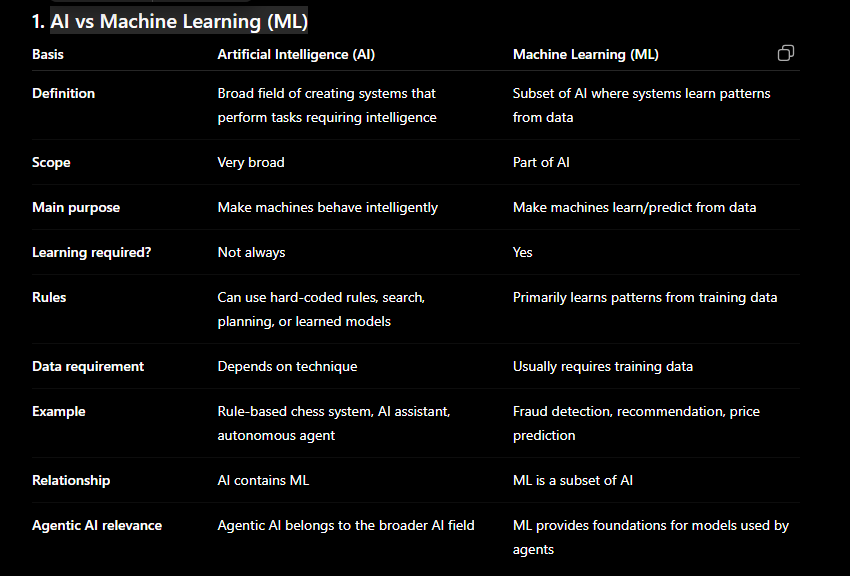
Machine Learning vs Deep Learning
Deep Learning vs Neural Network
Traditional ML vs Generative AI
Transformer vs LLM
Token vs Tokenization
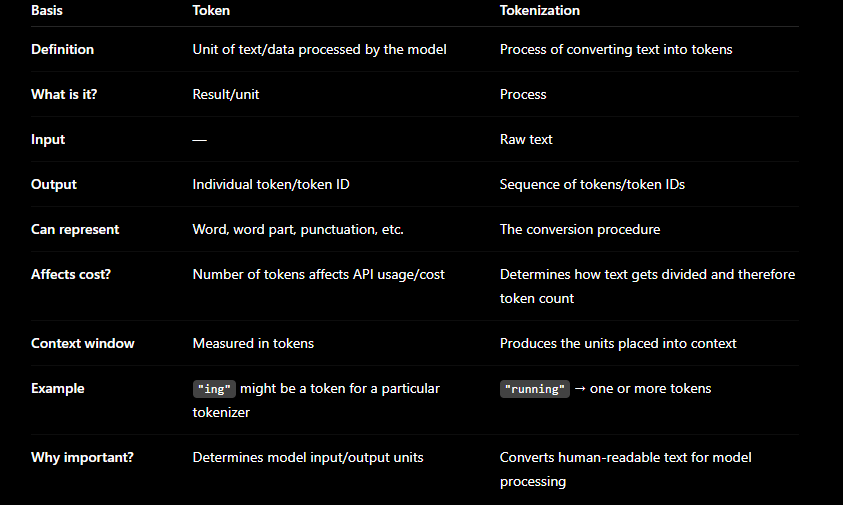
Architecture:
"AI is powerful"
       │
       ▼
  TOKENIZATION
       │
       ▼
[token][token][token...]
       │
       ▼
      LLM
Therefore:
Token = unit

Tokenization = process of creating those units
Training vs Inference
Temperature vs Top-p
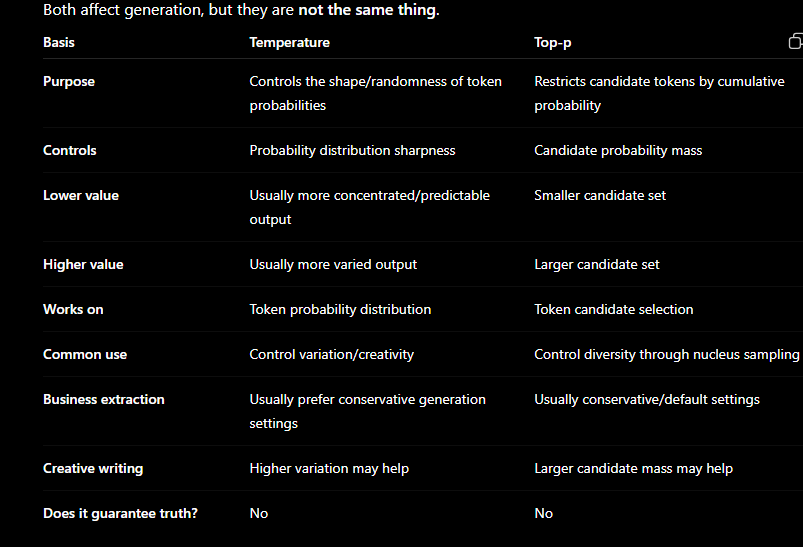
Top-p
Context Window vs Memory
Architecture
Final Week-1 Cheat Sheet



Top comments (0)