
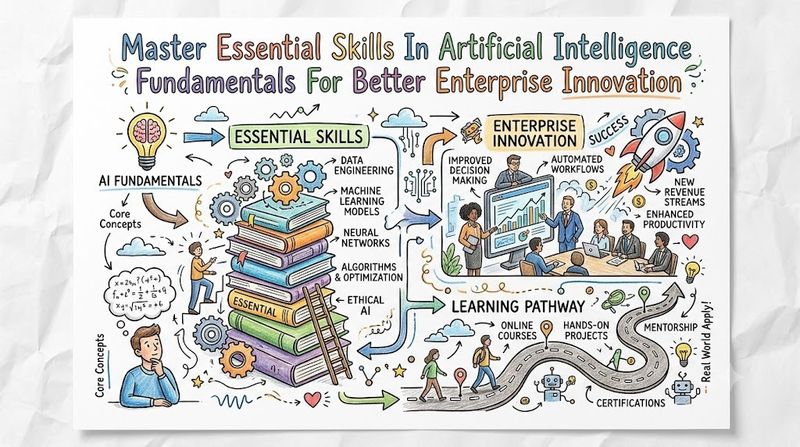
Imagine a critical machine learning model suddenly hallucinating during a peak financial trading hour, causing massive transactional anomalies across your entire corporate network. When intelligent automated pipelines stumble, traditional software troubleshooting fails because black-box algorithms require an entirely different operational paradigm. Consequently, modern engineering teams must establish a rock-solid foundation in machine learning architectures to prevent these hidden algorithmic bottlenecks from disrupting large-scale commercial deployments.
Therefore, Mastering artificial intelligence fundamentals has become a core requirement for teams aiming to deploy resilient, self-healing software ecosystems at enterprise scale. This comprehensive guide details the evolutionary path of intelligent systems, exploring everything from early computational workflows to advanced neural network operations. Furthermore, you will discover how strategic observability, continuous deployment pipelines, and systematic risk management ensure algorithmic stability across diverse production environments.
To navigate this complex landscape successfully, technical professionals require structured guidance and real-world hands-on engineering insights. You can jumpstart this educational journey by enrolling in professional programs through Debug.school, which provides the comprehensive framework needed to master automated workflows. Let us dive deep into the core infrastructure driving the future of cognitive enterprise platforms.
The Origin of Systems Infrastructure
The Early Industrial Bottlenecks
For decades, traditional software operations functioned within strictly isolated silos, creating massive barriers between developers and system administrators. Whenever engineers built complex applications, they passed the code over to operations teams who lacked deep visibility into the underlying architecture. As a result, unexpected deployment failures occurred frequently because development environments rarely matched production infrastructure identically.
Furthermore, manual configuration methods meant that fixing a single server bottleneck required hours of tedious command-line investigation. This fragmented approach slowed down feature releases and made it nearly impossible to diagnose systemic data processing errors quickly. Enterprise ecosystems suffered from extended downtime because nobody possessed a unified understanding of how the integrated code interacted with the underlying hardware fabric.
Moving Toward Unified Workflow Automation
To overcome these costly operational bottlenecks, pioneering technology organizations began breaking down traditional team walls to unify development and infrastructure management. This cultural shift introduced the concept of treating infrastructure as code, allowing teams to automate server setups using repeatable software scripts. Consequently, version control systems became the single source of truth for both application logic and cloud environment configurations.
By integrating automated testing into the core deployment pipeline, companies successfully eliminated human error during complex software releases. This unified workflow allowed operations specialists to focus on system architecture rather than repetitive manual patching tasks. Ultimately, the transition to automated coordination transformed corporate infrastructure into a highly flexible, self-healing software entity.
Global Expansion Across Commercial Ecosystems
As cloud computing platforms expanded globally, these automated operational frameworks quickly spread from elite tech firms to traditional commercial enterprises. Organizations realized that legacy infrastructure could not handle the massive data surges generated by modern mobile and web applications. Therefore, adopting standardized automation practices became essential for survival in a rapidly shifting digital marketplace.
Today, large-scale banking systems, healthcare providers, and e-commerce platforms rely on automated workflows to maintain consistent global uptime. This widespread adoption has created a massive market demand for specialized engineers who understand both software development and system orchestration. Modern commercial ecosystems now view continuous automation not as a luxury, but as a critical baseline for operational resilience.
Defining Strategic Operations Management
The Core Operational Structure
Managing intelligent enterprise systems requires a highly structured architectural flow that connects data ingestion, algorithmic processing, and continuous user feedback loops. Information must move seamlessly from edge data collectors through centralized pipelines where machine learning models evaluate telemetry statistics in real time. To maintain system health, operations teams implement automated control gates that validate data quality before it reaches production environments.
| Infrastructure Layer | Primary Function | Core Technology Focus |
|---|---|---|
| Ingestion & Telemetry | Collects real-time system logs and data streams | Prometheus, Fluentd |
| Orchestration Layer | Manages containerized microservices and scaling | Kubernetes, Docker |
| Automated Pipeline | Handles continuous integration and safe releases | Jenkins, Argo CD |
This structural design ensures that every infrastructural component remains highly visible and easily auditable by automated monitoring tools. By decoupling data storage from compute resources, teams can scale individual parts of the platform without risking total systemic failure.
Daily Tasks of Systems Coordinators
On any given day, system coordinators monitor automated dashboards to ensure that corporate telemetry metrics remain within acceptable operational boundaries. They spend significant time writing automation scripts to eliminate repetitive maintenance tasks and optimize infrastructure resource utilization across cloud clusters. When an automated alert triggers, these specialists investigate the root cause of the anomaly rather than applying temporary quick fixes.
Additionally, coordinators collaborate closely with product development teams to review upcoming architecture changes before code entering deployment pipelines. They conduct controlled chaos simulation tests to verify that the environment can gracefully withstand sudden network or hardware failures. By prioritizing long-term structural health, these professionals keep complex multi-region platforms running smoothly around the clock.
Localized Control vs. Broad System Architecture
Managing micro-level software components requires localized tracking tools that focus on individual container health and local service performance metrics. However, senior operations experts must balance this granular view against a broad understanding of the entire multi-system enterprise architecture. If an engineer optimizes a single database node without considering global network routing, the entire application pipeline might experience unexpected latency spikes.
Therefore, modern operational strategy emphasizes holistic visualization across diverse cloud regions, database clusters, and third-party application interfaces. Specialists must ensure that localized automation scripts do not conflict with macro-level security policies or global traffic-routing mechanisms. Achieving this balance allows organizations to maintain precise control over specific microservices while scaling their global infrastructure footprint.
The Efficiency Mindset
Transitioning to advanced operations management demands a profound cultural shift that prioritizes long-term systemic reliability over fast, reckless feature deployment. Engineers must develop a deep skepticism of manual interventions, recognizing that human touchpoints represent the primary source of operational instability. Instead of rushing to patch a failing server manually, team members focus on building self-healing automation routines.
This efficiency mindset encourages software teams to treat every system failure as a valuable data point for architectural improvement. By dedicating substantial engineering hours to reducing operational friction, organizations create a sustainable work culture that prevents engineer burnout. Ultimately, maintaining a relentless focus on stability allows companies to deliver high-quality user experiences consistently.
The 7 Core Principles of Learning Artificial Intelligence Fundamentals
1. Embracing Risk and Managing Variability
In large-scale modern infrastructure, achieving absolute 100% system uptime remains an impossible and financially prohibitive goal. Therefore, operations engineering accepts that software components will inevitably fail due to unpredictable network fluctuations or hardware degradation. Instead of aiming for flawless perfection, teams calculate an acceptable level of systemic risk based on business requirements.
By defining clear risk tolerances, organizations can accelerate their feature deployment velocity without compromising baseline user experiences. This principle teaches engineers to build resilient software layers that degrade gracefully when underlying components encounter errors. Managing variability proactively ensures that minor operational glitches do not cascade into catastrophic enterprise-wide service outages.
2. Establishing Service Level Objectives (SLOs)
Modern platforms depend on clear, measurable targets to determine whether system performance satisfies core user expectations. Teams establish precise metrics that define the exact level of reliability an application must maintain over a specific time window. These objectives serve as a vital communication bridge between software development teams, operations engineers, and business executives.
When system performance drops below the established objective, the organization automatically prioritizes stability fixes over new feature development. This data-driven approach removes emotional arguments from operational decision-making, ensuring that user satisfaction remains the primary guiding metric. Regularly reviewing these targets allows teams to adapt their infrastructure to changing commercial demands.
3. Eliminating Toil and Manual Processes
Toil represents repetitive, manual, operational work that provides no long-term strategic value and scales linearly with system size. Examples include manually restarting stuck services, resetting user passwords, and running routine database backups by hand. If left unchecked, accumulating toil completely drains engineering productivity and stalls crucial infrastructure innovation.
Operations specialists actively identify these repetitive manual processes and dedicate significant engineering time to coding them away entirely. By replacing human tasks with robust automation scripts, teams ensure that operational workloads remain flat even as infrastructure scales. Eliminating toil frees up valuable technical talent to focus on building advanced self-healing systems.
4. Monitoring & Observability Across the Pipeline
Comprehensive visibility across the entire data pipeline remains essential for detecting subtle performance anomalies before they impact end users. Modern monitoring goes beyond simple up-or-down checks by gathering deep cryptographic traces, structured application logs, and system metrics. This rich observability data allows engineers to reconstruct the exact state of a system during an unexpected operational incident.
By analyzing telemetry trends across development, testing, and production environments, teams eliminate dangerous operational blind spots. Automated alerting tools parse these continuous data streams to identify complex patterns that signal impending hardware or software degradation. Consequently, operations engineers can resolve underlying architectural friction long before it escalates into a visible service disruption.
5. Automation Over Manual Coordination
Scaling modern enterprise workflows requires a strict engineering commitment to software-driven automation rather than human coordination. Whenever a system requires configuration updates, engineers use declarative code templates to roll out modifications across thousands of servers simultaneously. This approach eliminates the inconsistencies and security vulnerabilities associated with manual server configuration adjustments.
Automated orchestration engines continuously monitor the state of live applications, comparing real-world performance against desired configuration templates. If a server instance crashes, the automation layer immediately provisions a fresh replacement without requiring human intervention. Prioritizing software coordination allows small engineering teams to manage massive, highly complex global infrastructures efficiently.
6. Release Engineering and Deployment Stability
Safe and predictable software delivery represents a cornerstone of modern operational stability within enterprise computing environments. Teams utilize standardized deployment strategies, such as canary releases and blue-green deployments, to minimize the blast radius of new code. By shifting traffic incrementally to a small subset of servers, engineers can validate updates using live production telemetry safely.
If the monitoring tools detect elevated error rates in the new release, the deployment system automatically triggers an immediate rollback. This rigorous approach ensures that buggy software updates never cause widespread disruptions across the broader corporate ecosystem. Release engineering transforms software deployment from a stressful, high-risk event into a routine, fully automated process.
7. Simplicity in Network Architecture
As systems expand, architectural complexity naturally increases, creating hidden failure paths and making root cause analysis exceptionally difficult. Therefore, operations engineers intentionally fight this trend by designing the cleanest, most minimalist infrastructure pathways possible. They avoid adding unnecessary software layers, redundant microservices, or overly complex routing rules unless strictly required for business operations.
[User Traffic]
       │
       ▼
[Simple Load Balancer] ───► [Minimalist API Gateway]
                                    │
                  ┌─────────────────┴─────────────────┐
                  ▼                                   ▼
       [Microservice Cluster A]            [Microservice Cluster B]
Keeping environments simple directly reduces the overall attack surface and minimizes the potential for unexpected component interactions. A clean, straightforward network architecture allows teams to onboard new engineers faster and diagnose systemic issues with much greater precision. Ultimately, simplicity remains the ultimate prerequisite for long-term operational reliability.
Key Operational Concepts You Must Know
SLA vs. SLO vs. SLI — Explained Simply
Understanding modern system management requires mastering three closely related yet fundamentally distinct operational metrics:
- Service Level Agreement (SLA): A formal legal contract between a service provider and end users defining system reliability terms. Failing to meet these strict contractual commitments results in explicit financial penalties, credits, or legal consequences.
- Service Level Objective (SLO): An internal target reliability metric that engineering teams aim to achieve to keep users satisfied. This metric is always stricter than the SLA, providing an early warning buffer to fix issues before violating legal contracts.
- Service Level Indicator (SLI): A precise compliance metric that measures the real-time performance of a specific operational component. Common examples include measuring request latency or tracking the exact percentage of successful HTTP responses over time.
Error Budgets — The Game Changer for Operational Risk
An error budget represents the exact amount of downtime or system instability an organization tolerates over a specific timeframe. Calculated directly from the established SLO, it quantifies the acceptable boundary for operational risk within a production environment. For instance, if a team commits to a 99% uptime SLO, they possess a 1% error budget for experimental development.
Product managers use this budget to balance rapid feature innovation against baseline architectural safety requirements. As long as the error budget remains positive, developers can launch experimental updates and high-risk software improvements. However, if a series of outages completely consumes the budget, feature releases freeze instantly while everyone focuses exclusively on system stabilization.
Toil — The Silent Productivity Killer in Infrastructure
Toil encompasses the repetitive, non-creative operational tasks that lack permanent engineering value and expand alongside business growth. If left unmanaged, engineers spend their entire week manually resolving routine alerts rather than building scalable architecture solutions. Identifying toil requires measuring whether a task can be entirely automated using a standard software script.
Organizations systematically eliminate this productivity drain by capping the amount of time engineers spend on manual operations. Teams calculate the hours dedicated to administrative tasks and use that data to design automated self-healing workflows. By aggressively automating repetitive duties, companies ensure that engineering velocity increases without requiring linear hiring growth.
Incident Management & Postmortems
When a severe operational outage occurs, teams follow a highly structured incident response framework to restore services rapidly. This process involves assigning explicit roles, such as an incident commander to coordinate communication and technical leads to isolate faults. Once the system returns to a stable state, engineers conduct a mandatory blameless postmortem meeting.
The primary goal of a blameless review is to discover systemic flaws rather than punishing individual human errors. Teams document the exact timeline of events, identify the root cause, and assign explicit tracking tickets to prevent reoccurrence. This transparent culture encourages honest communication, transforming operational failures into valuable educational opportunities for the entire organization.
Capacity Planning
Capacity planning involves forecasting future infrastructure demands to ensure that corporate systems can handle seasonal traffic spikes smoothly. Teams analyze historical telemetry trends, marketing projections, and compute resource utilization data to predict when hardware upgrades become necessary. This proactive approach prevents unexpected resource saturation during high-profile product launches or massive global sales events.
By utilizing cloud-native auto-scaling mechanisms, modern platforms adjust their resource footprints dynamically based on real-time traffic volumes. However, long-term capacity planning remains essential for negotiating cloud contracts and managing overall enterprise infrastructure costs efficiently. Preparing for growth in advance ensures that system performance remains highly stable under heavy operational loads.
The Four Golden Signals of Pipeline Performance
To maintain deep visibility into large-scale systems, operations teams track four critical performance metrics continuously:
- Latency: The precise time it takes to service a specific request, carefully separating successful requests from failed ones.
- Traffic: A direct measure of demand across the system, such as network requests per second or concurrent streaming sessions.
- Errors: The rate of requests that fail explicitly, return incorrect data, or timeout before completing successfully.
- Saturation: A metric tracking how close a system resource is to its maximum capacity, including memory allocation or disk input-output limits.
Platform Implementation vs. Culture — What's the Real Difference?
The Philosophy Difference
Many technology leaders confuse high-level cultural frameworks like DevOps with specific implementation methodologies like Site Reliability Engineering. DevOps represents a broad organizational philosophy focused on breaking down structural silos and fostering deep collaboration between development and operations. It provides the cultural mindset required to accept change, share organizational responsibilities, and automate corporate workflows continuously.
In contrast, Site Reliability Engineering acts as a concrete, highly practical implementation of that overarching philosophy. It applies specific engineering principles, software tools, and mathematical metrics to solve real-world infrastructure problems directly. While DevOps outlines the cultural destination, specific implementation practices provide the exact technical roadmap and toolset needed to get there.
Roles & Responsibilities Compared
Understanding how these paradigms divide daily tasks remains essential for structuring highly productive technology organizations.
- Cultural Automation Frameworks:
- Focus heavily on shifting team mindsets to improve overall software delivery velocity.
- Prioritize breaking down organizational barriers between disparate business departments.
Encourage shared ownership of the entire product lifecycle from initial code to deployment.
Concrete Practical Implementations:
Write actual software code to build highly resilient, self-healing cloud infrastructure.
Manage specific data budgets, set precise SLOs, and handle real-time on-call incident responses.
Spend a minimum of 50% of their time on purely engineering tasks to eliminate operational toil.
Can You Have Both Disciplines?
Modern enterprises do not need to choose between organizational culture and precise technical implementation methodologies. In fact, separate engineering philosophies coexist beautifully and support each other within mature, forward-thinking software organizations. A strong DevOps culture provides the empathetic mindset required for teams to embrace blameless postmortems and shared operational responsibilities.
Meanwhile, dedicated reliability engineers provide the hard telemetry metrics and automation frameworks that validate cultural assumptions scientifically. By merging cultural alignment with rigorous technical execution, companies build highly adaptable engineering ecosystems. This powerful combination allows organizations to innovate rapidly while maintaining world-class application performance.
Which One Should Your Team Adopt?
Choosing the right operational framework depends heavily on your current organizational size, technical maturity, and long-term business goals. Small startups facing rapid product iterations should focus primarily on establishing a collaborative culture to keep development teams aligned. At this early stage, introducing heavy mathematical metrics and strict error budgets can inadvertently stall crucial market validation.
| Organization Size | Recommended Focus | Primary Operational Goal |
|---|---|---|
| Early-Stage Startup | Collaborative DevOps Culture | Rapid feature validation and flexible deployments |
| Mid-Market Enterprise | Hybrid Platform Engineering | Standardizing infrastructure blueprints across teams |
| Global Tech Enterprise | Site Reliability Engineering (SRE) | Maintaining high availability and micro-level SLOs |
As your infrastructure expands to manage multiple complex microservices, adopting rigorous reliability engineering methodologies becomes absolutely vital. Larger teams require explicit metrics to prevent communication breakdowns and maintain global system stability. Assess your operational bottlenecks carefully to deploy the right balance of culture and code.
Real-World Use Cases of Modern Operations
How Tech Leaders Use Operational Metrics
Global software leaders leverage automated telemetry networks to manage millions of concurrent user sessions without experiencing noticeable performance degradation. These enterprises monitor user behavior trends and system health metrics on massive centralized visualization screens around the clock. By correlating real-time application errors with recent code updates, engineers can isolate problematic software deployments within seconds.
Furthermore, data-driven organizations use predictive analytics algorithms to forecast infrastructure resource consumption patterns across multiple cloud vendors. This deep visibility allows corporate finance and engineering teams to optimize cloud expenditures without risking application performance. Utilizing precise telemetry metrics transforms system monitoring from a reactive chore into a powerful strategic business asset.
Chaos Engineering Approaches to Resilient Systems
To build truly bulletproof digital platforms, progressive technology companies do not wait for unexpected hardware failures to occur naturally. Instead, they intentionally inject controlled disruptions into live production environments using specialized automation tools. This advanced practice, known as chaos engineering, helps engineers uncover hidden architectural flaws and cascading failure paths safely.
[Chaos Engine] ──(Injects Failure)──► [Live Microservice Node]
                                               │
                                      (Monitors Impact)
                                               ▼
[Automated Recovery System] ◄───(Triggers Safe Failover)
By purposefully disabling server clusters or simulating severe network latency, teams verify that their self-healing systems respond correctly. Chaos simulations ensure that when real hardware emergencies strike, the platform switches traffic to backup resources completely seamlessly. This proactive testing approach builds immense confidence in the overall resilience of global commercial software.
Handling Reliability at Massive Scale
Managing distributed microservices for hundreds of millions of international users demands a highly decentralized approach to system reliability. Massive consumer platforms partition their applications into completely independent zones to ensure that a localized outage cannot take down the global network. They implement advanced traffic routers that automatically steer user requests away from degraded regional cloud data centers.
Additionally, these systems utilize intelligent caching layers and data queues to process massive transaction surges gracefully. By treating every individual component as potentially unreliable, engineers build a collective architecture that achieves near-perfect uptime. Scaling operations efficiently requires combining automated configuration templates, deep observability networks, and robust cloud infrastructure designs.
High-Availability in Fintech Operations
Financial technology platforms operate under zero-tolerance mandates regarding data loss, transactional errors, and application downtime. A single minute of processing latency can result in millions of dollars in regulatory fines and lost trading revenue. Therefore, fintech operations engineering deploys multi-region active-active database clusters that replicate transactional records with microsecond precision.
Engineers implement strict automated validation checks to ensure that ledger balances remain perfectly synchronized across all distributed ledgers. They establish highly conservative error budgets that trigger instant code freezes the moment any systemic risk boundaries are approached. This uncompromising commitment to reliability protects consumer assets and maintains deep institutional trust in digital banking systems.
Scaled-Down but Essential Systems for Startups
Early-stage technology ventures often lack the massive engineering budgets and extensive staff found within global enterprise organizations. However, small teams can still apply core operational reliability principles efficiently by leveraging modern managed cloud services. By utilizing serverless computing options and automated container platforms, startups eliminate the need to manage underlying server hardware manually.
They establish basic, high-impact monitoring alerts focused exclusively on core user pathways, such as registration and payment processing checkout. This lightweight approach allows rapidly growing companies to maintain highly stable systems without incurring massive operational overhead. Implementing smart automation early ensures that your software infrastructure can scale seamlessly as your customer base expands.
Common Mistakes in Operations Engineering
Mistake 1 — Confusing System Management with Just Being On-Call
Many traditional corporate managers mistakenly believe that operational engineering simply means assigning staff to monitor alerts and fix broken servers overnight. This reactive mindset treats technical professionals as simple fireflies who wait for systems to crash before taking action. Consequently, engineers spend their valuable time applying temporary band-aids rather than resolving underlying architectural defects.
True system management focuses heavily on proactive software engineering, dedicated automation design, and continuous infrastructure improvement. When teams treat reliability as an engineering challenge rather than a shift-work chore, they build highly resilient self-healing environments. Shifting away from a pure on-call mindset remains critical for creating a stable corporate software architecture.
Mistake 2 — Setting Unrealistic SLOs
Inexperienced infrastructure teams often establish perfectionist reliability targets, demanding 100% application uptime without calculating the business consequences. Demanding absolute perfection stalls software feature releases instantly because developers must spend all their time chasing impossible metrics. Furthermore, achieving extreme levels of uptime requires massively expensive redundant infrastructure components that yield minimal business value.
Engineering leaders must recognize that user satisfaction rarely requires flawless performance across every single minor microservice. Teams should set realistic, data-driven targets that balance operational velocity with an acceptable level of systemic risk. Establishing sensible objectives keeps development pipelines moving forward smoothly while protecting technical staff from unnecessary alert burnout.
Mistake 3 — Ignoring Toil Until It's Too Late
Allowing repetitive, manual tasks to accumulate unchecked across an organization represents a major threat to long-term engineering velocity. When teams ignore growing toil, they soon find themselves completely buried under a mountain of routine administrative maintenance duties. Engineers lose their motivation when forced to spend hours manually copying files, updating server configurations, or resolving repetitive alerts.
This operational debt slows down crucial security patches and prevents organizations from launching innovative features on time. Management must empower technical teams to pause standard development tasks whenever manual overhead exceeds acceptable thresholds. Prioritizing automated tool building ensures that your engineering capacity scales efficiently alongside your business growth.
Mistake 4 — Skipping Blameless Postmortems
When an unexpected system outage occurs, organizations that focus on finding a human scapegoat create a highly toxic corporate culture. In a blame-heavy environment, engineers naturally hide their mistakes, falsify incident timelines, and avoid volunteering for critical on-call duties. Consequently, the underlying systemic vulnerabilities remain completely unaddressed, guaranteeing that identical failures will happen again.
[System Incident Occurs]
          │
          ▼
[Blame-Based Culture] ──► Hide Mistakes ──► Flaws Remain Unfixed ──► [Repeat Outage]
          │
          ▼
[Blameless Culture]   ──► Honest Analysis ─► System Architecture Fixed ─► [Resilient Platform]
Skipping blameless postmortems prevents your technology organization from learning from operational errors and improving its core code fabric. Teams must explicitly reward honesty during incident reviews to foster a healthy, transparent engineering culture. Resolving structural issues rather than punishing humans is the only way to build long-term systemic stability.
Mistake 5 — Monitoring Without Actionable Alerts
Configuring monitoring systems to send out notifications for every minor, non-critical event represents a dangerous operational practice. When engineers receive hundreds of low-priority emails or text alerts daily, they quickly develop severe alert fatigue. Eventually, team members begin ignoring notifications altogether, causing them to miss critical warnings that precede major system crashes.
Every single automated alert wired into your communication pipeline must point directly to a clear, actionable operational problem. If an alert does not require immediate human intervention to prevent user impact, it should be logged quietly rather than waking an engineer. Streamlining your notification framework ensures that critical architectural emergencies receive rapid, focused attention from your response team.
Mistake 6 — Not Involving Operational Engineers in the Design Phase
Software organizations frequently make the costly error of excluding operational specialists from early application architecture design meetings. Developers often build complex software frameworks focused solely on feature logic without considering how those applications will scale in production. When this unoptimized code is handed over to operations, deploying and monitoring it effectively becomes a massive technical challenge.
Involving systems engineers from day one ensures that new applications are built with native observability, security, and scalability. This collaborative approach allows teams to identify potential infrastructure bottlenecks long before writing the actual application code. Designing software with operational health in mind saves enormous amounts of engineering time and minimizes post-launch stability issues.
Essential Infrastructure Tools & Technologies
Monitoring & Observability
Maintaining deep insight into complex, multi-cloud enterprise architectures requires deploying a modern, unified observability stack. Industry-standard tools allow engineering teams to ingest millions of telemetry metrics every second, generating real-time dashboards that display system health instantly. These platforms track performance variables across virtual machines, container deployments, and application code layers simultaneously.
By utilizing distributed tracing tools, specialists can track a single user request as it traverses hundreds of distinct microservices. This granular visibility helps developers isolate hidden performance bottlenecks and resolve intermittent network latency spikes rapidly. Investing in comprehensive observability platforms eliminates guesswork, allowing teams to make data-driven decisions during critical deployment phases.
Incident Management
When critical infrastructure failures occur, organizations depend on automated incident response platforms to orchestrate their technical teams effectively. These systems parse incoming monitoring alerts and automatically route urgent pages to the designated on-call engineers based on custom schedules. If the initial responder fails to acknowledge the notification within minutes, the platform intelligently escalates the ticket to senior management.
Additionally, modern incident response tools serve as a centralized hub for team collaboration and corporate communication during major outages. They integrate seamlessly with standard chat applications, creating dedicated bridge spaces where engineers can share logs and track repair progress. Using structured incident management software reduces overall restoration time and ensures that stake-holders remain fully informed.
CI/CD & Release Engineering
Automating the path from local code repositories to live production environments requires deploying a robust continuous integration and deployment engine. These automated pipelines automatically compile application code, execute comprehensive security scans, and run unit tests whenever a developer commits changes. By validating every single software modification automatically, organizations dramatically minimize the risk of introducing critical bugs into live systems.
Advanced deployment tools allow release engineers to orchestrate sophisticated delivery strategies, including automated canary evaluations and safe rollback protocols. These systems continuously monitor application error rates during a rollout, immediately reverting updates if performance metrics degrade. Implementing a modern CI/CD architecture transforms software delivery into a highly predictable, risk-free enterprise workflow.
Chaos Engineering
Building truly resilient cloud infrastructure requires utilizing specialized automated frameworks designed to inject controlled failures into production systems. These advanced chaos tools allow engineers to purposefully introduce network latencies, shut down virtual servers, or simulate localized data center power losses. By systematically testing how your applications handle real-world stress, you can discover hidden design defects before they cause actual outages.
Chaos engineering software features built-in safety switches that allow teams to halt automated failure experiments instantly if system metrics drop past critical thresholds. This rigorous validation practice helps organizations verify that their automated self-healing mechanisms and failover protocols function flawlessly. Embracing controlled disruptions transforms infrastructure resilience from a hopeful theory into a scientifically proven reality.
SLO Management
As enterprise systems expand, tracking compliance across thousands of individual service level objectives requires dedicated monitoring platforms. Modern SLO management tools integrate directly with your existing telemetry stack to calculate real-time error budgets and reliability trends automatically. These dashboards provide a clear, unified view of system health, showing exactly how much operational risk budget remains for development.
[Telemetry Data Stack] ──► [SLO Management Engine] ──► Real-Time Error Budget Alerting
                                                                │
                                                       (Triggers Action)
                                                                ▼
                                                   Automated Feature Freeze Policy
When an application approaches its established reliability threshold, the management tool automatically notifies product managers and engineering leads. This automated tracking prevents teams from accidentally burning through their error budgets and violating critical legal service agreements. Using data-driven objective platforms helps organizations balance rapid software feature innovation with rigorous architectural stability.
How to Become an Operations Expert — Career Roadmap
Skills Every Specialist Must Have
Launching a successful career in modern systems engineering requires building a strong foundation across multiple technical domains. Aspiring specialists must become highly proficient with terminal command-line interfaces and master at least one powerful scripting language like Python. Understanding networking fundamentals, including domain name systems, load balancing protocols, and secure shell communication paths, remains absolutely vital.
- Core Technical Competencies:
- Advanced Linux systems administration and terminal shell scripting expertise.
- Proficiency in writing declarative infrastructure configurations using code templates.
Deep understanding of cloud computing services and distributed application architectures.
Observability & Architecture Mastery:
Ability to design and configure comprehensive telemetry networks and alerting pipelines.
Experience managing container orchestration platforms across multiple hybrid cloud environments.
Strong communication skills required to lead complex incident reviews and blameless postmortems.
The Professional Learning Path
The journey toward becoming a senior systems architect begins with mastering basic operating system concepts and manual system administration tasks. Next, engineers should transition to learning containerization technologies, exploring how to isolate applications and manage local microservice dependencies efficiently. Once comfortable with containers, professionals focus on mastering cloud-native orchestration engines to manage thousands of server clusters simultaneously.
After securing these core infrastructure skills, learning to build automated continuous integration and continuous deployment pipelines becomes the next priority. Experienced engineers then specialize in advanced topics like distributed systems tracing, predictive capacity planning, and chaos simulation design. This structured educational progression ensures that technical professionals develop the deep, well-rounded expertise required to manage massive enterprise platforms.
Certifications Worth Pursuing
Earning industry-recognized professional credentials provides an excellent way to validate your infrastructure expertise and advance your technical career. Professionals should consider pursuing specialized certifications focused on container orchestration, cloud architecture, and automated release engineering practices. These challenging exams require candidates to solve real-world infrastructure problems within live, time-limited terminal environments.
Securing globally respected credentials demonstrates to enterprise employers that you possess the hands-on engineering skills required to manage complex platforms. Furthermore, studying for these certifications exposes you to industry-wide best practices and standardized architectural frameworks. Combining real-world operational experience with strong professional certifications helps you stand out in a highly competitive technology job market.
Educational Resources with Debug.school
Navigating the rapidly shifting landscape of systems engineering requires access to high-quality, up-to-date educational resources and expert mentoring. Aspirants can find comprehensive training programs designed specifically to bridge the gap between software development and large-scale cloud operations at Debug.school. The platform offers immersive, hands-on courses covering advanced container management, continuous pipeline automation, and strategic observability frameworks.
By learning from experienced industry practitioners, students gain deep insights into real-world operational challenges and architectural troubleshooting techniques. The structured curriculum ensures that you spend your time building practical, portfolio-ready projects rather than just memorizing abstract computer science theory. Partnering with a dedicated educational platform allows technical professionals to accelerate their learning curve and master enterprise systems engineering confidently.
The Future of Systems Management
AI and Automation in System Optimization
The integration of advanced machine learning algorithms into modern observability networks is fundamentally transforming how organizations manage software infrastructure. Future monitoring platforms leverage automated anomaly detection engines to analyze terabytes of telemetry data and pinpoint structural defects instantly. Instead of waiting for an alert to trigger, these intelligent systems anticipate hardware failures and reoute traffic proactively.
Furthermore, automated root cause analysis tools cut down incident resolution times by immediately identifying the exact code commit responsible for an outage. Machine intelligence can automatically optimize cloud compute resources, adjusting server capacities in real time to minimize operational costs. Embracing automated optimization allows technology teams to maintain high availability while freeing up engineers from routine diagnostics.
Platform Engineering — The Evolution of Infrastructure
Platform engineering is rapidly emerging as the next logical evolution in cloud infrastructure management, designed to streamline internal developer experiences. Instead of requiring every software developer to master complex networking and cluster configurations, dedicated teams build centralized self-service portals. These internal developer platforms provide standardized, pre-approved infrastructure templates that allow engineers to deploy applications safely with a single click.
[Software Developer] ──► [Internal Developer Platform] ──► Auto-Provisioned Kubernetes Cluster
                                                                   │
                                                          (Embedded Security)
                                                                   ▼
                                                       Safe Production Deployment
By embedding compliance, security policies, and monitoring configurations directly into the underlying platform, organizations eliminate common deployment mistakes. This shift allows product development teams to move faster while ensuring that enterprise systems remain highly stable and auditable. Platform engineering transforms infrastructure from a frequent operational bottleneck into an efficient, invisible internal utility.
Management in Cloud-Native & Kubernetes Environments
As corporate enterprises migrate away from legacy virtual machines toward dynamic, containerized architectures, managing system reliability presents entirely new challenges. Modern orchestration environments scale thousands of microservices up and down continuously based on real-time consumer traffic variations. This highly fluid state requires operations engineers to deploy service meshes and advanced discovery networks to monitor internal communication paths.
Specialists must design resilient cluster architectures capable of surviving sudden node failures and cross-region network disruptions without impacting end users. Managing cloud-native systems requires shifting focus from individual server health to the overall stability of the broader orchestration cluster. Mastering these dynamic container technologies remains a critical priority for technology professionals aiming to manage next-generation enterprise platforms.
Operational Skills That Will Matter Most
In the coming years, the role of the infrastructure specialist will expand beyond technical troubleshooting to encompass strategic business optimization. Engineers must develop strong financial management skills to help organizations control escalating cloud computing costs across multi-vendor environments. Understanding data observability principles will also become crucial as companies deploy increasingly complex, distributed data processing pipelines.
Additionally, mastering chaos engineering methodologies and automated resiliency testing will remain essential for protecting large-scale software from unpredictable external disruptions. Successful professionals will combine deep command-line expertise with a strong understanding of product delivery and business metrics. Cultivating this multifaceted skill set ensures that your engineering career remains highly resilient in an evolving corporate marketplace.
FAQ Section
- What is the primary difference between traditional systems administration and modern operations engineering? Traditional systems administration relies heavily on manual configuration management, reactive troubleshooting, and isolated team structures to maintain corporate server hardware. In contrast, modern operations engineering treats infrastructure challenges as pure software problems, utilizing automated pipelines, declarative code templates, and data-driven metrics to scale global systems efficiently.
- How do technical teams calculate and manage a production error budget effectively? Teams calculate an error budget by subtracting their desired internal service level objective percentage from absolute perfection. For instance, a 99.9% uptime target leaves a 0.1% allowable error budget, which developers can consume for launching innovative software features or conducting controlled architectural chaos experiments safely.
- What specific terminal scripting languages should a beginner learn first to master automation? Beginners looking to build a career in infrastructure automation should focus on mastering Linux terminal commands and writing clean Bash scripts first. Immediately following that foundational step, learning Python is highly recommended because it serves as the primary language for building complex cloud-native automation tools.
- Why are blameless postmortems considered vital for maintaining high system reliability? Blameless postmortems shift the organizational focus away from punishing human mistakes toward identifying and fixing underlying structural vulnerabilities in the application architecture. This open culture encourages engineers to share accurate incident timelines honestly, preventing identical software failures from disrupting the enterprise platform in the future.
- What are the four golden signals used to monitor large-scale application performance? The four golden signals of performance monitoring encompass request latency, overall system traffic volume, explicit application error rates, and resource saturation levels. Tracking these critical telemetry vectors continuously allows operations teams to diagnose and resolve infrastructure degradation long before it negatively impacts the end-user experience.
- Can an organization implement reliability engineering principles without migrating to the cloud? Yes, the core principles of automated coordination, strategic observability, toil elimination, and data-driven risk management apply identically to traditional on-premise infrastructure data centers. While cloud platforms simplify automated scaling, the cultural mindset and architectural engineering practices remain completely independent of any specific deployment environment.
Final Summary
Maintaining optimal infrastructure health requires a continuous, engineering-driven commitment to automated coordination, deep pipeline observability, and systematic risk management. By replacing fragmented manual interventions with robust software-driven workflows, organizations successfully protect their global systems from cascading failures and costly transactional bottlenecks. Embracing realistic performance targets and cultivating blameless engineering cultures allows technology teams to innovate rapidly without compromising user satisfaction. Ultimately, building a resilient digital enterprise depends on choosing the right educational foundations and professional tools to navigate complex cloud landscapes. Technical professionals can ensure their long-term operational success by exploring the advanced training programs and expert mentorship available at Debug.school.



Top comments (0)