
Main Purposes of ASGI
What is a Web Framework?
Simple Web Framework Example
Types of Web Frameworks
WSGI vs ASGI
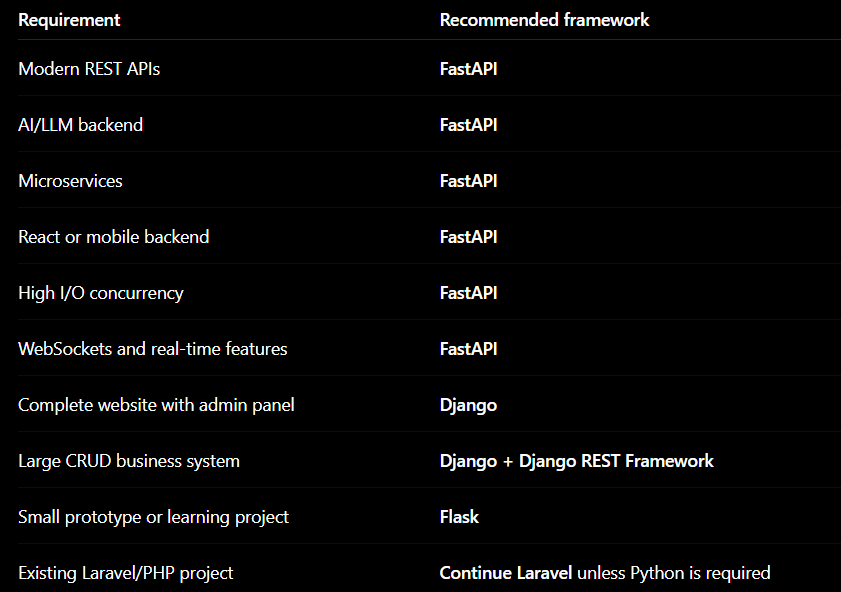
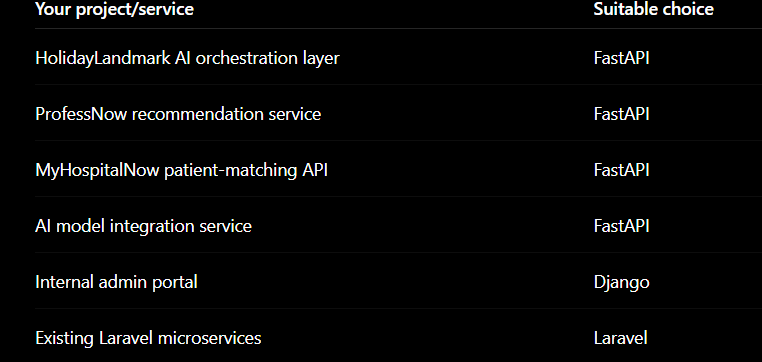
Recommended frameworks by requirement
Recommended learning order
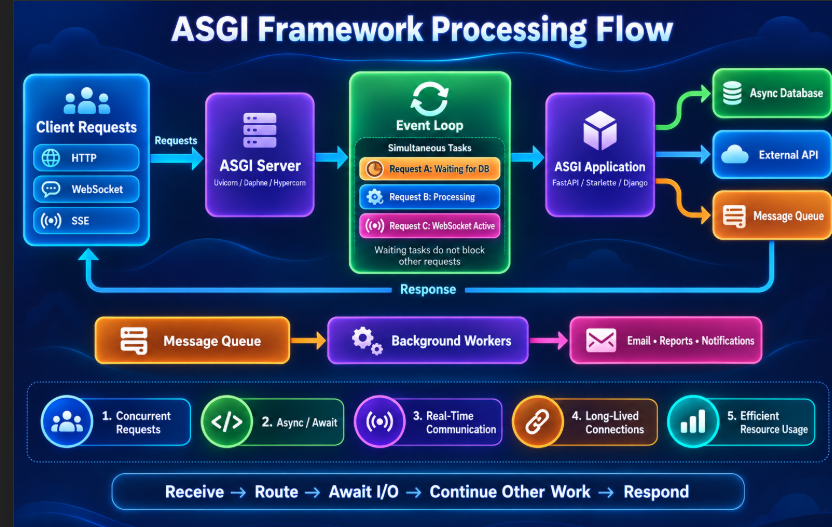
Main Purposes of ASGI
Use this as your blog heading:
ASGI Explained: 5 Reasons Modern Python Applications Need It
- Handle Multiple Requests Concurrently
ASGI allows the application to process other requests while waiting for databases, APIs or files.
- Support Asynchronous Programming
It provides native support for Python’s async and await, making I/O-heavy applications more efficient.
- Enable Real-Time Communication
ASGI supports WebSockets for live chat, notifications, order tracking and collaborative applications.
- Manage Long-Lived Connections
It can maintain connections required for streaming, Server-Sent Events, live dashboards and continuous updates.
- Improve Scalability and Resource Usage
ASGI can manage many concurrent connections without requiring a separate thread or process for every waiting request.
What is a Web Framework?
A web framework is a collection of ready-made tools that helps developers build websites, web applications and APIs.
Without a framework, developers must manually write code for:
Receiving HTTP requests
Sending HTTP responses
URL routing
Authentication
Database connections
Input validation
Security
Error handling
Cookies and sessions
A web framework provides these common features, allowing developers to focus on business requirements.
Simple real-life example
Imagine you want to build a house.
Without a framework, you must manufacture everything yourself:
Bricks
Doors
Windows
Electrical equipment
Plumbing equipment
With a framework, these building materials are already available. You only need to arrange and customize them.
Similarly, Django, Flask and FastAPI provide the building blocks needed to create web applications.
Simple Web Framework Example
Without discussing database or authentication, a framework lets you create an endpoint easily:
from fastapi import FastAPI

app = FastAPI()

@app.get("/hello")
async def hello():
    return {"message": "Hello, Ashwani"}
When someone opens:
http://localhost:8000/hello
The server returns:
{
  "message": "Hello, Ashwani"
}
Here, FastAPI manages the HTTP request, routing and JSON response.
Types of Web Frameworks
- Full-Stack Framework
A full-stack framework provides almost everything required to build a complete application.
Common features include:
URL routing
Database ORM
Authentication
Admin panel
Form handling
HTML templates
Sessions and cookies
Security features
Examples:
Django
Ruby on Rails
Laravel
Spring Boot
Best scenario
Use a full-stack framework when building:
Admin portals
E-commerce applications
School management systems
Content-management systems
Complete business applications
Example
Django provides a model, admin panel and authentication system:
from django.db import models

class Product(models.Model):
    name = models.CharField(max_length=100)
    price = models.DecimalField(
        max_digits=10,
        decimal_places=2
    )
- Microframework
A microframework provides only the basic web-development features.
Usually, it contains:
Routing
Request handling
Response handling
You add database, validation and authentication libraries according to your requirements.
Examples:
Flask
Bottle
Sinatra
Best scenario
Use it for:
Small applications
Prototypes
Simple APIs
Projects requiring complete architectural freedom
Flask example
from flask import Flask, jsonify

app = Flask(__name__)

@app.route("/products")
def products():
    return jsonify([
        {"id": 1, "name": "Laptop"},
        {"id": 2, "name": "Phone"}
    ])
- API-First Framework
An API-first framework is designed mainly for building APIs that return JSON to frontend or mobile applications.
Examples:
FastAPI
Django REST Framework
NestJS
Common features include:
Request validation
JSON responses
API documentation
Authentication support
Serialization
Best scenario
Use it for:
React application backends
Mobile application backends
Microservices
AI applications
Booking and payment APIs
FastAPI example
from fastapi import FastAPI
from pydantic import BaseModel

app = FastAPI()

class Product(BaseModel):
    name: str
    price: float

@app.post("/products")
async def create_product(product: Product):
    return {
        "message": "Product created",
        "product": product
    }
- Asynchronous Framework
An asynchronous framework can serve other requests while waiting for slow I/O operations.
Examples:
FastAPI
Starlette
Sanic
Tornado
It is useful when the application frequently waits for:
Database queries
External APIs
File operations
AI models
Network services
Example
from fastapi import FastAPI
import asyncio

app = FastAPI()

@app.get("/payment-status")
async def payment_status():
    await asyncio.sleep(2)

    return {"status": "successful"}
During the two-second wait, the server can process other requests.
WSGI vs ASGI
Full forms
WSGI: Web Server Gateway Interface
ASGI: Asynchronous Server Gateway Interface
They define how a Python web server communicates with a Python web application.
User → Web Server → WSGI/ASGI → Python Application
Tabular difference
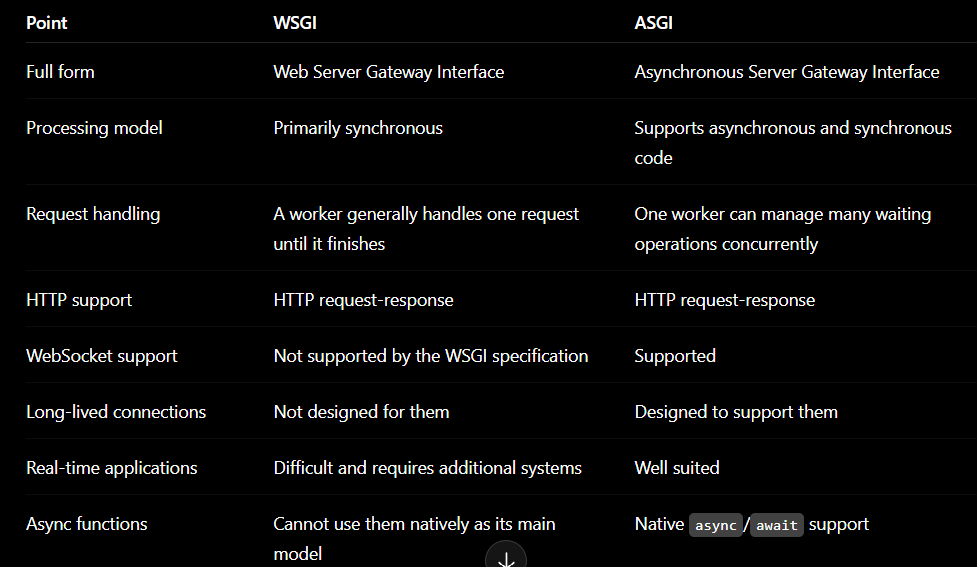
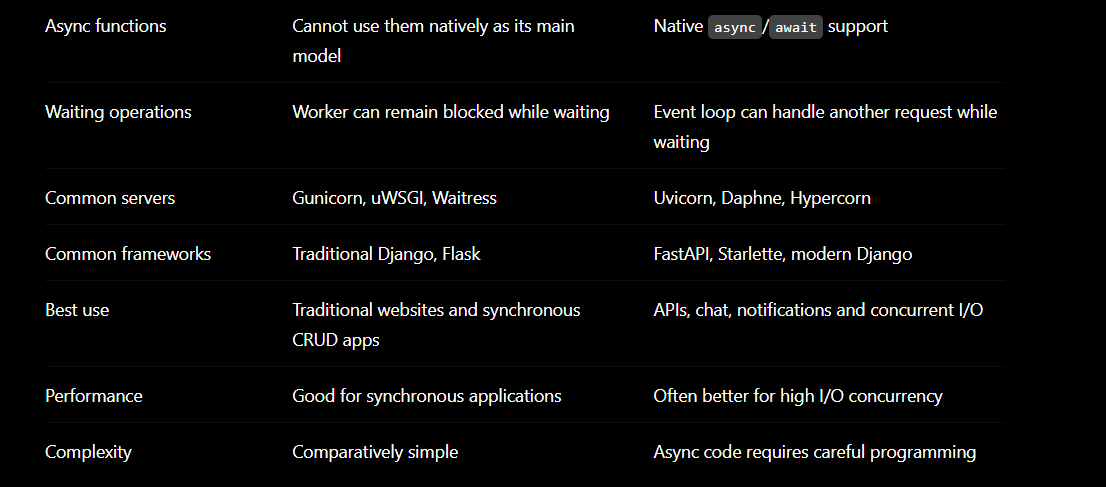
Simple real-world example
WSGI: One cashier per counter
Imagine one customer gives the cashier a task that takes five minutes.
The cashier waits until the task finishes before handling the next customer.
To serve more customers, the shop needs more cashiers.
ASGI: Restaurant waiter
A waiter takes your order and sends it to the kitchen.
While the kitchen prepares your food, the waiter serves other customers. When your food is ready, the waiter returns.
ASGI works similarly when waiting for:
Database results
Payment gateways
External APIs
AI-model responses
WSGI Coding Example
Flask commonly runs as a WSGI application.
from flask import Flask
import time

app = Flask(__name__)

@app.get("/order")
def create_order():
    # Blocking operation
    time.sleep(3)

    return {
        "message": "Order created"
    }
Run it with Gunicorn:
gunicorn app:app --workers 4
When time.sleep(3) executes, that worker remains blocked for three seconds.
The four-worker configuration allows multiple requests to be processed, but each waiting request occupies a worker.
ASGI Coding Example
FastAPI runs as an ASGI application.
from fastapi import FastAPI
import asyncio

app = FastAPI()

@app.get("/order")
async def create_order():
    # Non-blocking waiting operation
    await asyncio.sleep(3)

    return {
        "message": "Order created"
    }
Run it with Uvicorn:
uvicorn app:app --host 0.0.0.0 --port 8000
While one request is waiting, the event loop can process other requests.
Important difference in the code
WSGI-style blocking code:
time.sleep(3)
ASGI-style non-blocking code:
await asyncio.sleep(3)
It is not enough to write async def. The database client and external API libraries must also support asynchronous operations.
Database Example
Synchronous WSGI-style operation
@app.get("/orders")
def get_orders():
    orders = sync_database.query("SELECT * FROM orders")
    return {"orders": orders}

The worker waits until the database responds.

Asynchronous ASGI-style operation
@app.get("/orders")
async def get_orders():
    orders = await async_database.fetch(
        "SELECT * FROM orders"
    )

    return {"orders": orders}
FastAPI can handle other requests while the database operation is waiting.
Recommended frameworks by requirement
Recommended learning order
FastAPI — make this your primary Python



Top comments (0)