
What is Spring AI?
Spring AI Architecture
Purpose of Spring AI
Role of Spring AI
How Flow Works
Common Questions (with Answers)
What is Spring AI?
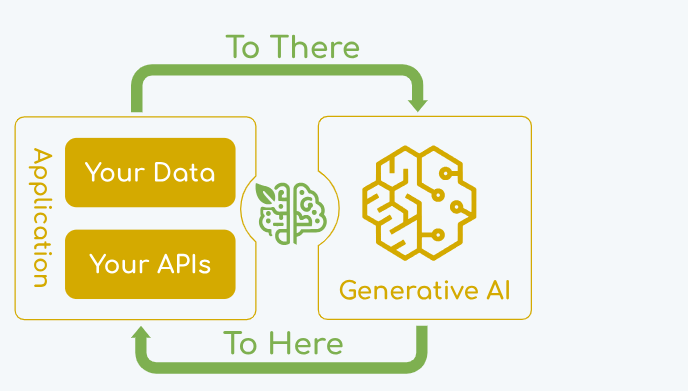
Spring AI is a framework that helps developers integrate AI models (like GPT, LLMs, embeddings, etc.) into Spring Boot applications easily.
Instead of manually calling AI APIs and handling complexity, Spring AI provides:
Clean Java-based abstraction
Easy integration with AI providers (OpenAI, Azure, etc.)
Support for chat, embeddings, vector DB, prompt templates
👉 In simple words:
Spring AI = Bridge between Spring Boot apps and AI models
🎯
Spring AI Architecture
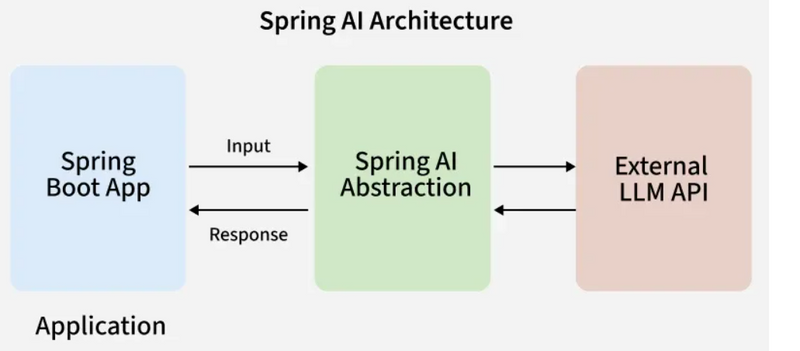
How Spring AI Works
- Users give input to Spring Boot REST controller.
- Spring AI processes the user input using Prompt Templates or ChatClient (to call LLM)
- ChatClient connects to external AI providers (OpenAI, Ollama, etc.)
- And response is returned to the Spring Boot app and sent back to the user . Multi-Provider Support: Spring AI framework supports connecting to multiple LLM providers like
OpenAI (ChatGPT)
Azure OpenAI
Hugging Face (Transformers)
Ollama (for local models)
Chat Client API: Standardizes communication with LLMs using a fluent API, regardless of provider differences.
Prompt Templates: Developers can define dynamic prompts with variables using Spring Expression Language (SpEL).
Embedding and Vector Store Integration: Spring AI supports converting text into embeddings like numeric vector and storing them in vector databases like PostgreSQL with pgvector.
Structured Outputs ( Like POJO Mapping): Spring AI model output (like JSON) directly to the Java POJOs class using annotations and converters.
Features of Spring AI
Purpose of Spring AI
The main purpose is to simplify AI integration in enterprise Java applications.
Key Goals:
Reduce boilerplate code for AI API calls
Provide standardized APIs (like Spring Data, Spring MVC)
Enable production-ready AI apps
Support scalable and maintainable architecture
🧩
Role of Spring AI
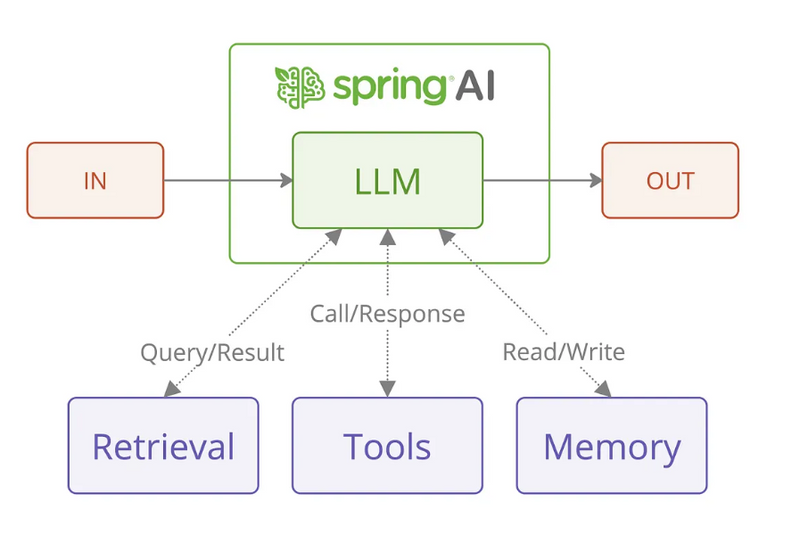
- AI Integration Layer Connects your Spring Boot app with AI models Handles API calls, authentication, retries
- Abstraction Provider You don’t write raw HTTP calls Use simple Java interfaces
- Prompt Management Helps structure prompts cleanly Supports templates
- Data Handling (Vector + Embeddings) Store & search semantic data Used in RAG (Retrieval-Augmented Generation)
- Enterprise Enablement Works with microservices Secure, scalable, production-ready 🏗️ Architecture (Colorful + Labeled Representation)
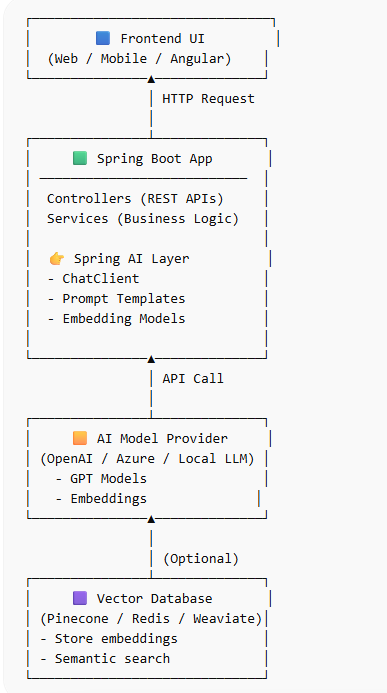
How Flow Works
User sends request → Frontend
Request hits → Spring Boot Controller
Service calls → Spring AI layer
Spring AI sends request → AI Model (GPT)
AI response → back to Spring Boot → UI
❓
Common Questions (with Answers)
- Why use Spring AI instead of direct API calls?
👉 Because it reduces complexity, gives structure, and is production-ready.
- Can Spring AI work with Laravel backend?
👉 No directly. Spring AI is for Java ecosystem.
For Laravel, you use OpenAI SDK or HTTP APIs manually.
- Is Spring AI suitable for microservices?
👉 Yes, very suitable. You can create:
AI microservice
Chat service
Recommendation engine
- What features does Spring AI provide?
Chat completion
Embeddings
Prompt templates
Vector DB integration
RAG support
- When should you choose Spring AI?
👉 Choose it when:
Your backend is Spring Boot
You need enterprise AI integration
You want clean, scalable architecture
- When NOT to use Spring AI?
👉 Avoid if:
Your backend is Laravel/PHP
Small project (simple API call enough)
🔥 Final Simple Summary
Purpose: Simplify AI integration
Role: Bridge Spring Boot ↔ AI Models
Benefit: Clean, scalable, enterprise-ready AI apps



Top comments (0)