
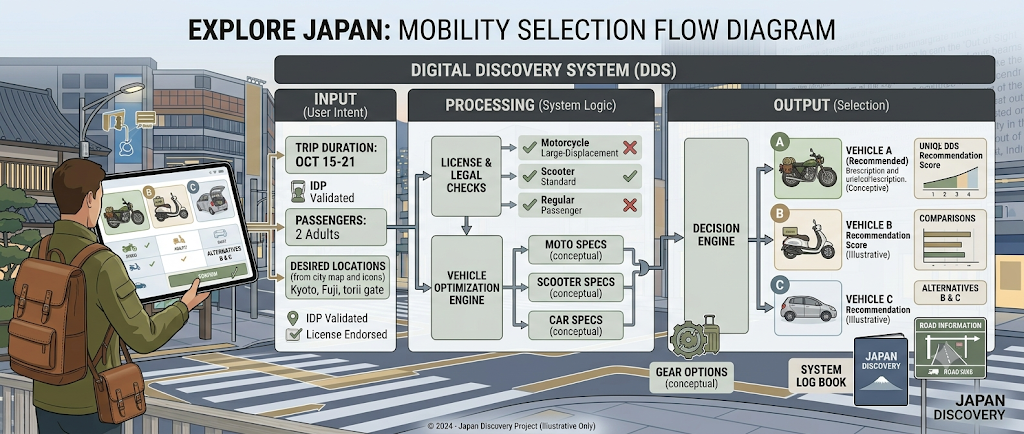
Introduction: The Hidden Complexity of a Rental Booking
When building an e-commerce platform, inventory management is usually straightforward: a customer purchases a product, and the database decrements the stock count. If stock reaches zero, the item is marked as out of stock.
Vehicle rental platforms—such as those handling compact cars, scooters, or touring motorcycles—operate on an entirely different axis of complexity. Inventory is not a static quantity; it consists of individual, unique physical assets tied to precise time windows. A booking is not a simple purchase; it is a temporary, stateful allocation of a specific physical asset across an overlapping calendar duration.
Building a reliable rental platform requires solving several distinct engineering and operational problems: coordinating vehicle metadata, enforcing strict date-range validation, handling concurrent checkout requests without double-booking, and synchronizing customer-facing discovery with internal fleet operations. This article explores the system design principles, data structures, and synchronization workflows required to build a dependable rental booking architecture.
Model the Rental Lifecycle
A transactional vehicle rental moves through a well-defined lifecycle, transitioning across multiple states from initial search to final vehicle return.
A robust lifecycle model generally tracks these sequential phases:
- Discovery: The user queries active listings based on location, category, and dates.
- Availability Validation: The system verifies that the requested asset is free during the target time window.
- Date Selection & Terms Review: The user reviews pricing, insurance coverage, deposit terms, and eligibility requirements.
- Eligibility Verification: The system checks whether the user's licence class matches the vehicle requirements.
- Reservation Request: A temporary lock or pending reservation is initiated.
- Confirmation: Payment and deposit verification complete, converting the pending state to a confirmed reservation.
- Handover: Staff inspect the vehicle, verify physical credentials, and mark the booking active.
- Return & Closeout: The vehicle is returned, inspected, checked for mileage or fuel compliance, and the rental record is closed.
Each state transition requires rigorous validation and audit logging. For instance, when a traveler researches a motorcycle rental Tokyo option or evaluates a provider offering a reliable レンタルバイク 東京 service, the software layer must instantly translate user search parameters into precise database queries that respect both temporal boundaries and physical asset availability.
Prevent Double Bookings and Race Conditions
The most critical challenge in reservation systems is preventing the double-booking anomaly: two users successfully reserving the exact same vehicle for overlapping time periods due to concurrent requests.
To mitigate this, backend systems must enforce atomic transaction boundaries. When a reservation request enters the system, the database must verify that no existing confirmed or active booking overlaps with the requested interval for that specific vehicle_id.
-- Conceptual query to check for overlapping date reservations
SELECT COUNT(*)
FROM bookings
WHERE vehicle_id = :target_vehicle_id
  AND status IN ('confirmed', 'active')
  AND start_time < :requested_end_time
  AND end_time > :requested_start_time;
If the query returns a count greater than zero, the transaction must abort and return a conflict error. In high-concurrency environments, optimistic locking or serializable transaction isolation levels prevent race conditions where two simultaneous transactions both pass the initial count check before either record is written. Additionally, implementing short-lived temporary holds (e.g., a 10-minute checkout lock) can reserve inventory while the user completes final verification steps.
Keep Vehicle Availability Consistent
A frustrating user experience occurs when a search results page indicates that a vehicle is available, but the checkout screen rejects the booking due to a conflict. Maintaining consistency across the discovery layer, checkout flow, and operator dashboard requires a centralized source of truth.
Key architectural considerations include:
- Unified Availability Service: All client interfaces (web, mobile, operator dashboard) must query the same availability engine rather than maintaining local caches of inventory state.
- Time-Zone Normalization: All booking timestamps should be stored in UTC and converted to local operational timezones only at the presentation layer to prevent regional scheduling errors.
- Buffer Periods: Systems must account for turnaround time between rentals, blocking out short post-trip windows for cleaning, inspection, and routine maintenance.
-
Data Validation: Strict server-side validation must ensure that
end_timealways succeedsstart_timeand that past dates cannot be booked.
Whether a user is browsing a regional レンタルバイク 日本 catalog or checking a nationwide motorcycle rental Japan index, the underlying inventory projections must reflect real-time operational status without latency drift.
Design for Different Vehicle Types
Different transport classes introduce unique constraints into the data model. While a motorcycle, scooter, and automobile share a core reservation pipeline, their attributes and legal requirements differ significantly.
- Motorcycles & Scooters: Require tracking engine displacement (cc), helmet inclusions, and specific license class endorsements (e.g., standard motorcycle vs. heavy bike). For example, users searching for a nimble スクーターレンタル 東京 option need clear data on urban utility and storage capacity.
- Automobiles: Require tracking passenger capacity, transmission type (automatic vs. manual), child seat availability, and luggage volume. When users look into a レンタカー 東京 service or evaluate a general car rental Tokyo listing, the system must accommodate insurance tiers and toll card (ETC) accessories.
- Economical Tiering: When users filter for budget-conscious choices within a 東京 バイク レンタル 安い category view, the database must accurately index base rates alongside mandatory insurance and equipment surcharges so that sorting logic remains transparent.
Synchronizing Consumer Discovery with Operator Workflows
While consumers interact with search bars and booking calendars, rental business operators require administrative software to manage daily logistics. An operational backend must synthesize vehicle maintenance schedules, contract generation, deposit tracking, and customer verification.
Implementing a dedicated バイクレンタル 管理システム enables staff to track two-wheeled maintenance intervals, manage key handovers, and review upcoming departures. Similarly, enterprises managing mixed fleets utilize an integrated レンタカー 管理システム to oversee larger vehicles, track security deposit releases, and generate revenue reports.
When platforms like MotoShare Japan connect travelers with local operators, they demonstrate how software bridges the gap between consumer-facing discovery and back-office management, ensuring that data entered during booking flows directly into operator operational dashboards.
FAQs
What causes race conditions in vehicle-rental booking systems?
Race conditions occur when two concurrent user requests check vehicle availability at the exact same millisecond, both find the vehicle free, and both attempt to write overlapping reservation records to the database.
How can developers prevent overlapping reservations?
Developers can prevent overlaps by using database transactions with serializable isolation, applying unique constraints or exclusion constraints on date ranges, and utilizing row-level locking (SELECT ... FOR UPDATE) during the checkout write operation.
Why is time-zone handling critical in rental systems?
Rental platforms often handle users booking from different countries or time zones for vehicles located elsewhere. Storing all dates in UTC prevents discrepancies between pickup times and local depot operating hours.
What is the role of an operator management system in a rental architecture?
An operator management system tracks internal inventory states, maintenance buffers, digital agreements, licence verifications, and deposit logs, ensuring that physical fleet operations synchronize with digital bookings.
Conclusion
Building a vehicle-rental platform is a multifaceted exercise in data modeling, concurrency control, and state management. By treating inventory as unique physical assets bound by temporal constraints—rather than simple retail stock—engineering teams can build resilient systems that prevent double bookings, maintain availability consistency, and bridge the gap between traveler discovery and operator workflows.



Top comments (0)