
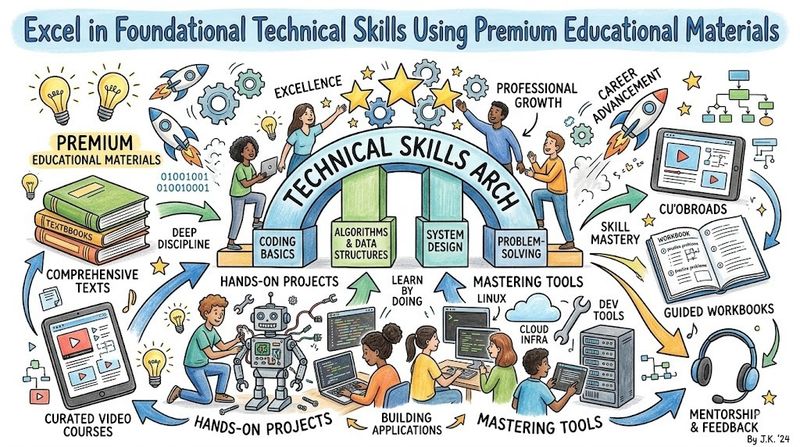
Imagine a critical transaction gateway freezing during peak holiday traffic, costing millions every minute while engineers scramble through disjointed server logs. This classic operational bottleneck highlights the fragility of unoptimized data infrastructure. Modern technical teams require systematic frameworks to prevent these catastrophic failures.
Building a scalable data career demands structured, reliable knowledge rather than scattered online tutorials. Aspiring engineers must master systematic data collection, storage, and analysis patterns to keep enterprise software healthy. You can establish this vital technical foundation by leveraging specialized learning materials.
This comprehensive guide serves as your architectural blueprint for modern data operations. We explore everything from foundational system histories to advanced telemetry signals. You will learn to calculate error thresholds, minimize repetitive manual tasks, and implement structured observability pipelines.
Ready to transform your technical expertise and build highly resilient systems? Explore the comprehensive collection of educational resources at Debug.school to accelerate your professional engineering journey today.
The Origin of Systems Infrastructure
The Early Industrial Bottlenecks
Traditional software operations suffered from severe disconnects between development teams and production environments. Siloed teams operated with conflicting incentives, where developers pushed rapid changes while administrators focused exclusively on stability. This structural division created a massive operational bottleneck.
Manual deployments frequently failed due to inconsistent environment configurations. Diagnosing issues required hours of manual log inspection across scattered physical hardware nodes. Consequently, businesses faced long release cycles and frequent system outages.
Moving Toward Unified Workflow Automation
Organizations gradually realized that manual infrastructure management could not support rapid software delivery. Breaking down traditional silos required a complete shift toward unified workflow automation frameworks. Engineering teams began treating infrastructure configurations exactly like application source code.
This transition allowed developers and operations specialists to collaborate within a standardized pipeline. Shared tooling replaced manual system provisioning, ensuring complete environment consistency across staging and production. Ultimately, automated validation minimized human error during high-frequency software updates.
Global Expansion Across Commercial Ecosystems
Automated operational frameworks rapidly spread from hyperscale internet pioneers to standard commercial enterprises. As global consumer demand spiked, traditional businesses discovered their legacy systems could not scale efficiently. Modern tech enterprises adopted structured reliability principles to handle millions of concurrent requests.
Today, standard commercial ecosystems rely heavily on these distributed systems architectures. Industries ranging from retail logistics to digital media require automated platform management to remain competitive. As a result, robust operations practices serve as the backbone of global corporate infrastructure.
Defining Strategic Operations Management
The Core Operational Structure
Strategic operations management establishes a structured architectural flow for data, metrics, and application logic. The core structure bridges software engineering principles with underlying physical or cloud infrastructure. This discipline ensures that applications remain highly available, scalable, and secure.
Data flows systematically through automated ingestion pipelines, validation engines, and continuous storage tiers. Specialists monitor these data paths to detect structural anomalies before they impact end users. The following diagram illustrates the lifecycle of data moving through a standard enterprise pipeline.
Daily Tasks of Systems Coordinators
Systems coordinators spend their daily shifts managing infrastructure health and refining data pipelines. They write automation scripts to handle repetitive cluster scaling tasks and eliminate operational bottlenecks. Additionally, these professionals configure comprehensive monitoring dashboards to track application health metrics.
Coordinators also participate in architectural review meetings to ensure new software designs meet reliability standards. When unexpected production anomalies arise, they lead the technical triage and mitigate service disruptions. Their proactive efforts consistently focus on optimization rather than reactive troubleshooting.
Localized Control vs. Broad System Architecture
Managing modern infrastructure requires balancing localized component tracking with broad, multi-system architecture oversight. Localized control focuses on specific database queries, individual container instances, or isolated code blocks. While essential, optimizing a single localized component does not guarantee overall system health.
In contrast, managing broad system architecture involves analyzing how hundreds of distributed microservices interact over complex networks. Engineers must evaluate systemic cascading dependencies, global data replication lag, and end-to-end network latencies. True operational efficiency comes from optimizing these complex macro-level relationships across the ecosystem.
The Efficiency Mindset
Transitioning to advanced operations management demands a significant cultural shift toward long-term systemic stability. Engineers must abandon short-term manual fixes in favor of permanent, programmatic software solutions. This efficiency mindset prioritizes building self-healing systems that automatically detect and resolve standard infrastructure anomalies.
Furthermore, this cultural framework values clear data metrics over subjective operational assumptions. Teams continuously measure infrastructure behavior to drive engineering investments and platform architecture upgrades. This relentless focus on sustainable, automated reliability ultimately protects the organization's bottom line.
The 7 Core Principles of Start Your Data Science Journey with Debug.school Ebooks
1. Embracing Risk and Managing Variability
Perfect system uptime is an unrealistic expectation that stalls feature innovation and exhausts engineering talent. Modern infrastructure principles accept that components will inevitably fail due to underlying hardware or network complexities. Instead of chasing impossible perfection, teams calculate acceptable systemic risk boundaries based on user expectations.
Managing variability involves designing fault-tolerant applications that degrade gracefully during localized network outages. Engineers use smart routing, circuit breakers, and fallback mechanisms to preserve essential product workflows. Embracing calculated risk allows organizations to balance high-speed feature shipping with baseline infrastructure stability.
2. Establishing Service Level Objectives (SLOs)
Teams define measurable targets for systemic success by implementing rigorous Service Level Objectives. These objectives serve as the primary metric indicating whether a data platform performs adequately for users. Without clear targets, engineering groups argue endlessly over subjective definitions of system performance.
Establishing these goals requires deep collaboration between business stakeholders, product managers, and engineering teams. The targets must align closely with real user satisfaction levels rather than arbitrary hardware capacity metrics. Consequently, well-defined objectives guide product release tempos and prioritize stability engineering tasks.
3. Eliminating Toil and Manual Processes
Toil encompasses repetitive, manual, operational tasks that lack long-term strategic value and scale linearly with system growth. Examples include manually restarting servers, resetting user permissions via database scripts, or human-verified data transfers. Left unchecked, manual toil completely consumes an engineering team's capacity, blocking innovative project work.
Modern operational frameworks demand the systematic tracking and elimination of these repetitive manual processes. Engineers write custom software utilities, deploy orchestration workflows, and leverage automated configuration tools to eliminate human intervention. Minimizing toil ensures that engineering talent spends time on creative architectural design.
4. Monitoring & Observability Across the Pipeline
Total visibility across the entire data environment prevents operational blind spots from hiding systemic performance degradation. Traditional monitoring merely alerts teams when a specific server crashes or a disk space threshold breaches. Modern observability, however, allows engineers to infer internal system states by analyzing external outputs.
       [ Telemetry Sources: Logs, Metrics, Traces ]
                            │
                            ▼
           [ Unified Observability Pipeline ]
                            │
            ┌───────────────┼───────────────┐
            ▼               ▼               ▼
      [Dashboarding]   [Anomalies]     [Alerting]
Achieving comprehensive observability requires collecting distributed traces, structured logs, and detailed timeseries metrics across every layer. This telemetry data flows into centralized platforms where teams analyze complex request lifecycles. Enhanced pipeline visibility dramatically accelerates root-cause analysis during multipart system failures.
5. Automation Over Manual Coordination
Scaling modern corporate workloads efficiently requires choosing software automation over manual human coordination. Manual system updates, human-driven data migrations, and verbal configuration handoffs introduce unacceptable risks. Automated orchestration systems execute these complex operational patterns consistently and without typographical errors.
[Code Commit] ──► [Automated Build] ──► [Security Scan] ──► [Canary Deploy]
Engineers build robust software engines that handle provisioning, cluster scaling, and self-healing behaviors dynamically. This programmatic approach allows a small engineering group to manage massive, global-scale multi-cloud infrastructures smoothly. Automation guarantees predictable environments and frees humans from performing high-risk manual tasks.
6. Release Engineering and Deployment Stability
Release engineering focuses on delivering software updates in a consistent, predictable, and exceptionally safe manner. Teams design automated pipelines that execute code compilation, comprehensive security scanning, and unit testing workflows. This structural rigor ensures that only verified code artifacts move toward production environments.
Deployment stability relies on advanced deployment strategies such as canary rollouts and blue-green environments. These techniques expose new application updates to a tiny percentage of live user traffic initially. If telemetry data detects unexpected anomalies, the delivery engine automatically triggers an instantaneous rollback to protect users.
7. Simplicity in Network Architecture
Keeping technical environments clean and minimal directly reduces the overall failure surface of an enterprise. Intricate network topologies and over-engineered data pipelines create hidden dependencies that complicate emergency troubleshooting. Simple architectures remain easier to document, understand, test, and maintain over long lifecycles.
Engineers enforce simplicity by avoiding redundant software components and maintaining strict design patterns across services. They eliminate dead code paths, de-commission abandoned servers, and consolidate fragmented database systems regularly. Prioritizing simplicity ensures that platforms remain highly resilient against unexpected operational turbulence.
Key Operational Concepts You Must Know
SLA vs. SLO vs. SLI — Explained Simply
Understanding operational health requires masterfully distinguishing between agreements, objectives, and indicators. These three components form the foundation of objective, data-driven reliability management.
- Service Level Indicator (SLI): A precise, quantitative measurement of a service's performance in real time. Common examples include the latency of a database query or the error rate of an API endpoint.
- Service Level Objective (SLO): A target reliability percentage defined for a specific indicator over a set time window. For instance, a team might state that their API latency must remain below 200 milliseconds for 99.5% of requests over a rolling 30-day period.
- Service Level Agreement (SLA): A formal legal and commercial contract between a service provider and end-users. This document defines the financial consequences, refunds, or penalties if the service fails to meet the specified objectives.
Error Budgets — The Game Changer for Operational Risk
An error budget represents the exact amount of acceptable downtime or system instability a service can incur over a specific timeframe. Mathematically, it is the simple inverse of the established Service Level Objective. If your team commits to a 99.9% uptime objective, your service possesses a 0.1% allowable error budget.
  ┌──────────────────────────────────────────────────────────┐
  │ Total System Budget (100%)                               │
  ├───────────────────────────────────────────────┬──────────┤
  │ Service Level Objective (99.9%)               │ Budget   │
  │ [Target Performance Window]                   │ (0.1%)   │
  └───────────────────────────────────────────────┴──────────┘
                                                      │
                       ┌──────────────────────────────┴──────────────┐
                       ▼                                             ▼
         [Spend on Feature Innovation]                  [Incur Unplanned Downtime]
This budget serves as a brilliant mechanism to balance engineering speed with platform safety. As long as the error budget remains positive, development teams can freely ship risky new features. However, if unexpected outages consume the budget entirely, feature deployments freeze, and engineering resources pivot exclusively to stability work.
Toil — The Silent Productivity Killer in Infrastructure
Toil refers to the manual, repetitive operational tasks that arise directly from running a live production service. Toil lacks long-term strategic value, does not require human creativity, and expands linearly as your infrastructure scales. If managing double the customer volume requires hiring double the operations staff, your environment suffers from excessive toil.
Teams must systematically calculate and eliminate this productivity killer before it burns out engineering talent. Coordinators log daily tasks to identify repetitive activities suitable for software automation. Setting a strict ceiling, such as capping toil at 50% of an engineer's time, ensures adequate availability for architectural improvements.
Incident Management & Postmortems
When complex infrastructure inevitably breaks, structured incident management frameworks guide teams through organized mitigation. Clear operational roles separate technical debugging tasks from cross-departmental communications duties. This division allows incident commanders to coordinate resolutions without external distractions.
Following incident mitigation, teams conduct blameless postmortem reviews to analyze the systemic root causes of the outage. A blameless culture assumes that engineers acted with good intentions based on the information available to them. These sessions focus on fixing flawed processes, updating monitoring systems, and implementing code guards rather than assigning individual blame.
Capacity Planning
Capacity planning involves forecasting resource requirements to ensure systems handle future demand spikes smoothly. Engineers analyze long-term historical usage trends across processing units, storage networks, and memory allocations. This statistical analysis helps organizations purchase infrastructure or adjust cloud limits well ahead of business growth.
Modern capacity planning also accounts for seasonal traffic surges, such as marketing campaigns or global holidays. Teams conduct rigorous load testing to discover the exact breaking points of their distributed data architectures. Proactive capacity engineering prevents unexpected resource saturation from degrading the end-user experience.
The Four Golden Signals of Pipeline Performance
To maintain clear visibility into distributed environments, engineers track the four golden signals of infrastructure health. Monitoring these specific metrics helps teams instantly diagnose whether a system performs acceptably.
| Golden Signal | Technical Metric Monitored | Operational Impact |
|---|---|---|
| Latency | Time taken to service a request | High latency degrades user experience directly |
| Traffic | Total demand placed on the system | Measures concurrent users or network requests |
| Errors | Rate of requests that fail explicitly | Identifies software bugs or structural drops |
| Saturation | Fraction of total system resources used | Predicts imminent crashes from memory exhaustion |
Platform Implementation vs. Culture — What's the Real Difference?
The Philosophy Difference
Many technical organizations confuse concrete tool implementations with high-level operational cultures. A cultural framework focuses heavily on high-level philosophies, software development mindsets, and breaking down organizational silos. It establishes how teams communicate and share responsibilities across the entire software delivery lifecycle.
In contrast, platform implementation provides the specialized technical practices and tools to realize those cultural goals. It introduces concrete engineering disciplines like software-driven infrastructure management, automated error tracking, and blameless postmortems. Culture defines the collaborative destination, while technical implementation builds the actual engine to travel there.
Roles & Responsibilities Compared
While both disciplines focus on delivering high-quality software, their daily focus areas differ significantly.
- Cultural Practitioners:
- Focus on optimizing the end-to-end organizational delivery pipeline.
- Promote cultural shift patterns and cross-functional team collaboration.
- Build shared continuous deployment frameworks across departments.
Design shared metrics across software creators and infrastructure managers.
Implementation Specialists:
Write actual software code to automate infrastructure provisioning workflows.
Configure specific telemetry pipelines and system monitoring platforms.
Manage precise error budgets, SLO targets, and concrete on-call schedules.
Conduct deep root-cause analyses on complex distributed software architectures.
Can You Have Both Disciplines?
Modern enterprise environments do not treat these two concepts as mutually exclusive choices. In fact, successful tech companies blend cultural philosophies with rigorous platform implementation frameworks. The cultural mindset encourages shared ownership, while the engineering implementation provides the tools to manage systems safely.
Relying on culture without technical implementation often results in abstract discussions lacking concrete operational data. Conversely, implementing advanced monitoring software without a collaborative culture leads to alert fatigue and siloed blame games. Combining both paradigms creates a highly efficient, automated engineering environment.
Which One Should Your Team Adopt?
Choosing where to focus your engineering investments depends directly on organizational size and structural maturity.
| Organizational Size | Primary Focus Area | Implementation Strategy |
|---|---|---|
| Early-stage Startups | Cultural Mindsets | Focus on shared code ownership and minimal automated tooling |
| Mid-sized Enterprises | Structured Engineering | Define explicit SLO targets and automate high-toil processes |
| Large Scale Scale-ups | Combined Ecosystem | Deploy dedicated platform engineering teams alongside cultural guardrails |
Real-World Use Cases of Modern Operations
How Tech Leaders Use Operational Metrics
Major software enterprises manage global infrastructure by analyzing fine-grained operational metrics in real time. They process billions of telemetry events daily to evaluate system stability and optimize resource allocation. Automated analytics platforms parse these incoming metrics to highlight anomalies before they affect performance.
These metrics also guide major business investments and feature development roadmaps. If telemetry shows a specific microservice consuming excessive cloud memory, engineers rewrite that component's architecture. Data-driven infrastructure tracking completely removes guesswork from global capacity management.
Chaos Engineering Approaches to Resilient Systems
Top tier technology organizations do not wait for unexpected production outages to test system resilience. Instead, they practice chaos engineering by intentionally injecting controlled failures into live environments. Automated software utilities randomly terminate server instances, inject network latency, or drop database connections.
[Inject Failure: Kill Node] ──► [Telemetry Scan] ──► [Verify Self-Healing]
These intentional disruptions verify that the infrastructure's self-healing mechanisms respond correctly. Engineers observe whether traffic automatically routes away from failed nodes without manual human intervention. Cultivating controlled chaos helps teams uncover hidden structural flaws before real emergencies strike.
Handling Reliability at Massive Scale
Distributed microservices architectures serving millions of concurrent global requests require advanced reliability patterns. When a single database node slows down, it can cause a cascading failure across the entire system. Engineers implement strict request timeouts and automated retries to contain localized damage.
Additionally, massive scale platforms utilize smart load balancing algorithms to distribute incoming traffic evenly across global regions. They replicate critical data across multiple physical availability zones to ensure continuous service availability. These distributed engineering strategies keep platforms running smoothly during unprecedented usage surges.
High-Availability in Fintech Operations
Financial technology platforms operate under stringent zero-tolerance mandates for system downtime and data loss. A single dropped network package can corrupt accounting ledgers or interrupt time-sensitive stock trades. Consequently, fintech operations enforce highly rigorous database replication and transaction logging standards.
These high-availability systems employ isolated, secondary processing clusters that mimic primary environments instantly. If a core ledger server drops, automated infrastructure components switch traffic to the backup environment immediately. Detailed cryptographic logging ensures every transaction remains completely traceable throughout the failover process.
Scaled-Down but Essential Systems for Startups
Early-stage startups lack the massive budgets and large engineering workforces found in tech conglomerates. However, they must still apply core operational principles to prevent business-ending downtime. Startups achieve this efficiency by relying on managed cloud services and lightweight automation frameworks.
Instead of deploying complex custom monitoring platforms, smaller teams set up basic alert thresholds on essential business paths. They focus on automating their primary code deployment pipeline to keep delivery fast yet stable. Embracing minimal but disciplined operational habits early helps startups scale smoothly as customer volume expands.
Common Mistakes in Operations Engineering
Mistake 1 — Confusing System Management with Just Being On-Call
Many traditional companies mistakenly believe that setting up an on-call rotation covers all operational needs. They expect engineers to simply answer system alerts and manually restart failing services indefinitely. This reactive mindset ignores the core philosophy of proactive, software-driven infrastructure engineering.
True system management focuses on writing code to eliminate the underlying reasons for those emergency alerts. If an engineer continuously patches a system manually, the underlying architectural flaw remains unfixed. Teams must prioritize structural engineering work over simple, repetitive fire-fighting tasks.
Mistake 2 — Setting Unrealistic SLOs
Product owners frequently demand 100% system availability, believing that any downtime will alienate customers. However, maintaining extreme uptime targets requires immense financial investments and halts feature development velocity completely. Every added decimal point of availability goals requires a exponential increase in engineering effort.
Unrealistic objectives lead to rapid error budget exhaustion and cause constant alert fatigue for engineers. Teams burn out trying to maintain targets that do not actually impact real-world user satisfaction. Smart organizations set achievable targets that realistically balance product innovation with operational stability.
Mistake 3 — Ignoring Toil Until It's Too Late
Startups and fast-growing companies often neglect manual toil in their rush to deliver new product features. Engineers perform quick manual database updates or server restarts to keep the application running temporarily. Over time, this unaddressed operational debt compounds until manual tasks consume the team's complete schedule.
[Ignore Toil] ──► [Toil Accumulates] ──► [No Time for Engineering] ──► [System Stagnation]
When manual toil completely blocks engineering velocity, innovation stops, and system stability degrades. New feature rollouts slow down because teams spend their shifts handling fragile manual steps. Organizations must track operational toil continuously and dedicate specific engineering sprints to automate it away.
Mistake 4 — Skipping Blameless Postmortems
When a major production outage occurs, broken corporate cultures focus on identifying and punishing the individual responsible. This punitive approach causes engineers to hide technical mistakes, cover up system flaws, and avoid risky innovations. Consequently, the underlying procedural problems remain unaddressed, ensuring the outage will eventually repeat.
Skipping blameless analysis prevents organizations from learning valuable operational lessons from their inevitable failures. Teams miss opportunities to update poor documentation, improve automated testing suites, or refine alert systems. Embracing honest, blameless evaluations transforms stressful technical outages into powerful opportunities for platform improvement.
Mistake 5 — Monitoring Without Actionable Alerts
A common architectural trap involves configuring monitoring tools to send notifications for every minor system variance. Engineers receive urgent text messages when a non-critical server experiences a temporary processing spike. This excessive volume of non-essential noise quickly leads to severe team alert fatigue.
When critical systems actually fail, exhausted engineers often miss the vital alert amidst the sea of un-actionable notifications. Every configured alert must point directly to a clear, actionable issue requiring immediate human intervention. If an anomaly does not require urgent attention, it belongs in an analytics report, not an emergency page.
Mistake 6 — Not Involving Operational Engineers in the Design Phase
Software development teams frequently design new application architectures without consulting operations specialists. They write complex code paths that perform beautifully in isolated local environments but fail under live traffic. This lack of collaboration results in fragile systems that are highly difficult to monitor and scale.
Bringing operational engineers into design conversations from day one ensures systems are built for long-term stability. Specialists help identify potential bottlenecks, design logging paths, and plan cluster scaling rules early. Proactive collaborative design prevents expensive architectural rewrites after software launches.
Essential Infrastructure Tools & Technologies
Monitoring & Observability
Modern engineering teams utilize specialized monitoring suites to maintain comprehensive visibility into their application pipelines. Tools like Prometheus collect high-frequency time-series metrics from cloud infrastructure and container environments. Grafana visualizes this raw data, turning complex performance metrics into intuitive, readable dashboards.
Enterprise observability platforms like Datadog and New Relic combine metrics, structured logs, and distributed traces into unified interfaces. These tools allow engineers to trace single user requests as they traverse complex microservices. Enhanced observability dramatically reduces the time required to diagnose subtle performance drops.
Incident Management
When critical outages disrupt production workflows, organizations rely on incident response engines to coordinate resolutions. Platforms like PagerDuty integrate directly with monitoring systems to route critical alerts to on-call engineers instantly. These systems manage team schedules, escalate unresolved pages, and handle automated alerting paths.
During active incidents, teams utilize collaboration spaces to centralize debugging discussions and track remediation steps. Automated integrations pull relevant system graphs directly into chat rooms to keep responders aligned. Structured coordination tooling helps organizations minimize overall recovery times during high-stress situations.
CI/CD & Release Engineering
Automated deployment pipelines serve as the foundation of secure, high-frequency software delivery environments. Automation engines like Jenkins handle code compilation, unit testing routines, and container building processes. This automated validation guarantees that flawed code updates never reach production systems.
Modern cloud native environments leverage continuous delivery tools like Spinnaker and Argo CD to manage complex deployment strategies. These platforms automate advanced canary rollouts, verify telemetry metrics, and trigger safe rollouts or rollbacks dynamically. Standardized delivery tooling ensures deployment stability across vast corporate systems.
Chaos Engineering
To proactively uncover hidden systemic vulnerabilities, modern organizations deploy specialized fault-injection software frameworks. Tools like Chaos Monkey pioneered this domain by systematically terminating production server instances during normal business hours. This forced disruption proves whether underlying platforms adapt automatically without user impact.
Modern resilience engineering platforms allow teams to schedule precise, controlled failure scenarios across cloud networks. Engineers simulate localized network drops, database disconnections, and artificial resource saturation safely. Using automated chaos tools helps teams validate their monitoring configurations and self-healing systems.
SLO Management
Tracking service reliability against formal business thresholds requires dedicated service level management tooling. Platforms like Nobl9 connect directly to existing monitoring streams to compute real-time error budget consumption. These dashboards translate complex technical performance metrics into clear business alignment graphs.
SLO tracking platforms alert engineering groups well before a service completely exhausts its allowable downtime budget. This early warning allows developers to adjust feature delivery tempos before breaking customer agreements. Dedicated metric computation provides a clear, objective framework for balancing engineering velocity and system safety.
How to Become an Operations Expert — Career Roadmap
Skills Every Specialist Must Have
Entering this advanced infrastructure field requires building a robust foundation of core technical competencies. Aspiring specialists must master terminal navigation commands and become highly fluent in shell scripting languages. Additionally, learning modern programming languages like Python or Go allows engineers to write custom infrastructure automation utilities.
Understanding fundamental networking protocols, domain routing patterns, and data security layers is equally essential. Professionals must also study cloud infrastructure architecture and container orchestration frameworks like Kubernetes. Combining strong software programming skills with solid systems management expertise forms the core profile of successful operations experts.
The Professional Learning Path
Your educational progression begins with configuring local environments, writing basic automation scripts, and studying operating system fundamentals. Next, learn to deploy simple applications within containerized systems and establish basic telemetry monitoring. This initial hands-on experience builds deep familiarity with standard deployment workflows.
As your experience matures, transition toward designing complex distributed systems and managing multi-region cloud networks. Practice defining objective SLO metrics, calculating error budgets, and organizing blameless incident reviews. True expertise develops by systematically diagnosing real world platform failures and refining complex automation architectures over time.
Certifications Worth Pursuing
Industry recognized technical credentials help validate your system management expertise and accelerate career progression. Earning certifications from major cloud providers confirms your practical ability to design resilient digital infrastructure. Furthermore, specialist certifications focusing on Kubernetes management validate your container orchestration skills.
Pursuing specialized certifications in systems administration or professional security engineering adds significant value to your resume. These structured training paths ensure you learn industry standard best practices for running high scale platforms. Validated expertise helps you stand out to premium technology employers globally.
Educational Resources with Debug.school
Navigating the vast sea of scattered online tutorials can easily overwhelm aspiring infrastructure engineers. Utilizing structured, professional educational material streamlines your technical learning curve dramatically. Selecting high-quality guides allows you to study complex distributed patterns systematically.
To fast-track your technical growth, explore the curated collection of technical educational books at Debug.school. These comprehensive resources break down complex architectural topics into clear, highly digestible lessons. Investing in premium learning materials equips you with the practical skills required to excel in modern enterprise operations.
The Future of Systems Management
AI and Automation in System Optimization
The integration of machine intelligence is fundamentally reshaping how enterprises monitor and optimize their digital infrastructure. Advanced analytics engines parse massive volumes of telemetry data to identify subtle anomaly patterns before failures manifest. This predictive capability shifts operations from traditional reactive firefighting toward complete proactive prevention.
AI systems also assist infrastructure teams by automating initial root-cause analysis during multipart system outages. Machine models correlate scattered logs, trace anomalies, and suggest exact remediation paths to on-call engineers. Automated intelligence ultimately helps organizations minimize recovery times and maintain exceptional system stability.
Platform Engineering — The Evolution of Infrastructure
Platform engineering represents the next major evolutionary phase in modern infrastructure lifecycle management. Instead of configuring custom environments manually for every project, dedicated teams build unified internal developer portals. These self-service portals allow software developers to provision secure, compliant infrastructure environments instantly.
[Developer Portal] ──► [Automated Blueprint] ──► [Instant Secure Environment]
This structural shift minimizes organizational friction and eliminates repetitive configuration bottlenecks across engineering departments. Platform engineering productizes infrastructure, allowing developers to focus entirely on application logic. Embracing self-service platforms dramatically accelerates delivery speed while maintaining corporate security standards.
Management in Cloud-Native & Kubernetes Environments
The global transition toward dynamic containerized environments introduces intricate orchestration complexities that require specialized management. As application microservices scale fluidly across multiple cloud networks, tracking operational dependencies becomes increasingly challenging. Engineers must design robust service meshes to handle cluster communications safely.
Managing modern cloud-native systems requires declarative configuration paradigms and automated Git-driven delivery workflows. Teams use software code repositories as the single source of truth for entire infrastructure states. This automated alignment ensures containerized clusters remain highly repeatable, auditable, and resilient against configuration drift.
Operational Skills That Will Matter Most
As infrastructure systems grow increasingly abstract, the core skill sets demanded of technical specialists continue to evolve. Future engineering leaders must excel at cloud financial optimization, balancing high performance against infrastructure costs. Developing deep data observability expertise to extract insights from massive telemetry streams will be equally vital.
Furthermore, strong cross-departmental collaboration and communication skills will remain essential to guide teams through digital transformations. Engineers must translate complex system metrics into clear, actionable business strategies for organizational stakeholders. Mastering both technical execution and strategic communication defines the future infrastructure expert.
FAQ Section
- What is the typical career path for an infrastructure operations specialist? Most professionals begin their careers as junior systems administrators, software developers, or technical support engineers. As they master automation scripting, cloud networking, and observability tools, they transition into dedicated systems engineering roles. Senior specialists eventually advance into enterprise platform architecture, reliability leadership, or executive technology management roles.
- How do software engineering skills apply to modern system operations? Modern operations treats infrastructure challenges as software problems rather than manual administration tasks. Specialists write production quality code to automate server provisioning, manage cluster scaling, and build internal deployment portals. Applying disciplined software engineering practices like version control and automated testing guarantees highly reliable, repeatable environments.
- What are the average salary trends for reliability and platform engineers? Due to the critical shortage of specialized technical talent capable of managing high-scale systems, compensation remains exceptional. Globally, platform and reliability engineering roles rank among the highest-paid positions within the technology sector. Compensation scales upward rapidly as engineers demonstrate expertise in container orchestration, multi-cloud architecture, and automated system recovery.
- Why is an error budget considered a cultural game-changer for tech teams? An error budget removes subjective friction between fast-paced product developers and stability-focused operations teams. It provides a clear, mathematical framework that dictates when teams can safely ship features or when they must stop to fix infrastructure. This objective data-driven alignment encourages shared risk-taking while systematically preserving long-term application health.
- Can small startups benefit from implementing advanced observability pipelines? Yes, implementing basic observability early saves early-stage companies hundreds of development hours spent diagnosing vague software errors. While startups do not need expensive enterprise monitoring suites, setting up clean structured logging and essential trace metrics is vital. Clear visibility allows lean teams to fix bugs rapidly and maintain a stable user experience as business expands.
- What is the difference between traditional monitoring and modern observability? Traditional monitoring focuses on alerting engineers when specific infrastructure thresholds breach, such as a server disk filling up. Modern observability, however, focuses on understanding the internal state of a complex distributed system based on its external telemetry data outputs. Observability allows teams to debug entirely new, unexpected failure patterns that simple threshold alerts miss completely.
Final Summary
Maintaining modern infrastructure health demands a complete transition away from traditional reactive administration and toward automated, software-driven reliability frameworks. Organizations must master objective telemetry metrics, eliminate manual toil, and foster collaborative, blameless cultures to protect their production environments. Implementing these structured operational principles ensures that enterprise platforms remain highly resilient under massive consumer demands.
Building a successful career within this fast-evolving technical domain requires continuous structured learning and access to premium architectural resources. Equipping yourself with verified educational materials ensures you develop the practical, real-world skills needed to solve complex distributed systems challenges. Take charge of your technical advancement and explore the specialized educational guides at Debug.school to elevate your engineering capabilities today.



Top comments (0)