
Introduction
Authentication vs Authorization
What is Role-Based Authorization?
Why RBAC is Important
When Should You Use RBAC?
System Architecture Overview
Store Role in Session During Login
Create Role Guard Helper
Protect Admin Route
Protect Vendor Route
Role-Based Scope Grouping
Create Admin Middleware (Advanced)
Prevent Privilege Escalation
Database-Level Role Enforcement (Extra Secure)
Multi-Role Access Example
Real Production Role Example
Common RBAC Mistakes
Best Practices
Security Flow
RBAC vs Simple Login Check
PRACTICAL CODING EXAMPLE
Introduction
Authentication answers:
`“Who are you?”`
Authorization answers:
`“What are you allowed to do?”`
In real-world applications, just checking if a user is logged in is not enough. We must also control what actions each user can perform.
This is where Role-Based Access Control (RBAC) comes in.
In this guide, we will build a production-ready RBAC system using:
Actix-Web

Session-based authentication

Middleware + guard helpers

Clean architecture
2️⃣ What is Role-Based Authorization?
RBAC is a system where users are assigned roles, and roles define permissions.
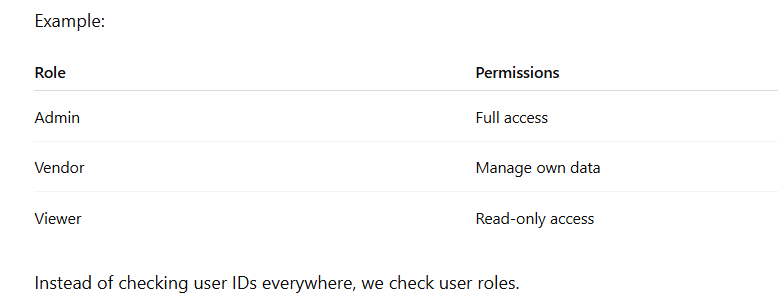
Why RBAC is Important
Without RBAC:
Any logged-in user may access admin routes

Data leaks may happen

Privilege escalation becomes possible
With RBAC:
Clear separation of responsibilities

Secure system design

Easy to scale for large applications
4️⃣When Should You Use RBAC?
Use RBAC when:

You have multiple user types

You build admin panels

You build SaaS applications

You handle sensitive business logic
5️⃣ System Architecture Overview
User Login
    ↓
Session stores user_id + role
    ↓
Middleware/Guard checks role
    ↓
Access granted or denied
6️⃣ Step 1: Store Role in Session During Login
Inside login handler:
session.insert("role", user.role.clone())?;
Now every request carries role info in session.
7️⃣ Step 2: Create Role Guard Helper
Create in src/handlers/common.rs
use actix_session::Session;
use actix_web::{error, Result};

pub fn require_role(session: &Session, allowed_roles: &[&str]) -> Result<()> {
    let role = session
        .get::<String>("role")
        .map_err(error::ErrorInternalServerError)?
        .unwrap_or_default();

    if !allowed_roles.contains(&role.as_str()) {
        return Err(error::ErrorForbidden("Access denied"));
    }

    Ok(())
}
8️⃣ Step 3: Protect Admin Route
Example:
pub async fn admin_dashboard(
    session: Session,
) -> Result<HttpResponse> {

    require_role(&session, &["admin"])?;

    Ok(HttpResponse::Ok().json(ApiResponse {
        message: "Admin Dashboard".to_string(),
        data: true,
    }))
}
9️⃣ Step 4: Protect Vendor Route
require_role(&session, &["admin", "vendor"])?;
This allows both admin and vendor.
🔟 Step 5: Role-Based Scope Grouping
Instead of checking role in every handler, create role middleware.
Example:
web::scope("/api/admin")
    .wrap(RequireLogin)
    .wrap(RequireAdmin)
Now all /api/admin/* routes are admin-only.
Create Admin Middleware (Advanced)
pub struct RequireAdmin;

impl<S, B> Transform<S, ServiceRequest> for RequireAdmin

Inside call():

let role = session.get::<String>("role")?;
if role != Some("admin".to_string()) {
    return Err(error::ErrorForbidden("Admin only"));
}
1️⃣2️⃣ Prevent Privilege Escalation
Never trust frontend role input.
❌ Wrong:
let role = body.role;
✅ Correct:
Always read role from session:
let role = session.get::<String>("role")?;
1️⃣3️⃣ Database-Level Role Enforcement (Extra Secure)
For sensitive operations, double-check role in DB.
let db_role = sqlx::query_scalar!(
    "SELECT role FROM users WHERE id = ?",
    user_id
).fetch_one(&state.pool).await?;
This prevents tampering.
1️⃣4️⃣ Multi-Role Access Example
require_role(&session, &["admin", "manager"])?;
Very flexible design.
1️⃣5️⃣ Real Production Role Example
SaaS System Roles:
Super Admin
Admin
Vendor
Staff
Customer
Each role has:
Different dashboards
Different APIs
Different data visibility
1️⃣6️⃣ Common RBAC Mistakes
❌ Checking role only on frontend
❌ Forgetting to protect one route
❌ Hardcoding role logic inside business code
❌ Mixing authentication and authorization logic
1️⃣7️⃣ Best Practices
Always check role server-side

Keep authorization logic separate

Use middleware for scalability

Log forbidden access attempts
1️⃣8️⃣ Security Flow
Login → Session(role stored)
        ↓
User hits /api/admin/users
        ↓
Middleware checks role
        ↓
Allowed or 403 Forbidden
RBAC vs Simple Login Check
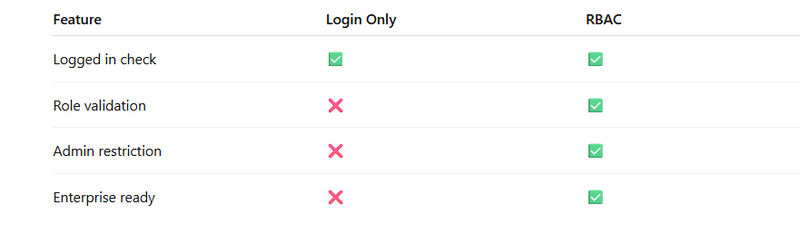
=============PRACTICAL CODING EXAMPLE============
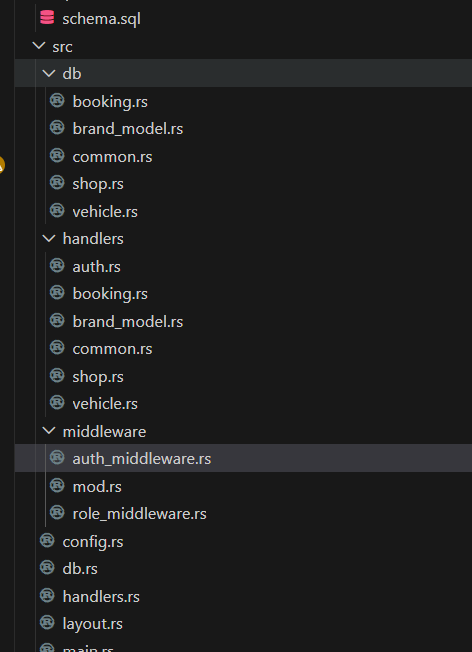
// role_middleware.rs
// src/middleware/role_middleware.rs
use std::future::{ready, Ready};
use std::rc::Rc;

use actix_session::SessionExt;
use actix_web::{
    body::{EitherBody, MessageBody},
    dev::{forward_ready, Service, ServiceRequest, ServiceResponse, Transform},
    Error, HttpResponse,
};
use futures_util::future::LocalBoxFuture;

fn role_from_session(req: &ServiceRequest) -> Option<String> {
    req.get_session()
        .get::<String>("role")
        .ok()
        .flatten()
        .map(|role| role.trim().to_lowercase())
}

fn is_logged_in(req: &ServiceRequest) -> bool {
    req.get_session()
        .get::<i64>("user_id")
        .ok()
        .flatten()
        .is_some()
}

pub struct RoleMiddleware {
    allowed_roles: Vec<String>,
}

pub fn require_roles(roles: &[&str]) -> RoleMiddleware {
    RoleMiddleware {
        allowed_roles: roles.iter().map(|r| r.trim().to_lowercase()).collect(),
    }
}

impl<S, B> Transform<S, ServiceRequest> for RoleMiddleware
where
    S: Service<ServiceRequest, Response = ServiceResponse<B>, Error = Error> + 'static,
    B: MessageBody + 'static,
{
    type Response = ServiceResponse<EitherBody<B>>;
    type Error = Error;
    type InitError = ();
    type Transform = RoleMiddlewareService<S>;
    type Future = Ready<Result<Self::Transform, Self::InitError>>;

    fn new_transform(&self, service: S) -> Self::Future {
        ready(Ok(RoleMiddlewareService {
            service: Rc::new(service),
            allowed_roles: self.allowed_roles.clone(),
        }))
    }
}

pub struct RoleMiddlewareService<S> {
    service: Rc<S>,
    allowed_roles: Vec<String>,
}

impl<S, B> Service<ServiceRequest> for RoleMiddlewareService<S>
where
    S: Service<ServiceRequest, Response = ServiceResponse<B>, Error = Error> + 'static,
    B: MessageBody + 'static,
{
    type Response = ServiceResponse<EitherBody<B>>;
    type Error = Error;
    type Future = LocalBoxFuture<'static, Result<Self::Response, Self::Error>>;

    forward_ready!(service);

    fn call(&self, req: ServiceRequest) -> Self::Future {
        let service = self.service.clone();
        let allowed_roles = self.allowed_roles.clone();

        Box::pin(async move {
            if !is_logged_in(&req) {
                let response = HttpResponse::Unauthorized().body("Login required");
                return Ok(req.into_response(response).map_into_right_body());
            }

            let role = role_from_session(&req).unwrap_or_default();
            if !allowed_roles.iter().any(|r| r == &role) {
                let response = HttpResponse::Forbidden().body("Insufficient role permissions");
                return Ok(req.into_response(response).map_into_right_body());
            }

            let response = service.call(req).await?;
            Ok(response.map_into_left_body())
        })
    }
}
// src/middleware/mod.rs
pub mod auth_middleware;
pub mod role_middleware;

pub use auth_middleware::AuthMiddleware;
pub use role_middleware::require_roles;
main.rs
// main.rs (RBAC usage on route scope)
web::scope("/api")
    .route("/login", web::post().to(handlers::login))
    .route("/logout", web::post().to(handlers::logout))
    .service(
        web::scope("")
            .wrap(middleware::AuthMiddleware)
            .route("/me", web::get().to(handlers::me))
            .route("/dashboard", web::get().to(handlers::dashboard))
            .service(
                web::scope("")
                    .wrap(middleware::require_roles(&["user"])) // RBAC
                    .route("/shops", web::get().to(handlers::list_shops_handler))
                    .route("/shops", web::post().to(handlers::create_shop_handler))
                    .route("/shops/{id}", web::put().to(handlers::update_shop_handler))
                    .route("/shops/{id}", web::delete().to(handlers::delete_shop_handler))
                    .route("/vehicles", web::get().to(handlers::list_vehicles_handler))
                    .route("/vehicles", web::post().to(handlers::create_vehicle_handler))
                    .route("/brand-models", web::get().to(handlers::list_brand_models_handler))
                    .route("/brand-models", web::post().to(handlers::create_brand_model_handler)),
            ),
    )
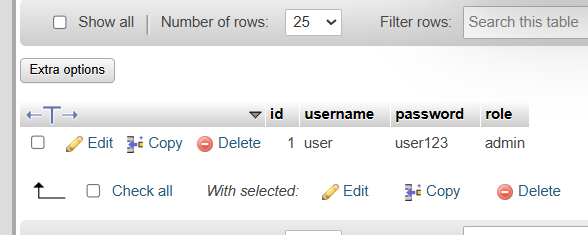
// handlers/auth.rs (must store role in session for RBAC)
let role = user.role.trim().to_lowercase();
session.insert("user_id", user.id)?;
session.insert("role", role)?;
practical scenario
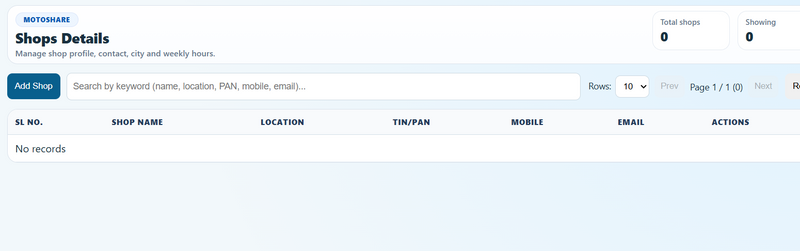
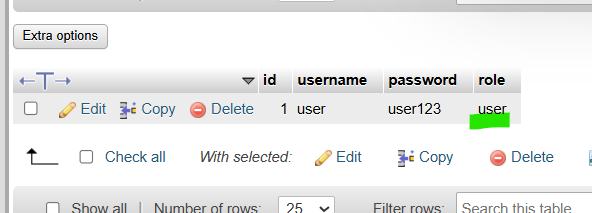
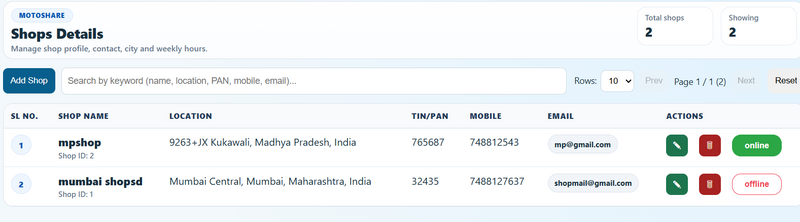
===============================================================
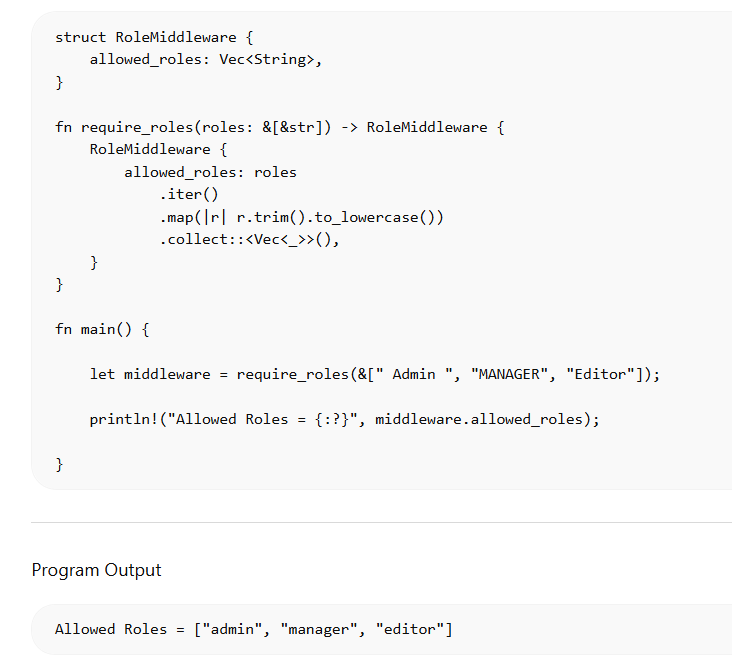
pub fn require_roles(roles: &[&str]) -> RoleMiddleware {
    RoleMiddleware {
        allowed_roles: roles.iter().map(|r| r.trim().to_lowercase()).collect(),
    }
}
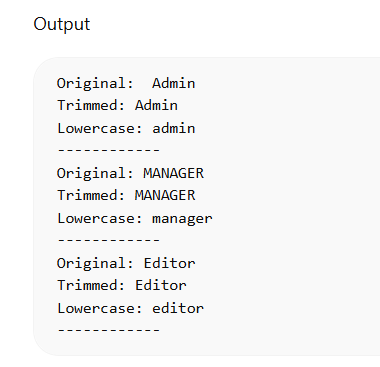
Above fun require_roles can write in a way that
fn main() {

    let roles = [" Admin ", "MANAGER", "Editor"];

    for role in roles.iter() {

        let trimmed = role.trim();
        let lower = trimmed.to_lowercase();

        println!("Original: {}", role);
        println!("Trimmed: {}", trimmed);
        println!("Lowercase: {}", lower);
        println!("------------");

    }

}
output



Top comments (0)