Debug School

rakesh kumar
rakesh kumar

Posted on

Keycloak Mapper Types & Their Database Tables Explained (With Real Use Cases)”

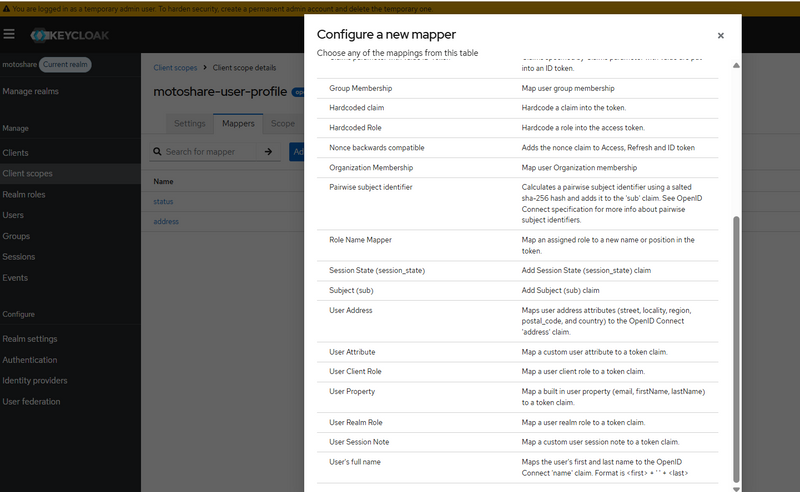
Keycloak gives you more than 20+ mapper types, but real confusion starts when developers ask:

“Ye mapper internally Keycloak ke kis table me store hota hai?”

“User Attribute vs User Property ke database tables alag kyun hote hain?”

“Role mapper ka data kaha save hota hai?”

“Client Scope add karne se backend me kya change hota hai?”

This blog finally solves these questions with full technical breakdown, database tables, architecture diagrams, and real Laravel / microservices use cases.
📑

Table of Contents

Keycloak Mapper System – Short Introduction

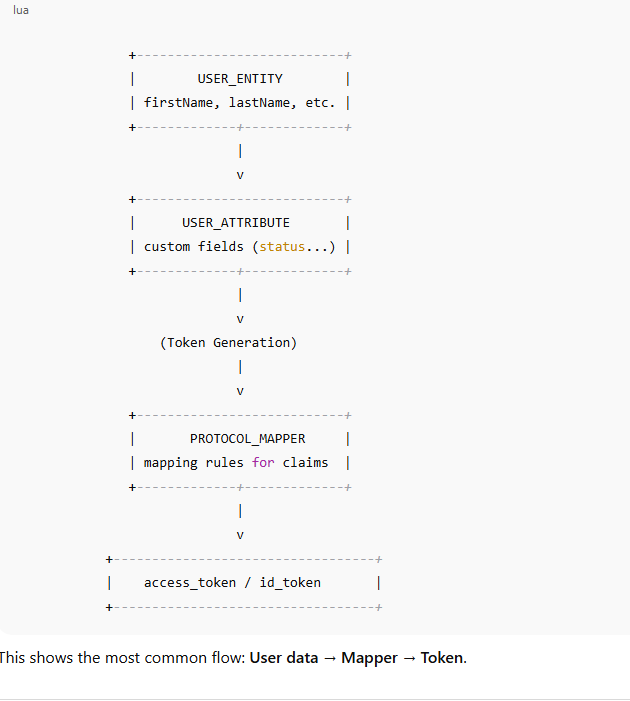
High-Level Architecture Diagram

Why Mapper Database Tables Matter

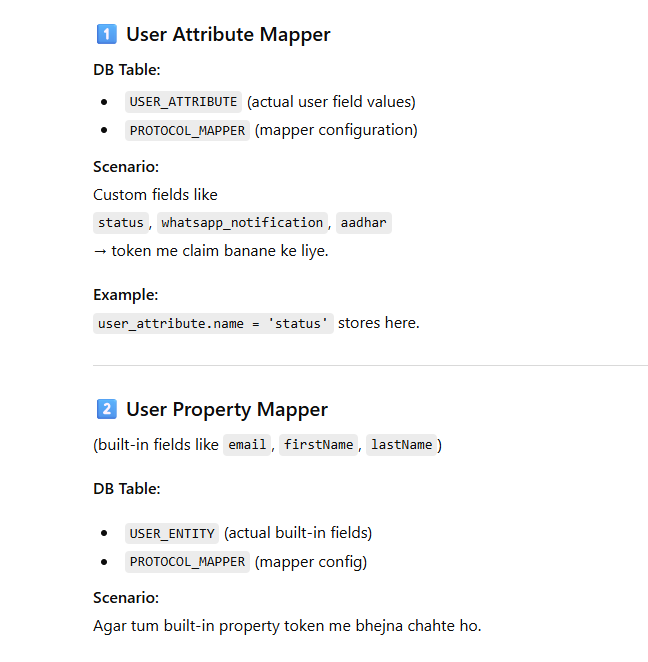
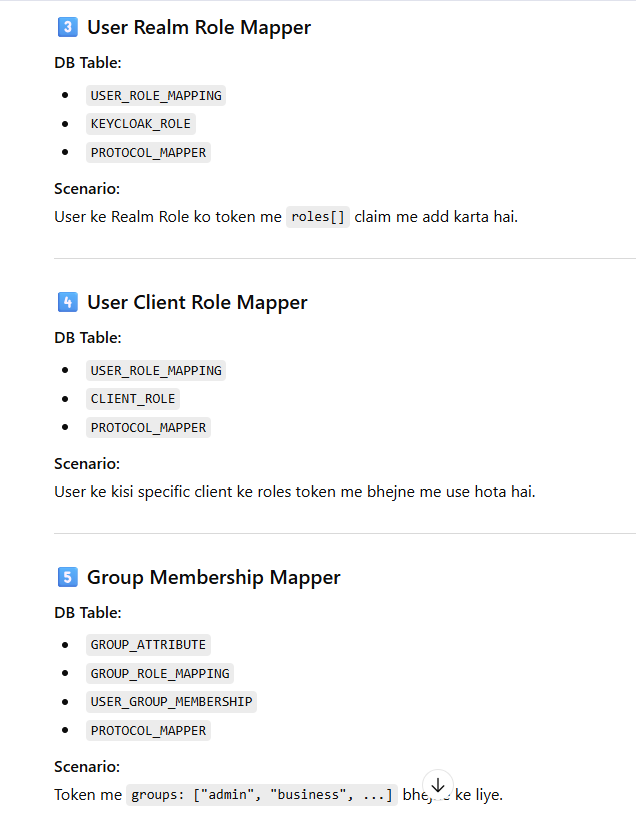
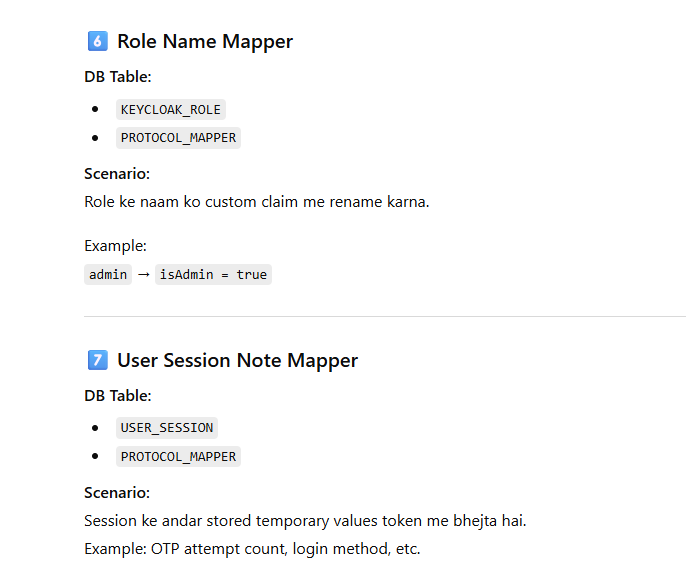
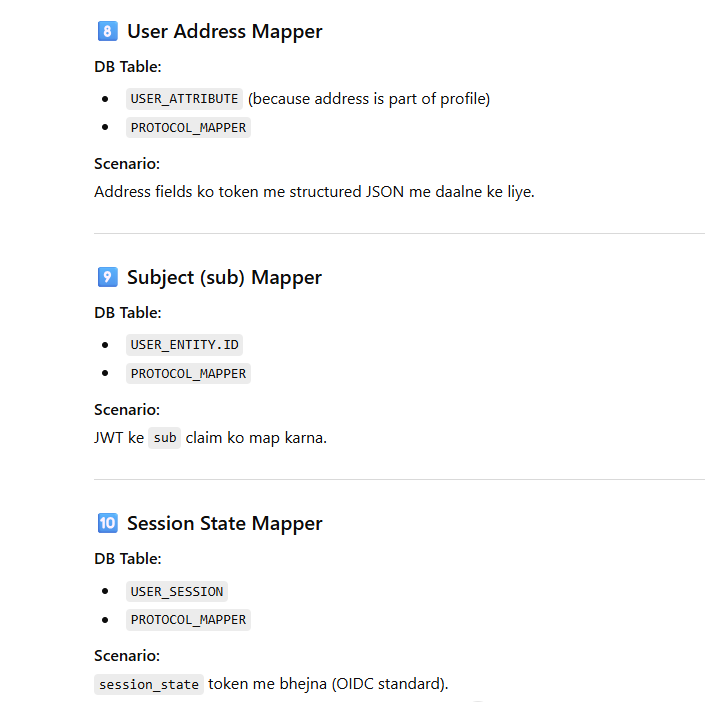
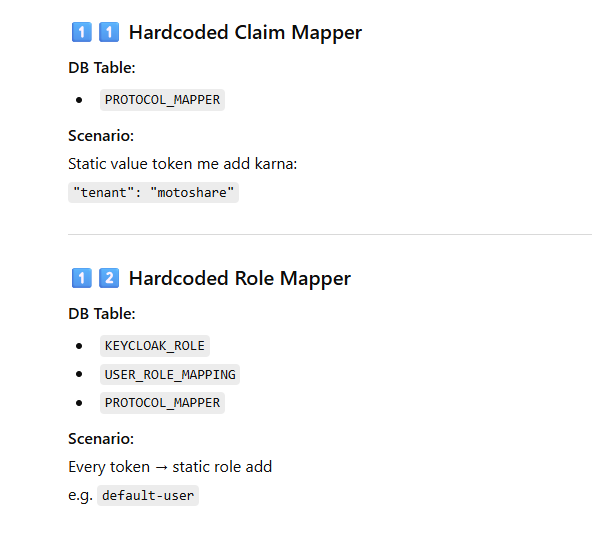
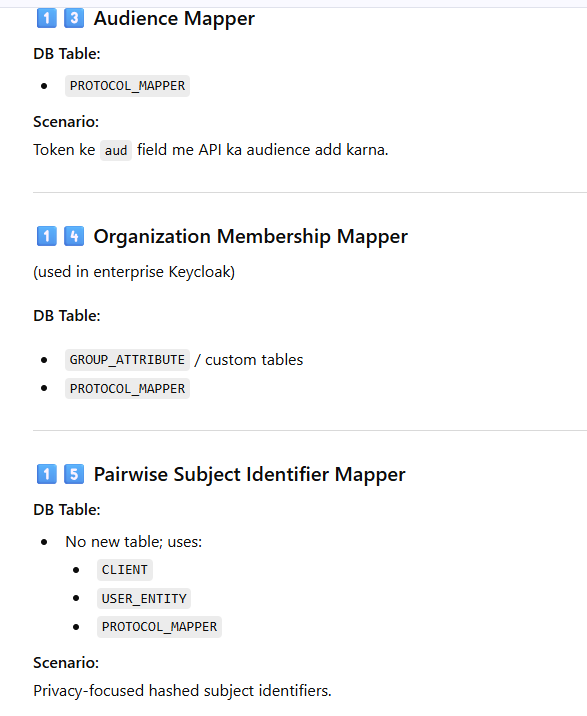
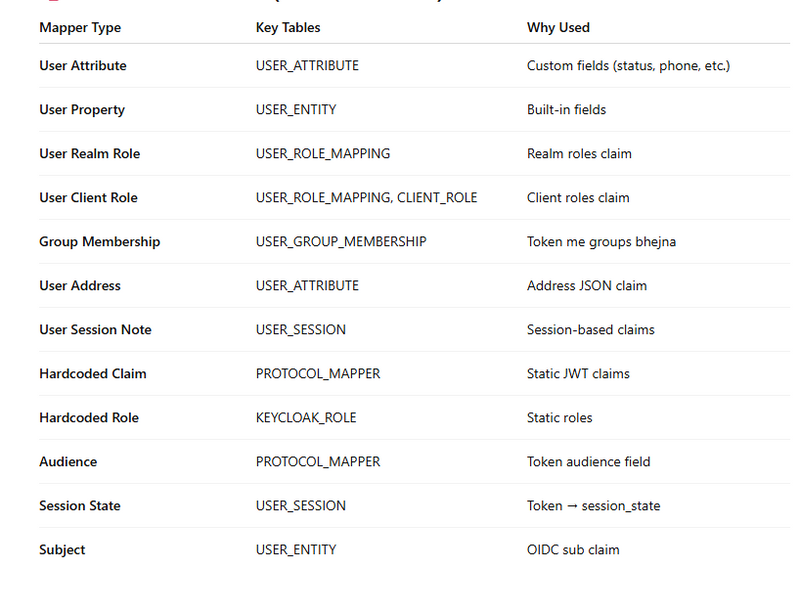
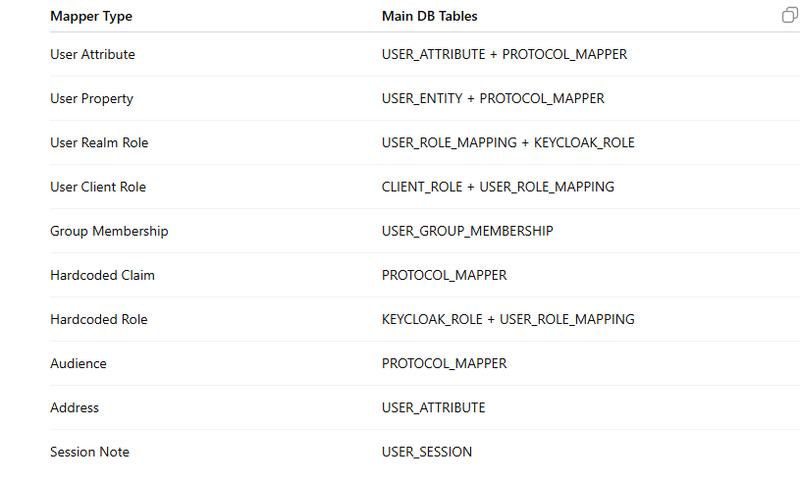
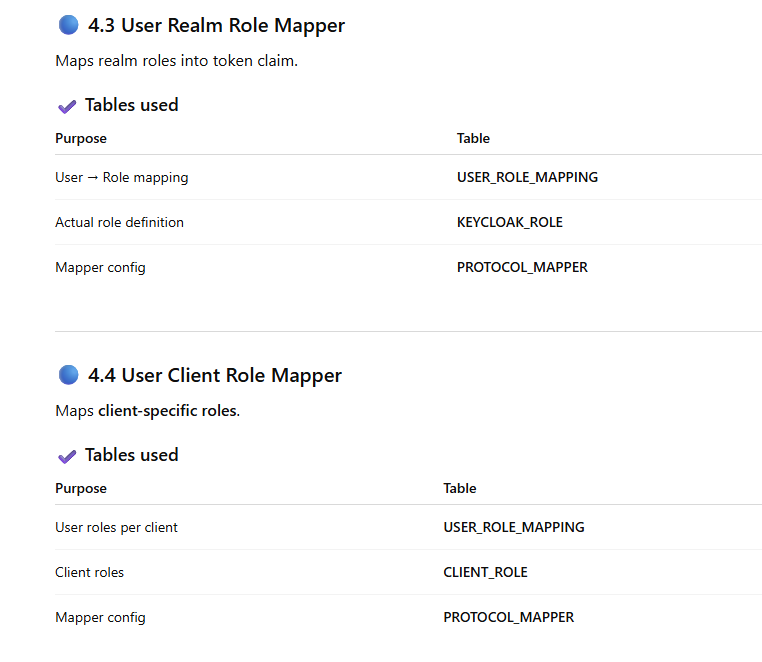
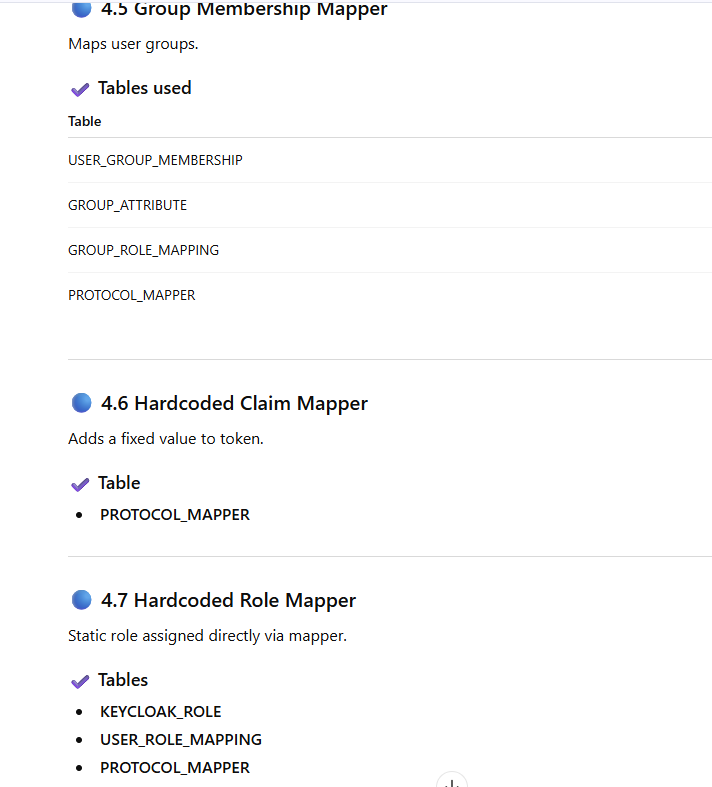
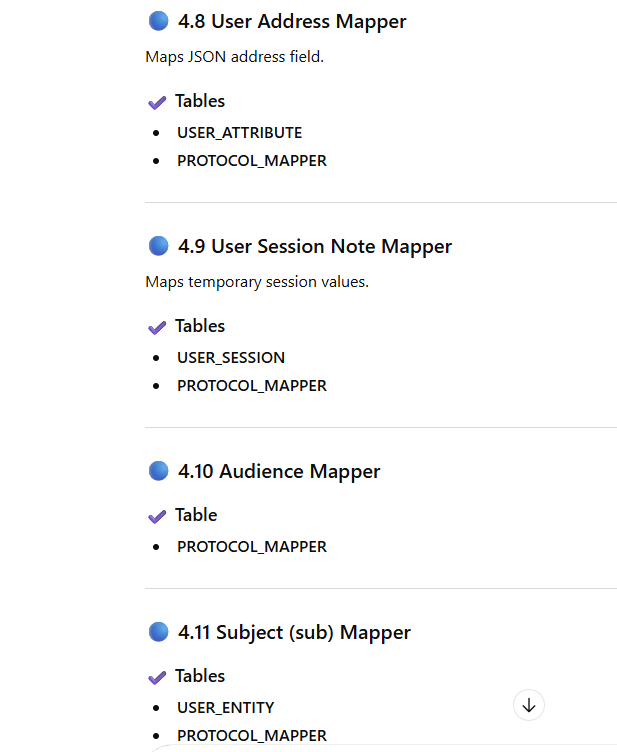
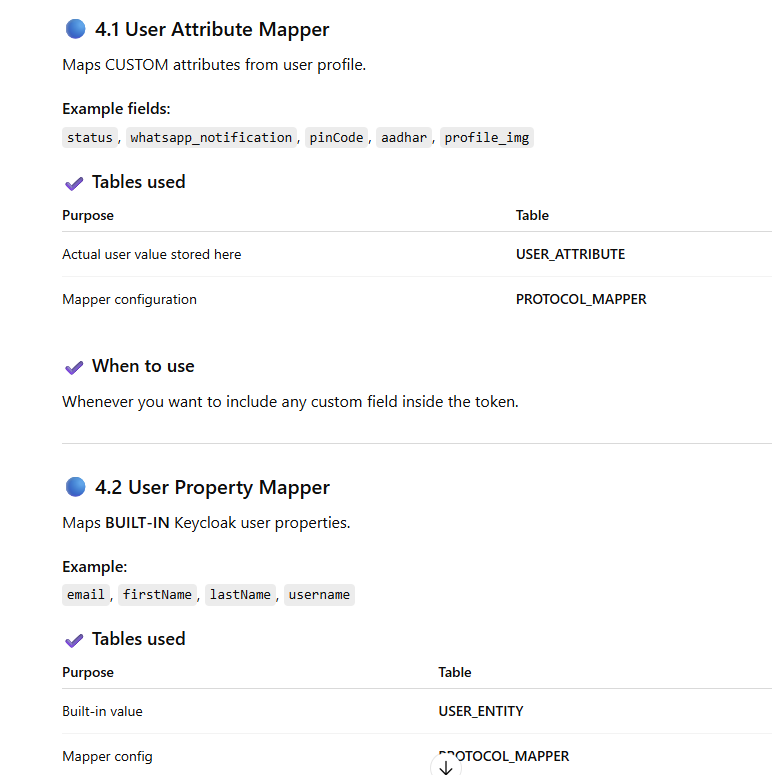
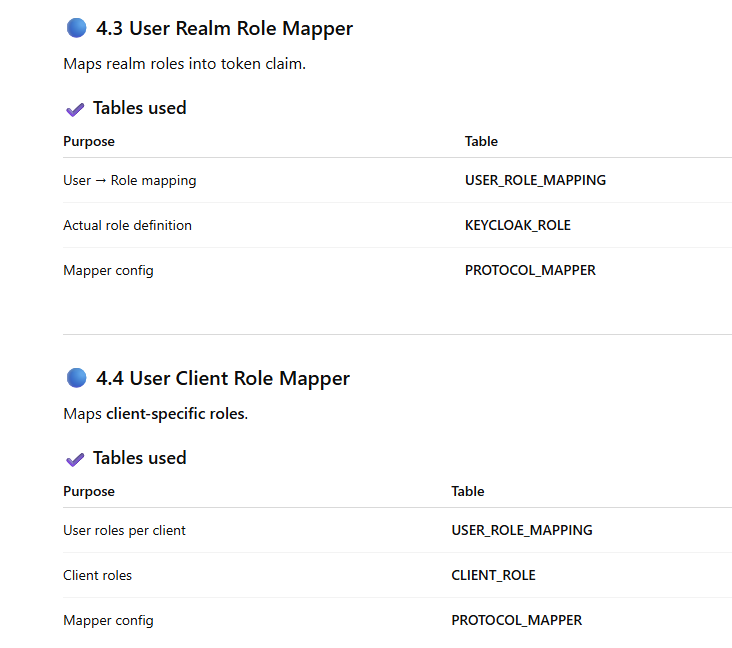
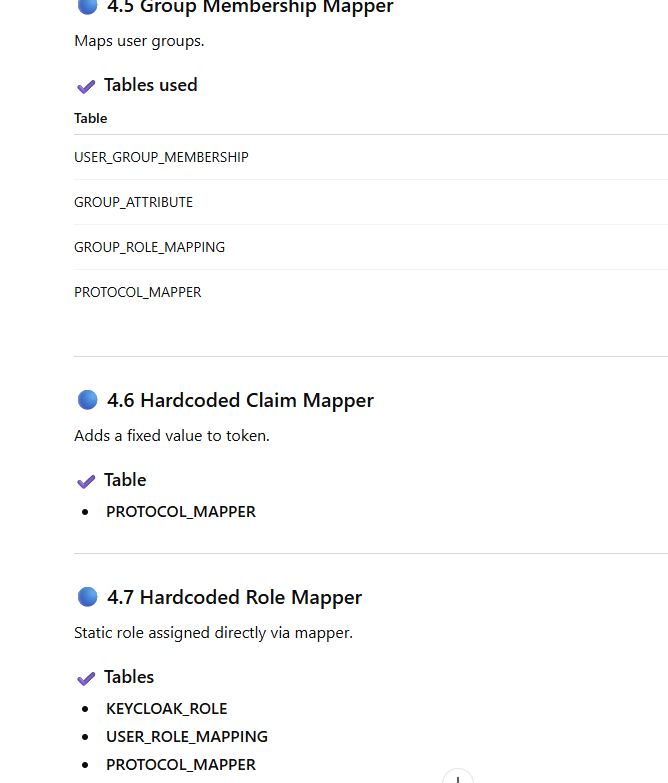
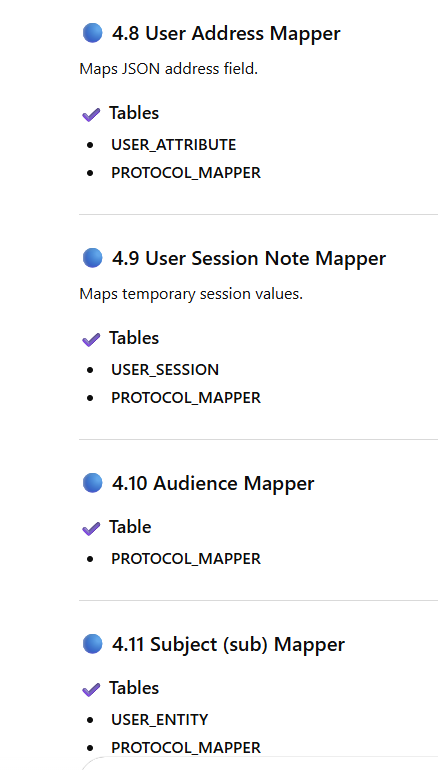
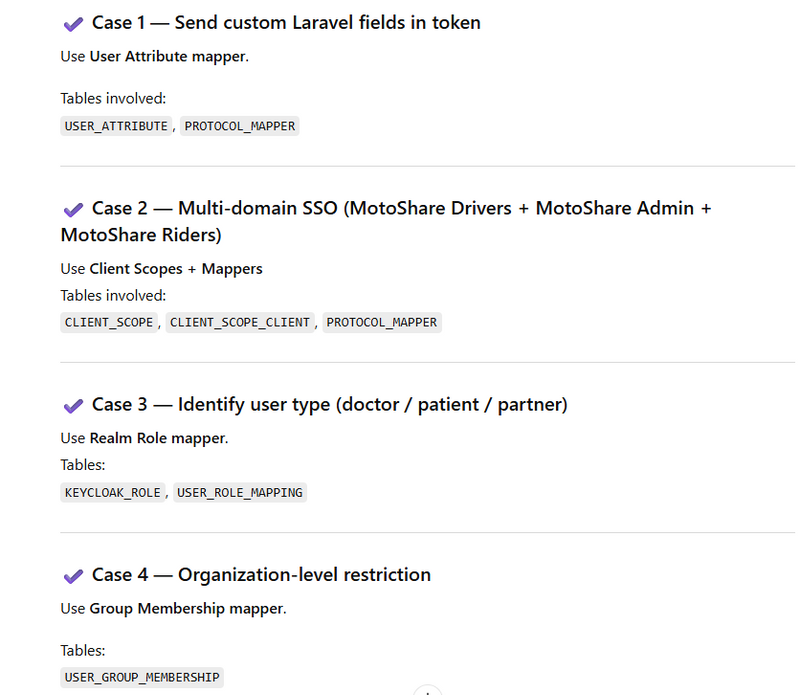
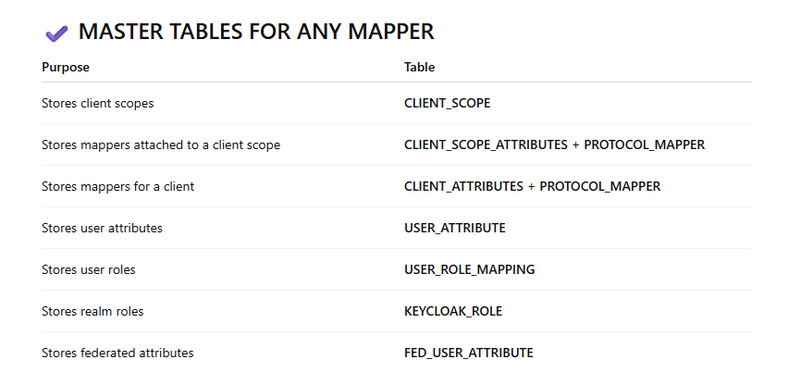
Full List of Mapper Types & Their Corresponding DB Tables

User Attribute

User Property

User Realm Role

User Client Role

Group Membership

Hardcoded Claim

Hardcoded Role

Address Mapper

Session Note

Audience Mapper

Subject (sub) Mapper

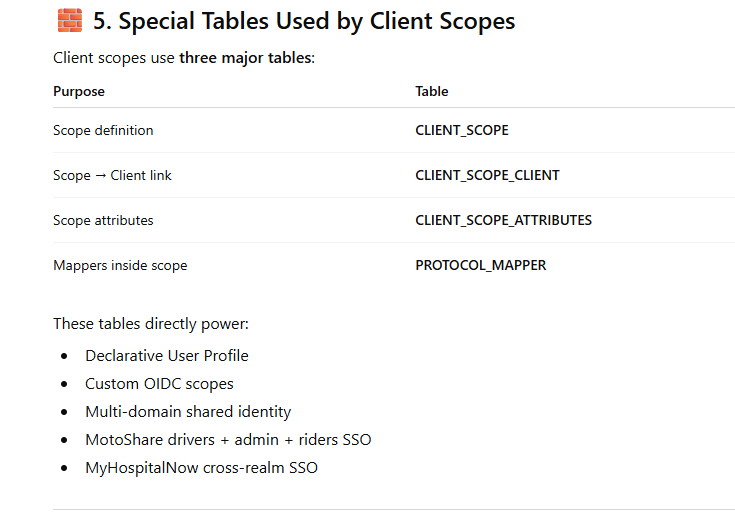
Special Tables Used by Client Scopes

Quick Reference Summary Table

Real Use Cases (Laravel + Multi-domain SSO + Microservices)

Conclusion

🚀 1.

Keycloak Mapper System – Short Introductio

n

In Keycloak, mappers decide what data goes inside a token:

Access Token

ID Token

UserInfo Response

Token Introspection

Whenever you add a custom attribute, custom claim, custom role, or custom scope, the result is handled by protocol mappers.

But internal working is hidden.
To understand debugging, migrations, or automation—knowing the exact database tables is extremely important.

🧩 2. High-Level Architecture Diagram
Top comments (0)